
Review · BATTAMBANG
Morning Tuk tuk: City, Handicrafts, Killing field, Temples
Battambang’s best morning outing is not a race from one monument to the next. It is a tuk-tuk ride into the working countryside, where families still make noodles, rice paper, sticky rice and rice wine by hand. You get temples and history, but the food stops give the morning its real character.
I like the local workshops, where you can watch everyday production and taste fresh snacks. I also like the mix of Buddhist and Angkorian sites, especially Wat Samrong Knong and Ek Phnom. The main caution is the pace: five hours is a lot of time in an open tuk-tuk, and the ride may not suit anyone with high blood pressure, limited stamina, or an age over 70.
Key points at a glance
- 7:20 AM tuk-tuk pickup: Start early from your hotel or restaurant, with pickup and drop-off available within 5 kilometers of Battambang town.
- Four hands-on food stops: See Khmer rice noodles, bamboo sticky rice, rice paper and rice wine made by local families.
- A serious historical visit: Wat Samrong Knong includes a torture house and killing field linked to the Khmer Rouge period.
- Two very different temple sights: See a 25-meter Buddha and an 11th-century Hindu temple at Ek Phnom.
- English-speaking local guides: Guides such as Samol and David explain food, religion, agriculture and Cambodian history in a friendly, clear way.
- Good value at $20: Transport, guide, water, wet wipes, snacks, admissions and donations are included.
Why the food workshops are the heart of the morning
Battambang is one of Cambodia’s important agricultural areas, and rice shapes much of daily life here. This tour lets you see that connection in practical terms. Instead of simply ordering a dish in a restaurant, you watch the steps that turn rice into noodles, wrappers, sweets and alcohol.
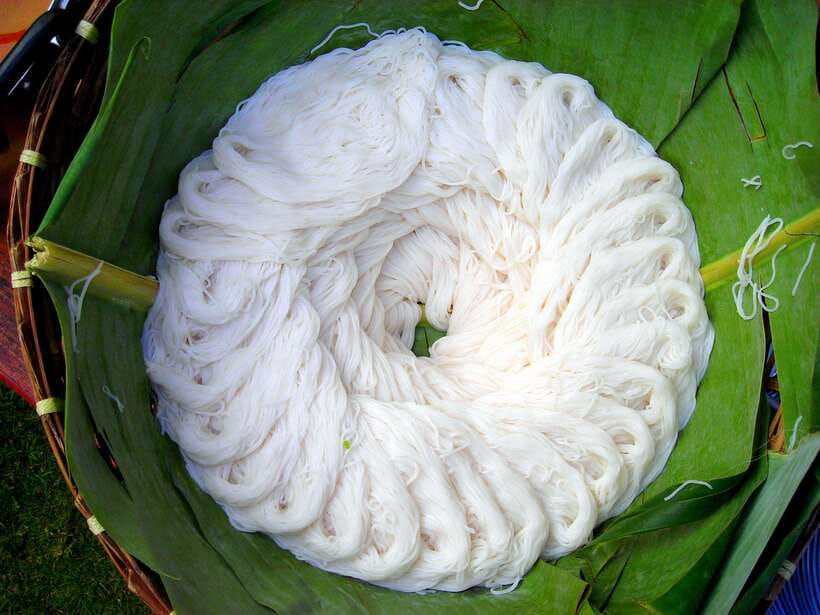
Your first food stop is a Khmer rice noodle factory. Locals make the noodles for breakfast, lunch and dinner, and you can sample them during the visit. This is a useful stop for anyone who wants to understand Cambodian food beyond the familiar curry and fried rice.
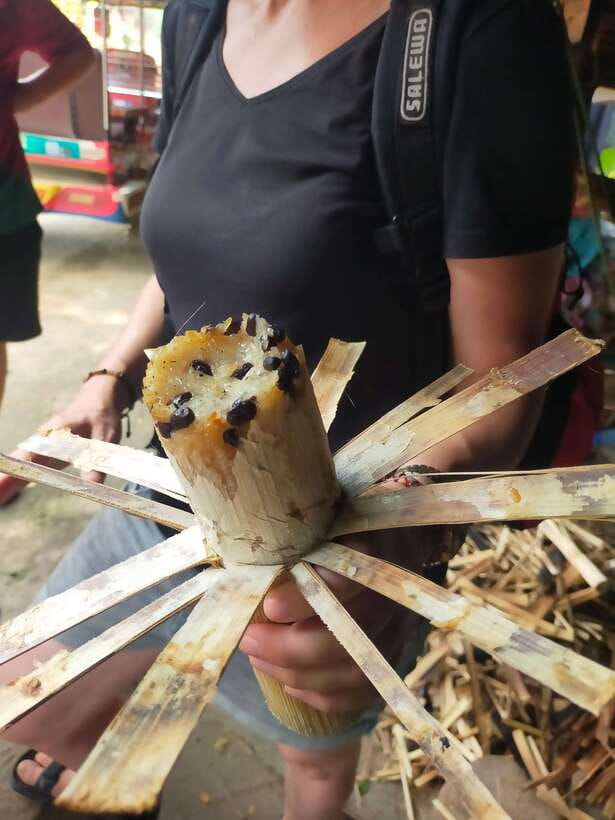
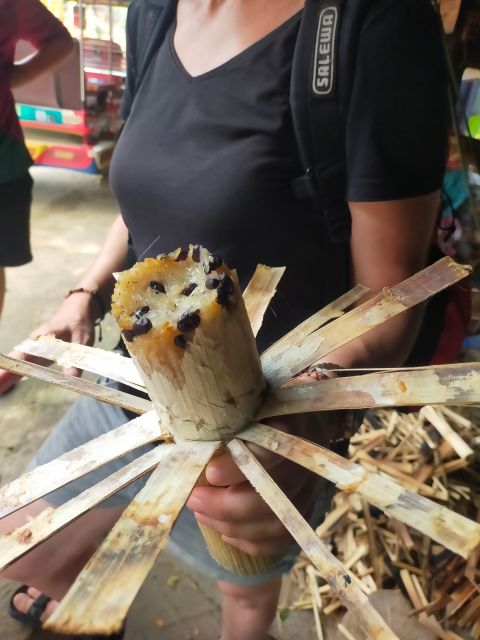
The next stop focuses on bamboo sticky rice, a sweet snack cooked inside sections of bamboo. The preparation gives the food its name and its distinct appeal. You watch the local method, then try the finished product. It is a small tasting, but it helps you connect the crop, the cooking method and the snack sold to both local people and visitors.
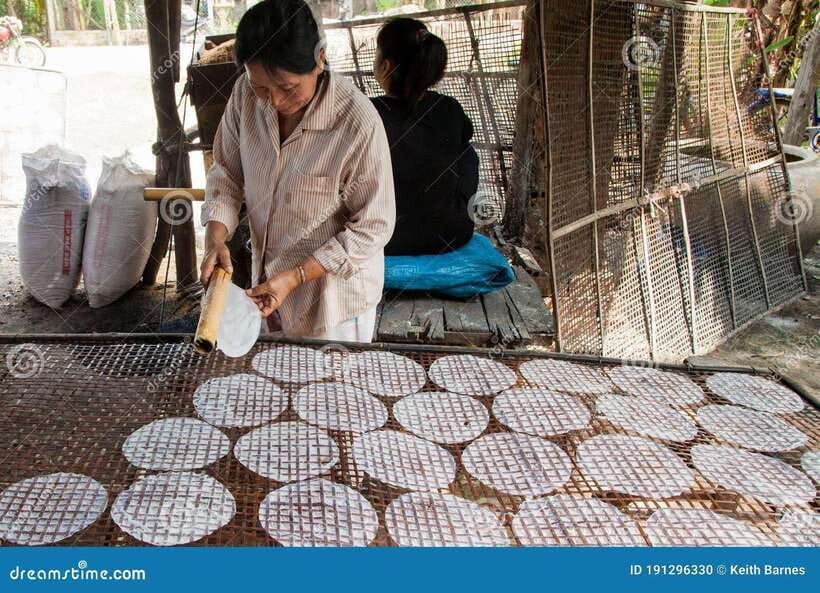
Rice paper offers another close look at village work. The sheets are used for spring rolls, and the families making them can produce at least 1,500 a day. That number changes how you see the product. A thin wrapper that looks simple on a plate requires steady, repeated work on a large scale.
You also get to taste the rice paper and, according to the food experiences offered on the route, fresh spring rolls. One of the tour’s most memorable details is the chance to eat spring rolls made with very fresh wrappers. If you enjoy food tours, this stop alone gives the morning a strong reason to book.
The final production visit is a rice wine plant that has operated since the 1980s. You learn how rice wine is made and sample it. The guide also explains its traditional uses, including medication and soaking plants, fruit and even poisonous animals such as cobras and tarantulas. The tasting is interesting, but take it slowly. You still have temples and a tuk-tuk ride ahead.
More Temple Tuk Tuk Tours in Cambodia
- Battambang family tuktuk tour BambooTrain/Wat Banan/Bat cave
★ 4.8 · 18 reviews - Siem Reap: Angkor Wat Private Tuk-Tuk Tour
★ 4.9 · 2,222 reviews - Angkor Wat Private Tuk-Tuk Tour (sunrise Option) & more
★ 5.0 · 439 reviews
Battambang’s center before the countryside
The tour begins around 7:20 AM with pickup from your accommodation or a restaurant. An early start is useful in Battambang, since it leaves room for several stops before the heat becomes too strong.
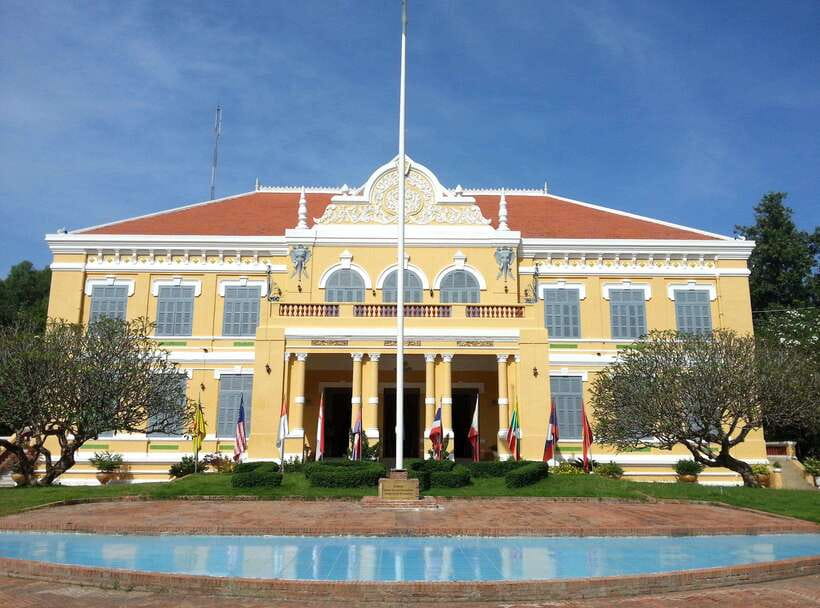
Before heading into the villages, your guide introduces Battambang’s history, culture, religion and agriculture. You pass historical buildings, the central market, the provincial hall and the statue of Ta Dambong Kranhoung, the city’s symbol.
This opening section helps you get your bearings. You are not simply being driven from one photo stop to another. The guide connects the city with the rural production you see later. Guides such as Samol are also known for adding folk tales, humor and stories about Buddhism, which can make the historical explanations easier to follow.
The city portion is fairly brief, so do not book this experience expecting a long architectural walking tour. Its purpose is to introduce Battambang before the tuk-tuk heads into smaller communities and open rice fields.
Wat Samrong Knong and the difficult history of Battambang
Wat Samrong Knong is one of the morning’s most important stops. The Buddhist temple dates from 1707, and its brick stupa was built in 1887. These older structures offer a direct link to Battambang’s religious past.
The site also carries painful memories from the Khmer Rouge period. The pagoda was used to house Khmer Rouge soldiers and as a detention area for victims. You see a torture house and a killing field where approximately 10,008 people were killed.
This is not a light sightseeing stop. Give yourself time to take in the memorial and listen carefully to the guide. The visit adds necessary context to Cambodian history, but some people may find it emotionally difficult, especially alongside the otherwise cheerful food tastings.
The contrast is part of what makes the route meaningful. In one morning, you see a living Buddhist site, village food production and a place marked by mass violence. A good guide helps keep those subjects separate and respectful. Samol, whose English and storytelling have been praised for clear explanations of history and religion, is one guide associated with this experience.
Ek Phnom combines a giant Buddha with ancient ruins
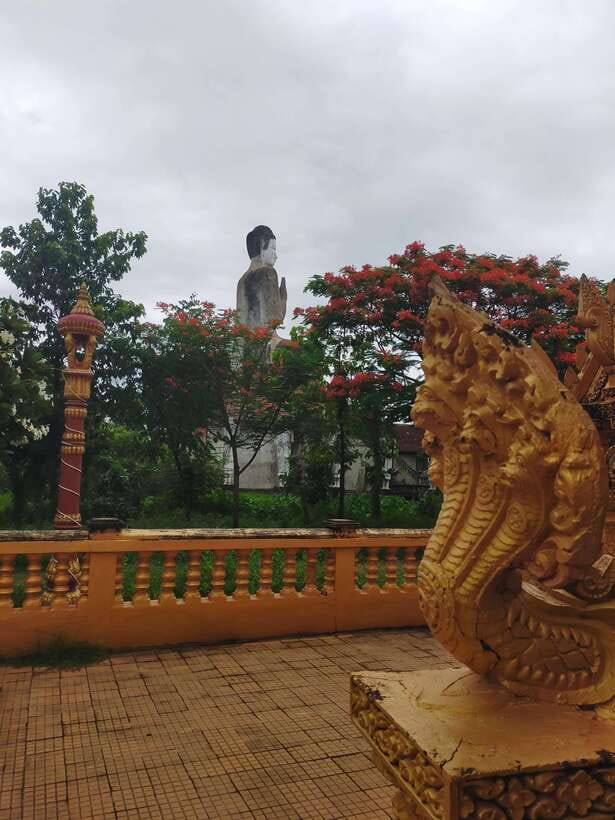
The final major stop is the Ek Phnom area. First you see a 25-meter-high Buddha surrounded by standing Buddha figures. The scale makes this an easy photo stop, and the open setting gives you room to view the statue from different angles.
You then visit a Buddhist temple built in 1991. Inside, paintings show stories from the life of Buddha. This is a more modern religious space than the Angkorian ruins nearby, so the two sites create a useful comparison.
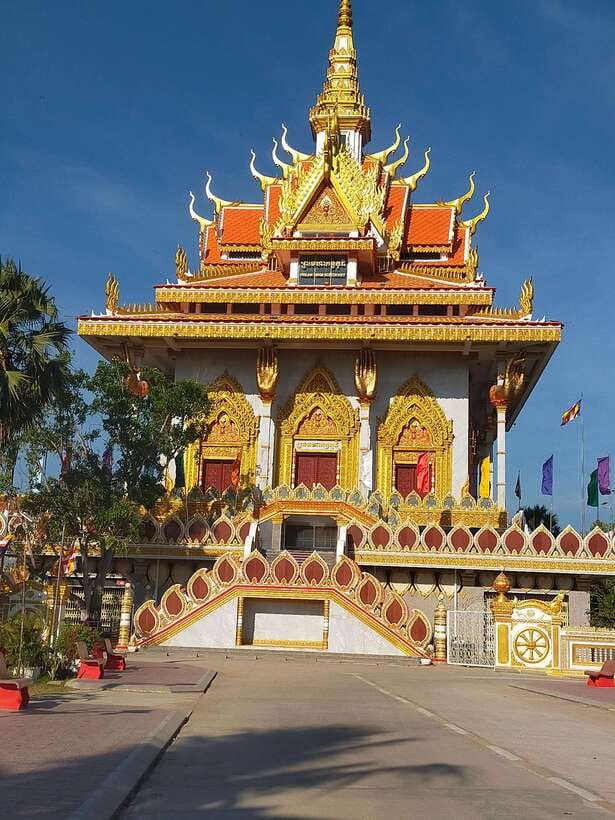
The older ruins are from an 11th-century Hindu temple built under King Suryavarman I. You do not get only one version of Cambodian religious architecture here. The stop shows later Buddhist practice alongside an earlier Hindu structure, with both occupying the same wider area.
You should expect some walking around the temple grounds. Wear practical shoes and clothing that respects the site. Sleeveless shirts are not allowed, so cover your shoulders before pickup rather than relying on a last-minute adjustment.
More Temple Tuk Tuk Tours in Battambang:
- Bangkok by Night: Temples, Markets and Food Tuk-Tuk Tour
★ 5.0 · 3,752 reviews - Bangkok: Markets, Temples and Food Night Tour by Tuk Tuk
★ 4.9 · 2,371 reviews - Bangkok: Tuk Tuk Adventure Chinatown Michelin Food & Temples
★ 4.3 · 725 reviews - Bangkok: Evening Tour with Wat Arun, Wat Pho & Tuk Tuk Ride
★ 4.6 · 701 reviews
What the tuk-tuk ride is really like
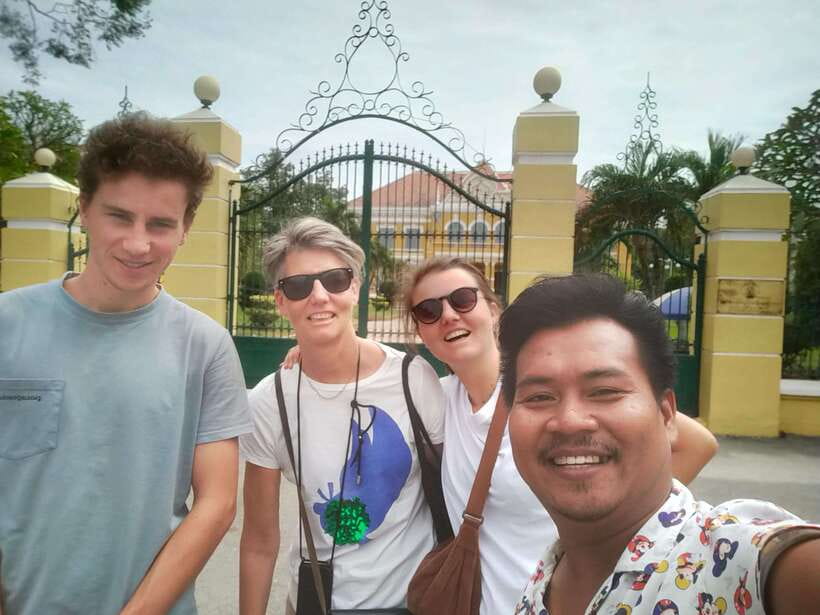
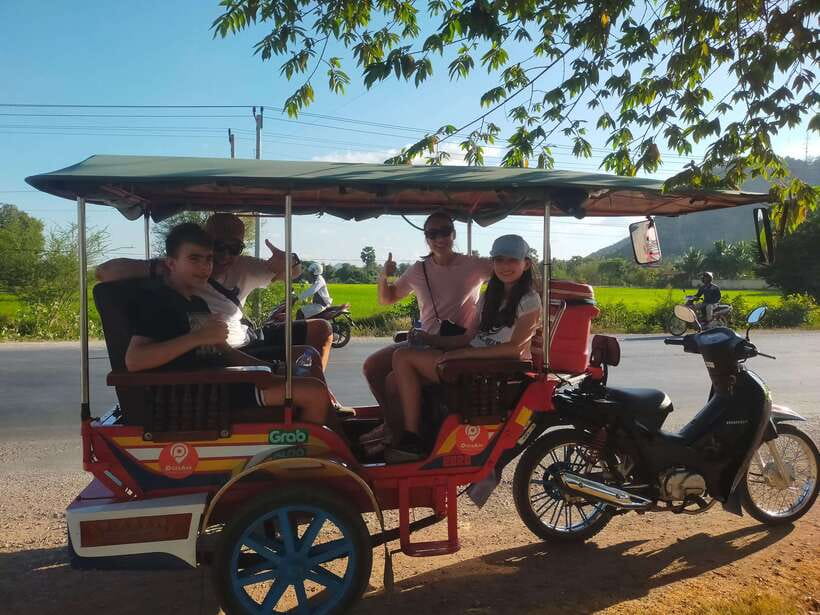
The tuk-tuk is the right vehicle for this route because it lets you move between town, villages and paddy fields with an open view. You can see small communities and agricultural areas along the way rather than spending the whole morning inside a car.
The trade-off is comfort. An open tuk-tuk exposes you to sun, dust and road movement. The tour provides cold bottled water and wet wipes, which are useful after food production stops and during the warmer part of the ride. Bring any extra sun protection you normally use, though the supplied information does not specify whether shade or sunscreen is provided.
Pickup and drop-off are offered within 5 kilometers of Battambang town. If your accommodation is farther out, check the meeting point before booking. The tour returns to Battambang for lunch or hotel drop-off after about five hours.
The tour is described as a live English-language experience. That matters here because the value depends on explanations, especially at the killing field, rice wine plant and temple ruins. Guides may also take photographs for you. Samol has shared tour photos through WhatsApp, which is a useful touch if you want pictures of the group without handing your camera to a stranger.
What $20 includes, and where the value sits
At $20 per person, this is a strong-value half-day outing if you want several different experiences in one morning. You receive hotel pickup and drop-off within the stated area, an English-speaking guide, bottled water, wet wipes, snack tastings, entrance fees and donations.
The value is not just the number of stops. Arranging the food visits independently would require finding the small producers, organizing transport and working out which temples to combine. Here, one tuk-tuk route links the city center, village workshops, a memorial site and Ek Phnom.
There are still costs you should plan for. Personal expenses are not included. The tour description does not promise a full lunch, so plan to eat after returning to town. The included tastings are better understood as samples rather than a meal.
The reserve-now, pay-later option keeps your cash free until closer to the activity date, and cancellation is allowed up to 24 hours before departure for a full refund. Those terms are useful if your Cambodian route is still changing.
Who will enjoy this Battambang tour most
I would choose this experience if you want to see how local food is made and prefer a small-scale cultural outing to a simple city loop. It suits curious eaters, first-time visitors to Battambang, photographers and anyone interested in the relationship between farming and Cambodian cooking.
It is also a good choice for visitors who want both major sights and ordinary daily life. The city buildings and temples give you the classic stops, while the rice paper, noodle, sticky rice and wine producers show how people work.
The history portion makes it a better fit for adults and older teenagers than for very young children. The tour does not allow baby strollers, and the open vehicle may be tiring for anyone who has trouble with heat or extended sitting.
The provider specifically says the activity is not suitable for people with high blood pressure or those over 70. Take that warning seriously. The tour involves early pickup, a long tuk-tuk ride, walking around temple grounds and exposure to heat. If you have concerns, ask before booking rather than assuming the route can be shortened.
Small details that improve the experience
Wear clothing with covered shoulders, especially for the temples. Loose, light clothing and comfortable shoes are sensible for the tuk-tuk ride and the walking stops.
Keep your morning flexible. The exact time at each producer may vary, since you are visiting working local businesses rather than a scripted museum exhibit. That is part of the appeal, but it also means the route may feel less polished than a large commercial attraction.
Try the tastings, even if you do not recognize the food. The point is not a formal cooking lesson. It is seeing the hands, tools and repeated motions behind familiar Cambodian ingredients.
Listen closely at Wat Samrong Knong. The food stops are friendly and informal, but the memorial deserves a quieter mood. Your guide’s explanation will help you understand why the site matters.
Finally, make sure your pickup address is within 5 kilometers of Battambang town. The tour includes hotel pickup and drop-off, but the distance limit is an important practical condition.
Should you book it?
Book this tour if you want Battambang in miniature: city landmarks, rural food production, Buddhist worship, Angkorian ruins and a serious Khmer Rouge memorial, all linked by tuk-tuk. At $20, the combination of transport, guide, admissions and tastings is hard to fault.
Skip it if you want a slow temple day, a full lunch, or a private luxury vehicle. The morning is active, the tuk-tuk is basic, and the memorial stop can be heavy. For most fit adults who want local food and a clear introduction to Battambang, though, this is one of the more useful half-day choices in town.
FAQ
What time does the Battambang tuk-tuk tour start?
Pickup starts at about 7:20 AM from your accommodation or a restaurant.
How long does the tour last?
The experience lasts approximately five hours and returns to Battambang for lunch or hotel drop-off.
What places are visited?
The route includes Battambang city sights, a Khmer rice noodle factory, bamboo sticky rice production, Wat Samrong Knong, rice paper production, a rice wine plant and the Ek Phnom temples.
Is hotel pickup included?
Yes. Hotel pickup and drop-off are included for locations within 5 kilometers of Battambang town.
Is the tour offered in English?
Yes. The tour includes a live English-speaking guide.
What food and drink tastings are included?
You can taste Khmer rice noodles, bamboo sticky rice, rice paper products and rice wine. Snacks and tastings are included, but a full lunch is not listed.
Are entrance fees included?
Yes. All admissions and donations are included in the price.
What does the tour cost?
The price is $20 per person.
Can I wear a sleeveless shirt?
No. Sleeveless shirts are not allowed, so wear clothing that covers your shoulders.
Is the tour suitable for everyone?
The activity is not considered suitable for people with high blood pressure or people over 70. Baby strollers are also not allowed.
More Morning in Battambang
- half day morning tour by Tuk-Tuk
★ 5.0 · 20 reviews - Morning Tuk Tuk Food Tour: Taste Iconic Dishes of Battambang
★ 5.0 · 2 reviews - Battambang: Morning Tuk Tuk Food Tour of Our Iconic Dishes
★ 5.0 · 2 reviews - Colombo private city tour by tuk tuk morning and evening
★ 5.0 · 109 reviews
Just added around Battambang
- Private Half-Day Tuk Tuk Tour in Battambang★ 5.0 · 2 reviews
- Full/Half Day Tuk TuK: Handicrafts Bambootrain Killing&Bat Caves★ 5.0 · 14 reviews
- Morning Tuk Tuk Food Tour: Taste Iconic Dishes of Battambang★ 5.0 · 2 reviews
- Tuk Tuk Tour (Full-Day)★ 5.0 · 7 reviews
- Full-Day Battambang with a local Tuk Tuk Tours★ 5.0 · 2 reviews
- Private Full Day Tuk Tuk Tour in Battambang★ 5.0 · 12 reviews
- half day morning tour by Tuk-Tuk★ 5.0 · 20 reviews
- Battambang family tuktuk tour BambooTrain/Wat Banan/Bat cave★ 4.8 · 18 reviews
Battambang Tuk Tuk Tours, compared.
Tuk-Tuk, Bamboo Train, Killing/Bat Caves, Sunset
Read our review →
Battambang Tuk Tuk tour: Bambootrain, Killing & Bat Caves,Sunset
Read our review →
Afternoon tour by tuk tuk to bamboo train,bat cave,killing cave,countryside.
Read our review →
Explore Battambang full day tour by Tuk Tuk (start from 9am-6:30pm)
Read our review →
A Day TukTuk Handicrafts Bambootrain Killing&BatCaves,Sunset
Read our review →
A Day TukTuk Bambootrain, Banan, Killing & Bat Caves, Sunset
Read our review →
Full day tour by bicycle & tuk tuk,bamboo train,bat cave,villages
Read our review →Browse the lists this tour appears in