
Review · ITALY
The Life of Saint Francis Tour by Tuk Tuk: English & Spanish
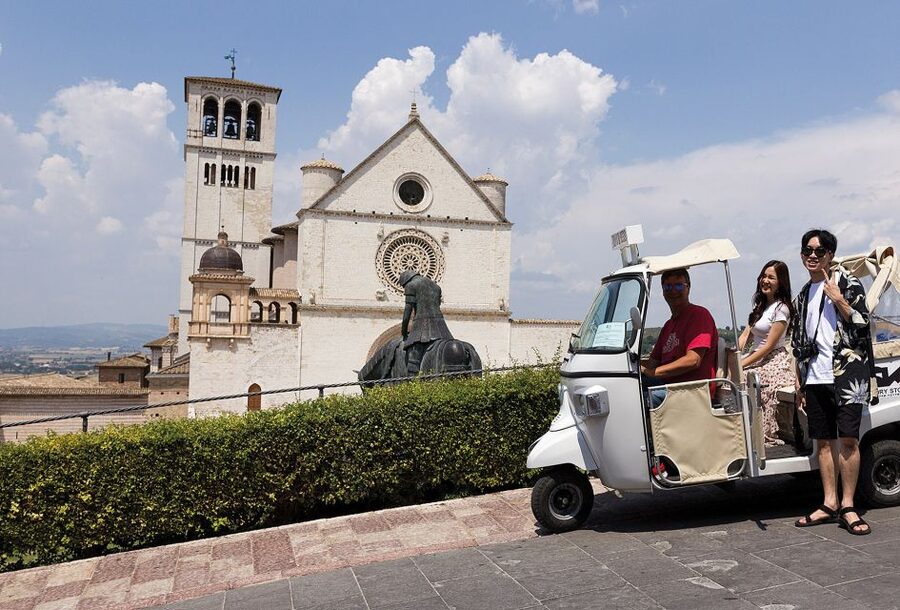
Assisi is built on a steep hill, and this private tuk-tuk tour gives you a smart way to connect the town’s upper lanes with the important Franciscan sites below. You ride through narrow medieval streets, then head beyond the historic center to San Damiano, Rivotorto, and Santa Maria degli Angeli without spending the day climbing hills.
I like the personal scale, limited to four people, and the local perspective offered by guides such as Daniel, Daniele, and Marco. I also like that the route links the life of St. Francis to real places, including his family home, the church where he was baptized, the site of his death, and the simple shrine at Rivotorto. The main consideration is that three and a half hours moves quickly, so you get an excellent overview rather than a long, quiet visit at every church.
Key points to know before booking
- A tuk-tuk solves Assisi’s hill problem: You can reach upper and lower Assisi with far less walking between sites.
- The route follows St. Francis from birth to death: Stops include Chiesa Nuova, San Rufino, San Damiano, Rivotorto, the Porziuncola, and the Basilica of St. Francis.
- The group is very small: The tuk-tuk carries up to four participants, making conversation with the guide easy.
- Local guides add personal context: Daniel and Daniele are lifelong Assisi-area residents, while Marco is also praised for his clear explanation of the town and Franciscan tradition.
- It covers more than the main basilica: You see places that can be awkward to reach on foot, especially Santa Maria degli Angeli and Rivotorto.
- English is available: The tour can be conducted in English, Italian, Spanish, or French.
Why a tuk-tuk works so well in Assisi
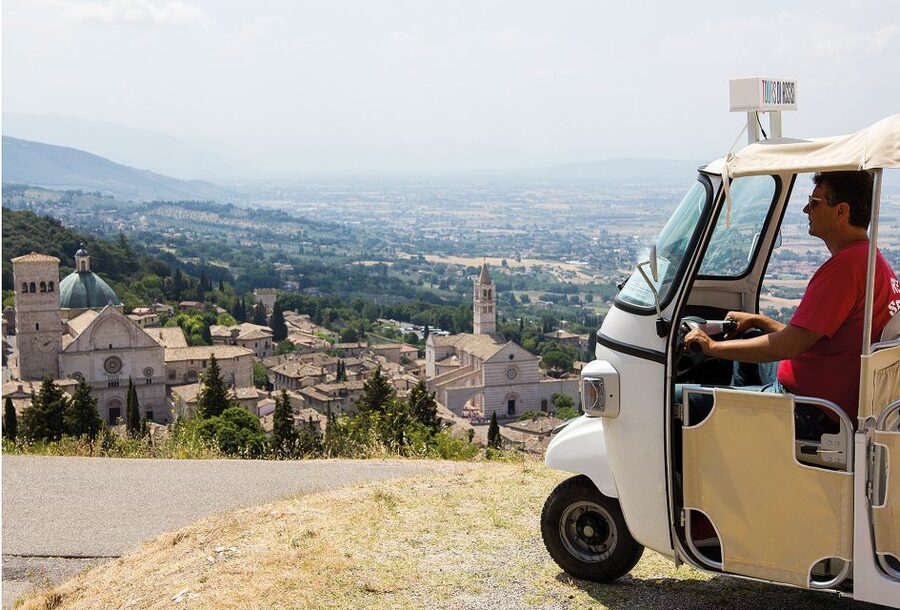
Assisi looks compact on a map, but the town is not flat. The medieval center climbs the side of Mount Subasio, with steep lanes, stairs, and sharp changes in level. The most famous churches are not all in one pocket, either. Some are in the upper town, while the Porziuncola sits in Santa Maria degli Angeli on the plain below.
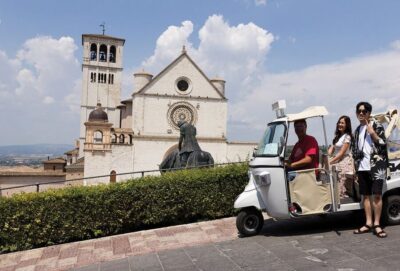
That is where the tuk-tuk earns its keep. You are not simply getting a novelty ride through town. You are using a small vehicle that can handle the narrow streets of the old center and carry you between the upper and lower parts of Assisi. This is especially useful if you want to see San Damiano, Rivotorto, and the Basilica of Santa Maria degli Angeli in one half-day.
The group limit of four is another practical advantage. A small vehicle allows the guide to speak directly with you, answer questions, and adjust the pace of the explanation. It also feels more personal than a large coach, though you should not expect a private, silent visit at every church. The vehicle is compact, and the experience is built around moving between several sites.
The tour is described as a luxury private experience, but the real value is convenience and access rather than lavish extras. You are paying for a local driver-guide, a carefully connected route, and transport over ground that would otherwise take time and energy to cover.
A few more rides around Italy worth a look
- Florence Private Transportation in Rickshaw
★ 5.0 · 730 reviews - Florence: Private Transport by Rickshaw
★ 5.0 · 659 reviews - Sorrento Farm by Tuk Tuk: Cheese, Limoncello & Hands-On Pizza
★ 5.0 · 628 reviews
Starting at Chiesa Nuova, where Francis was born
The first major stop is Chiesa Nuova, traditionally identified with the home of St. Francis. This gives the tour a useful starting point because it connects Francis to his family, his upbringing, and the urban setting of medieval Assisi before the better-known religious story begins.
Nearby, you see the statue of Francis’s parents. It is a small detail, but it helps frame the saint as a real person born into a family and a social world. The guide can explain the relationship between Francis’s early life and the later choice to reject wealth and status.
From here, the tuk-tuk continues to Piazza del Comune, the main square. This is one of the best places to see how Roman and medieval Assisi overlap. The Temple of Minerva, with its striking ancient columns, faces the square, while the surrounding buildings reflect later civic life.
I like this opening because it avoids treating Assisi as only a collection of religious monuments. You begin with family, town government, Roman remains, and daily life. That wider setting makes the later Franciscan sites easier to understand.
Piazza Matteotti and the Cathedral of San Rufino
Piazza Matteotti brings another layer of Assisi’s past into view: the Roman amphitheater. The stop helps you see that the town’s story did not begin with St. Francis. Ancient Roman foundations, medieval streets, and Christian landmarks all occupy the same compact hill town.
The route then reaches the Cathedral of San Rufino. This is one of the key stops on the tour because St. Francis was baptized here. St. Clare was also closely connected with Assisi’s religious life, and the cathedral helps place both figures within the town’s church tradition.
A baptismal connection can sound abstract if you only hear it in a lecture. Standing at the cathedral makes it more concrete. The guide can link the building to Francis’s earliest days, before he became a preacher and a symbol of poverty.
The stops are not only about looking at façades. The best part of this tour is the way the guide connects buildings to events. Daniel, who was born and raised in Assisi, is particularly valued for placing the sites in their local and historical setting. That kind of explanation is useful here, where a quick photograph alone tells you little.
Piazza del Vescovado and the Sanctuary of the Stripping
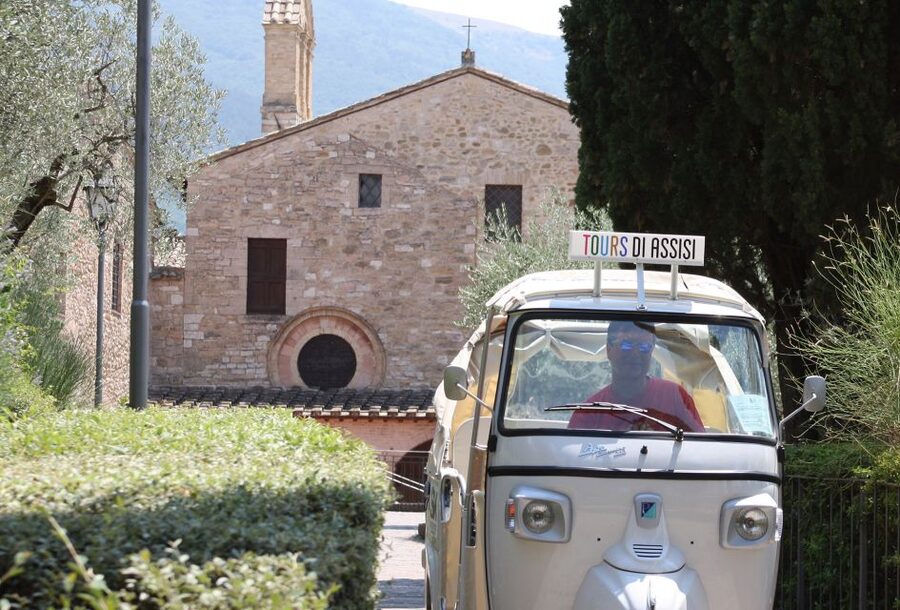
The route continues to Piazza del Vescovado, home to the Bishop’s Palace and the Sanctuary of the Stripping. This is one of the most powerful moments in the life of St. Francis because it relates to his rejection of his former identity and wealth.
The sanctuary is associated with the story of Francis giving up his worldly possessions. It is a place where the spiritual theme of the tour becomes more direct. Francis’s life was not simply a series of picturesque walks around Assisi. It involved a sharp break with his former social position.
This stop may appeal most if you are interested in the personal side of Francis’s life. The setting allows the guide to explain the contrast between the prosperous young man he had been and the life of simplicity he later chose.
Allow yourself a little mental space here. The tour covers many sites, and it would be easy to rush from one church to the next. Pay attention to the transitions in the story. The tour works best when you see each location as part of Francis’s changing life, not as an isolated monument.
Same streets, a different route:
- Bari: Old Town Guided Eco-Friendly Rickshaw Tour
★ 4.9 · 355 reviews - Private Tour of the Medieval Village of Ostuni by Tuk Tuk
★ 4.5 · 278 reviews - Lecce: City Highlights Guided Tour by Rickshaw
★ 4.8 · 236 reviews - Bari Rickshaw Tour
★ 5.0 · 233 reviews
San Damiano and the famous crucifix
San Damiano is one of the most important stops on the route. It is linked to the crucifix that spoke to Francis and directed him to repair the church. The site also has a strong connection with St. Clare, who lived there with her followers.
The original San Damiano cross is a major goal for many people visiting Assisi. One account of the tour specifically highlights the chance to see it, along with the Basilica of Santa Chiara. The stated route focuses on San Damiano and the crucifix, so it is sensible to confirm the exact interior visits when booking or before departure.
San Damiano feels different from the grand basilicas. Its importance comes from the simplicity of the place and the stories attached to it. You get a clearer sense of the early Franciscan movement here, before it became tied to large pilgrimage churches and elaborate art.
This is also one of the stops where the arts and spiritual sides of the tour meet. The crucifix is an artwork, but it is also central to the story of Francis’s vocation. A good guide helps you see both sides without turning the visit into a dry art lecture.
Rivotorto and the Sacred Shrine
The tuk-tuk then leaves the upper town for Rivotorto. The Sacro Tugurio, or Sacred Shrine, is associated with the humble shelter where Francis and his early companions lived.
Rivotorto matters because it strips away the grandeur that can surround the Franciscan story. You are looking at a place tied to cramped, basic living conditions rather than a monumental church. That contrast helps explain the movement’s original emphasis on poverty, service, and a life close to ordinary people.
This is also a stop that is difficult to fold into a walking tour of the upper town. You would need extra time and a separate plan to reach places beyond the central hill. The tuk-tuk lets the tour cover this wider area without making the day feel like a transport puzzle.
The guide’s role is important here. Without context, a small shrine can seem easy to overlook. With a clear explanation, it becomes one of the most revealing stops because it shows how different Francis’s early life was from the grand basilicas built in his honor.
Santa Maria degli Angeli and the Porziuncola
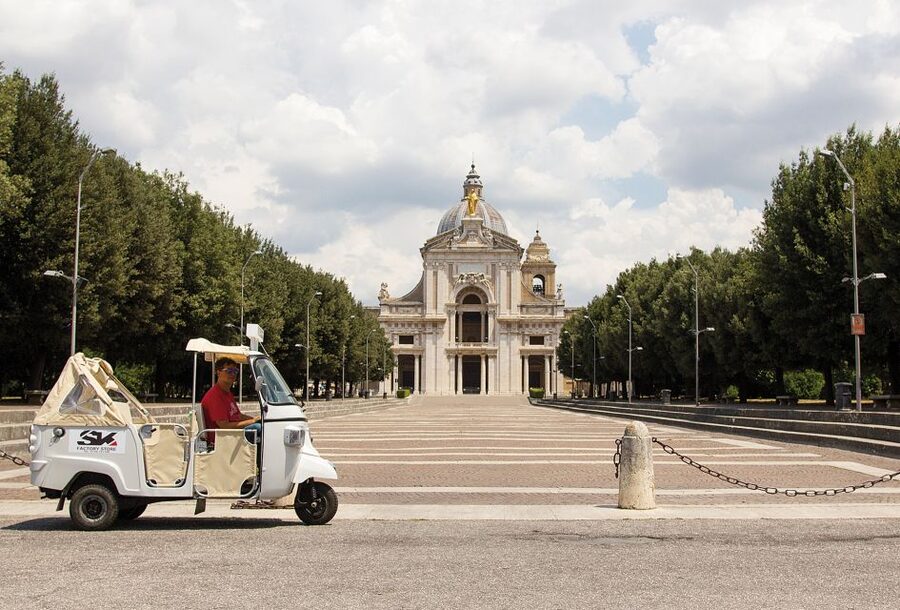
One of the major rewards of this route is the visit to the Basilica of Saint Mary of the Angels, in the lower Assisi area. Inside is the Porziuncola, the small chapel closely associated with St. Francis and the early Franciscan movement. Francis died here.
The scale contrast is unforgettable. A large basilica surrounds a much smaller chapel, creating a visual reminder of how a modest place can carry enormous meaning. You see the grand setting, but the focus remains on the simple chapel at its center.
This stop is particularly valuable if you are staying in upper Assisi and might otherwise skip Santa Maria degli Angeli. The lower basilica is not a quick extension of the main town. It requires a trip down from the hill, and the tuk-tuk makes that connection practical within the three-and-a-half-hour schedule.
The Porziuncola also gives the tour an emotional turning point. Earlier stops trace Francis’s birth, baptism, conversion, and early companions. Here, the story reaches the place where he died. The route is not just a list of churches. It has a clear beginning, middle, and end.
You should keep in mind that the tour is still moving at this point. If you want a long, unhurried period for prayer or private reflection, you may prefer to return on your own later. The tour gives you access and explanation, but its purpose is to connect several sites in one outing.
Ending at the Basilica of St. Francis
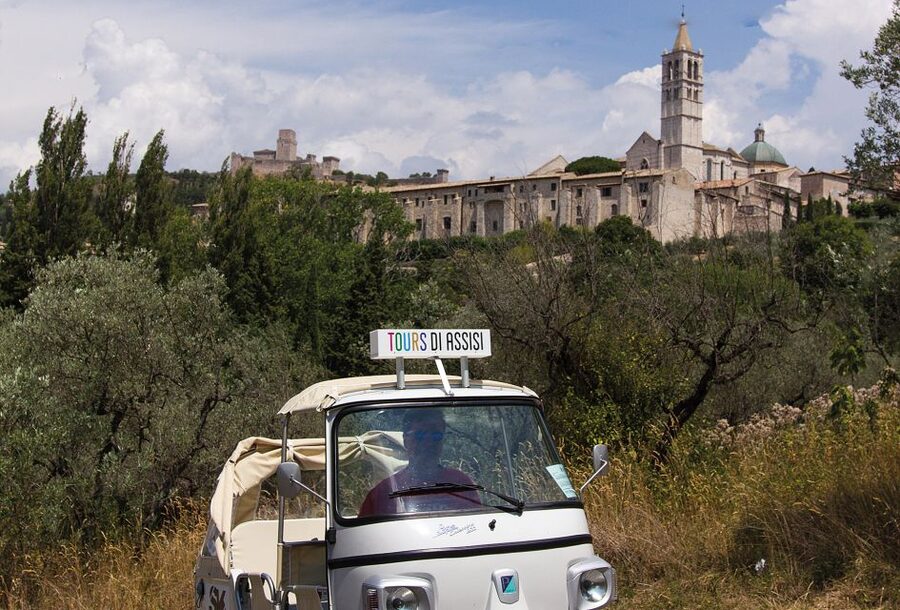
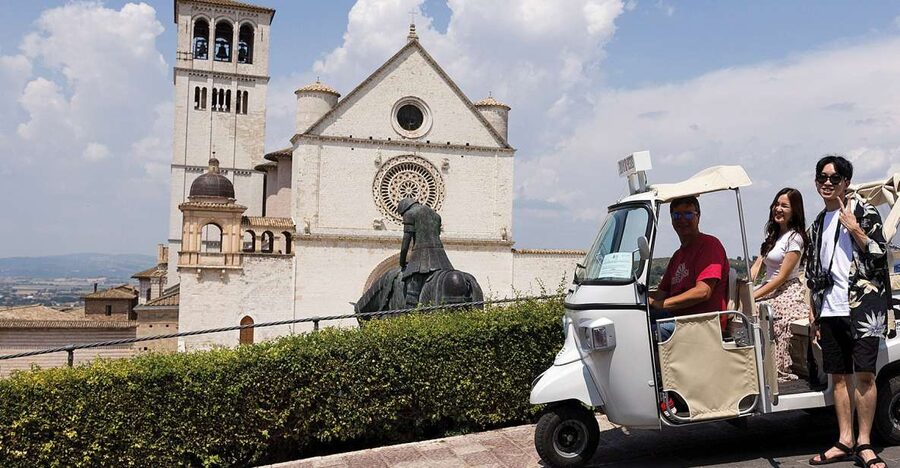
The final stop is the Basilica of St. Francis, one of Assisi’s defining sights. Ending here makes sense because the basilica is the place most closely associated with the saint’s public memory and burial.
By the time you arrive, the building has more meaning than it would at the start of the day. You have already seen the house connected with Francis’s family, the cathedral where he was baptized, San Damiano, Rivotorto, and the Porziuncola. The basilica becomes the final chapter rather than the whole story.
The church is also the artistic high point of the tour. Assisi’s Franciscan story is told through architecture, painting, sculpture, and pilgrimage. The tour title includes an arts and spiritual focus, and this is where those two themes come together most clearly.
The final stop can be busy with visitors, and three and a half hours does not allow unlimited time inside every building. If the basilica is your main reason for coming to Assisi, consider using this tour to understand the town first, then return for a slower independent visit if your schedule permits.
The guides and the quality of the explanation
The strongest feature of this experience is the guide. Daniel and Daniele are described as lifelong residents of the Assisi area, and that matters. A local guide can explain how the town’s streets, churches, and surrounding communities fit together instead of giving you disconnected dates and names.
The feedback is especially consistent about the guides’ ability to explain history in an engaging way. Daniel is repeatedly singled out for his command of Assisi and the life of St. Francis, while Marco is praised for making the route clear and enjoyable. The useful distinction here is not simply that the guides know facts. They connect geography, history, religion, and local identity.
The available languages are English, Italian, Spanish, and French. If you have a strong preference, confirm it when you book. The driver-guide is listed as speaking all four languages, but the specific guide assigned to your departure may vary.
Who will get the most from this tour
I would choose this tour if you want a broad introduction to Assisi and do not want to spend the day managing steep walks, local transport, and a separate visit to Santa Maria degli Angeli. It is also a strong choice for first-time visitors who want the life of St. Francis explained in chronological order.
Families, older visitors, and anyone with limited time may find the tuk-tuk especially useful. The small group format also suits couples or friends who prefer asking questions rather than listening from the back of a large group.
The tour is less suitable if you want a slow, contemplative visit at each church. You will see many important places, but the route has a lot to cover. People focused mainly on medieval art may prefer a dedicated basilica or walking tour with more time inside the churches.
Wear comfortable clothes and bring a credit card. There is no stated dress code beyond comfortable clothing, but these are religious sites, so modest clothing is a sensible choice.
Practical value, booking, and timing
The tour lasts three and a half hours and is limited to four participants. No price is provided here, so I cannot judge it against a specific fare. Still, the value is clear if you would otherwise need several taxis, a bus connection, or a full day of walking to cover the same ground.
The meeting point is Asisium Travel Agency near the Porta Nuova medieval gate. Hotel pickup in Assisi is also offered, so check the available option for your booking. The agency lists coordinates of 43.067230224609375, 12.619208335876465, which can help if you are navigating by phone.
There is a technical booking issue for parties of three. If you are booking for exactly three people, contact Asisium Travel by email or phone at 0039 3343954324 or 0039 075813074 rather than assuming the online booking will handle it correctly.
You can cancel up to 24 hours before departure for a full refund, and the reserve-now, pay-later option keeps your plans flexible. Starting times depend on availability, so check the schedule before building the rest of your Assisi day around the tour.
Should you book the Life of Saint Francis Tuk-Tuk Tour?
Book it if you want the full geographic story of Assisi in one outing, with a local guide and very little wasted effort on steep streets. The route is especially good for connecting upper Assisi with Rivotorto and Santa Maria degli Angeli, places that are easy to miss when you stay near the main basilica.
I would also choose it if the life of St. Francis and St. Clare is central to your visit. The tour gives you the family home, baptismal church, conversion story, early shelter, Porziuncola, and final basilica in a logical sequence.
Skip it if you want a quiet, highly detailed church-by-church study. In that case, use the tour as an orientation, then return independently to your favorite sites. For most visitors who want history, faith, local stories, and practical transport in a compact half-day, this is a very strong way to meet Assisi.
FAQ
How long does the Life of Saint Francis Tuk-Tuk Tour last?
The tour lasts three and a half hours.
How many people can join the tour?
The group is limited to four participants.
Which languages are available?
The tour is available in English, Italian, Spanish, and French.
Where does the tour meet?
The meeting point is Asisium Travel Agency next to the Porta Nuova medieval gate. Pickup from a hotel in Assisi is also offered.
Which places connected with St. Francis are included?
The route includes Chiesa Nuova, the main square and Temple of Minerva, Piazza Matteotti and the Roman amphitheater, San Rufino Cathedral, Piazza del Vescovado, the Sanctuary of the Stripping, San Damiano, Rivotorto, the Porziuncola at Santa Maria degli Angeli, and the Basilica of St. Francis.
Can a group of three book online?
Because of a technical issue, a group of three should contact Asisium Travel Agency directly by email or phone at 0039 3343954324 or 0039 075813074.
What is the cancellation policy?
You can cancel up to 24 hours in advance for a full refund. The reserve-now, pay-later option lets you book without paying at the time of reservation.
Just added around Italy
- Tuk Tuk Coastal Tour★ 5.0 · 10 reviews
- Private Tuk Tuk Tour of the Millenary Olive Groves in Ostuni★ 5.0 · 4 reviews
- Syracuse and Ortygia and Park Neapolis Tuk-Tuk Tour★ 5.0 · 5 reviews
- Siena E-Tuk Tuk panoramic Aperitivo with Local Snacks★ 5.0 · 2 reviews
- 2 Hours Calessino/ Tuk tuk Tour to Syracuse and Ortigia Island★ 4.5 · 34 reviews
- Ortigia APE-TUK TUK 1-hour private tour★ 5.0 · 22 reviews
- From San Gimignano: Tuscany Wine tour by Tuk Tuk with Lunch★ 5.0 · 13 reviews
- Tour of Vietri and its villages on board the Ape Calessino (tuktuk)★ 5.0 · 9 reviews
Italy Tuk Tuk Tours, compared.
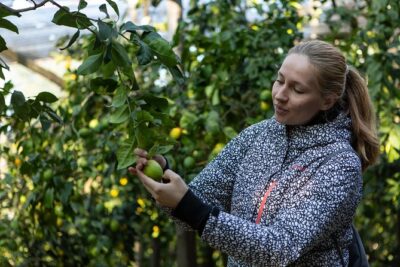
Sorrento Farm by Tuk Tuk: Cheese, Limoncello & Hands-On Pizza
Read our review →
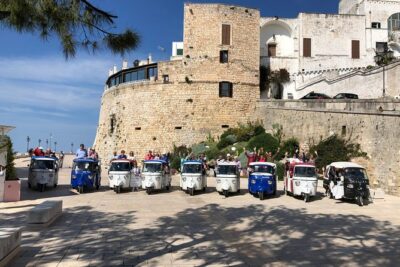
Private Tour of the Medieval Village of Ostuni by Tuk Tuk
Read our review →
Browse the lists this tour appears in