
Review · BANGKOK
Bangkok: Guided Tour in a Typical Thai Tuk-Tuk
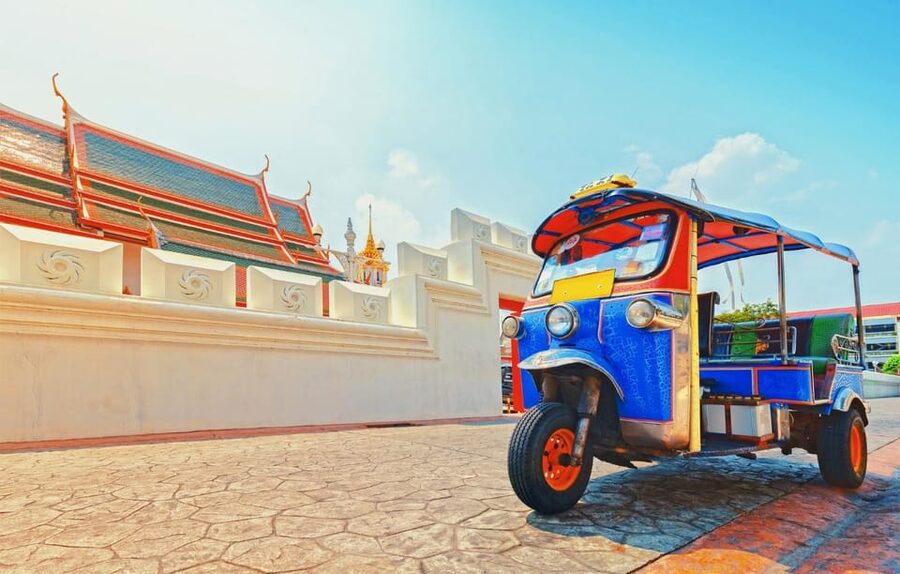
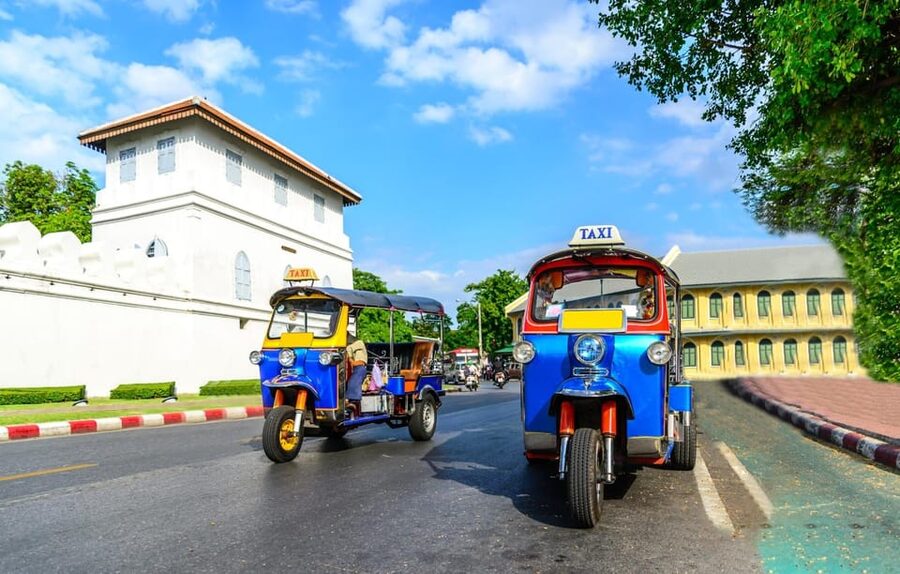
Bangkok’s famous three-wheeled tuk-tuk is more than transport. It is part sightseeing ride, part sensory jolt, with open sides, sharp turns, and the city rushing past. This two-hour route links the Grand Palace, old-city temples, the flower market, the riverfront, and Chinatown without asking you to negotiate a fare at every corner.
I like the way the tour gives you a fast city orientation, and I like the guides’ personal approach. Anna, Ana, Johan, Yohan, and other guides are repeatedly praised for clear English, humor, local stories, and help with photographs. The main drawback is simple: you see the major sights from outside, so this is an introduction, not a temple tour.
Key points to know before booking
- Ride in a real Thai tuk-tuk: The open-sided vehicle is noisy, breezy, and fun, with a much stronger sense of Bangkok street life than a sealed car.
- See several major sights quickly: The route connects the Grand Palace, Giant Swing, Loha Prasat, Wat Pho, the river view of Wat Arun, Chinatown, and the flower market area.
- Expect outside views only: You do not enter the Grand Palace, Wat Pho, Loha Prasat, or Wat Arun.
- Finish in Chinatown: The tour ends in a useful spot for street food and evening exploring.
- Learn to fold a lotus flower: This small hands-on activity adds a touch of Thai culture beyond taking photographs.
- Meet at the correct Museum Siam exit: Use MRT Sanam Chai, Exit Museum Siam, at the front exit outside the museum.
Why a tuk-tuk is a smart first look at Bangkok
Bangkok can feel scattered at first. The royal quarter sits apart from Chinatown, the temples are spread around busy roads, and traffic can make a short distance take far too long. This tour pulls several pieces together in one compact ride.
You move between stops in a classic tuk-tuk, then regroup for a short explanation and photographs. The pace is brisk, but the route is not just a drive-by. Your guide gives you context about Thai life, local customs, temples, and the city itself before sending you on to the next stop.
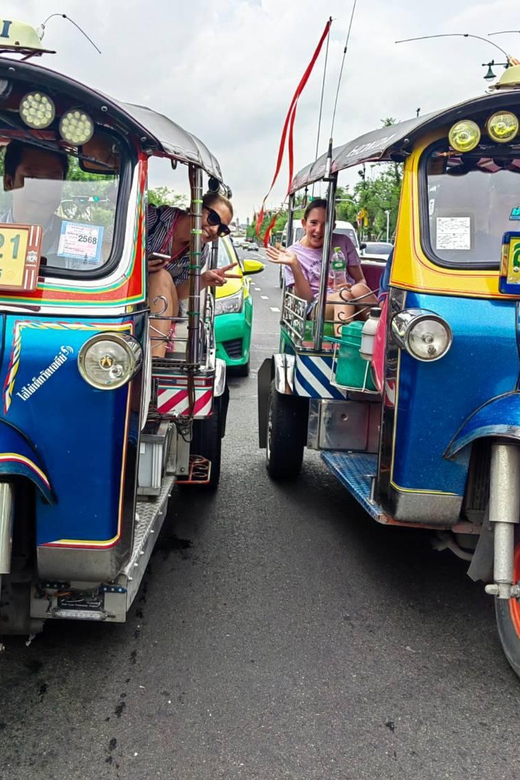
The open vehicle is part of the point. You hear engines, street sounds, and the distinctive tuk-tuk rattle. You also feel more exposed to heat, traffic fumes, and sudden weather than you would in a taxi. That tradeoff is worth it if you want a memorable Bangkok ride rather than the smoothest possible transfer.
The tour has earned a 4.7 rating from 830 bookings, and its strongest feature is clear: the guide can make a short route feel personal. Anna is frequently praised for warmth and humor, while Johan and Yohan receive similar praise for clear explanations and patience. Guide assignments vary, so you should not assume one particular person will lead your departure.
A few more rides around Bangkok worth a look
- Bangkok: Michelin Guide Street Food Tour by Tuk Tuk
★ 4.4 · 1,274 reviews - Bangkok: Michelin Guide Street Food Tour by Tuk Tuk
★ 4.5 · 56 reviews - 4-Hour Hidden Bangkok TukTuk Street Food Guided Tour
★ 5.0 · 23 reviews
Starting at Museum Siam and Sanam Chai MRT
The meeting point is outside the Museum Siam exit at Sanam Chai MRT station. This is a practical starting point because the metro takes you directly into Bangkok’s old city, avoiding the need to guess where a tuk-tuk can safely meet you in heavy traffic.
Pay attention to the exit. Museum Siam has a front exit and a back-road exit, and the meeting point is at the front exit outside the museum. Arrive with enough time to orient yourself rather than emerging from the wrong side and searching around the station.
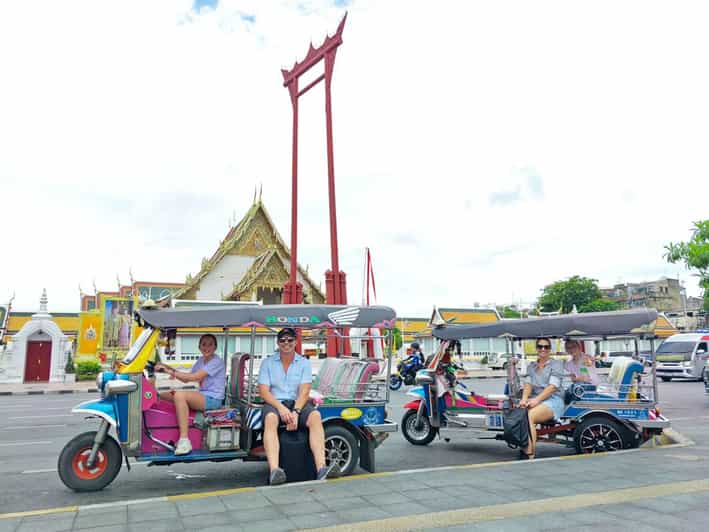
The opening ride is short, only about five minutes, but it lets you settle into the vehicle. The guide explains how the group will move and where you will meet after each stretch. In several tour arrangements, two people share a tuk-tuk, though a solo booking or a small departure may work differently.
The Grand Palace: an outside look at Bangkok’s royal center
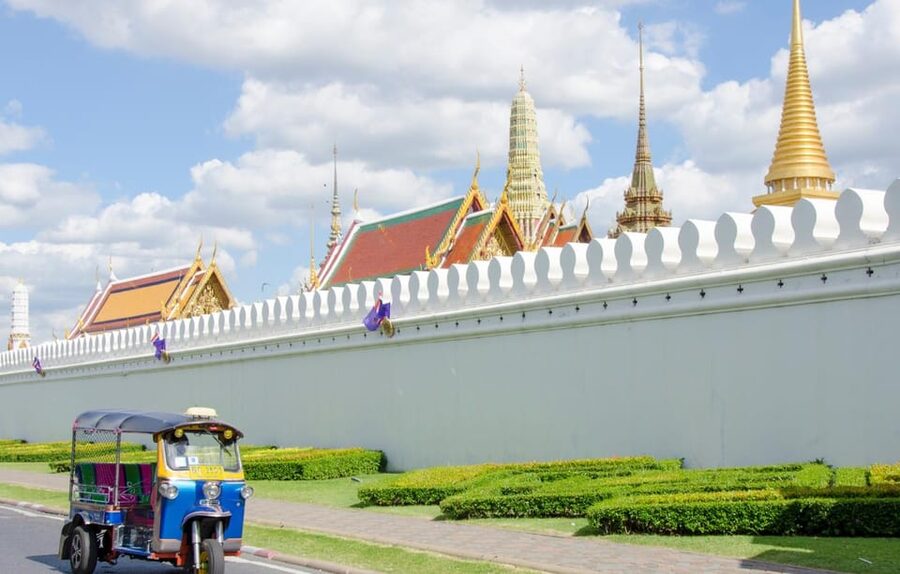
The Grand Palace is the first major photo stop. You see the complex from outside and hear about its place in Thai history and civic life, but entrance is not part of this experience.
That distinction matters. The palace grounds require more time and a separate admission, so this stop works best as a preview. Your guide can point out what you are seeing and help you frame photographs, but you will not have time to inspect the courtyards, halls, and temple interiors.
For a first afternoon or evening in Bangkok, this brief stop is useful. It tells you if the palace deserves a longer return visit. If you already know you want to explore the compound properly, plan another visit on a different day.
The Giant Swing and Wat Suthat
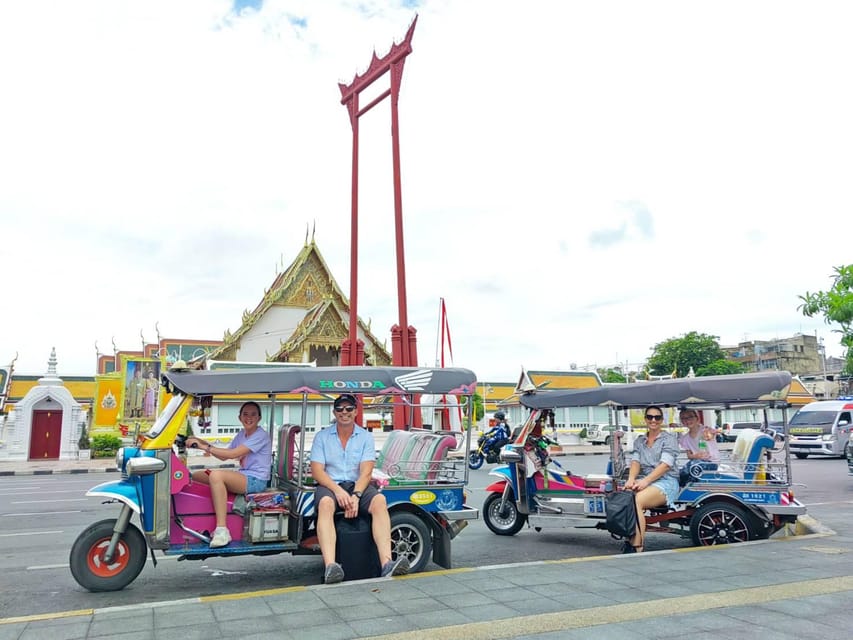
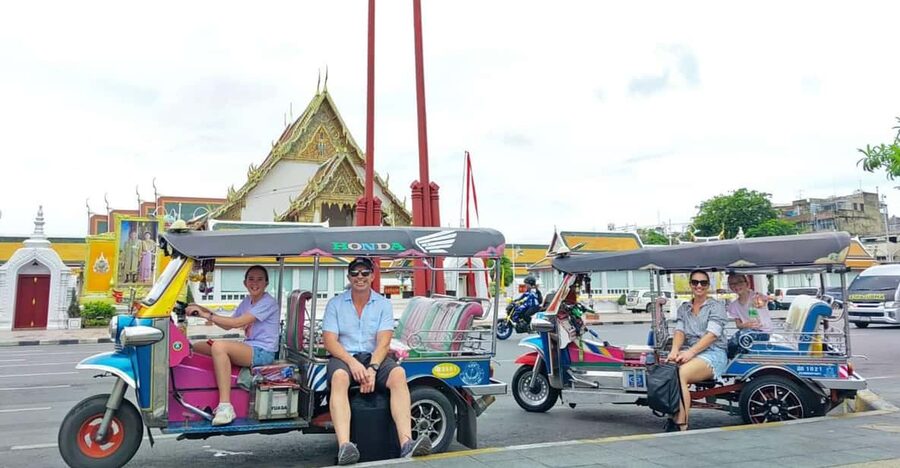
The route continues to Wat Suthat and the Giant Swing. The huge red structure is one of Bangkok’s most recognizable old-city landmarks, and its scale makes it a good photograph stop even when you have only ten minutes.
Wat Suthat gives the stop a temple setting rather than a single monument. Your guide explains the area while you look around from outside. You should not expect a long quiet visit or detailed architectural study. The value here is orientation: you connect the Giant Swing to the old royal district and begin to see how Bangkok’s important sites sit close together, yet remain separated by busy streets.
This is also one of the stops where a guide’s storytelling helps. A quick photograph alone can blur into the next one. A short explanation gives the structure a reason to stay in your memory.
Same streets, a different route:
- Bangkok by Night: Temples, Markets and Food Tuk-Tuk Tour
★ 5.0 · 3,752 reviews - Bangkok Midnight Food Tuk Tuk Tour
★ 5.0 · 2,542 reviews - Bangkok: Markets, Temples and Food Night Tour by Tuk Tuk
★ 4.9 · 2,371 reviews - Bangkok: Midnight Food Tour by Tuk-Tuk
★ 4.9 · 2,054 reviews
Loha Prasat and Wat Ratchanatdaram
Wat Ratchanatdaram is represented by Loha Prasat, the unusual metal-roofed temple structure often called the Metal Castle. It has a very different profile from the ornate spires and walls you see at other Bangkok temples.
You stop for photographs and an explanation from outside. The route description includes Loha Prasat among the sights you pass, while the practical stop is listed as Wat Ratchanatdaram. Either way, this part of the ride gives you one of the old city’s less familiar silhouettes.
I like this stop because it broadens the picture of Bangkok. The tour is not limited to the city’s most famous postcard view. At the same time, ten minutes is not enough to understand the whole temple complex. Treat it as a useful preview and mark it for a longer visit if the architecture catches your eye.
Wat Pho and the view toward Wat Arun
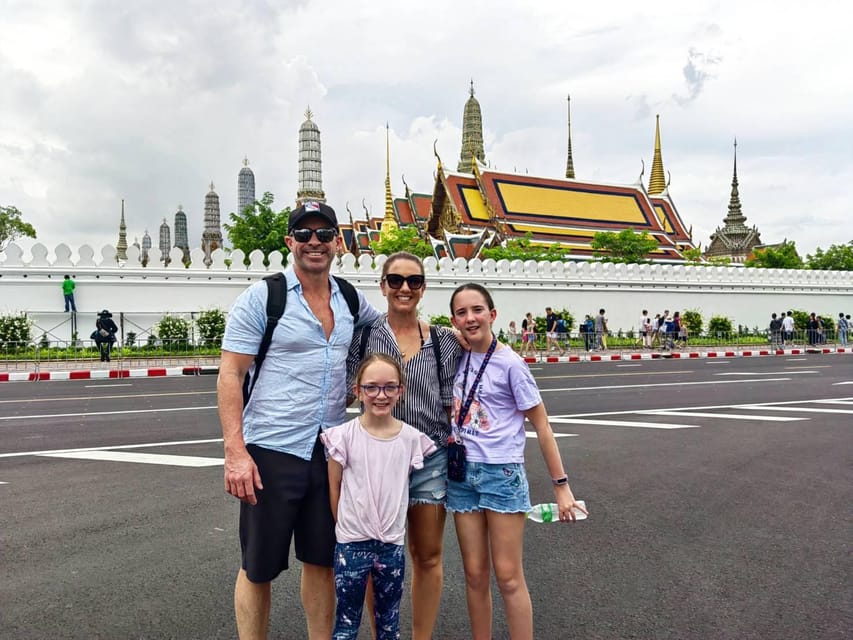
Wat Pho is another outside photo stop. The temple is closely tied to Bangkok’s old religious center, and your guide can explain its importance while you remain outside the complex.
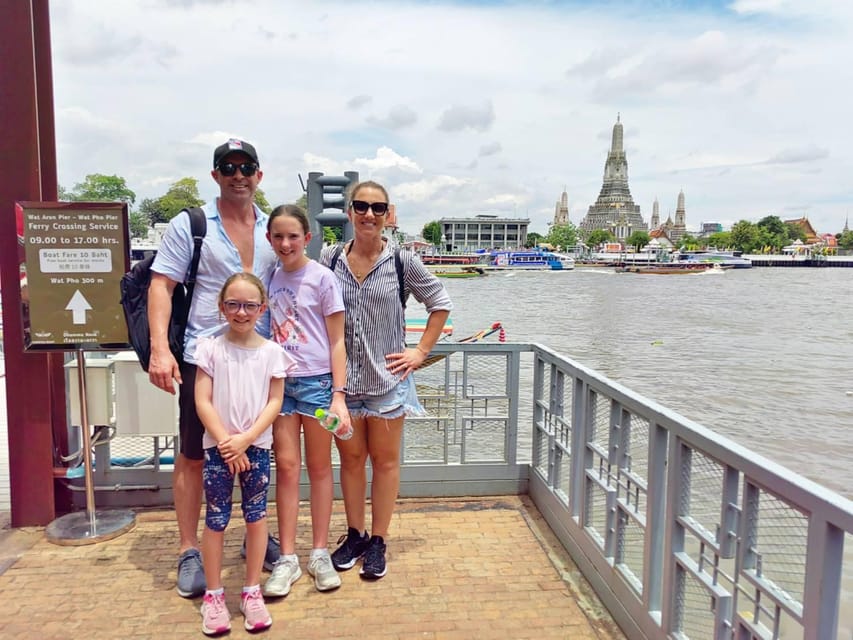
Wat Arun is seen from the opposite side of the river rather than visited directly. This gives you a different kind of stop: you get the temple’s riverfront profile, but not the experience of walking among its towers. The changing angle is useful because Bangkok’s landmarks are often best understood in relation to the Chao Phraya River.
Keep your expectations clear here. The tour does not enter Wat Pho, and it does not cross the river for an interior or close-up visit to Wat Arun. If the reclining Buddha at Wat Pho or the details of Wat Arun are high on your list, return independently with more time. One passenger specifically found that the Golden Buddha was missed while the tuk-tuk moved along, which shows the limit of a fast city sampler.
Pak Khlong Talat and the lotus-folding activity
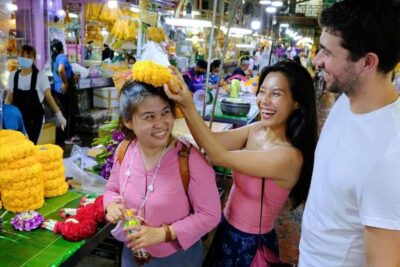
The flower market, Pak Khlong Talat, adds color and a welcome change from palace walls and temple facades. The route includes time around the flower-market area, and the experience includes a folding lotus flower activity.
This is one of the tour’s more useful touches. You are not only looking at Bangkok, you are doing something with your hands. The lotus has an important place in Thai religious and cultural life, and folding one gives the guide an easy way to discuss local traditions without turning the tour into a lecture.
The flower market also helps you notice everyday commerce. Flowers are part of offerings, ceremonies, and ordinary city routines. You may find this stop more memorable than another quick photograph because it connects a major Bangkok sight with a living local practice.
The exact order can vary with traffic and operating conditions, so do not treat the route as a clockwork schedule. The tour is designed to cover a lot in two hours, not to linger at every stall.
Chinatown: a useful finish on Yaowarat Road
The tour ends in Chinatown, around Yaowarat Road. This is a strong finish because you are left in a district that works well for further exploring after the guide departs.
You can continue on foot, look for food, or simply enjoy the lights and street activity. A 4pm departure ending around 6pm has a particularly useful rhythm: you get the old-city sights in daylight, then arrive in Chinatown as the evening begins. One practical suggestion is to book an afternoon or evening departure if you want the city lit up and plan to eat afterward.
The ending also makes the tour feel less artificial. You are not returned to the starting point or dropped at an isolated attraction. You finish in one of Bangkok’s best-known districts, with an easy next step for your evening.
What the guides add to a short route
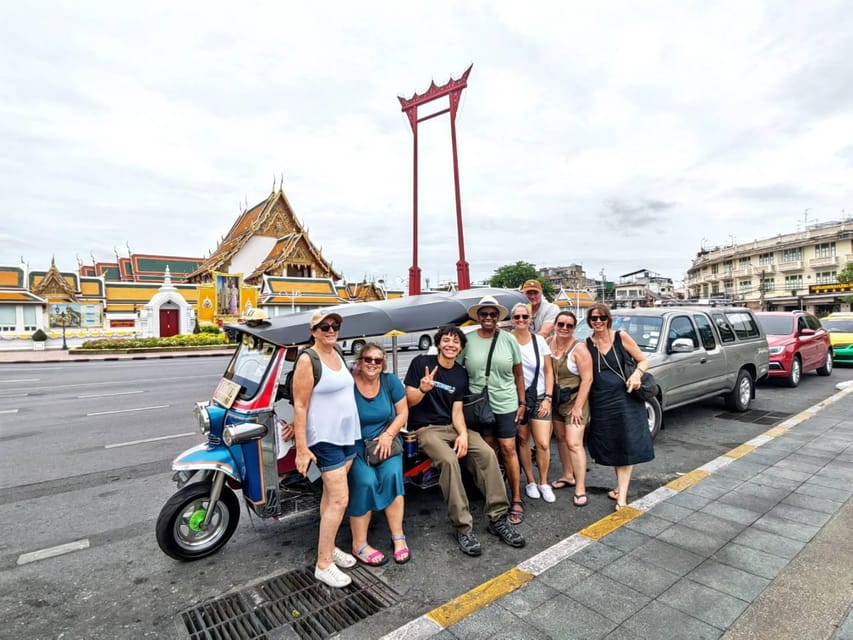
A two-hour route can easily become a string of names and photographs. The guide is what prevents that. The strongest guide feedback centers on clear English, friendly conversation, useful explanations, and a relaxed pace between stops.
Anna is often praised for making the route feel personal while still keeping the group organized. Ana is described as warm, funny, and well informed about Thai life and temple traditions. Johan and Yohan are also praised for patience, good English, and helpful explanations. Ken receives credit for taking time with questions and helping a solo participant with photographs.
These names are useful indicators of the company’s guide style, but they are not a promise of who you will get. The guide may ask questions, chat with you, and explain what to expect before each ride. That matters because the tour has several short stops, and clear instructions keep the group moving without feeling rushed.
The guide also handles the awkward part of tuk-tuk travel: you do not need to bargain with a driver or wonder if you are being charged fairly. That convenience is part of the price.
Is $28 good value for two hours?
At $28 per person, this is not the cheapest way to catch a tuk-tuk. A local ride between two points can cost much less, especially if you are comfortable negotiating and already know where you want to go.
You are paying for more than transport here. The fee includes a typical tuk-tuk ride, a licensed English-speaking guide, bottled water, and the lotus-folding activity. You also get a planned route through several major parts of central Bangkok, with no need to arrange separate fares or work out how to connect the Grand Palace area with Chinatown.
I consider the price reasonable for a first-day orientation, especially if you have only a short stay. It is less compelling if you already know Bangkok well, have plenty of time, or mainly want to enter the temples. In those cases, you may get better value from choosing one or two major sites and spending more time inside them.
Solo visitors should also weigh the price differently from couples. A couple may share a tuk-tuk and receive a social small-group experience. A solo visitor may still value the guide and route, but a simple local ride would cost less if sightseeing information is not important.
Comfort, timing, and practical limits
The tuk-tuk is fun, but it is not a luxury vehicle. Expect an open-sided ride, traffic noise, wind, and Bangkok heat. Bring water, use sun protection, and wear clothes that make it easy to get in and out.
The tour provides one bottle of water, and the route includes several brief stops. Comfortable shoes are sensible, even though this is not a long walking tour. You will need to step out, gather with the group, take photographs, and get back into the vehicle several times.
Traffic affects Bangkok tours, so the two-hour duration should be viewed as an overall plan rather than a guarantee that every road segment will take the same amount of time. The route is compact, but the city is not always quick.
The tour is offered in English with a live guide. It is a good match if you want explanations as you move, rather than an audio guide or a self-directed ride. Personal expenses are not included, so budget separately for anything you buy after the tour, especially in Chinatown.
Free cancellation is available up to 24 hours before departure, and you can reserve now and pay later. Starting times vary, so check availability for the date you want.
Who should book this tuk-tuk tour?
I would choose this for your first day in Bangkok, a short stopover, or a final afternoon when you want to see more without committing to a full-day program. It also suits solo visitors who want help with photographs and couples who want a shared activity with a local guide.
Families and older visitors should consider the open vehicle and the repeated boarding, though the tour lasts only two hours. Anyone looking for detailed temple interiors should choose a longer guided visit instead.
The best fit is someone who wants a taste of Bangkok, not a complete study of its monuments. You see enough to decide where to return, and you finish in a district where the evening can continue on your own.
FAQ
Where does the tuk-tuk tour start?
It starts outside Museum Siam at MRT Sanam Chai station, at the Museum Siam exit. Use the front exit, not the back-road exit.
Where does the tour finish?
The tour finishes in Bangkok’s Chinatown, around Yaowarat Road.
Do I enter the Grand Palace and the temples?
No. The tour views the Grand Palace, Loha Prasat, Wat Pho, and Wat Arun from outside. Wat Arun is seen from the opposite side of the river.
Is the tour conducted in English?
Yes. A licensed English-speaking guide leads the tour.
What is included in the price?
The price includes the tuk-tuk ride, the English-speaking guide, a bottle of water, and the folding lotus flower activity. Personal expenses are not included.
How long is the tour, and can I cancel?
The tour lasts two hours. You can cancel up to 24 hours in advance for a full refund, and the reserve-now, pay-later option is available.
Just added around Bangkok
- Tuk Tuk Tour in Bangkok★ 5.0 · 3 reviews
- Tuk-Tuk Tales: Bangkok Private Tour★ 4.4 · 5 reviews
- Tuk-Tuk & Longtail Boat : Bangkok Private Tour★ 4.3 · 6 reviews
- 4-Hour Hidden Bangkok TukTuk Street Food Guided Tour★ 5.0 · 23 reviews
- Tuk-tuk tour Bangkok by Night with Chinatown meal and hotel transfers★ 4.5 · 60 reviews
- Tuk-tuk Private Tour in Bangkok by Night with Chinatown meal★ 4.5 · 5 reviews
- Fun Tuk Tuk Dinner and Massage in Old Town Bangkok★ 5.0 · 7 reviews
- Tuk Tuk Bangkok Private Tour: WW2 Pad Thai, 360-Viewpoint, Chinatown (Pickup)★ 5.0 · 9 reviews
Bangkok Tuk Tuk Tours, compared.
Bangkok by Night: Temples, Markets and Food Tuk-Tuk Tour
Read our review →
Markets, Temples and Food Night Tour by Tuk Tuk
Read our review →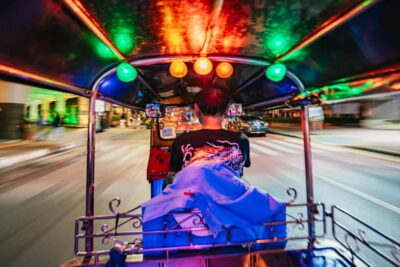
Tuk Tuk Adventure Chinatown Michelin Food & Temples
Read our review →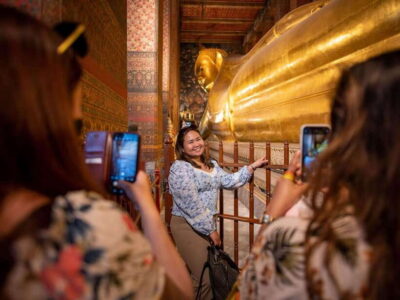
Evening Tour with Wat Arun, Wat Pho & Tuk Tuk Ride
Read our review →
Bangkok Tuk-Tuk Tour by Night with Chinatown Street Food Meal
Read our review →Browse the lists this tour appears in