
Review · INDIA
Bengaluru by Tuk Tuk
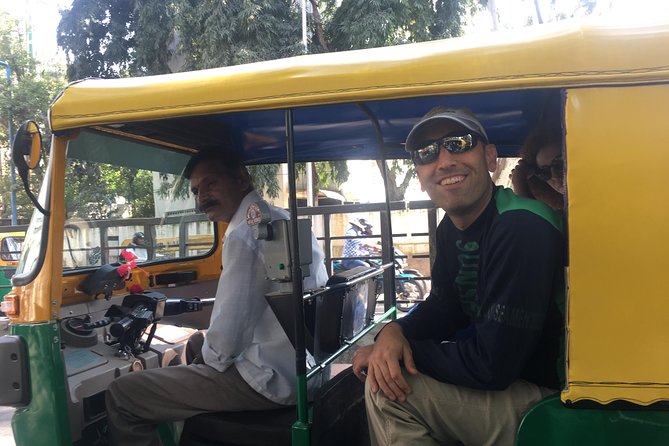
A tuk-tuk is a fine way to meet Bengaluru: open to the city’s sounds, quick through crowded streets, and small enough to connect the grand sights with ordinary neighborhood life. This seven-hour outing moves from Tipu Sultan’s Summer Palace and Bangalore Fort to flower stalls, silk shops, and a hole-in-the-wall South Indian restaurant.
I like the strong mix of old and everyday Bengaluru. You get carved temple stone and colonial architecture, then watch garland makers, silk workers, and jewelry craftsmen at work. I also like that brunch is part of the plan, since a crisp dosa and tangy chutney can tell you plenty about a city.
The main consideration is the pace. Eleven stops in about seven hours means some visits are brief, including only 15 minutes at Bangalore Fort and Vidhana Soudha. Traffic, heat, market crowds, and the compact tuk-tuk ride may also test your patience.
Key points to know before you book
- Tipu Sultan’s palace sets the historical tone: Begin with an elegant Indo-Islamic building linked to the ruler’s resistance to British power.
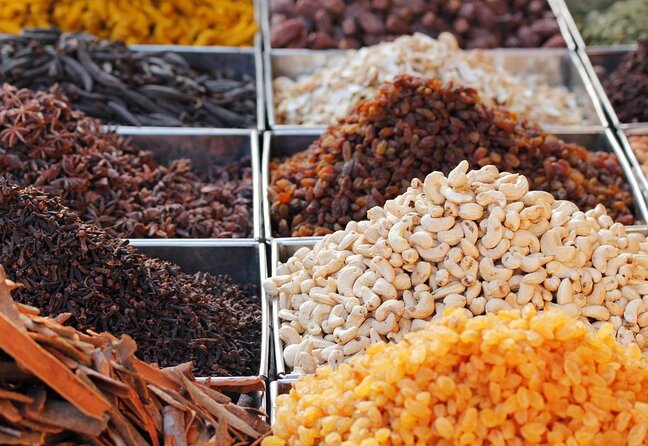
- KR Market is the sensory center: Allow yourself to notice flowers, spices, silk, noise, movement, and the working rhythm of central Bengaluru.
- Brunch is more than a meal: A local restaurant serves South Indian breakfast food, including dosas and chutneys, in the Nagarathpete market area.
- The guides shape the day: Past guide names include Gladys, Pallavi, Sandra, Ajith, Midhu, and others, with particular praise for clear history and friendly care.
- The route keeps changing character: You move from markets and workshops to Cubbon Park, government buildings, churches, and a Kali temple.
- The price covers the main costs: At $87 per person, the tour includes the guide, tuk-tuks, meals mentioned, monument entries, taxes, and fees.
Why a tuk-tuk works so well in Bengaluru
Bengaluru is spread across several distinct areas, and this tour links them without asking you to arrange a string of taxis. You meet at 8:00 a.m. outside Hard Rock Cafe on St. Mark’s Road, then ride toward the old market quarter with a guide leading the way.
The tuk-tuk matters here. It is not the fastest way to cross the city, but it gives you a closer view than a sealed car. You can watch the streets change as the modern center gives way to older trading lanes, and you get short walks at each stop instead of spending the whole morning inside a vehicle.
This is described as a private auto-rickshaw experience, but the overall booking limit can reach 16 people, with a maximum of 15 on one booking. Ask about the exact group arrangement when booking if you want a quieter outing. The small vehicle is fun, though taller people may find the seating snug during longer stretches.
The tour averages about seven hours. That is a full morning and afternoon, not a quick orientation. You will walk through markets, temples, parks, and historic sites, so comfortable shoes and light clothing make sense. Cultural sites call for clothing that covers your knees and shoulders.
A few more rides around India worth a look
- Old Delhi Food, Heritage&Cultural Walk with Rickshaw ride to Masterji Kee Haveli
★ 5.0 · 742 reviews - Adventure Tuk Tuk Tour in kochi – A Private Guided Tour with Hotel Pick up
★ 5.0 · 579 reviews - Jaipur: Private Full-Day Sightseeing Tour by Tuk-Tuk
★ 4.8 · 573 reviews
Tipu Sultan’s palace brings the past into focus
The first major stop is Tipu Sultan Fort and Palace near KR Market, with about an hour set aside. The palace is known for its graceful Indo-Islamic design and its connection to Tipu Sultan, a ruler who fought British colonial expansion.
This stop gives the day a useful anchor. Instead of hearing a list of dates while riding, you begin with a place where power, architecture, and resistance come together. Your guide can help you read the building, its structure, and its place in Bengaluru’s story.
The palace is not a giant complex, so the hour should feel manageable rather than rushed. The real value comes from context. With a guide such as Pallavi, Gladys, or Ajith, you can ask how the palace fits into the wider story of the city and South India.
The adjoining fort receives a separate visit later, but do not expect a long military-site walk. Bangalore Fort gets around 15 minutes. That is enough for a quick look at the historic walls and a short explanation of its colonial role, but not enough for a detailed architectural study.
Kote Venkataramana Temple shows a different Bengaluru
The Kote Venkataramana Temple follows, with about 45 minutes inside or around the site. This 15th-century Hindu temple is noted for its Vijayanagara-style carvings, giving you a sharp contrast with the Indo-Islamic palace.
The point is not simply to collect another monument. The temple offers a look at living religious practice and the visual language of South Indian architecture. Your guide can explain what you are seeing and help you behave respectfully in a working place of worship.
Temple visits require a little awareness. Keep your shoulders and knees covered, follow instructions about footwear or restricted areas if given, and avoid treating the site like a photo set. The tour’s suggested dress code is practical for this stop and for the Kali temple later in the day.
Fort and temple are close in the historical sequence, but the experience changes completely. One speaks of military power and colonial conflict. The other connects the city to centuries of faith, craft, and local worship.
KR Market is the day’s most immediate experience
Set aside a full hour for KR Market, Bengaluru’s largest market area. This is where the tour feels least like a standard monument circuit and most like a look at the city at work.
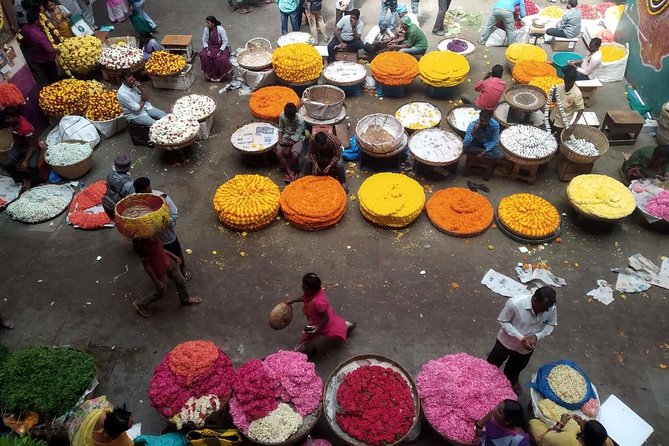
The market is known for flower, spice, and silk trading. You may see heaps of color, strong smells, narrow lanes, and sellers handling goods at a pace designed for business rather than sightseeing. The flower area is a particular highlight, and the guide may help you understand how garlands and other goods fit into daily religious and social life.
A market visit rewards attention. Watch how goods are sorted, carried, priced, and displayed. Notice the difference between the lanes meant for shoppers and those serving traders. You may also receive small touches such as flower garlands or bangles, which have been part of the experience for some participants.
This is not a quiet stop. If crowded places make you uneasy, stay close to your guide and keep your belongings secure. The market can feel chaotic, but that is also its value. It shows a working Bengaluru that polished attractions cannot provide.
The hour passes quickly, especially if you enjoy photography or want to pause at the flower stalls. Keep in mind that a guide may need to keep the group moving so the rest of the route stays on schedule.
Same streets, a different route:
- Private Full Day Jaipur Sightseeing Tour By Tuk Tuk
★ 5.0 · 382 reviews - Tajmahal Full day Tour by tuk tuk
★ 5.0 · 357 reviews - Old Delhi: Private Tour of Chandni Chowk, Tuk Tuk & Food
★ 4.9 · 345 reviews - Kochi: Private Tuk-Tuk City Tour with Hotel Pickup
★ 4.8 · 292 reviews
Nagarathpete serves up dosa and craft traditions
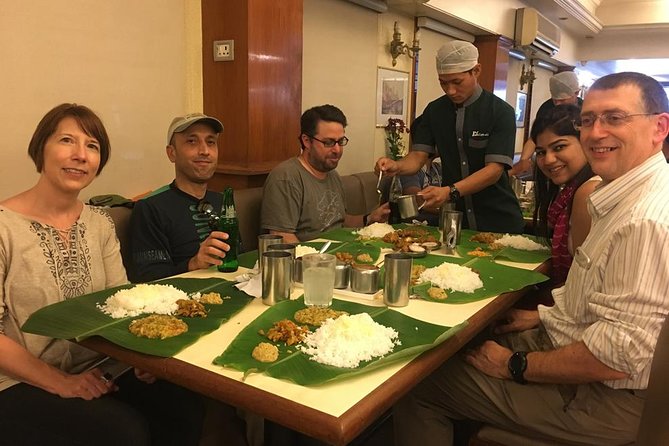
After the market, the tour turns toward Nagarathpete for a South Indian breakfast or brunch. The meal is included, and the stop lasts about an hour. The restaurant is described as one of the area’s established eateries, known for crisp dosas and tangy chutneys.
This is one of the best uses of a guided tour. A local restaurant in a market district can be difficult to identify on your own, especially when menus, ordering customs, and crowded seating are unfamiliar. Here, the guide can take care of the practical side while you focus on the food.
Expect a traditional South Indian meal rather than a hotel-style buffet. Dosa is the headline item, with chutney and other accompaniments. Alcohol is not included, and personal expenses beyond the listed inclusions are your responsibility.
The food stop is also a needed pause. The morning includes traffic, walking, heat, and noise, so sitting down for a meal helps reset the day. If you have strict dietary needs, ask before booking because the supplied details do not specify special-meal arrangements.
Nagarathpete then introduces you to silk weaving and jewelry-making workshops. These visits connect the market economy to skilled handwork. You might see craftsmen concentrating on fine details, though the exact workshop activity can vary.
This part suits anyone curious about how Bengaluru’s goods are made, not just sold. It can also become a shopping moment, but do not feel pressured to buy. The value is in seeing the work and understanding the neighborhood’s connection to silk and jewelry.
Cubbon Park provides a needed change of pace
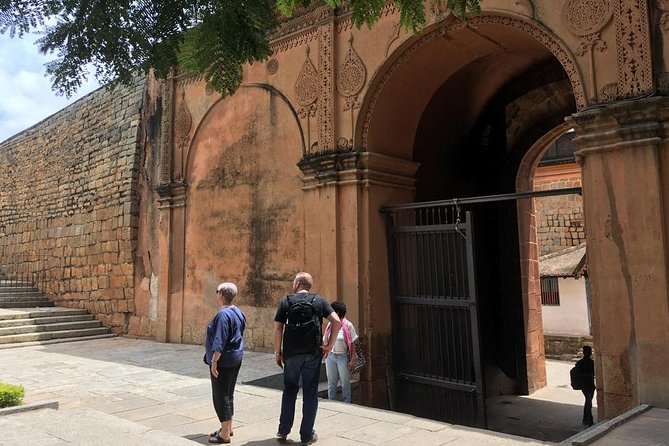
The route next reaches Cubbon Park, where you have about 30 minutes for a walk. The park covers roughly 300 acres and divides the central city’s market side from the Cantonment area.
After the tight lanes of KR Market and Nagarathpete, the open park gives your eyes and ears a break. You can stroll beneath trees, watch residents use the grounds, and see how Bengaluru makes room for public life within a busy city.
Thirty minutes is enough for a pleasant walk, not a full exploration. If parks are your main interest, you may wish for more time. On a broad city tour, though, this short stop is well judged. It keeps the day from becoming a string of enclosed rooms and crowded streets.
Vidhana Soudha and St. Andrew’s add colonial-era contrast
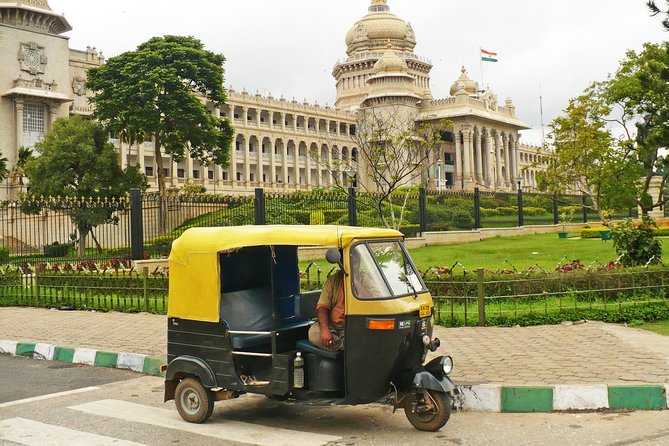
The stop at Vidhana Soudha and Attara Kacheri lasts about 15 minutes. Vidhana Soudha is the imposing seat of Karnataka’s state government, built in a Neo-Dravidian architectural style.
The guide uses the stop to discuss India’s freedom movement and Bengaluru’s role in the making of independent India. You will mainly view the buildings from outside, identify their forms, and hear the political background. Fifteen minutes will not allow for an interior visit or a lengthy architectural talk, so treat this as a focused photo and orientation stop.
St. Andrew’s Church gets 30 minutes. Built in the mid-19th century, it is known for Gothic design, colored glass, and a pipe organ that is about 150 years old. It is also described as the only Scottish church in Bengaluru.
This church adds a quieter historical note. After the market’s commercial energy and the government buildings’ official scale, the church shows another strand of the city’s colonial past. Look for the glasswork and architectural details rather than expecting a long service or concert visit. The information provided does not promise that the pipe organ will be played.
Ulsoor ends with a serious spiritual stop
The final listed stop is in Ulsoor, where you visit a Kali temple. The temple honors Kali in her fierce warrior form and offers a spiritual setting where ideas of life, death, protection, and healing meet.
This is a more intense ending than a final viewpoint or shopping stop. You should enter with respect and follow your guide’s instructions. Dress that covers knees and shoulders is especially important here, and photography may be limited according to temple rules.
The half-hour visit gives you time to understand the temple’s purpose without turning the experience into a rushed pass-through. It also shows why this tour is broader than a palace-and-market outing. Bengaluru’s identity includes government, commerce, worship, craftsmanship, green space, and many overlapping historical periods.
The activity returns to the Hard Rock Cafe meeting point. Since the tour begins and ends in the central area, you can plan the rest of your day from there, though the exact return time will depend on traffic and the group’s pace.
Guides make the difference on this route
A day with this many subjects needs a guide who can connect them. The named guides associated with the experience include Gladys, Pallavi, Sandra, Ajith, and Midhu. Their reported strengths are clear explanations, enthusiasm, friendly care, and the use of images or diagrams to make points easier to follow.
That matters because the route can otherwise feel like unrelated stops. A palace, temple, market, church, and government building only become a story when someone explains how they fit together. Guides have also been praised for helping people understand daily life in India, not just dates and monuments.
Guide quality can vary from one departure to another, so you should not assume you will receive a specific person unless the booking confirms it. Still, the repeated pattern of well-organized guiding and personal attention is a strong reason to choose a guided route instead of arranging these places alone.
Is $87 a fair price?
At $87 per person, this is not the cheapest way to see Bengaluru. It is also more than a simple tuk-tuk ride or a short palace visit. The value comes from what is bundled into the day: a guide, tuk-tuk transport, monument admission, taxes, fees, and the included brunch.
You are also paying for local access and time saved. Finding the market lanes, locating the temple and workshops, arranging transport between scattered areas, and choosing a reliable restaurant would take effort. The tour handles those connections in one day.
The price works best if you want an organized first look at Bengaluru and prefer experiences over luxury. It is less appealing if you already know the city, want long uninterrupted time at one museum, or prefer to set your own pace.
Group discounts may be available, and the tour is commonly booked around 10 days ahead. Booking earlier is sensible if your dates are fixed, especially since the experience can fill before departure.
Who should book this Bengaluru day out?
I would choose this tour for a first visit, especially if you have limited time and want more than a list of famous buildings. It gives you a useful introduction to central Bengaluru through food, faith, trade, architecture, and local streets.
It also suits couples, families with children aged 10 or older, and small groups who enjoy a structured day. The minimum age is 10, and most people can participate, but the market walking and tuk-tuk seating may not suit anyone who needs a very slow or spacious outing.
You should be comfortable with early starts, crowds, modest dress, short walks, and a full schedule. If you need long rest breaks or dislike noisy markets, this may feel busy. If you want to see how the city works beyond its polished center, the mix is much more rewarding.
Free cancellation is available if you cancel at least 24 hours before the 8:00 a.m. start time. Changes or cancellations inside that window are not accepted for a refund.
Should you book it?
Book this if you want one well-packed day that joins Bengaluru’s major historic sights with its markets, food, workshops, and religious life. The strongest parts are the KR Market visit, the local brunch, the tuk-tuk transport, and the guide’s ability to explain what you are seeing.
Skip it if you prefer slow travel, independent wandering, or detailed time at each monument. The itinerary covers a lot, and some stops are short. For a first taste of Bengaluru, though, the $87 price is reasonable because it includes the practical pieces that are hardest to arrange on your own.
FAQ
Where does the Bengaluru tuk-tuk tour begin?
The tour begins at 8:00 a.m. outside Hard Rock Cafe Bengaluru, at 40 St. Mark’s Road, Shanthala Nagar, Ashok Nagar.
Where does the tour end?
The activity ends back at the meeting point at Hard Rock Cafe Bengaluru.
How long does the experience last?
The tour lasts approximately seven hours.
What is included in the price?
The price includes the guide, good-quality tuk-tuks, all meals mentioned in the itinerary, monument and attraction entry fees, taxes, and other listed fees.
What should I wear?
Wear clothing that covers your knees and shoulders, since the route includes Hindu temples and other culturally important sites.
Is there a minimum age?
Yes. The minimum age is 10 years, and the maximum group size for the activity is 16 people.
Just added around India
- Udaipur Local Sightseeing Tour by Tuk-tuk (Rikshaw)★ 4.5 · 3 reviews
- Unique Jaipur Full Day Tour of Pink City Jaipur by TukTuk★ 5.0 · 18 reviews
- Tuk Tuk City tour with ramesh jodhpur.★ 5.0 · 18 reviews
- Udaipur Half Day City Tour by Tuk Tuk★ 5.0 · 2 reviews
- Full-Day Private Udaipur Three wheeled Tuk Tuk Sightseeing★ 5.0 · 11 reviews
- Jaipur City Full Day Tour By Tuk-Tuk★ 5.0 · 8 reviews
- Udaipur Full Day Sightseeing Tour By Tuk Tuk★ 5.0 · 6 reviews
- Tuk Tuk Delhi Experience★ 4.5 · 3 reviews
India Tuk Tuk Tours, compared.
Old Delhi Food, Heritage&Cultural Walk with Rickshaw ride to Masterji Kee Haveli
Read our review →
Adventure Tuk Tuk Tour in kochi – A Private Guided Tour with Hotel Pick up
Read our review →
Private Full Day Jaipur Sightseeing Tour By Tuk Tuk
Read our review →
Old Delhi: Private Tour of Chandni Chowk, Tuk Tuk & Food
Read our review →
Half Day Tuk Tuk Tour in Kochi – Private Tour with Hotel Pick up
Read our review →Browse the lists this tour appears in