
Review · CHINA
Tuktuk Food Tour Through Chengdu’s Local Eats
Chengdu’s best food often hides behind plain doors, down pedestrian lanes, or inside family-run restaurants that are easy to miss. This three-and-a-half-hour tuk-tuk tour gives you a practical way to reach several of them in one evening, with a local guide choosing the dishes and handling the ordering.
I like the mix of street food, small restaurants, and a retro Chinese bar. I also like that beer, soda, bottled water, and rice wine are included, so you can focus on eating instead of keeping track of every small charge. The main drawback is the tuk-tuk itself: taller people may find the ride cramped, especially when the group is full.
Key points at a glance
- Four or five local food stops: Expect Sichuan dishes served at small restaurants, family-run places, and a former street-stall shop.
- A moving dinner table: The tuk-tuk connects food stops through alleys, side streets, small parks, and temple areas that are hard to link on foot.
- Guides who shape the evening: Fiona, George, Jaz, Monica, Daisy, Tom, and other English-speaking guides have received strong praise for explaining dishes and local customs.
- Drinks are included: Local beer, soda, bottled water, rice wine, and a final taste of house-made plum wine are part of the experience.
- Spice can be adjusted: Tell the guide if you want mild food. Vegetarian meals are possible with advance notice.
- Plan on a filling night: Portions can be generous, so arrive hungry and avoid booking a large dinner beforehand.
Why this is a smart first taste of Chengdu
Chengdu is famous for Sichuan cooking, but many visitors know only one dish: hotpot. That is a narrow view of the city’s food. Here, the evening is designed to show you a wider range, from quick street snacks to dumplings, noodles, tofu, skewers, fried dishes, and stir-fries.
The city is a UNESCO City of Gastronomy and has an unusually high number of restaurants. That sounds impressive, but it can make choosing dinner harder, not easier. A menu may be long, the English limited, and the spice level unclear. Your guide removes much of that guesswork.
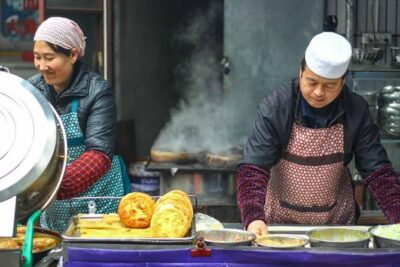
I especially like the focus on places you are unlikely to locate on your own. This is not a polished restaurant crawl built around famous dining rooms. The appeal is the ordinary setting: a family restaurant, a small shop, a converted street-food stall, or a place with one specialty that local customers return for again and again.
The tour begins at 6:30 pm, which is a useful time for dinner. You get the evening atmosphere without giving up a full day of sightseeing. The meeting point is on Shuang Qiao Lu in Chenghua District, and the tour finishes back at the starting point after the final bar stop.
More Tuk Tuk Food Tours in China:
- Xi’an Evening Food Tour by TukTuk
★ 5.0 · 715 reviews - Private Xi’an Night & Food Tour by Tuk Tuk and Public Transportation
★ 5.0 · 23 reviews - Xi’an Terracotta Warriors, City Wall and Tuktuk Food Tour
★ 5.0 · 6 reviews
Riding through Chengdu by tuk-tuk
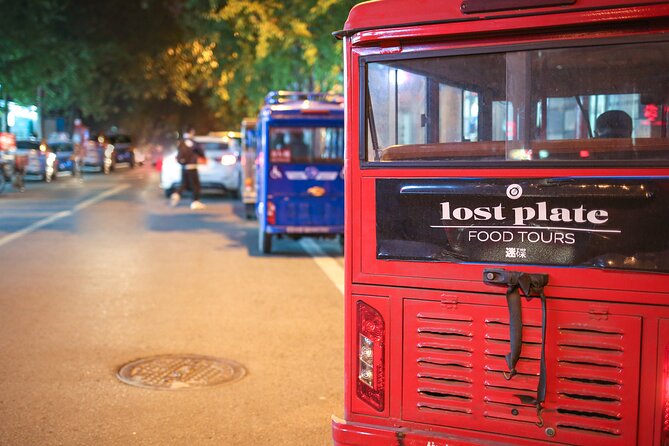
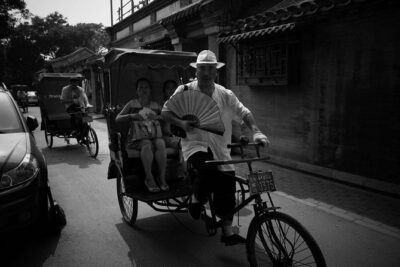
The tuk-tuk is not only transport. It gives the evening its character and lets you cover more ground than you could comfortably walk between several food stops. You may pass through pedestrian lanes, quieter side streets, small parks, and areas near temples while moving from one meal to the next.
It is also the part of the tour that requires the most realistic expectations. The vehicles are small, and one person specifically found the seating uncomfortable with several tall people in the group. If you are tall or dislike confined seating, ask about the group size and vehicle arrangement before booking.
The listed group size is small, described as 2 to 12 people, while the additional details give a maximum of 10. Either way, this is intended to feel more personal than a large bus tour. You will share the food and tuk-tuk experience with other people, but the guide can still answer questions and adjust the pace.
The ride between stops is not a sightseeing tour with long explanations at every landmark. Think of it as a fun link between meals. The food remains the main event.
Stop one: Chengdu-style street crepes
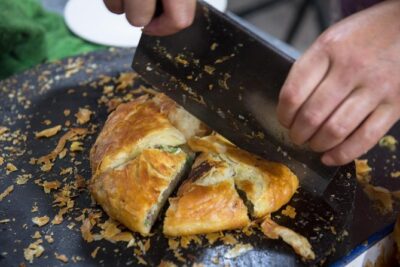
One early specialty is a Chengdu street crepe, served at a street stall that has become a small shop. The crepe comes in four flavor styles: sweet, salty, spicy, and strange.
That range gives you a quick introduction to the city’s playful approach to food. The unusual option is especially useful for curious eaters who want something beyond the safest choice. If you are cautious with spice, tell your guide before ordering rather than trying to guess from appearance.
This stop also shows why a guided food tour helps. A street crepe can be easy to walk past, especially if there is no English sign explaining what it is. Your guide can tell you how locals think about the dish and help you choose a version that fits your taste.
Stop two: Sichuan wontons and family cooking
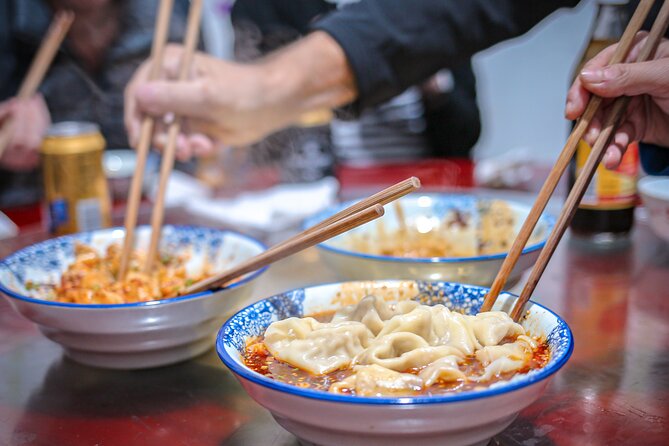
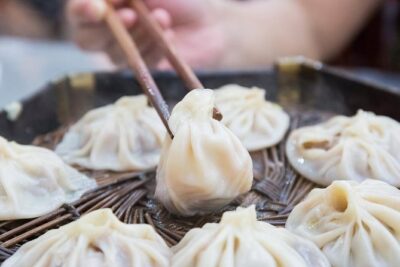
At a family restaurant, you can try Sichuan-style wontons, known locally as chaoshou. The name itself becomes part of the lesson, since the guide explains how this local version differs from the wontons you may have eaten elsewhere.
This is the kind of stop I value most. You are not just sampling a dish. You are learning a local name, seeing how a modest restaurant operates, and trying food in the sort of place that may not be designed for international visitors.
The food can be spicy, but Sichuan cooking is not simply about heat. The flavor may include chili, peppercorn, garlic, oil, and savory sauces. Tell your guide if you prefer mild dishes. Several guides, including Fiona, have been praised for helping people choose a more comfortable spice level.
A few more rides around China worth a look
- Xi’an Morning Food & Market Tour by TukTuk
★ 5.0 · 46 reviews - Bangkok by Night: Temples, Markets and Food Tuk-Tuk Tour
★ 5.0 · 3,752 reviews - Bangkok Midnight Food Tuk Tuk Tour
★ 5.0 · 2,542 reviews - Bangkok: Markets, Temples and Food Night Tour by Tuk Tuk
★ 4.9 · 2,371 reviews
The middle of the night: noodles, skewers, tofu, and more
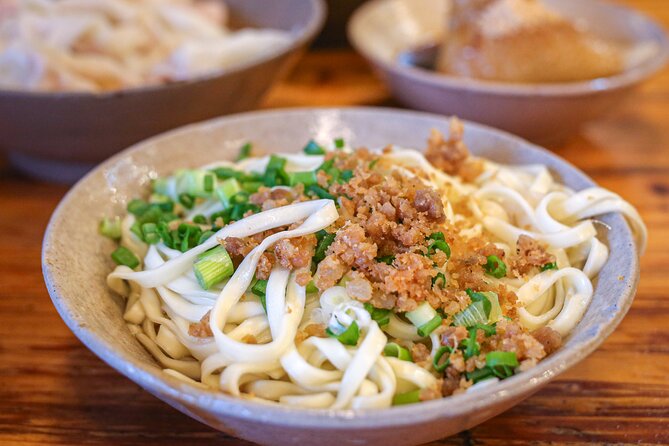
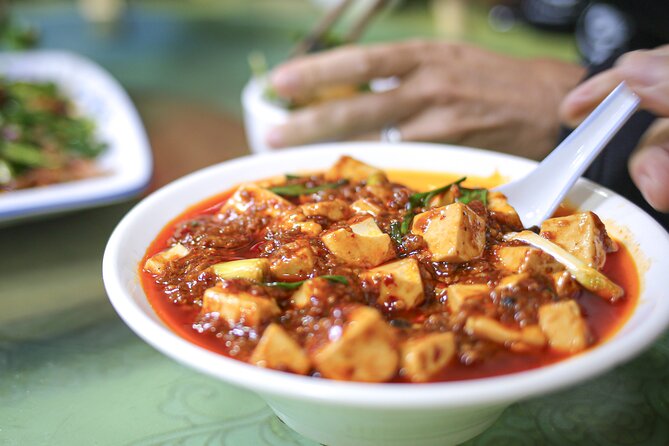
The full order of dishes can vary, but the route is built around four or five restaurants and a broad sample of Chengdu cooking. Past meals have included noodles, beef skewers, dumplings, fried chicken, Sichuan stir-fries, and mapo tofu.
That range matters. You may discover that the favorite dish is not the one you expected. Mapo tofu has been a highlight for some people, while others have preferred the noodles, skewers, or dumplings. The point is to try several small portions and learn what you want to seek out later.
The food is often plentiful. One useful tip is to arrive very hungry, but not so hungry that you eat a large meal right before the tour. The evening is meant to be a full dinner, and the pace is arranged so dishes arrive steadily rather than all at once.
You may also be able to take leftover food away. The tour has made a point of offering takeout for remaining dishes, which is a thoughtful practical touch. It reduces waste and gives you a snack for later.
Guides make the difference
The food matters, but the guide determines how much you get from it. The strongest guide names connected with this experience include Fiona, George, Jaz, Monica, Daisy, Tom, Choco, Chino, Ming, Olivia, Mia, and Bo.
Fiona has been praised for her clear English, upbeat manner, and smooth handling of the restaurants and drivers. George is noted for explaining both the food and the background of each dish. Jaz has been described as especially good at sharing stories while keeping the evening moving.
Monica’s local knowledge can be useful if you want the perspective of someone who grew up in Chengdu. Daisy has received praise for being helpful and clear, while Chino is described as a serious food fan who talks beyond the basic list of dishes.
Guide quality can vary on any scheduled tour, but the strong pattern here is clear: the guide is expected to order, explain, translate, watch the timing, and help the group interact. That is more useful than simply being led from one restaurant to another.
If you have questions about spice, ingredients, food customs, or later restaurant choices, ask during the meal. You can also request personal recommendations at the end.
Drinks and the retro bar finish
Local beer, soda, bottled water, and rice wine are included. The beer seems to be part of the social rhythm, rather than a single drink served with dinner. Some guides may also offer a taste of baijiu for those who want to try it.
The last stop is a 1970s and 1980s-themed bar. It serves house-made plum wine and offers a look at a particular period in modern Chinese culture. This gives the evening a change of pace after the restaurant stops.
Mahjong may be part of the fun here. One guide taught the group how to play, and the bar has been a highlight for people who enjoyed a relaxed finish. You are not simply rushed out after the final plate. There is time to sit, drink plum wine, and talk with the guide and other people in the group.
The bar is about a 10-minute walk from the nearest subway station. The official end point is back at the meeting point, so confirm the return arrangement with your guide if you plan to use public transport afterward. The walk to the subway is worth remembering when planning your evening.
How vegetarian and spice needs are handled
Vegetarian food is available, but you must give advance notice. This is important. One poorly handled booking involved a vegetarian request reaching the team only just before the tour, leaving too little time to plan suitable dishes.
Do not assume that mentioning a restriction casually at the meeting point will be enough. Put it in the booking details and, if it is important, confirm it before the tour date.
The route is built around Sichuan food, so spice is part of the experience. Still, the guides can request milder dishes. You should say clearly if you want little or no heat. Also explain allergies and other dietary needs when booking, since the restaurants are selected in advance.
The setting may not suit everyone. One food stop was described as noisy and affected by cigarette smoke. China’s dining culture can be more casual and less controlled than what you may be used to at home, so people who need a quiet, smoke-free restaurant at every stop should consider that before booking.
Is $73 a fair price?
At $73 per person, this is not the cheapest way to eat in Chengdu. You can certainly buy individual dishes for much less. But the comparison is not really between this tour and one bowl of noodles.
The fee covers food at four or more sit-down restaurants, local beer, soda, bottled water, rice wine, a guide, and tuk-tuk transport. You are also paying for the route, ordering help, translation, and access to places that can be difficult to identify on your own.
For a first evening in Chengdu, I think the price can be good value if you want variety and structure. You get a complete dinner rather than a single tasting, and you can use the guide’s advice to choose restaurants and dishes for the rest of your stay.
The value is weaker if you already speak Chinese, know Chengdu well, and enjoy planning every meal yourself. It is also less appealing if you prefer a formal dining room or want to sit in one place for the whole night.
Who should book this evening?
This tour suits first-time visitors who want a fast introduction to local food. It is also a good fit for people who are curious but unsure how to order, families with adventurous eaters, and anyone who wants an easy social evening.
It works especially well early in your Chengdu stay. You can learn dish names, identify flavors you like, and ask the guide for suggestions before you spend several more days eating in the city.
You should think twice if you are very tall, dislike small vehicles, need a quiet dining setting, or have strict dietary requirements that were not confirmed ahead of time. The walking is not the main challenge, but the evening includes movement between several stops and a walk to the subway near the bar.
The tour operates in all weather, so dress for the forecast. It requires advance booking and payment, and the operator may cancel if the minimum number is not reached. Free cancellation is available up to 24 hours before the start time, but later cancellations and changes are not accepted.
Should you book the Chengdu tuk-tuk food tour?
I would book it if you want Chengdu explained through food rather than through a list of landmarks. The strongest parts are the local restaurant choices, the generous number of dishes, the friendly English-speaking guides, and the unusual tuk-tuk connection between stops.
Book it early in your visit, arrive hungry, state your spice and dietary needs clearly, and expect a casual rather than polished dining environment. If you can accept a snug ride and the possibility of noise at one stop, $73 buys a useful and entertaining introduction to Sichuan cooking.
FAQ
How long does the Chengdu tuk-tuk food tour last?
The tour lasts about 3 hours and 30 minutes. It begins at 6:30 pm.
How many restaurants does the tour visit?
You can expect to stop at four or five restaurants, including street-food shops, family-run restaurants, and small local eateries.
What food is included?
All food at four or more sit-down restaurants is included. Possible dishes include Chengdu-style street crepes, Sichuan wontons, noodles, beef skewers, dumplings, fried chicken, mapo tofu, and Sichuan stir-fries.
Are drinks included?
Yes. Local beer, soda, bottled water, and rice wine are included. The final bar stop also includes house-made plum wine.
Is the tour vegetarian friendly?
Yes, a vegetarian option is available. You must provide the requirement in advance so the food can be planned.
Can the food be made less spicy?
Yes. You can ask for mild or less spicy dishes. Tell the guide about your preference before ordering.
Where does the tour begin and end?
The meeting point is 251-14 Shuang Qiao Lu in Chenghua District, Chengdu. The activity ends back at the meeting point.
How many people can join the tour?
It is a small-group tour. The group size is listed as 2 to 12 people, with additional information giving a maximum of 10 travelers.
Can I cancel for a refund?
You can cancel at least 24 hours before the start time for a full refund. Cancellations or changes made less than 24 hours before the start time are not accepted for a refund.
More Food in China
- Private Xi’an Foodie Tour by Tuktuk
★ 5.0 · 34 reviews - Bangkok: Midnight Food Tour by Tuk-Tuk
★ 4.9 · 2,054 reviews - Bangkok: Michelin Guide Street Food Tour by Tuk Tuk
★ 4.4 · 1,274 reviews - Old Delhi Food, Heritage&Cultural Walk with Rickshaw ride to Masterji Kee Haveli
★ 5.0 · 742 reviews
Just added around China
- Xi’an Terracotta Warriors, City Wall and Tuktuk Food Tour★ 5.0 · 6 reviews
- Private Xi’an Foodie Tour by Tuktuk★ 5.0 · 34 reviews
- Private Xi’an Night & Food Tour by Tuk Tuk and Public Transportation★ 5.0 · 23 reviews
- 4-Hour Private Tour to Beijing Drum Tower with Drum Performance and Rickshaw★ 5.0 · 2 reviews
- Summer Palace, Hutong Rickshaw, Lama and Confucius Temple Tour★ 5.0 · 6 reviews
- Houhai Hutong Tour: Rickshaw + Prince Gong & Soong Residences★ 5.0 · 6 reviews
- Beijing Private Tour to Summer Palace plus Drum Tower Performance and Rickshaw★ 5.0 · 3 reviews
- Beijing Half Day : Summer Palace Tour with Hutong Rickshaw Rides★ 5.0 · 7 reviews
China Tuk Tuk Tours, compared.
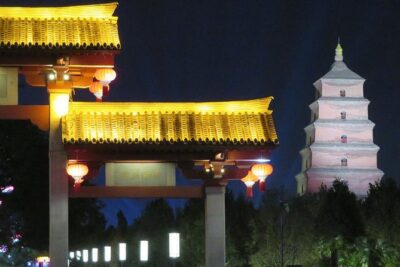
Private Xi’an Night & Food Tour by Tuk Tuk and Public Transportation
Read our review →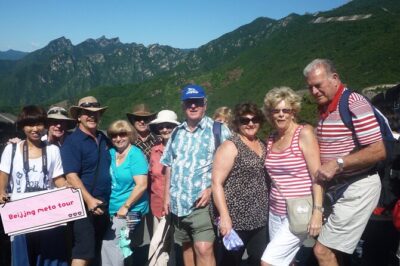
Beijing Half Day : Summer Palace Tour with Hutong Rickshaw Rides
Read our review →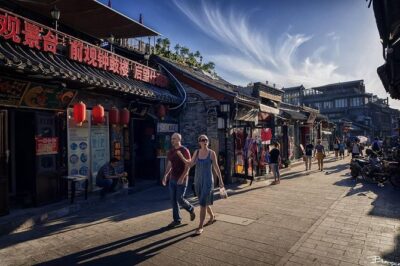
Houhai Hutong Tour: Rickshaw + Prince Gong & Soong Residences
Read our review →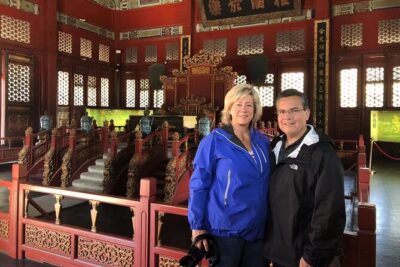
Summer Palace, Hutong Rickshaw, Lama and Confucius Temple Tour
Read our review →Browse the lists this tour appears in