
Review · LISBON
1 Guide 1 Tuk Tuk — Complete Historical Tour — True Local Guide
Lisbon’s story is easiest to grasp from a tuk tuk, where you can move from earthquake ruins to royal churches, hilltop views, and Alfama’s maze-like lanes in a single outing. Gonçalo Seabra drives the colorful Mandala-covered vehicle and explains the city as you go, with short stops for photos, walks, and local details.
I like the private format, which keeps the pace in your hands, and I like the way the route joins famous sights with less obvious places such as Teatro Romano and Igreja de São Domingos. The open-sided vehicle is also a smart match for Lisbon’s narrow hills and makes quick photo stops simple.
The main drawback is time. Four hours sounds generous, but this route covers a lot, and many stops last only 10 to 15 minutes. You will get a strong first look rather than a slow visit inside every church or museum.
Key points at a glance
- Gonçalo Seabra drives the Mandala-covered tuk tuk: Look for the colorful vehicle at the meeting point.
- You cover Lisbon’s oldest quarters quickly: The route includes Baixa, Alfama, the cathedral area, and several hilltop viewpoints.
- The open-sided vehicle suits the city: You get clear views and easy photo opportunities while Gonçalo handles steep streets and tight corners.
- The tour is private for up to six people: Your group alone participates, with the chance to adjust the pace and interests.
- The history is tied to real places: Expect stories about the 1755 earthquake, Roman Lisbon, royal ceremonies, the Inquisition, and the dictatorship.
- The top viewpoints are a major reward: Santa Luzia, Portas do Sol, and Senhora do Monte show Lisbon from very different angles.
Why a tuk tuk works so well in Lisbon
Lisbon is a difficult city to cover on foot in one sweep. The historic center climbs sharply, streets pinch into lanes, and the best viewpoints are often far above the riverfront. A tuk tuk removes much of the uphill slog without turning the city into a blur behind a bus window.
The open-sided design matters. You can see tiled walls, balconies, church fronts, laundry, and sudden views as you move between stops. It also lets you take photographs without dealing with a closed vehicle window.
This is not a point-to-point taxi ride with a few facts added. The drive between stops is part of the tour. The remaining time is used for transport and short explanations of places you pass, so you should expect a running commentary rather than silence between scheduled stops.
The vehicle holds up to six people, making the $432.50 group price easier to assess. For six people, that works out to about $72 per person for four hours. For two people, it is a much more expensive experience, but you are paying for a private vehicle, a dedicated guide, and the ability to shape the outing around your group.
More Guided Tuk Tuk Tours in Lisbon
- True 4Hour Private Tuk Tuk Tour: Discover Lisbon with a Local!
★ 5.0 · 8,008 reviews - Welcome Lisbon Tour with Local Guide in Private Eco Tuk Tuk
★ 5.0 · 1,691 reviews - Lisbon: Private Tuk-Tuk City Tour With Local Guide
★ 5.0 · 483 reviews
Baixa begins with Lisbon’s public memory
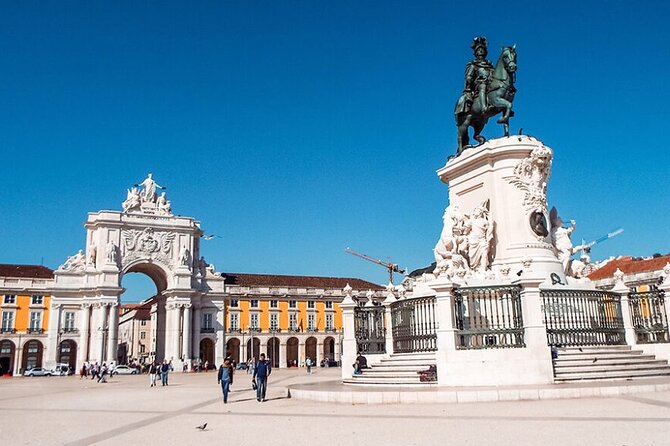
The opening historical square is linked with major events from the 1755 earthquake through the end of Portugal’s dictatorship. Even without spending a long time here, this is a useful starting point because Lisbon’s central squares are not just pretty spaces. They are places where the city’s government, public ceremonies, disasters, and political changes played out.
From here, the tour moves toward the Elevador de Santa Justa. You get a free visit to the platform at the top, with views across downtown Lisbon. The elevator itself is one of the city’s most recognizable structures, but the real value of this stop is orientation. From above, the streets of Baixa form a clear grid, making it easier to understand the lower city before the route climbs toward Alfama.
You have about 15 minutes here. That is enough for the platform and photographs, but not for a leisurely visit if lines or crowds slow things down. The tour does not list a separate ride on the elevator, so do not assume the experience includes a full elevator journey.
A quick taste of Lisbon’s ginjinha tradition
Ginjinha Sem Rival offers a short stop of about 10 minutes. The focus is the small glass of ginjinha, Lisbon’s sour-cherry liqueur, and the local rivalry with A Ginjinha nearby.
This is a small detail, but it gives the tour some flavor beyond monuments. Lisbon can feel like a sequence of viewpoints and churches if you only chase major sights. A brief drink stop shows how the city’s everyday traditions fit into the historic center.
The stop is listed as free admission, but that does not necessarily mean a drink is included. I would plan to pay for anything you choose to order. If you do not drink alcohol, treat this as a chance to see one of the old central shops and hear the story rather than as a required tasting.
Igreja de São Domingos and the city’s darker past
The 20-minute visit to Igreja de São Domingos is one of the route’s more unusual church stops. It is tied to royal baptisms and marriages and to the Portuguese Inquisition, but the building’s interior is the real reason to pay attention.
You are told to expect something unlike the usual polished European church. That warning is useful because this is not simply another ornate stop to photograph and leave. The church carries visible signs of a difficult past, and Gonçalo’s explanation helps connect the building to Lisbon’s religious and political life.
Twenty minutes gives you enough time to look around and listen. It is still a short visit, so you will not have the freedom of a long independent museum stop. If church interiors are a major interest, note the location and consider returning later on your own.
More Guided Tuk Tuk Tours in Portugal
- Expert Lisbon Tour with Local Guide in Private Eco Tuk Tuk
★ 5.0 · 422 reviews - Historic Lisbon Tour with Local Guide in Private Eco Tuk Tuk
★ 5.0 · 301 reviews - Expert Plus Lisbon Tour with Local Guide in Private Eco Tuk Tuk
★ 5.0 · 230 reviews - Food & Wine Lisbon Tour with Local Guide in Private Eco Tuk Tuk
★ 5.0 · 114 reviews
Lisbon Cathedral and Saint Anthony’s birthplace
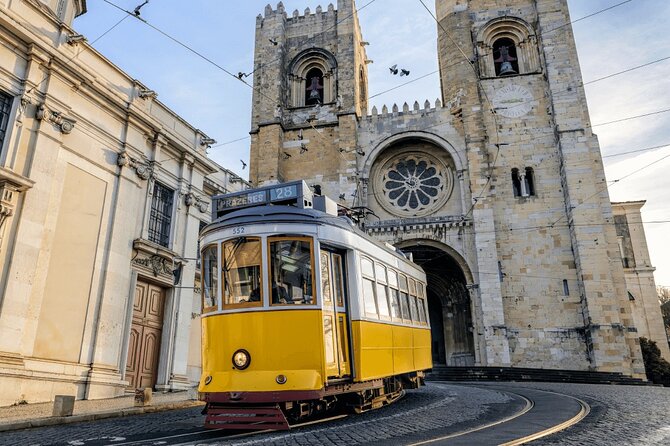
The oldest square in Lisbon introduces the city’s northern limit during the Roman period and its later expansion. From there, the route reaches Lisbon Cathedral, known locally as Sé.
The cathedral occupies ground used for religious purposes for at least 2,000 years. The current church is presented as the first Portuguese church in the city, while the site itself reaches back through earlier temples. You get only about five minutes here, so the stop functions mainly as an explanation and exterior look rather than a full cathedral visit.
That short timing is worth noting. If you want to examine the cathedral’s interior, chapels, or details at leisure, plan a separate return. On this tour, the point is to understand why the site matters before moving on.
The Church of St. Anthony receives 15 minutes. This is associated with Lisbon’s Saint Anthony of Padua, including his birthplace and birth room. The church also has a lighthearted tradition for single visitors seeking a blessing for the right partner.
This stop works well for mixed groups because it combines religious history with a human, local custom. The subject is familiar to people who know Saint Anthony as a widely honored figure, but the Lisbon connection gives the story a clear sense of place.
Roman Lisbon beneath the modern city
At Museu de Lisboa, Teatro Romano, you see how a structure built about 2,000 years ago connects with later Portuguese history and the 1755 earthquake. This is the kind of stop that gives depth to a city tour. You are not only looking at old streets. You are seeing how Lisbon was built, damaged, rebuilt, and reinterpreted over many centuries.
The visit lasts about 10 minutes, so expect an introduction rather than a full museum session. The stop is particularly useful if you want to understand that Lisbon’s oldest story did not begin with the medieval cathedral or the Age of Discoveries. Roman foundations are part of the city beneath the later layers.
Three viewpoints, three ways to read Lisbon
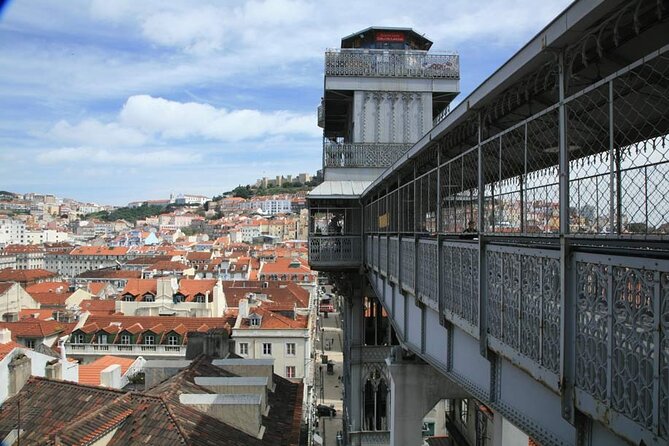
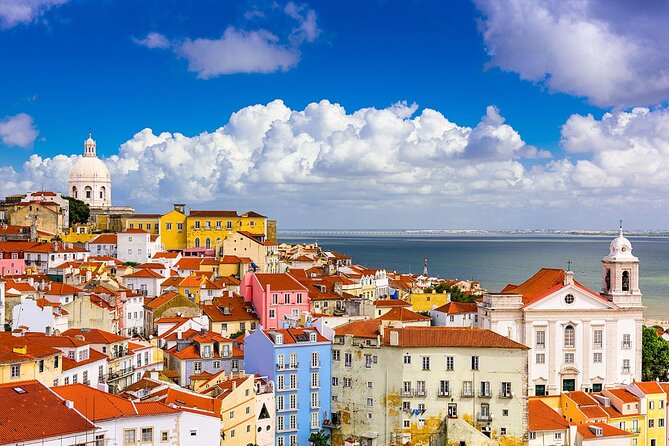
The first major viewpoint is Miradouro de Santa Luzia, above Alfama. It is one of Lisbon’s most photographed outlooks, with rooftops and the old neighborhood spreading below. The 15-minute stop gives you time for pictures and a short explanation of the district.
Portas do Sol follows as a sister viewpoint with a broader outlook. Seeing both is worthwhile because they offer related but different angles. Santa Luzia feels closely tied to Alfama’s rooftops and decorative setting, while Portas do Sol opens the view more widely.
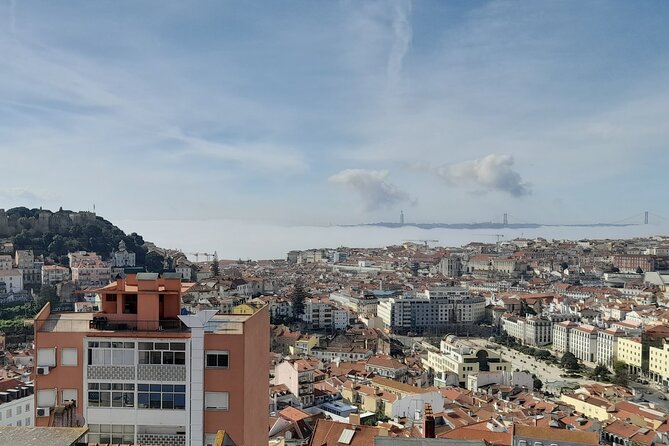
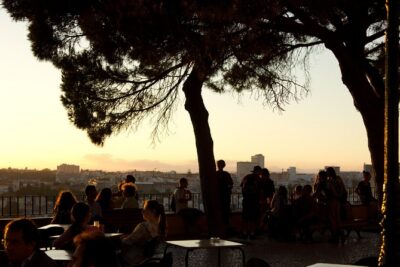
The route then climbs to Miradouro da Senhora do Monte, the strongest viewpoint of the day. From here, the panorama reaches across much of historic Lisbon, including the castle, Christ the King statue, the bridge, downtown, and the hills. The view is described as more than 200 degrees, with sightlines over roughly 80 percent of the historic city.
This is also where the tour adds a modern personal detail: the view includes the location of the most expensive apartment ever sold in Portugal, associated with footballer Cristiano Ronaldo. That kind of detail can help connect old Lisbon with the city you see today.
You get about 15 minutes at Senhora do Monte. Bring your camera, but also listen before rushing to the railing. A good explanation turns a pretty panorama into a useful map of Lisbon’s neighborhoods.
Big churches, foreign saints, and the national pantheon

Several itinerary entries describe major religious buildings without giving their names. One is among the city’s largest churches and convents. Another is the biggest church inside the city, dedicated to Lisbon’s patron saint, even though the saint is not Portuguese. A third is the pantheon containing the tombs of important Portuguese figures.
These stops are a reminder that Lisbon’s identity is not limited to one faith tradition or one period of national power. The route uses churches to raise questions about who shaped the city, who was honored, and how outside influences became part of Portuguese life.
Because the supplied timing is not specified for these unnamed stops, you should expect drive-by explanations or brief pauses rather than guaranteed long interior visits. If one particular church matters to you, ask Gonçalo early in the tour how much time can be given to it.
Alfama is best handled slowly, even on a fast tour
Alfama is Lisbon’s oldest neighborhood, a web of narrow streets that can feel deliberately confusing. The tuk tuk is useful for reaching the area, but the best part may be getting out and walking a little.
The route allows about 15 minutes to explore. That is enough to stretch your legs, peer into lanes, and take in the district’s tight layout. It is not enough to discover every corner, so think of this as a first introduction rather than a complete neighborhood visit.
Alfama’s scale explains why this private tour is practical. A larger vehicle could not manage many of its lanes, and a walking tour would require more time and more uphill effort. The tuk tuk gives you access, then lets you sample the streets on foot.
If you have limited mobility, tell Gonçalo what you need. The tour is designed for most people, and service animals are allowed, but the route includes historic hills and short walks. Children under three are not accepted.
The final square ties Lisbon to the sea
The route ends at Lisbon’s most significant square, marked by a triumphal arch and linked to the organization of Portugal’s maritime discoveries. This is a fitting final stop because the tour has moved from Roman foundations and medieval faith to imperial ambition and modern political memory.
The square also helps you understand Lisbon’s relationship with the river. The city’s power was directed outward from here, while its markets, palaces, and public spaces grew around the waterfront. The visit is a useful final piece after the hilltop views, because you can connect the high historic districts with the lower central city.
The tour returns to the meeting point at the end. Pickup is offered, but the exact pickup arrangement should be confirmed when you book.
How the private format changes the experience
This is not a fixed large-group outing. Only your party participates, up to six people, and that makes the tour a strong option for families or friends with different interests.
Gonçalo reaches out after booking and can tailor the stops around your needs. That flexibility has real value for a multigenerational group. A family may want more viewpoints and snacks, while a history-focused group may prefer longer explanations at São Domingos, the cathedral area, or Teatro Romano.
A specific family experience shows how the format can work in practice: Gonçalo adjusted the outing for different ages and included several snack breaks for children. That does not guarantee the same schedule for every booking, but it signals that you should speak up about food, walking, attention spans, and preferred subjects before the day begins.
The route is offered in English. Gonçalo’s strong interest in history is central to the experience, so this suits you if you want context while moving through the city, not just a driver who points out landmarks.
Price, timing, and practical fit
At $432.50 per group, the price makes the most sense when shared by four to six people. A couple can still find value in the private setting, especially if a short stay in Lisbon makes time more important than budget, but the per-person cost is high for two.
The tour lasts about four hours and is often reserved well ahead of time, with an average booking lead time of 48 days. That suggests you should not leave it until the last moment if you want a particular date.
The confirmation normally arrives at booking. If you reserve within one day of the tour, confirmation comes as soon as possible, subject to availability. Free cancellation is available until 24 hours before the start time. Changes or cancellations inside that window are not accepted for a refund.
The activity finishes back at the meeting point. Look for Gonçalo Seabra and the colorful tuk tuk with Mandalas. Since pickup is offered, check the exact arrangement rather than assuming the vehicle will collect you at your hotel.
Who should book this Lisbon tour?
I would choose this tour for a first visit to Lisbon, especially if you want the city’s main historic zones in one organized outing. It is also a good fit for a family group, a multigenerational party, or anyone who finds Lisbon’s steep streets tiring.
You will get the most from it if you enjoy connecting buildings to events. The route covers Roman remains, religious sites, the Inquisition, the earthquake, dictatorship, royal traditions, maritime expansion, and modern local life. It gives you a framework for later independent exploring.
I would be more cautious if you want long museum visits, quiet time inside churches, or a slow food tour. The schedule is full, and some stops last only five to 15 minutes. You will see a lot, but you will not study every place in detail.
Should you book it?
Book this private tuk tuk tour if your priority is getting your bearings quickly while hearing the stories behind Lisbon’s oldest districts. Gonçalo Seabra’s local focus, flexible approach, and ability to handle narrow hills make the format especially useful for families and small groups.
Skip it if your main goal is to spend half a day inside one museum or church. For most first-time visitors, though, the mix of viewpoints, old lanes, Roman remains, churches, earthquake history, and a private vehicle offers a practical way to meet Lisbon before exploring it more deeply on foot.
FAQ
How long does the tour last?
The tour lasts approximately four hours, including travel between stops and short explanations along the way.
How many people can join the private tour?
The private tuk tuk tour is available for one group of up to six people.
Who is the guide?
The driver and guide is Gonçalo Seabra. Look for the tuk tuk decorated with colorful Mandalas.
Is pickup available?
Yes, pickup is offered. The activity ends back at the meeting point.
Are children allowed on the tour?
Children under three are not allowed. Most other travelers can participate, and service animals are allowed.
What is the cancellation policy?
You can cancel for a full refund up to 24 hours before the experience starts. Cancellations or changes made less than 24 hours before the start time are not accepted for a refund.
More History Tours in Lisbon
- Explore Lisbon by Tuk Tuk: History and Viewpoints
★ 5.0 · 840 reviews - Private Tuk Tuk Tour Through Lisbon’s Historical Streets
★ 5.0 · 734 reviews - Lisbon: Guided Tuk-Tuk Tour Along the Historic Tram Line 28
★ 4.8 · 475 reviews - Lisbon’s historic old town in a tuk-tuk in German
★ 4.9 · 319 reviews
More Guided Rides in Lisbon
- Lisbon Private TukTuk Tour with True Local Guide
★ 5.0 · 110 reviews - Full Day Lisbon Tour with Local Guide in Private Eco Tuk Tuk
★ 5.0 · 46 reviews - Lisbon: Tuk-Tuk Tour in French or German w/True Local Guide
★ 5.0 · 43 reviews - Lisbon: Belem Sightseeing Tour by Tuk Tuk with local guide
★ 4.9 · 17 reviews
Just added around Lisbon
- Tuktuk tour in historical old lisbon, city center and Belem★ 4.8 · 5 reviews
- Lisbon: Private City Tour in Alfama and Chiado with Tuk Tuk★ 3.5 · 9 reviews
- Tuk Tuk Tour of Belem★ 5.0 · 3 reviews
- Tuk Tuk Tour historic central Lisbon★ 5.0 · 3 reviews
- Tuk Tuk Old Lisbon Tour 1,5h★ 5.0 · 3 reviews
- Lisbon: Private Tuk-Tuk Tour★ 5.0 · 56 reviews
- Vintage Tuk Tuk Tour experience in Alfama, Chiado, and Baixa 2h★ 5.0 · 3 reviews
- Lisbon Tuktuk Tour With Pickup★ 4.0 · 24 reviews
Lisbon Tuk Tuk Tours, compared.

True 4Hour Private Tuk Tuk Tour: Discover Lisbon with a Local!
Read our review →
Private Lisbon Sightseeing Tuk-Tuk Tour: Alfama, Belém & More
Read our review →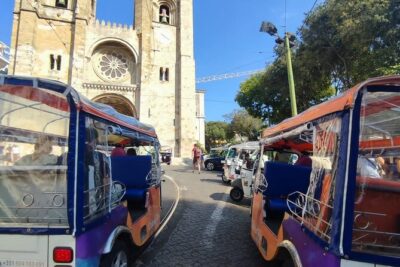
Lisbon Highlights: Private Tuk Tuk Tour Adventure Sightseeing
Read our review →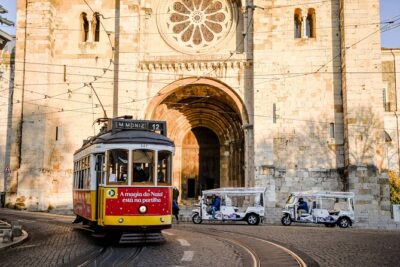
Welcome Lisbon Tour with Local Guide in Private Eco Tuk Tuk
Read our review →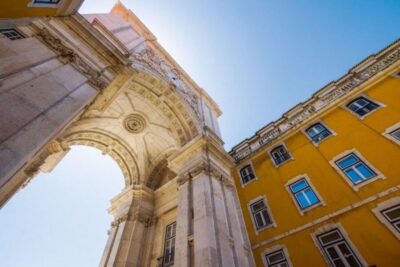

Old Town TukTuk Tour and Scenic Viewpoints in Alfama
Read our review →
Explore Lisbon by Tuk Tuk: History and Viewpoints
Read our review →Browse the lists this tour appears in