
Review · BATTAMBANG
A Day TukTuk Bambootrain, Banan, Killing & Bat Caves, Sunset
The most memorable part of this Battambang day is the way it builds toward sunset. You begin with markets, villages, rice fields, and an old railway ride, then face the painful Khmer Rouge past before watching millions of bats stream from Phnom Sampov. I especially like the mix of countryside and history, and the chance to meet local life beyond the town center.
I also like the human touch. Guides such as Samol are praised for their stories, humor, photos, and clear explanations of Cambodian culture. The main drawback is the length: 11 hours in the heat is a full day, and some people may find the bamboo train less exciting than expected or want more time walking in Battambang itself.
Key points at a glance
- A full day from 8:20 AM to evening: You cover town sights, countryside, two major temple areas, the Killing Cave, and the bat flight.
- Wat Banan means 358 steps: The climb leads to a five-tower Khmer temple with wide views from the hilltop.
- The bamboo train is simple and local: Expect a basic platform on railway tracks, open views, and a $5 ticket paid separately.
- Phnom Sampov combines sorrow and spectacle: The Killing Cave explains the Khmer Rouge period, while the summit offers temples, monkeys, and viewpoints.
- The sunset bat flight is the finale: Millions of wrinkle-lipped bats may pour from the cave for more than 50 minutes.
- The $14 price is strong value: Transport, guide, admissions, water, fruit, and mountain transfers are included, but lunch and the bamboo train cost extra.
Why this Battambang day works so well
Battambang is best understood in pieces. The town has French-influenced buildings and a central market, but its real character appears outside the center, where rice fields, fruit plantations, village homes, temples, and small food stops fill the day.
This tour gives you that wider picture without requiring you to arrange several separate tuk-tuk rides. You stay with an English-speaking guide for the day and move between town, countryside, and the Phnom Sampov area. That continuity matters because the history, food, religion, farming, and local stories make more sense when one person connects them.
Samol is the guide most often named in the feedback, and his style seems to be a major part of the experience. He is described as funny, warm, energetic, and good at explaining Cambodian history and daily life. He also takes photos, offers water breaks, and uses jokes and even magic tricks to keep a long day moving. Other guides named include Uk Bon Thai and Jay, so your guide may differ.
The tour costs $14 per person, which is a low starting price for an 11-hour outing. You need to add $5 for the bamboo train, plus lunch and any personal spending. Even with those extras, the price remains good for a day that includes hotel pickup and drop-off within 5 kilometers of Battambang, admissions, bottled water, wet wipes, fruit salad, and transport up and down the mountain.
A few more rides around Battambang worth a look
- Battambang: Tuk-Tuk, Bamboo Train, Killing/Bat Caves, Sunset
★ 4.9 · 1,436 reviews - Battambang Tuk Tuk tour: Bambootrain, Killing & Bat Caves,Sunset
★ 5.0 · 799 reviews - A Day TukTuk Handicrafts Bambootrain Killing&BatCaves,Sunset
★ 4.9 · 78 reviews
Starting in Battambang at 8:20 AM
Pickup begins at about 8:20 AM from your accommodation or a restaurant. The first part is a gentle introduction to the city, useful if you have just arrived and want to get your bearings quickly.
You pass historical buildings, the central market, the provincial hall, and Ta Dambong Kranhoung, the statue that serves as a symbol of Battambang. The guide uses these places to discuss Cambodian culture, religion, agriculture, folk tales, and the city’s past.
This section is not a long walking tour. You see the sights from the tuk-tuk and stop for explanations and photos. If your main goal is architecture or city streets, you may wish there were more time on foot. One piece of practical advice is to spend an extra hour or two in Battambang on another day, rather than expecting this tour to cover every corner of town.
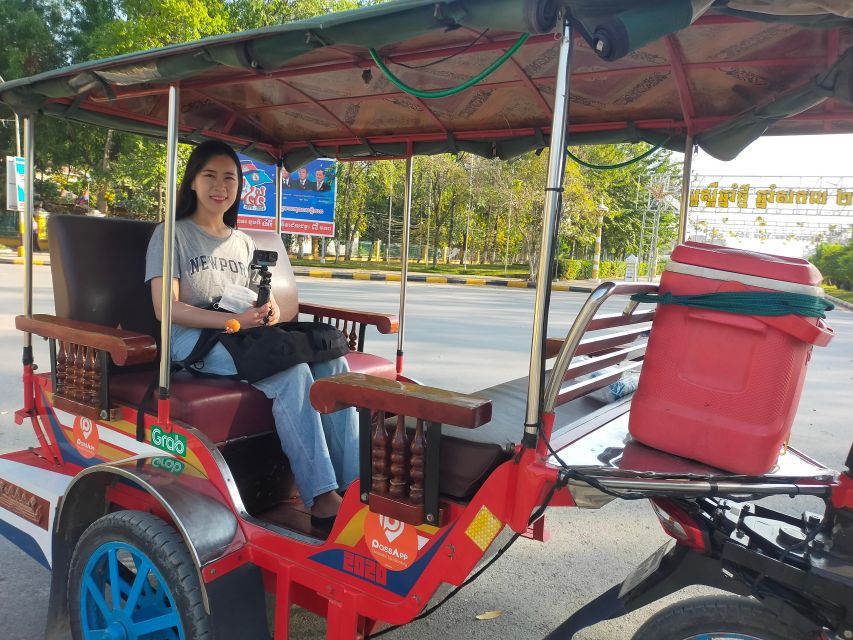
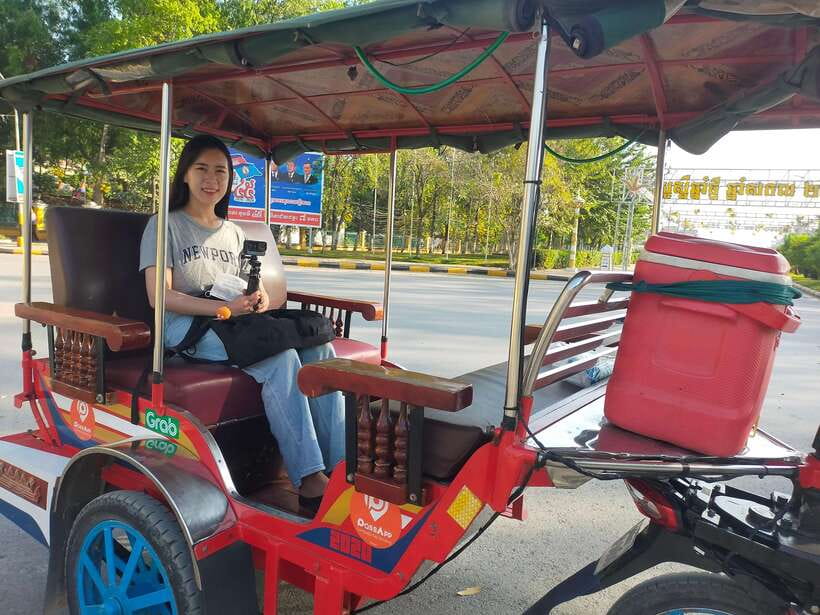
The tuk-tuk itself is part of the appeal. The open sides let you watch daily life as you move through town and into the countryside. Bring sunscreen, cash, and a camera. Rain gear is also sensible because the tour runs all day and outdoor plans continue in changing weather.
Villages, fruit plantations, and the original bamboo train
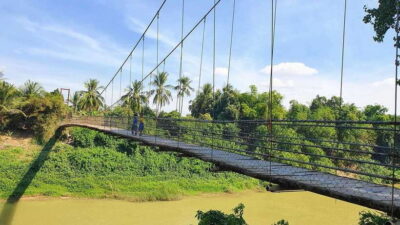
The countryside section takes you past small villages, fruit plantations, rice fields, and a suspension bridge. You may stop to speak with farmers and learn about crops and rural life. This is where the tour feels most personal, since you are not simply being driven from monument to monument.
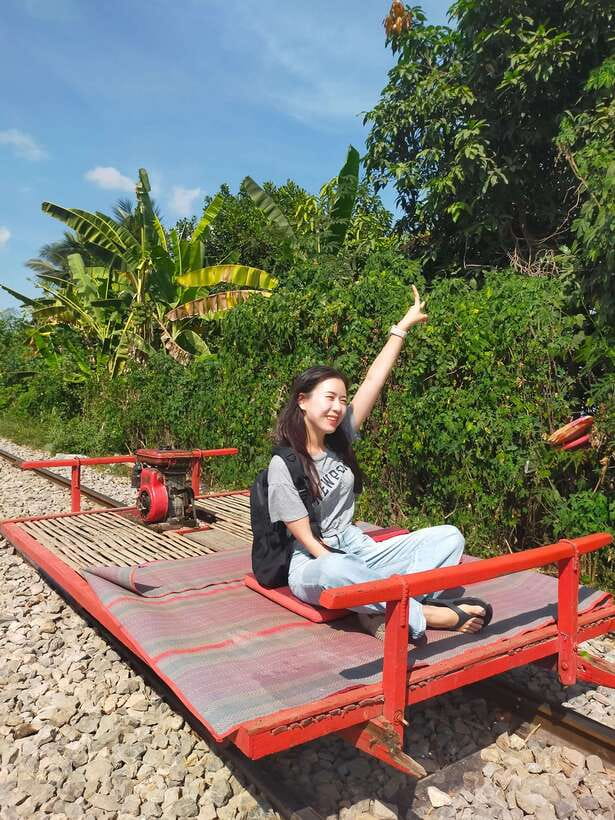
The bamboo train is a very basic local railway experience. You sit on a bamboo platform fitted with wheels and travel along the track through open countryside. The ride is known for its bumpiness and simplicity, not for comfort or speed. You see fields and village scenery from a low, exposed position, and the guide can explain how the system works.
The train ticket costs $5 per person and is not part of the $14 tour price. Bring cash for it. The ride appeals most to people who enjoy unusual transport and a little rough-and-ready fun. If you expect a polished attraction or a long scenic railway journey, you may find it underwhelming. One useful detail is the reported free massage connected with the stop, though the overall activity remains quite simple.
The route also includes opportunities to see fruit bats hanging in trees between the bamboo train and Banan. These are different from the huge evening bat flight at Phnom Sampov. The daytime sighting is quieter and gives you a chance to look at the animals resting in the trees before the more dramatic sunset spectacle later.
Climbing the 358 steps at Wat Banan
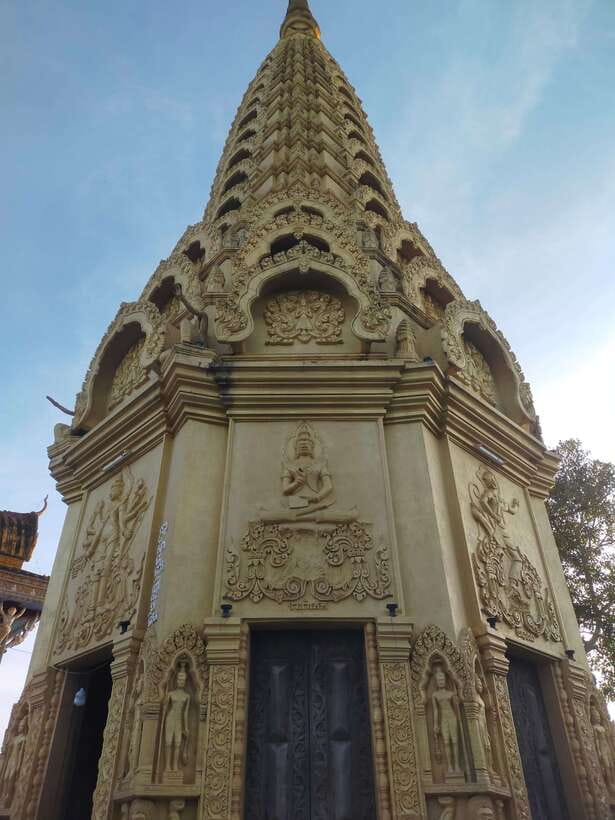
Wat Banan is one of the strongest stops on the day. It is described as the best-preserved Khmer temple in Battambang Province, and its five towers create a clear visual link with the much larger temple complex at Angkor.
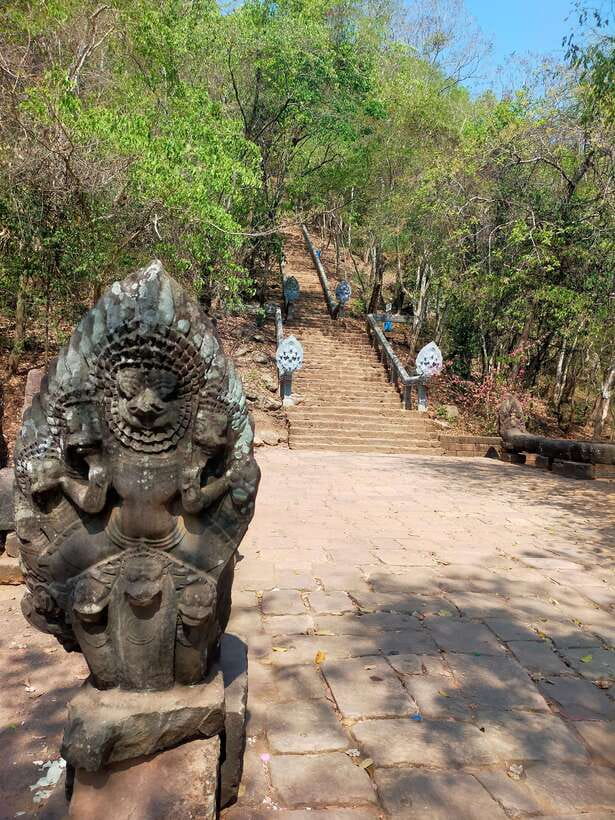
To reach the top, you climb a laterite staircase of 358 steps, with naga figures along the approach. The climb is not technically difficult, but Cambodia’s heat can make it tiring. Go slowly, drink water, and use the pauses as a reason to look back at the view.
The temple dates to the 11th century and is associated with King Udayadityavarman II, the son of King Suryavarman I. It was built as a place to give thanks, ask for help, and pray. The site also reflects the changes in Cambodian religion over time. It began in a period of strong Hindu belief, while the sculptures seen at Phnom Banan are mainly Buddhist and may relate to later rebuilding under Jayavarman VII.
You do not need to be an expert in Khmer architecture to enjoy the site. The five towers are compact and easy to appreciate, and the hilltop position gives the visit a sense of space. This is one of the stops where a good guide makes a real difference, because the stones alone cannot explain how religious ideas changed over the centuries.
Lunch comes by a lake after the temple visit. Lunch is not included, so budget separately. The setting sounds more important than the meal itself: it gives you a calm break after the steps and before the afternoon sites. Bring patience here. One criticism of the day is that the time after Banan can feel slow, so this may not suit you if you prefer a tightly packed schedule with little downtime.
Same streets, a different route:
- Afternoon tour by tuk tuk to bamboo train,bat cave,killing cave,countryside.
★ 5.0 · 344 reviews - Explore Battambang full day tour by Tuk Tuk (start from 9am-6:30pm)
★ 5.0 · 240 reviews - Battambang: Bamboo Train, Bat Cave, Killing Cave by Tuk Tuk
★ 5.0 · 182 reviews - Full day tour by bicycle & tuk tuk,bamboo train,bat cave,villages
★ 5.0 · 27 reviews
A serious stop at the Killing Cave
Phnom Sampov changes the mood. Before reaching the mountain, you have the option to taste barbecued rat. It is presented as a local food experience, not a required part of the tour. If you are curious about Cambodian food and comfortable trying something unfamiliar, this is your chance. If not, you can skip it.
A motor taxi or pickup truck takes you up the hill. The mountain shuttle or motorbike transfer is included, which saves you from making the climb by road in the heat. The area includes the Killing Cave, where more than 10,000 people were killed during the Khmer Rouge period from 1975 to 1979.
This is not a light sightseeing stop. The cave is a memorial to mass violence, and you should expect a sober explanation of the Khmer Rouge era. The visit can be difficult, but it gives you essential context for Cambodia. A guide who can explain the past with care helps you understand that the country’s temples, food, and daily life exist alongside memories of very recent suffering.
The cave was closed on one reported visit, so conditions can change. If it is unavailable, the guide may adjust the day with other stops, but you should not assume every part will operate exactly as planned. This is also a poor fit for anyone wanting a purely cheerful day of photos and scenery.
Monkeys, temples, and views above Phnom Sampov
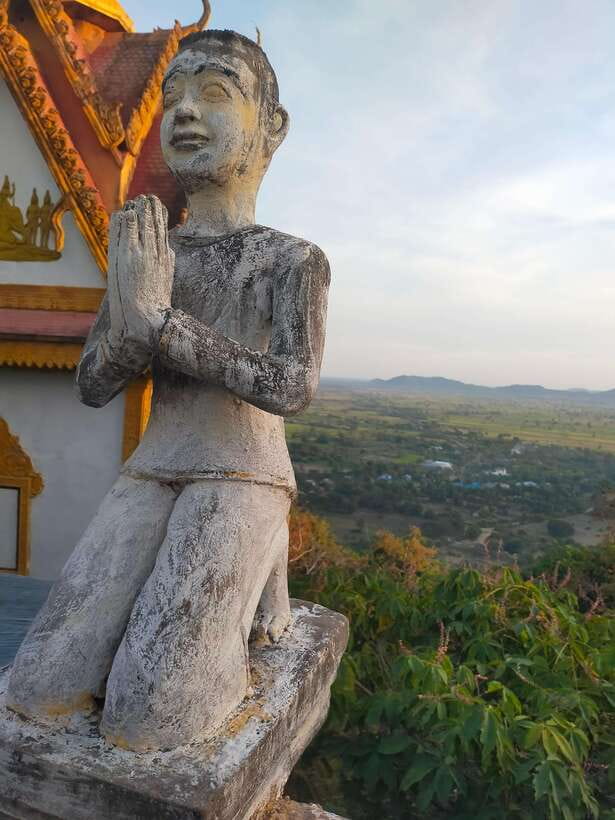
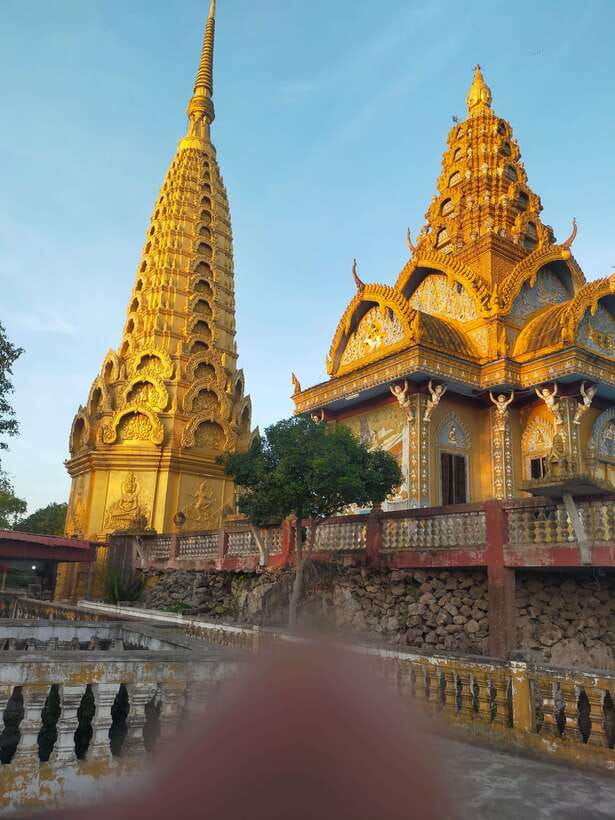
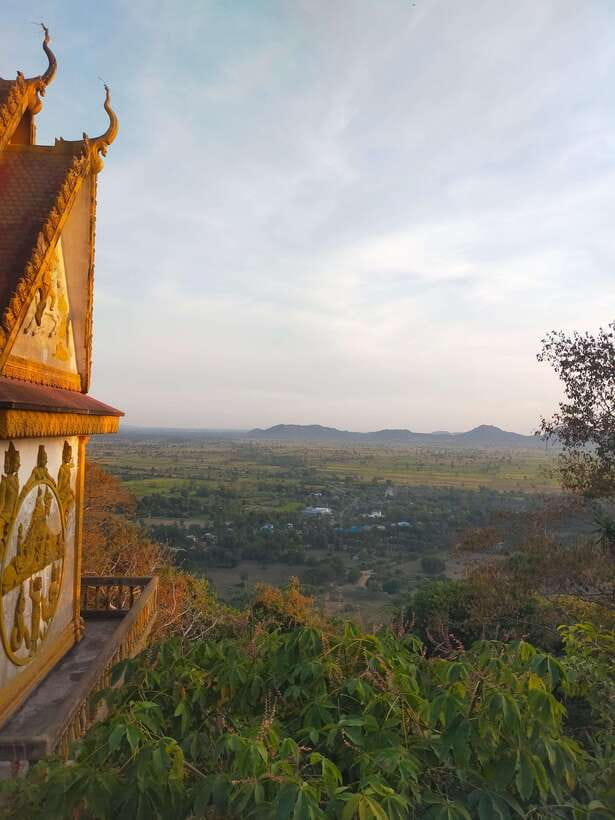
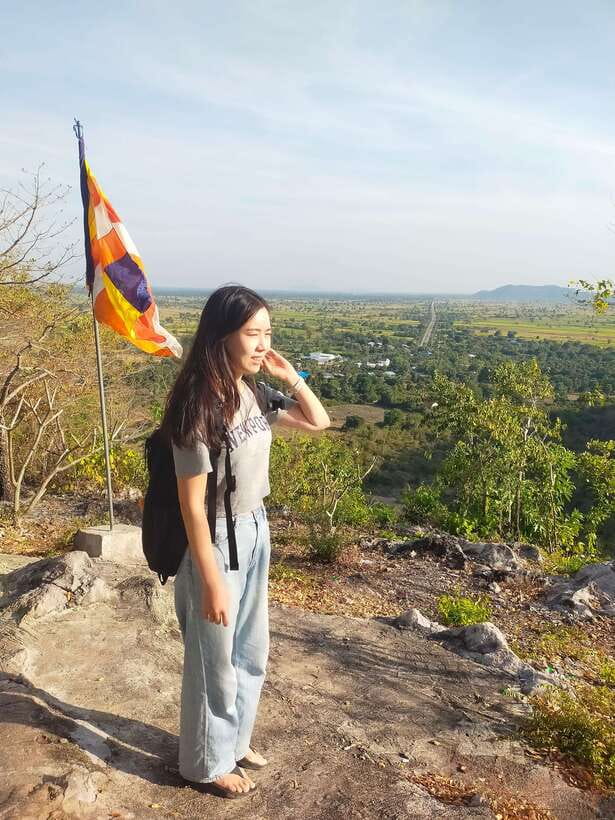
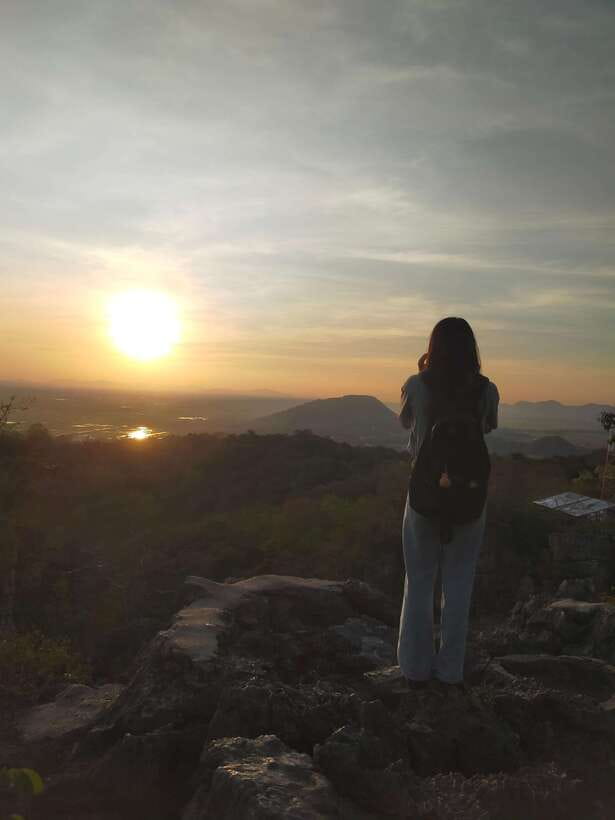
After the Killing Cave, you continue higher to see temples, monkeys, and viewpoints on the summit. The mountain gives you a broad view over the surrounding countryside, with fields and distant settlements spread below.
This is one reason to keep water close. The combination of heat, steps, uneven ground, and time outdoors can be demanding. The tour is not suitable for pregnant women, people over 220 pounds or 100 kilograms, people with high blood pressure, or people over 95 years old, according to the stated restrictions.
The top section balances the serious cave visit with open air and movement. You can take photographs, look at the temple details, and watch the monkeys, while the guide continues explaining the area. Stay aware around the animals and follow the guide’s instructions.
The timing is designed to lead into sunset. You may wait on the hill before descending to the bat cave area. That pause is part of the day’s rhythm, but it can feel long if you are tired or hungry. Carry a small snack or plan your lunch well, since the only included food is fruit salad and optional rat barbecue tasting.
Millions of bats at sunset
The final major stop is Phnom Sampov’s bat cave. As evening approaches, millions of wrinkle-lipped bats fly out in a long stream. The flight can continue for more than 50 minutes, turning the cave opening into a moving black ribbon across the sky.
This is the tour’s most distinctive natural sight. It costs nothing extra beyond the included admission, and it is very different from watching wildlife in a zoo. You stand outside and wait for the movement to begin, so the experience depends on timing and natural conditions. Once it starts, the sheer number of bats makes the wait worthwhile.
Bring a camera, but do not spend the entire time looking through it. The flight can be hard to capture well, and the scale is easier to appreciate with your own eyes. The guide can help you find a good viewing point and explain what you are seeing.
The day ends with a tuk-tuk ride back to your hotel or to Pomme Bar in town. Because the start is early and the bat flight happens in the evening, you should keep your night free. This is not a tour to squeeze between other fixed plans.
What to budget and bring
The base price is $14 per person. That includes:
- Hotel pickup and drop-off within 5 kilometers of Battambang
- An English-speaking guide
- Bottled water and wet wipes
- Fruit salad
- Admissions for Wat Banan, Phnom Sampov, the Killing Cave, and the bat cave
- Mountain transport by motorbike or shuttle
- Donations connected with the sites
You pay extra for the $5 bamboo train ticket, lunch, and personal expenses. Cash is important for these costs and for small purchases along the way.
Wear light clothing that covers you respectfully at temples. Good walking shoes will help with the 358 steps and uneven mountain paths. Add sunscreen, rain gear, a camera, and a water bottle if you have one. The supplied water is useful, but an 11-hour outdoor day can make extra hydration worthwhile.
Who should book this tour?
I would choose this tour if you want Battambang in one broad sweep: city landmarks in the morning, village life and farmland, an unusual railway ride, a major temple, a difficult historical site, and a memorable wildlife event at dusk.
It suits curious people who like guides with personality. Samol, when available, seems especially good for visitors who want history explained with humor and warmth rather than a dry list of dates. It also suits anyone who wants authentic local food and is willing to try optional rat barbecue.
I would hesitate if you dislike long days, heat, rough transport, or emotionally serious sites. The bamboo train may feel too basic, the post-Banan pacing may be slower than you prefer, and there is not much time for a detailed walking tour of central Battambang.
Should you book it?
Yes, if you have only one day for Battambang and want a practical introduction to the province beyond the town center. The best reasons are the five towers of Wat Banan, the Khmer Rouge history at the Killing Cave, and the evening bat flight. Together, they give the day real range.
Book it with realistic expectations. Add money for lunch and the bamboo train, wear shoes for the steps, and accept that the day will be hot and long. If you can manage that, the $14 starting price buys an unusually full view of Battambang, with a guide helping connect its food, farms, faith, history, and natural sights.
FAQ
What time does the Battambang tour start?
Pickup begins at about 8:20 AM from your accommodation or a restaurant. The tour lasts around 11 hours and ends after the evening bat flight, with return to your hotel or Pomme Bar in town.
Is the bamboo train included in the $14 price?
No. The bamboo train costs $5 per person separately. Lunch and personal expenses are also excluded.
What does the tour include?
The price includes hotel pickup and drop-off within 5 kilometers of Battambang, an English-speaking guide, bottled water, wet wipes, fruit salad, site admissions, mountain transport, and donations.
How difficult is the Wat Banan climb?
You climb 358 steps to reach the temple. The tour also includes outdoor walking around Phnom Sampov, so sunscreen, water, and suitable shoes are important.
Is the rat barbecue required?
No. Rat barbecue tasting is optional. You can choose whether to try it before visiting Phnom Sampov.
Who should not take this tour?
The tour is listed as unsuitable for pregnant women, people over 220 pounds or 100 kilograms, people with high blood pressure, and people over 95 years old.
Just added around Battambang
- Private Half-Day Tuk Tuk Tour in Battambang★ 5.0 · 2 reviews
- Full/Half Day Tuk TuK: Handicrafts Bambootrain Killing&Bat Caves★ 5.0 · 14 reviews
- Morning Tuk Tuk Food Tour: Taste Iconic Dishes of Battambang★ 5.0 · 2 reviews
- Tuk Tuk Tour (Full-Day)★ 5.0 · 7 reviews
- Private Full Day Tuk Tuk Tour in Battambang★ 5.0 · 12 reviews
- Full-Day Battambang with a local Tuk Tuk Tours★ 5.0 · 2 reviews
- half day morning tour by Tuk-Tuk★ 5.0 · 20 reviews
- Morning Tuk tuk: City, Handicrafts, Killing field, Temples★ 4.9 · 13 reviews
Battambang Tuk Tuk Tours, compared.
Tuk-Tuk, Bamboo Train, Killing/Bat Caves, Sunset
Read our review →
Battambang Tuk Tuk tour: Bambootrain, Killing & Bat Caves,Sunset
Read our review →
Afternoon tour by tuk tuk to bamboo train,bat cave,killing cave,countryside.
Read our review →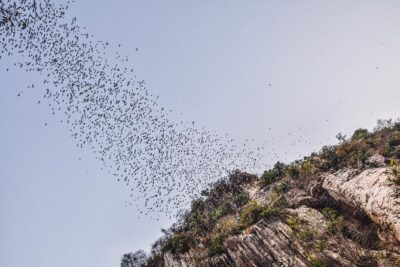
Explore Battambang full day tour by Tuk Tuk (start from 9am-6:30pm)
Read our review →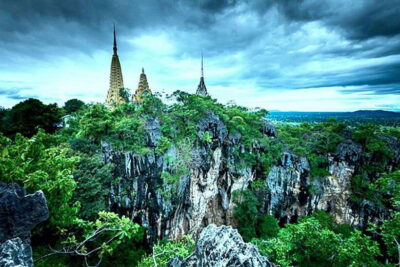
A Day TukTuk Handicrafts Bambootrain Killing&BatCaves,Sunset
Read our review →
Full day tour by bicycle & tuk tuk,bamboo train,bat cave,villages
Read our review →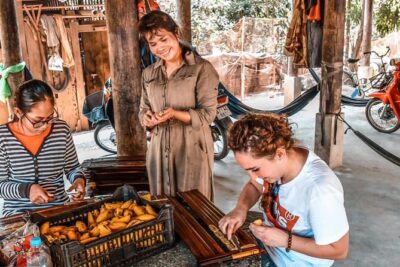
Browse the lists this tour appears in