

Review · AMSTERDAM
Amsterdam: Private Pedicab Historical Sightseeing Tour
Amsterdam’s best feature is often its scale: you can move from a medieval square to a grand canal, a Jewish landmark, and a world-class museum in minutes. This private pedicab tour makes that easy, especially when walking is tiring or the weather is not ideal. Local guide Bram de Haan takes you through the old center, canal district, Jewish quarter, Chinatown, and Museumplein.
I like the way this tour covers both famous sights and quieter city details, from the 15th-century gate at New Market Square to houseboats along the Oude Waal. I also like the personal format: you have the pedicab to yourself, can ask questions freely, and can arrange a preferred finish. The main consideration is the price, $230 for up to two people, which makes this a better value for a pair than for a solo visitor.
Key points to know before booking
- A local guide named Bram de Haan: Expect detailed explanations of Amsterdam’s growth, architecture, Jewish heritage, and wartime past.
- A broad two-hour route: The pedicab links Dam Square, Zeedijk, New Market Square, the Jewish quarter, the Amstel, the canal ring, and Museumplein.
- Useful for limited walking ability: You stay seated for much of the ride, and the pedicab can reach streets that cars cannot.
- A genuinely private experience: The $230 rate covers a group of up to two people, with hotel pickup and drop-off included.
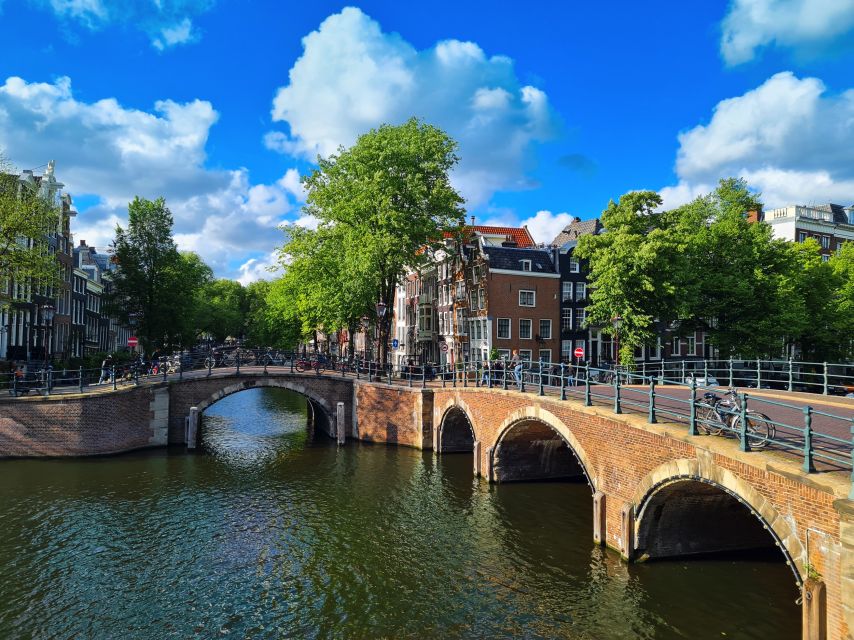
- Good photo stops: The Amstel, Skinny Bridge, canal houses, houseboats, and Museumplein all provide strong picture opportunities.
- Check the weight limit: The combined passenger weight must not exceed 200 kilograms, and the activity is not suitable for anyone over 100 kilograms.
Why a pedicab works well in Amsterdam
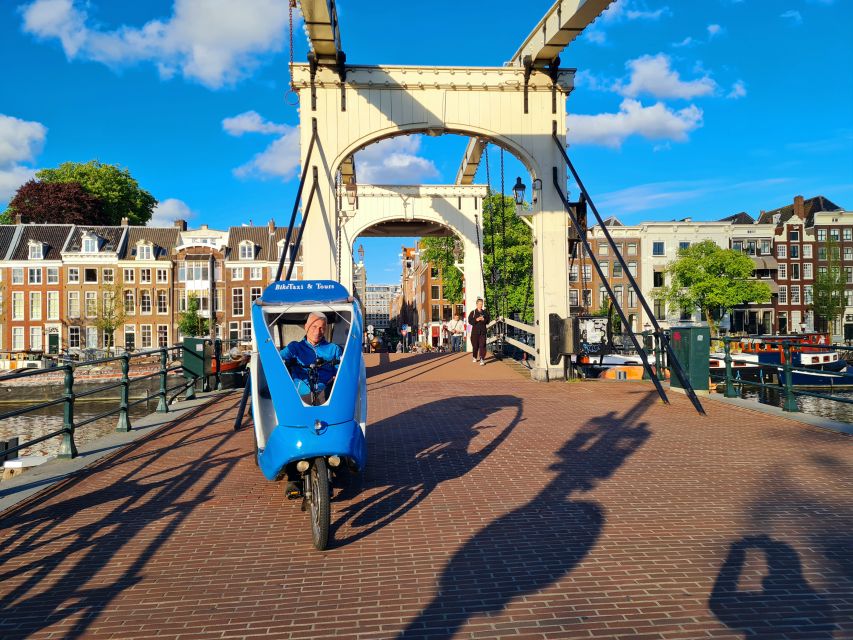
Amsterdam is easy to explore on foot, but the old center can be tiring. Bridges, cobblestones, traffic, narrow pavements, and long distances between sights can add up quickly. A pedicab gives you a moving seat and lets you see a large part of the city without spending two hours on your feet.
The format also gives you a better view than a standard vehicle. You sit close to the street, so canal houses, bridge details, shopfronts, and passing neighborhoods are easier to notice. The pedicab can use some streets that are inaccessible to cars, which gives the ride a more local feel.
This is not a hop-on, hop-off service. The tour lasts two hours, and the route is designed as one continuous sightseeing ride with stops for explanations and pictures. You should not expect to enter the Royal Palace, museums, synagogues, or other buildings during the tour. The value comes from seeing the city’s main areas in context and learning how they connect.
Bram is the guide named for this experience, and the strongest praise centers on his detailed presentation and obvious affection for Amsterdam. He uses photographs and maps to explain how the city developed, including its expansion, canal planning, and the years of German occupation. That sort of visual help matters because Amsterdam’s story is easier to follow when you can compare old maps and photographs with the streets in front of you.
More Pedicab Tours in Amsterdam:
- Amsterdam: Private Guided City Tour by Pedicab
★ 4.9 · 130 reviews - 2 hours Amsterdam City Tour in Pedicab
★ 5.0 · 39 reviews - Explore Amsterdam in 75 Minutes – Pedicab Rickshaw City tour
★ 5.0 · 38 reviews
Dam Square, where Amsterdam begins
The ride starts at Dam Square, the symbolic heart of the old city. This is where Amsterdam began to grow, and the square remains one of the city’s main gathering places.
You will see the Royal Palace, the New Church, and the National Monument. The square is not the prettiest space in Amsterdam, but it is an important starting point because it ties together the city’s royal, civic, and religious past.
A guide can make a big difference here. Without context, Dam Square can look like a large open area surrounded by major buildings. With an explanation of how the settlement developed around the dam in the Amstel, the location makes much more sense.
Starting here also gives you a quick orientation to the old center. If this is your first visit, that is useful. You will soon move into smaller streets where the city feels less monumental and more intimate.
Zeedijk and Chinatown

The pedicab next heads to Zeedijk, a street that began as one of the dikes protecting the old settlement. Its name still recalls that practical purpose.
Zeedijk is a good example of how Amsterdam’s past remains part of its present street plan. The area now has restaurants, bars, and shops, but the shape and location of the street point back to the city’s struggle with water.
One stop here is the oldest cafe still standing with its original interior. The tour does not include food or drinks, so you will not be stopping for a tasting. Instead, you get the setting and the story, with time to see the nearby Chinatown area.
This part of the route is useful because it shows Amsterdam as a working city rather than only a postcard of canals and grand houses. The streets are compact, and the pedicab is practical here, though you should expect a close urban environment with other road users around you.
New Market Square and the old city gate
A few minutes later, you reach New Market Square, or Nieuwmarkt. Its main feature is the old city gate at the center of the square, a 15th-century structure that once formed part of Amsterdam’s defenses.
The square is packed with layers of city history. It was connected to the defensive edge of the old settlement and later became part of the expanding urban center. Your guide uses the site to explain how Amsterdam grew beyond its original boundaries.
This is one of the places where a short stop can add a lot to the ride. You are not just seeing an attractive old building. You are seeing evidence of a city that had to protect itself, manage trade, and keep adapting as its population increased.
More History Tours in Amsterdam:
- Madrid Historical Tour with Local Guide in Eco Tuk Tuk Private
★ 5.0 · 876 reviews - Explore Lisbon by Tuk Tuk: History and Viewpoints
★ 5.0 · 840 reviews - Old Delhi Food, Heritage&Cultural Walk with Rickshaw ride to Masterji Kee Haveli
★ 5.0 · 742 reviews - Historic Porto by Private Electric Tuk Tuk to Top Landmarks
★ 4.5 · 735 reviews
Montelbaanstoren and the Oude Waal
The Montelbaanstoren is an early 16th-century watch and defense tower. It formed part of the city’s expanded defensive line and now gives the tour one of its more distinctive views.
From here, you can look toward the Oude Waal, where houseboats sit along the water with 17th-century canal houses behind them. This combination is very Amsterdam: old merchant homes, working waterways, and modern life on the canals all sharing one view.
I would have your camera ready here. The sightline over the water is one of the more rewarding picture stops because it brings together several periods of the city at once.
The tower also helps explain why Amsterdam cannot be understood only through its grandest canal streets. Defense, shipping, housing, and water management all shaped the city. This stop gives you a quick look at those practical forces.
The Jewish quarter and Amsterdam’s wartime memory
The route then moves into the Jewish quarter, one of the most important sections of the tour. You will see the Big Synagogue, described as the first synagogue Jewish people were permitted to build in Western Europe more than 350 years ago.
Across the street is the Portuguese Synagogue. Its presence reflects the Sephardic Jewish community that settled in Amsterdam and became successful in the diamond trade. Nearby canal houses were once home to prosperous Sephardic residents, giving you a chance to see how commerce and migration shaped the neighborhood.
The Holocaust Names Memorial is another major stop. Its 102,000 bricks bear the names of Dutch Jewish victims of the Second World War. This is a serious part of the route, and Bram’s use of photographs and historical material helps place the memorial within Amsterdam’s wider story.
You should allow yourself a quiet moment here. The stop is not simply another landmark on a sightseeing circuit. It connects Amsterdam’s earlier religious freedom and commercial growth with the destruction of the Jewish community during the German occupation.
The subject matter may feel heavy compared with the lighter canal views later in the ride. That is also the point. A useful city tour should not skip the difficult parts of the past, and this route gives them proper space.
The Hermitage and the Skinny Bridge
The ride continues past the Hermitage, housed in a large 17th-century widowhouse. The building’s earlier purpose is part of what makes it interesting. It was built as a home for widows, and today it is associated with museum exhibitions.
Soon you reach the Skinny Bridge, or Magere Brug, one of Amsterdam’s most recognizable bridges. Its narrow design and rows of light bulbs make it especially attractive after dark, although this tour’s exact timing depends on the departure you choose.
From the bridge, you get a broad view over the Amstel. The Amstel is the main and widest canal in the city, and the water opens up here more than it does in the tighter canal streets.
This is a fine place for photographs. You can frame the bridge, the river, and the surrounding buildings in one view. It is also a good moment to pause and appreciate the difference between Amsterdam’s narrow inner canals and the wider waterway that gave the city its name.
The 17th-century canal ring
After the Amstel, the pedicab enters the canal district. On a map, the 17th-century canal ring forms a series of half circles around the old center. In person, the pattern is easier to understand as you move from one canal to another.
This is where many visitors expect the classic Amsterdam view: narrow canal houses, bridges, tree-lined water, and former merchant homes. The houses are not identical, though they share features that reveal when and why they were built.
Bram explains the similarities and differences between the buildings. That is more useful than simply pointing out pretty facades. You begin to notice width, roof shapes, windows, and the way houses were adapted for commerce and residence.
The pedicab is especially effective in this section. You can watch the buildings pass at a slow pace without the effort of walking the full canal ring. You also avoid turning the tour into a lecture in one fixed location. The city keeps changing around you as the explanation continues.
Keep in mind that Amsterdam’s streets remain active. Bikes, cars, delivery vehicles, and pedestrians share much of the route. The ride is comfortable, but it is still an urban outing rather than a quiet countryside excursion.
Museumplein and the Rijksmuseum tunnel
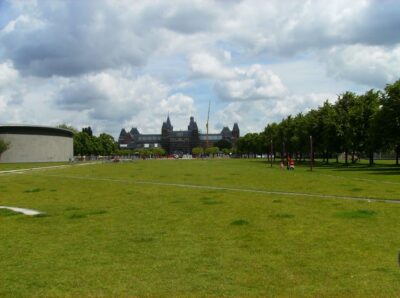
The final major stop is Museumplein, a broad green square from the 19th century. It is home to the Rijksmuseum and the Van Gogh Museum, two of the country’s most important museums.
The pedicab drives through the Rijksmuseum tunnel and stops in the middle of Museumplein. This is a memorable way to arrive because the tunnel gives you a direct link between the old canal districts and Amsterdam’s later cultural quarter.
The tour does not include museum admission, and two hours is not enough to visit the collections. Think of Museumplein as an orientation stop. Bram can show you where the museums are, and you can decide if you want to return later for a longer visit.
If you are planning a museum day, ask to finish here. The tour allows you to choose a desired ending location in advance, so Museumplein can be a practical final stop rather than a return to your hotel.
Price, comfort, and who gets the best value
The cost is $230 per group of up to two people for two hours. That is not a budget sightseeing ride, but it includes private transport, hotel pickup and drop-off, and a local guide focused entirely on your party.
For two people, the cost works out to $115 each. I see the value most clearly if you want a broad introduction to Amsterdam without a long walk, or if you would otherwise need to arrange several taxis between distant neighborhoods. You are paying for coverage, comfort, and personal attention rather than entry tickets.
The tour is particularly suited to seniors and people with limited walking ability. Several visitors with mobility concerns found the seated format ideal, and the pedicab can reach streets that cars cannot. Still, this should not be treated as a fully accessible vehicle experience. The supplied information sets a combined passenger weight limit of 200 kilograms, and anyone over 100 kilograms is listed as unsuitable for the activity.
The pedicab includes a blanket in cold weather. Bring warm clothing anyway, since you are outdoors for the full ride. A cool or rainy day does not necessarily ruin the experience, but your comfort will depend on dressing properly.
The tour is private, and the available guide languages are English, Dutch, and German. Hotel pickup is included, but you need to wait outside in front of the hotel. Food and drinks are not included.
You can cancel up to 24 hours before the tour for a full refund, and the reserve-now, pay-later option gives you some flexibility while your Amsterdam plans are still changing.
Should you book the Amsterdam pedicab tour?
Book it if you want to see a wide slice of Amsterdam in two hours, prefer sitting to walking, or value a guide who explains how the city developed rather than simply naming landmarks. Bram’s use of maps, photographs, and personal knowledge adds weight to the historical sections, especially around the Jewish quarter and the wartime memorial.
It is also a strong first-day choice. You will get your bearings in the old center, see the canal ring, learn where the major museums are, and identify places to revisit on foot later.
I would skip it if you want museum entry, a food-focused outing, or a slow, silent ride with little narration. The tour is information-heavy and covers a lot of ground. Its price makes the most sense for two people sharing the private booking.
For a pair seeking comfort, a broad route, and real context, this is a practical way to meet Amsterdam.
FAQ
How long is the Amsterdam private pedicab tour?
The tour lasts two hours.
How much does the tour cost?
The price is $230 per group of up to two people.
Is the tour private?
Yes. The experience is for a private group.
Does the tour include hotel pickup and drop-off?
Yes. Pickup and drop-off are included. You should wait outside in front of your hotel for pickup.
Which languages are available?
The live guide is available in English, Dutch, and German.
Which Amsterdam areas does the tour visit?
The route includes Dam Square, Zeedijk, Chinatown, New Market Square, Montelbaanstoren, the Jewish quarter, the Hermitage, the Skinny Bridge, the 17th-century canal district, and Museumplein.
Does the tour enter the Rijksmuseum or Van Gogh Museum?
No. The tour visits Museumplein and drives through the Rijksmuseum tunnel, but museum admission is not included.
Is food or drink included?
No. Food and drinks are not included.
What should I bring?
Bring warm clothing. A blanket is provided in cold weather.
Is there a passenger weight limit?
Yes. The maximum combined passenger weight is 200 kilograms. The activity is not suitable for people over 100 kilograms.
Just added around Amsterdam
- 1,5 hours Amsterdam Rickshaw Tour★ 5.0 · 24 reviews
- Explore Amsterdam in 75 Minutes – Pedicab Rickshaw City tour★ 5.0 · 38 reviews
- 2.5 hours Amsterdam Pedicab Tour★ 5.0 · 7 reviews
- Amsterdam Pedicab City Tour (2 hours)★ 5.0 · 22 reviews
- 1 Hour Private Amsterdam Rickshaw Tour★ 5.0 · 11 reviews
- 1 hour Amsterdam City Tour in Pedicab★ 4.5 · 3 reviews
- 2 Hours Private Amsterdam Rickshaw Tour★ 5.0 · 16 reviews
- Amsterdam: Private Guided Pedicab & Rickshaw Highlights Tour★ 5.0 · 5 reviews
Amsterdam Tuk Tuk Tours, compared.

Explore Amsterdam in 75 Minutes – Pedicab Rickshaw City tour
Read our review →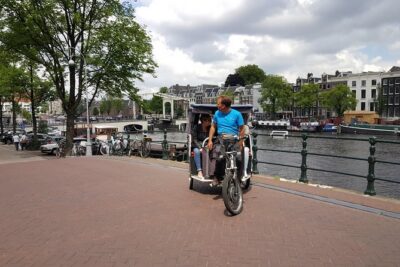


Browse the lists this tour appears in