
Review · SRI LANKA
Anuradhapura: 14 Ancient City Sites Tuk Tuk Tour
Anuradhapura is too spread out for a sensible walking tour, and this private tuk-tuk ride solves the problem neatly. In four to six hours, you move between 14 ancient sites, from sacred trees and giant stupas to royal bathing pools and carved guardstones, without wasting time finding transport.
I like the private group setup, which keeps the outing to your party of up to three. I also like the simple front-door pickup, bottled water, parking, and audio guide. The main drawback is that admission is not included, and the rapid pace gives you only brief visits at several major monuments.
Key points
- Four to six hours by private tuk-tuk: A practical way to cover Anuradhapura’s scattered ruins without walking long distances.
- Fourteen stops in one outing: The route includes the city’s best-known stupas, monasteries, pools, temples, and carvings.
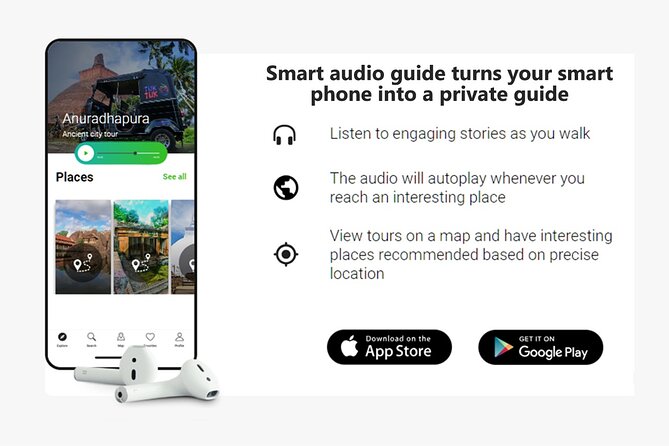
- Audio guide included: You get recorded information for the sites, rather than relying only on the driver.
- Pickup from a hotel or railway station: The tour begins and ends at a convenient local point.
- Extra admission cost: Entry tickets for the eight UNESCO World Heritage sites cost $30 per person and are not part of the tour price.
- Small-group value: The $46.40 price covers up to three people, making it more attractive when shared.
Why a tuk-tuk makes sense in Anuradhapura
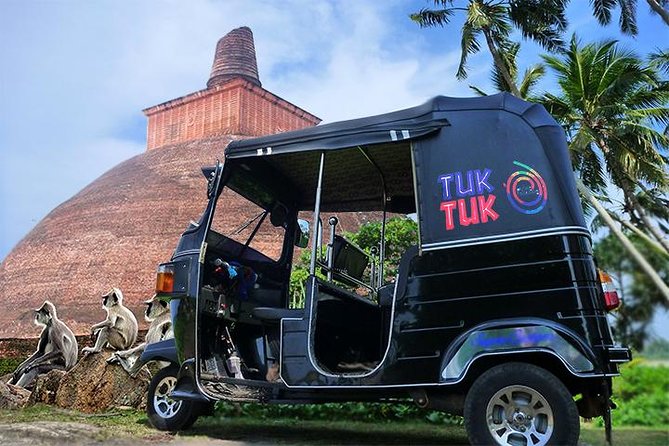
Anuradhapura is not one compact ruin with a single entrance. Its sacred monuments, monastery remains, parks, ponds, and stupas are spread across a wide area. Walking between every stop would eat up much of your day, especially under Sri Lanka’s strong sun.
A private tuk-tuk gives you a seat between sites and keeps the route moving. You do not need to flag down a vehicle at every turn or bargain over each short ride. Pickup and drop-off are offered at your hotel or railway station, which is especially useful if you have only half a day in town.
The experience is designed for a group of up to three people. That makes it more personal than a large coach tour, though it does not promise a live guide walking with you at every stop. The supplied digital audio guide provides the historical explanation, while the driver handles the transport and parking.
The route is busy, with 14 stops in roughly four to six hours. Some visits last only 10 minutes, so think of this as a well-planned overview rather than a slow archaeological study.
More City Tours in Sri Lanka:
- Colombo: Private Tuk-Tuk City Tour with All Entry Fees
★ 4.9 · 2,154 reviews - Kandy Private Guided City Tour by Tuk Tuk
★ 4.9 · 1,307 reviews - Colombo Tuk Tuk City Tour -Sightseeing Entry Fees & Food Included
★ 5.0 · 678 reviews
The southern opening: Isurumuniya and Ranmasu Uyana
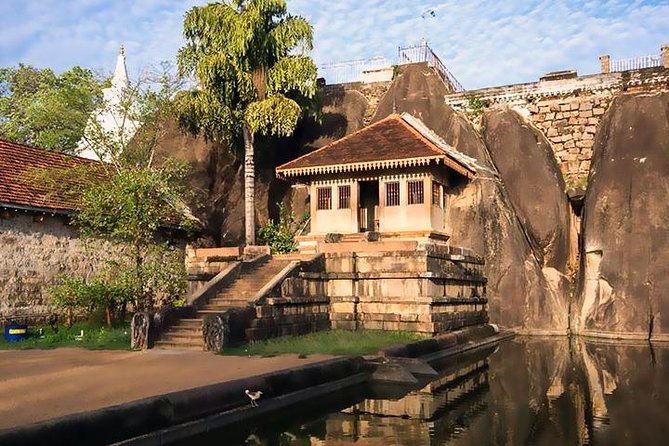
The first stop is Isurumuniya Temple, near Tissa Wewa. The temple is known for several carvings, including the Isurumuniya Lovers, the Elephant Pond, and the Royal Family. Twenty minutes gives you time to look around and focus on the details, but not much room for a long visit.
Admission is not included. You should also expect to remove your shoes at Buddhist religious sites, although the supplied practical advice is particularly useful here: bring or wear socks. Bare feet on hot sand and sun-heated stone can become painful quickly.
Next comes Ranmasu Uyana, also called Magul Uyana, an ancient park close to Isurumuniya and Tissawewa. The stop lasts about 40 minutes, making it one of the longer pauses on the route. That extra time matters because this is not simply a single monument. You have room to view the park remains and connect them with the nearby temple area.
The combination works well at the start. Isurumuniya gives you carvings and a living religious setting, while Ranmasu Uyana shifts your attention to the planned spaces of the old city.
Dutugamunu’s monuments and Sri Maha Bodhi
The route then moves to Mirisaveti Stupa, built by King Dutugamunu after his victory over King Elara. The visit is scheduled for only 10 minutes, so you will mainly see the stupa, take in its scale, and listen to the audio explanation before moving on.
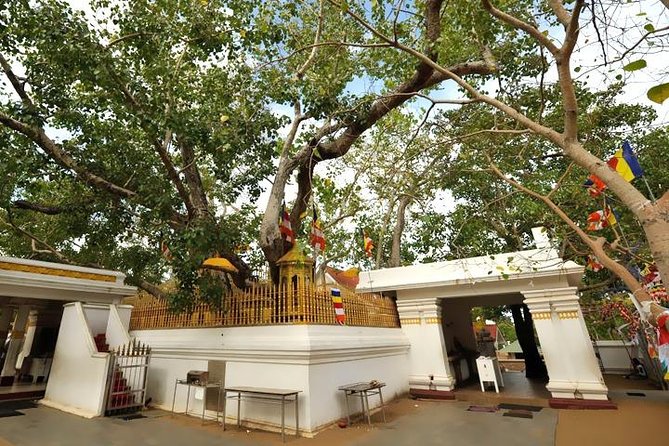
Sri Maha Bodhi receives 20 minutes. This sacred fig tree is described as the oldest tree known to have been planted by human hands, with an age of about 2,300 years. Its importance is not only botanical. It is a living focus of Buddhist devotion, and the atmosphere differs from the silent stone ruins around it.
You should dress and behave respectfully at the religious sites. The timing lets you see the main area, but anyone hoping to sit quietly for a long period will find the schedule tight.
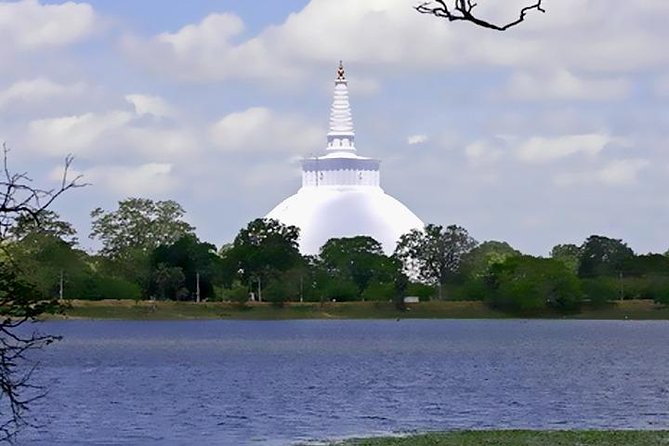
Ruwanwelisaya follows, with another 20-minute visit. This huge white stupa was built by King Dutugamunu around 140 B.C. and is considered sacred by Buddhists around the world. It is one of the route’s major visual moments, and the audio guide can help you understand why a rounded reliquary monument matters beyond its impressive size.
Thuparama, Lankarama, and the language of stone
At Thuparama Dagoba, you have about 10 minutes. Its bell shape is distinctive, and the monument has been destroyed and restored several times. That short stop is enough for a close look, but you may want to keep your expectations in check. Fourteen sites in half a day means some monuments receive a quick viewing rather than a full explanation on foot.
Lankarama Stupa is also allotted 10 minutes. It was built by King Valagamba at Galhebakada, though little is known about its original form. This is a good example of why the audio guide has value. A ruined monument can look simple at first glance, but its association with an ancient king and its later changes give it more meaning.
The Moonstone, or Sandakada Pahana, is another brief stop. These semicircular carved stones usually feature a half lotus in the center, surrounded by several bands. The design is easy to miss if you hurry past a staircase or entrance, so pay attention to the stonework beneath your feet.
The tour also includes Rathna Prasadaya and its guardstone. Early guardstones were plain supports for heavy stone balustrades. Later examples gained carved symbols connected with protection and prosperity. This stop rewards close looking more than wide views. It is a reminder that Anuradhapura’s art is often found in small architectural details, not only in its enormous stupas.
A few more rides around Sri Lanka worth a look
- Colombo Private Tuk-Tuk City Tour with All Entry Fees Included
★ 5.0 · 524 reviews - Colombo: Private Tuk-Tuk City Tour with Guide & All Tickets
★ 4.9 · 471 reviews - Mr.TukTuk Nuwara Eliya
★ 5.0 · 322 reviews - Kandy to Ambuluwawa & Kandy City Guided Tuk Tuk Day Tour
★ 4.8 · 270 reviews
Abhayagiri’s monastery remains
The Abhayagiri section gives you a stronger sense of the ancient city as a working monastic center. At the Main Refectory of Abhayagiri Monastery, you see the remains of the building where daily alms were served. The planned visit lasts 20 minutes.
This kind of stop adds useful context. Anuradhapura was not simply a collection of isolated religious monuments. Monasteries required kitchens, dining halls, bathing facilities, residences, and organized daily routines. The refectory helps you picture the practical side of monastic life.
Abhayagiri Dagaba receives 30 minutes, the longest stop among the major stupas on this part of the route. Abhayagiri was a major monastery and royal center, with large buildings that once rose several stories and were finished with gilt bronze or glazed tiles. Much of that decoration is gone, but the scale of the complex remains important.
The longer pause is welcome here. You can give the stupa and monastery grounds more attention instead of taking a quick photograph and returning to the tuk-tuk. Still, the experience remains a survey tour. If you want extensive time at every Abhayagiri ruin, you would need to arrange a longer private visit.
Samadhi Statue and the Twin Baths
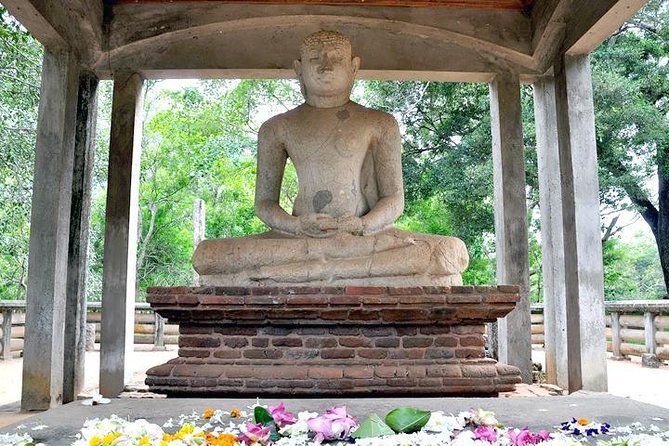
The Samadhi Statue is a 10-minute stop in Mahamevnawa Park. The Buddha is shown in the Dhyana Mudra, the meditation posture associated with his first enlightenment. This is a compact visit, but the statue provides a change of scale and mood after the large Abhayagiri complex.
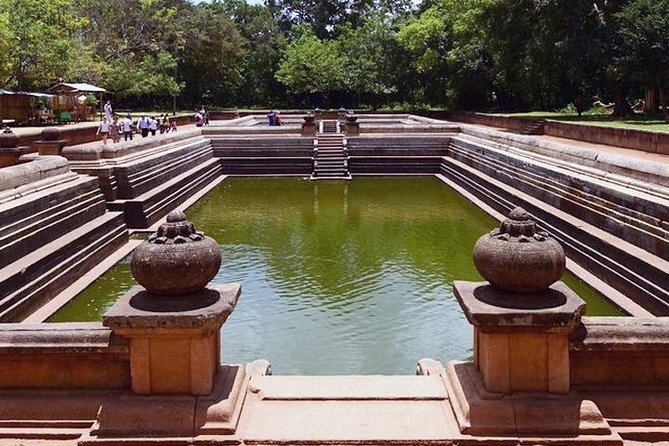
Next come the Twin Baths, or Kuttam Pokuna. The paired pools are among the finest surviving examples of ancient bathing tanks in Sri Lanka. The tour allows 20 minutes here, enough to study the stone edges, steps, and design.
The baths are particularly useful for understanding the engineering behind the sacred city. They show that ancient Anuradhapura depended on carefully planned water systems, not just shrines and ceremonial buildings. You do not need a long stop to appreciate the clean geometry of the pools, though the hot weather may make the shaded or cooler moments welcome.
Ending beside the enormous Jetavanaramaya
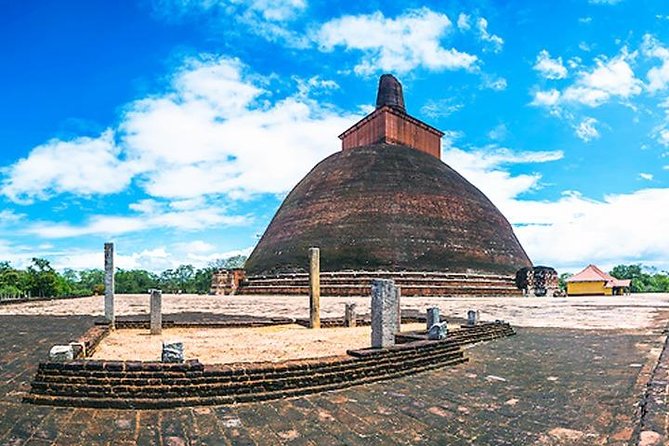
The final stop is Jetavanaramaya, a major stupa in the ruins of Jetavana Monastery. At 122 meters, or about 400 feet, it was once the tallest stupa in the world. That figure gives you a useful sense of its ambition, even before you see the monument.
A 20-minute visit allows a final look at one of Anuradhapura’s largest religious structures. After a route filled with smaller carvings, pools, monastery buildings, and stupas, Jetavanaramaya provides a powerful closing image.
The sequence is sensible. You begin with a temple and ancient park, pass through sacred and royal monuments, spend meaningful time at Abhayagiri, and finish with a colossal stupa. The tradeoff is that some of the smaller sites may blur together if you are not listening to the audio guide.
What the $46.40 price really covers
The listed price is $46.40 per group of up to three, not per person. For three people, that is a low transport cost for a private half-day ride. Even for two people, it can compare well with arranging separate tuk-tuk rides and negotiating each fare.
The price includes the private vehicle, driver, bottled water, parking fees, and the digital audio guide for all the sites. Those inclusions matter because Anuradhapura’s spread-out layout makes transport the main practical challenge.
Admission is extra. Entry tickets for the eight UNESCO World Heritage sites are listed at $30 per person. For three people, that adds $90, making the total outlay much higher than the vehicle price alone. You should budget for that before booking, especially if you are comparing this outing with a walking tour or a self-guided visit.
The value is strongest when you want efficient transport and a fixed route. It is weaker if you already have a vehicle, prefer to choose only two or three monuments, or want a live historian to spend long periods at each stop.
Timing, heat, and what to bring
The duration is approximately four to six hours. The variation likely depends on traffic, pickup location, time spent at each site, and how closely you follow the suggested schedule. Since several stops last only 10 minutes, you should be ready to get in and out of the tuk-tuk often.
Wear light, respectful clothing suitable for Buddhist temples. Bring socks for hot ground, as bare feet on sun-heated sand and tiles can be very uncomfortable. Bottled water is included, but carrying anything else you need for the half-day may still be sensible.
Because the experience requires good weather, poor conditions can lead to a different date or a full refund. Free cancellation is available up to 24 hours before the start time. Changes or cancellations inside that 24-hour window are not accepted for a refund.
The tour is listed as suitable for most people, and service animals are allowed. It is also near public transportation, with pickup available from a railway station as well as surrounding hotels.
Who should book this Anuradhapura tour?
I would choose this tour if I had limited time and wanted to see the main ancient city sites without working out transport myself. It is also a good fit for a couple, family, or small group of friends who can share the group price.
The audio guide suits you if you like some historical explanation but do not need a live guide at your side. The private format gives your party control of the vehicle, though the fixed itinerary and tight stop lengths limit how much you can linger.
You may want something else if your main interest is detailed archaeology, long meditation at sacred places, or photography at a leisurely pace. Fourteen sites is a lot. Some monuments will receive only a quick look, and the number of stupas can feel repetitive if you are not especially interested in Buddhist architecture.
Should you book it?
Book this tuk-tuk tour if you want broad coverage, simple transport, and a private half-day schedule. It gives you a practical first look at Anuradhapura’s major sacred sites, with enough historical information to make the ruins easier to understand.
Before booking, add the $30-per-person admission cost to your budget and bring socks for the temple visits. If you can spare only one morning or afternoon in Anuradhapura, this is an efficient choice. If you have a full day and want to explore fewer places in greater detail, arrange a slower private visit instead.
FAQ
How long does the Anuradhapura tuk-tuk tour last?
The tour lasts approximately four to six hours.
How many sites are included?
The route includes 14 ancient city sites, including temples, stupas, monastery remains, bathing pools, and carved architectural features.
What transport is used?
The tour uses a private auto-rickshaw, commonly called a tuk-tuk.
How many people can join the private tour?
The price covers one private group of up to three people.
Is hotel pickup available?
Yes. Pickup and drop-off are offered from surrounding hotels. Pickup is also available from the railway station.
Is an audio guide included?
Yes. A digital audio guide is provided for all the sites included in the tour.
Are entrance tickets included?
No. Entry tickets are not included. Admission for the eight UNESCO World Heritage sites is listed as $30 per person.
What else is included in the price?
Bottled water and parking fees are included, along with the private tuk-tuk and digital audio guide.
Can I cancel for a full refund?
Yes, if you cancel at least 24 hours before the experience start time. Cancellations made less than 24 hours in advance are not refunded.
What happens if the weather is poor?
The experience requires good weather. If it is canceled because of poor weather, you will be offered another date or a full refund.
Just added around Sri Lanka
- Village Expedition in Yala By Tuk-Tuk from Hambantota Harbor★ 5.0 · 2 reviews
- Tuk Tuk Tales of Colombo From Cruies★ 4.6 · 4 reviews
- Tuk Tuk Kandy City Tour By Local Guide★ 5.0 · 3 reviews
- Trincomalee: Tuk-Tuk city tour with a guide★ 5.0 · 4 reviews
- Rent a Tuk Tuk & Explore★ 5.0 · 2 reviews
- Sigiriya and Dambulla Private Day Tour by Tuk-Tuk or Car★ 5.0 · 28 reviews
- Tuk Tuk Rentals★ 5.0 · 15 reviews
- Tuk Tuk Nuwara Eliya Tea Falls Adventure★ 5.0 · 44 reviews
Sri Lanka Tuk Tuk Tours, compared.
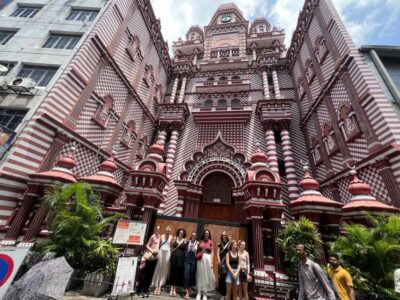
Private Tuk-Tuk City Tour with All Entry Fees
Read our review →
Colombo Tuk Tuk City Tour -Sightseeing Entry Fees & Food Included
Read our review →
Colombo Private Tuk-Tuk City Tour with All Entry Fees Included
Read our review →
Private Tuk-Tuk City Tour with Guide & All Tickets
Read our review →
Kandy to Ambuluwawa & Kandy City Guided Tuk Tuk Day Tour
Read our review →
Colombo Local Food Tour by Tuk Tuk – All Inclusive
Read our review →Browse the lists this tour appears in