
Review · BANGKOK
Bangkok Tuk Tuk Night Tour with Chinatown visit
Bangkok after dark makes the best case for getting out of a car. This four-hour outing puts you in a tuk tuk, zipping between Chinatown food stalls, the Flower Market, the Giant Swing, and Wat Ratchanadda. The evening ends with an optional look at Khao San Road before you return to your hotel.
I like two things here: the food tasting gives you a useful first step into Bangkok’s huge street-food scene, and the route mixes famous sights with ordinary city life. You’ll also have a guide such as Aey or Sunny to explain what you’re eating and seeing. The main drawback is the pace and vehicle: tuk tuks are lively but not gentle, and this tour is not suited to people with mobility limits, motion sickness, several food allergies, or a low fitness level.
Key points to know before booking
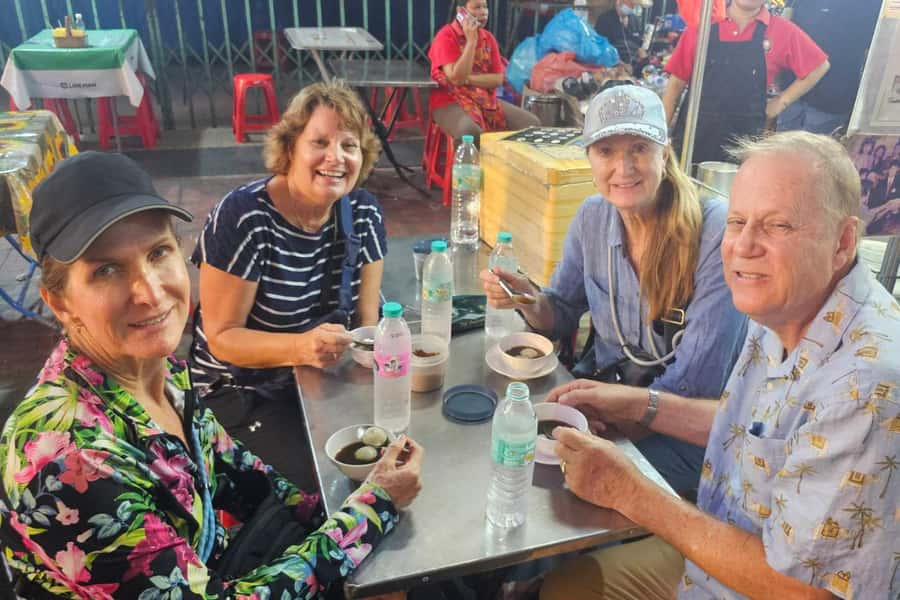
- Chinatown is the food center of the evening: Taste Dim Sum, mango sticky rice, PaTongGo, Bualoi Namkhing, and other local snacks.
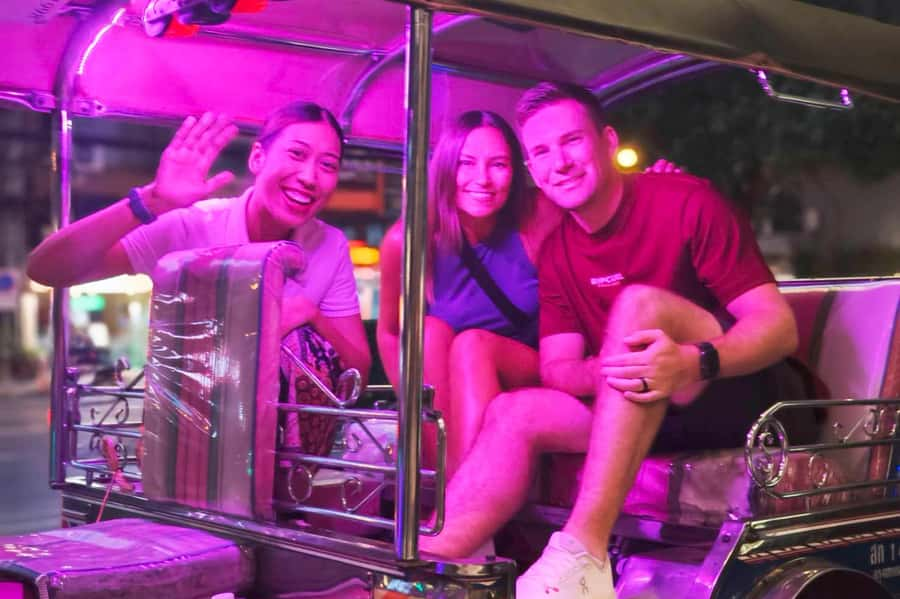
- The tuk tuk is part of the attraction: It gives you quick open-air city views, though pickup and drop-off can be limited in some areas.
- You see Bangkok beyond the food stalls: The route includes the Flower Market, Giant Swing, and Wat Ratchanadda.
- The guides matter: Aey is praised for knowing Bangkok and its food, while Sunny is singled out for making the Chinatown outing enjoyable.
- The tour runs four hours: Pickup begins around 6 p.m., with hotel service available in central Bangkok.
- Food restrictions need care: Tell the operator about dietary needs before the tour, and note that the activity is not suitable for people with food allergies, nut allergies, lactose intolerance, or diabetes.
Why Bangkok at 6 p.m. is the right starting point
The tour begins at about 6 p.m., when Bangkok is shifting from workday traffic to evening life. You are collected from your hotel in Bangkok, except at hotels near the airport or far from the city center. From there, the group heads toward Chinatown by tuk tuk.
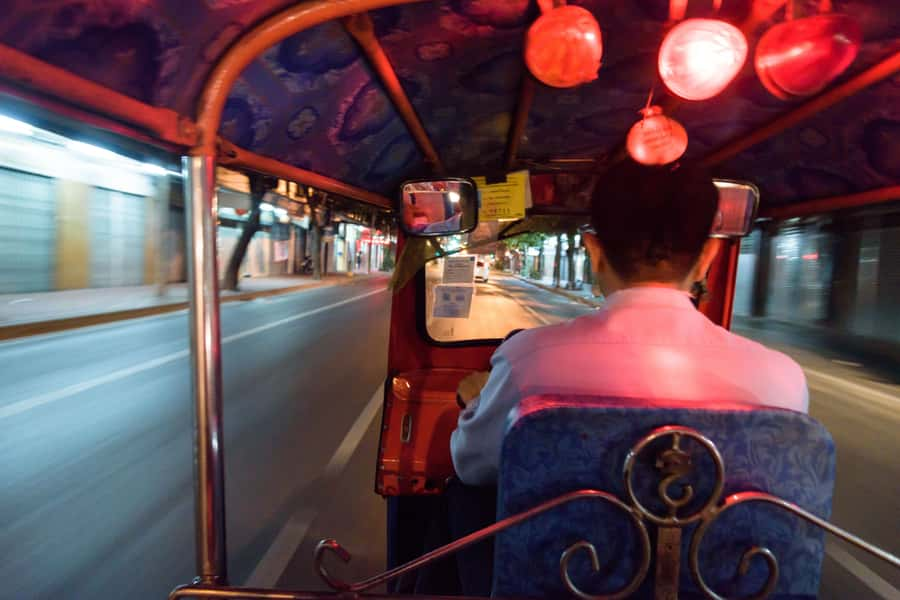
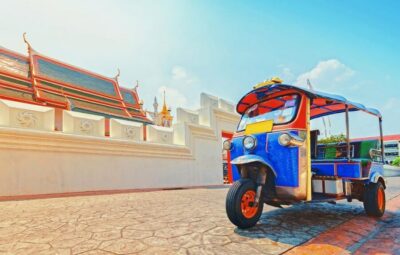
That transfer is not just a ride between stops. A tuk tuk gives you a low, open view of the streets, with the sounds and smells of the city close at hand. It also makes the ride feel like part of the evening rather than a simple taxi transfer. I would still set your expectations properly: this is a small, open vehicle with limited pickup and drop-off reach, not a private car with door-to-door access anywhere in Bangkok.
If your hotel is too far from the central area, you may need to use public transport to reach the meeting point. The same issue can apply at the end of the evening. Confirm the pickup details before you go, especially if you are staying near the airport or on the outer edge of the city.
A few more rides around Bangkok worth a look
- Bangkok by Night: Temples, Markets and Food Tuk-Tuk Tour
★ 5.0 · 3,752 reviews - Bangkok: Markets, Temples and Food Night Tour by Tuk Tuk
★ 4.9 · 2,371 reviews - Bangkok: Evening Tour with Wat Arun, Wat Pho & Tuk Tuk Ride
★ 4.6 · 701 reviews
Chinatown food tasting, from Dim Sum to mango sticky rice
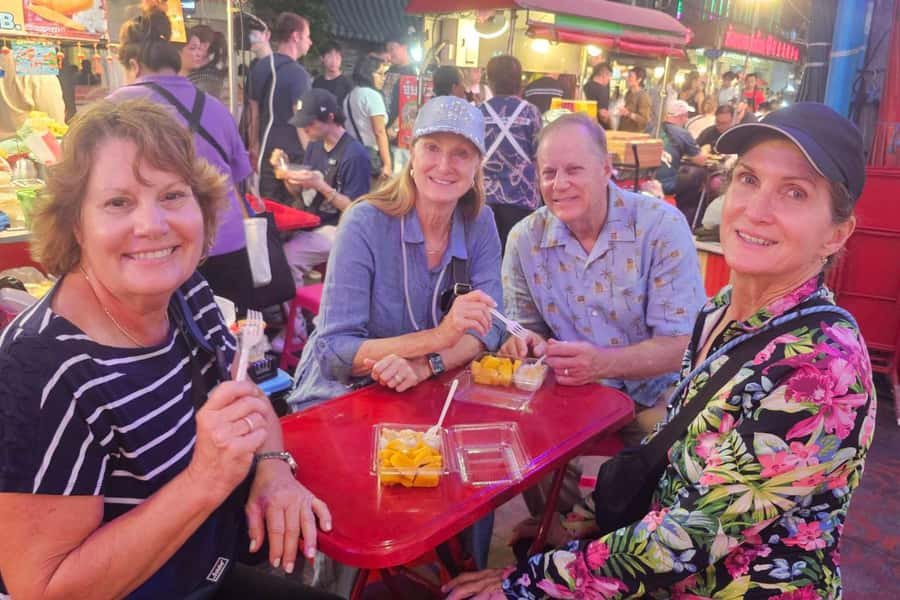
Chinatown is the main event for many people on this tour. You will stop for local street food and desserts, with the chance to taste several well-known items rather than commit to one large meal. That is a smart format in a place where the choice can feel overwhelming.
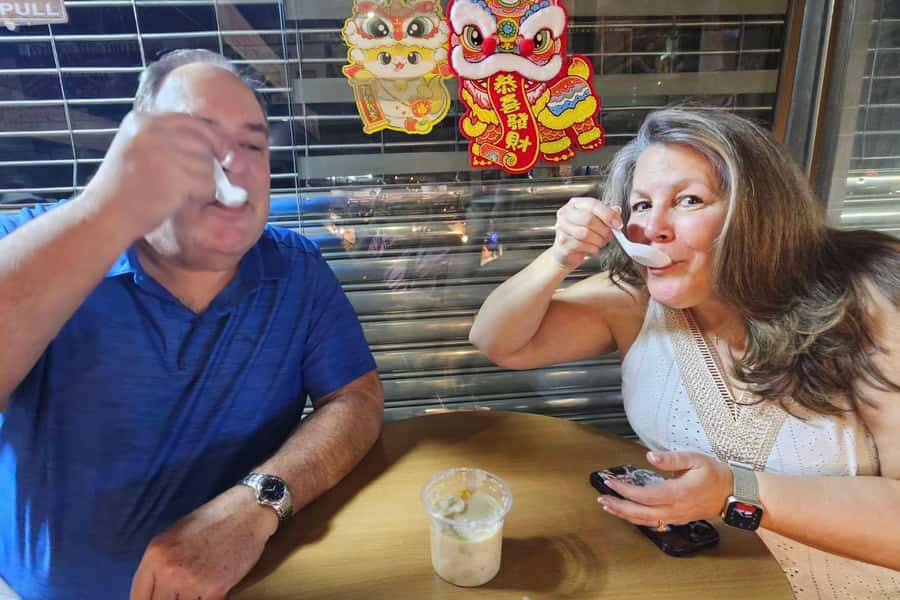
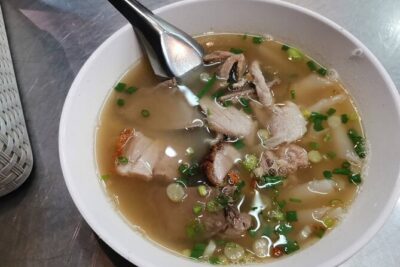
The food examples include Dim Sum, mango sticky rice, PaTongGo, and Bualoi Namkhing. PaTongGo is a Thai-style fried dough snack, while Bualoi Namkhing is a dessert built around glutinous rice balls and a warm ginger-based liquid. Mango sticky rice is familiar to many visitors, but tasting it in the middle of a Chinatown evening gives the dish a better setting than a hotel restaurant.
The tour also focuses on places and dishes associated with the Michelin Guide. That does not mean you are sitting down to a formal Michelin-star meal. You are tasting street food, with the guide helping you understand what is popular and how the local food scene works. This is where Aey’s reported strength with Bangkok food would be especially useful. You can ask what an item contains, how it is normally eaten, and which flavors to expect before ordering.
I like the tasting approach because it lowers the risk of making a poor first choice. Instead of staring at a long menu while scooters and pedestrians move around you, you have someone helping you make sense of the options. It is also a good way to try sweets and snacks that you might otherwise overlook.
Still, food is the part of this outing that requires the most caution. The operator asks you to share dietary requirements before the tour starts, but the activity is specifically not recommended for people with food allergies, nut allergies, lactose intolerance, or diabetes. Alcohol is not included, and extra meals are also your responsibility. Bring cash for anything beyond the included tasting.
The Flower Market and Bangkok’s everyday rhythm
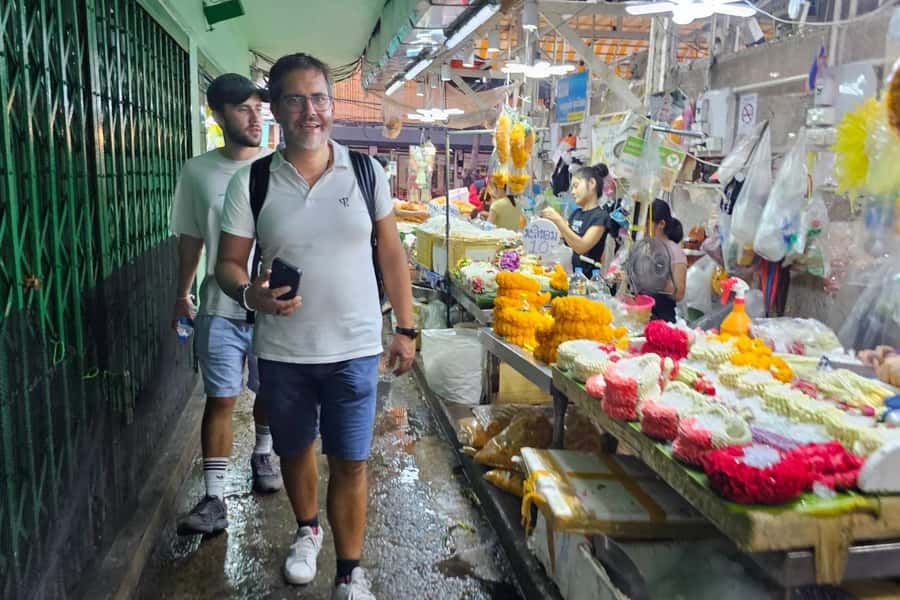
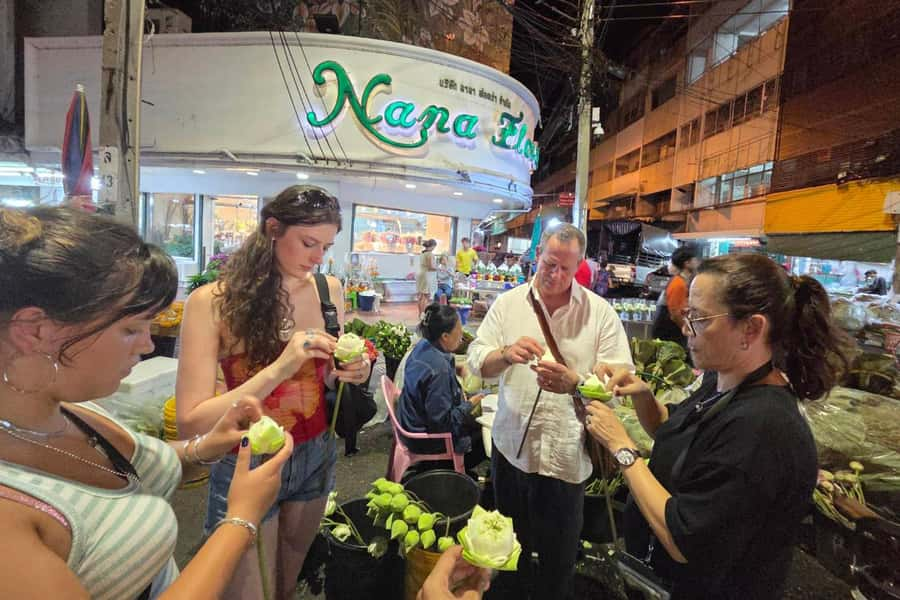
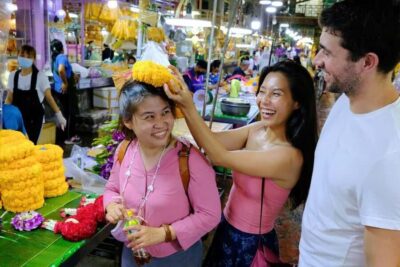
After Chinatown, the tuk tuk continues to the Flower Market. This stop shifts the mood from eating and sightseeing to watching local commerce at close range. You can see how flowers fit into daily life in Bangkok and observe people working and moving through the market at night.
The supplied information does not promise a particular flower display, market stall, or length of time at the stop, so I would think of it as a guided look rather than a long market-shopping session. The value is in seeing a working part of the city, not just a polished monument.
This is also one of the reasons the tuk tuk route works well. You are not spending the entire evening inside a restaurant or at a single landmark. The short transfers connect different sides of Bangkok and give you glimpses of streets that you might miss on a standard sightseeing circuit.
Bring insect repellent. Bangkok evenings can be warm, and the tour keeps you outdoors for much of the night. Comfortable clothing and shoes make sense, though the operator does not list a formal dress code.
The Giant Swing and a piece of Bangkok’s past
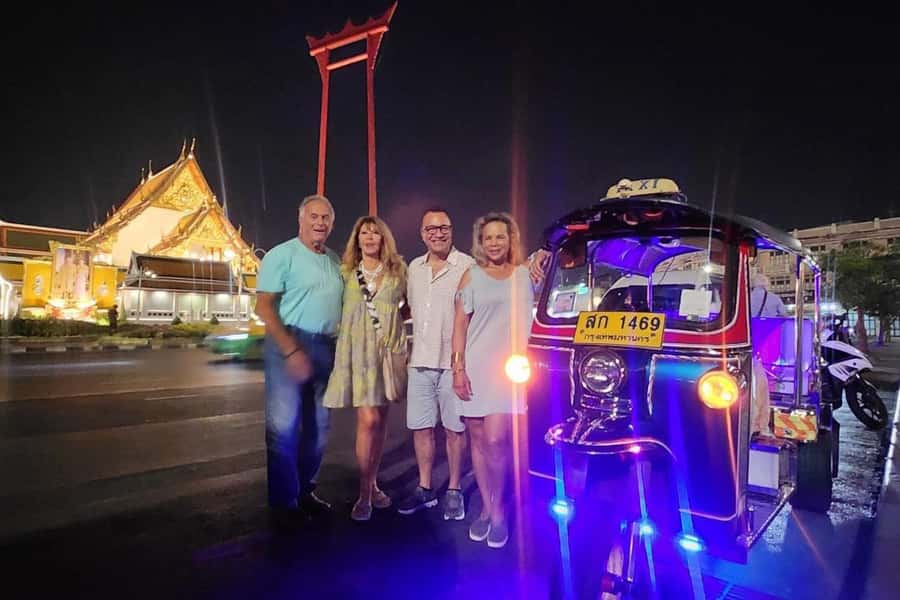
The Giant Swing is the next major stop. It is one of Bangkok’s recognizable landmarks, and the guide provides the background that gives the structure meaning beyond its shape and size.
The important point here is not simply taking a photograph. The stop adds historical context to an evening otherwise centered on food and nightlife. A guide can explain why the Giant Swing matters and connect it to the city’s older religious and royal districts. The tour description promises an interesting history lesson, though it does not specify how long the explanation lasts.
I appreciate this balance. Bangkok can be easy to reduce to markets, temples, and traffic. A stop like the Giant Swing gives you a little more context and helps you see the city as a place with layers, not just a series of photo stops.
Because this is a four-hour tour with several locations, you should not expect a long, quiet visit at every sight. If you want extensive time at the Giant Swing or a detailed historical lecture, a dedicated walking tour may suit you better. Here, the goal is to connect the landmark with the rest of the night.
Same streets, a different route:
- Bangkok Midnight Food Tuk Tuk Tour
★ 5.0 · 2,542 reviews - Bangkok: Midnight Food Tour by Tuk-Tuk
★ 4.9 · 2,054 reviews - Bangkok: Michelin Guide Street Food Tour by Tuk Tuk
★ 4.4 · 1,274 reviews - Bangkok: Guided Tour in a Typical Thai Tuk-Tuk
★ 4.7 · 830 reviews
Wat Ratchanadda and the Royal Metal Castle
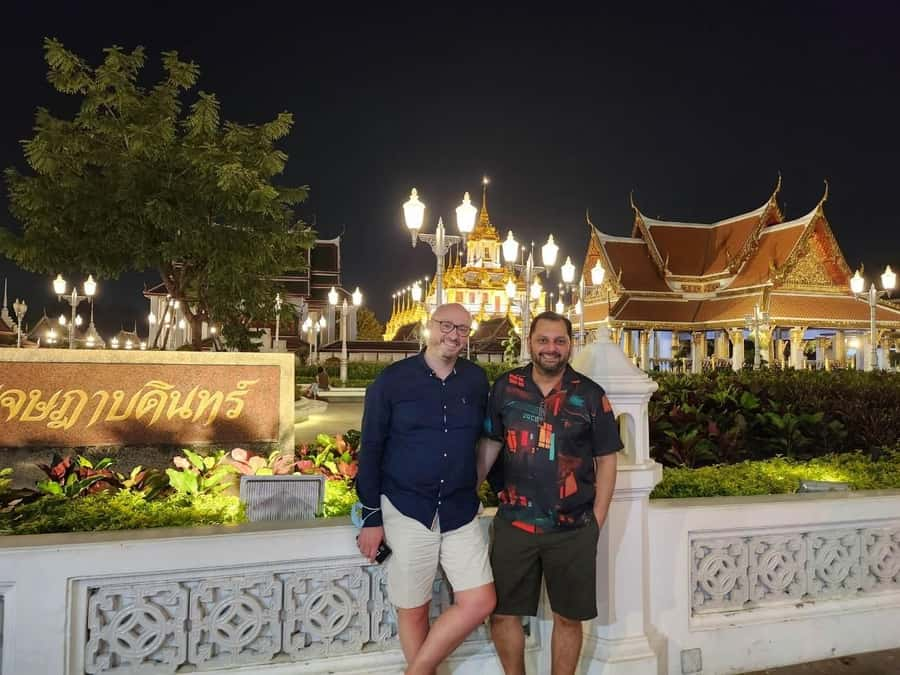
The tour then visits Wat Ratchanadda on Ratchadamnoen Road. The temple is known for its unusual metal structure, often called the Royal Metal Castle. It provides the evening’s strongest architectural stop.
This visit gives you a chance to move from street food and market activity into a more reflective setting. The temple’s design is different from the bright, heavily ornamented image many people have of Bangkok’s religious buildings. The contrast makes the stop worthwhile, even if you are not someone who normally plans a full temple circuit.
Your guide can also help explain the cultural setting. That matters because temple visits are more rewarding when you understand what you are looking at. The tour includes admission and activity fees listed in the itinerary, so you do not need to arrange separate entry for the included stops.
You should remember that this remains an evening sightseeing tour, not a formal temple study. The schedule has to allow time for Chinatown, the Flower Market, the Giant Swing, and the return trip. I would treat Wat Ratchanadda as a focused visit rather than a long period for quiet exploration.
The optional Khao San Road finish
Khao San Road is offered as an optional stop before the ride back to your hotel. This gives you a look at one of Bangkok’s best-known nightlife walking streets without making it the whole point of the tour.
The choice is useful. If you still have energy, Khao San Road adds a noisy, social ending to the evening. If you have had enough food, traffic, and city lights, you can skip the optional activity and return instead. The tour description does not say how much extra time is spent there, so ask your guide on the night if the stop is important to you.
Khao San Road is also a different experience from Chinatown. Chinatown centers on food, local trade, and historic streets, while Khao San Road is known for nightlife and pedestrian activity. Seeing both in one evening lets you compare two very different sides of Bangkok, though the schedule may feel full if you prefer a slower pace.
What the guides add to the experience
The guide is a key part of this tour. English service is included, and the tour is designed to explain local culture as you move between stops. Two guides connected with the experience are Aey and Sunny.
Aey is especially associated with knowing Bangkok’s food scene and helping visitors make sense of market choices. That can be valuable if you are new to Thai food or have just arrived from another part of Thailand and found the choices hard to sort through. Sunny is praised for leading an enjoyable Chinatown outing and for making the tuk tuk adventure a strong part of the night.
The setup includes both a driver and a guide. That is helpful because the guide can focus on you while the driver handles Bangkok traffic. It also means the ride is more than a self-guided tuk tuk trip where you simply point at a landmark and hope for the best.
The tour requires at least two people per group. The supplied details do not state a maximum group size, so ask before booking if the size of the group is important to you. The wording and feedback suggest a personal style, but you should not assume that every departure will operate as a private tour unless the provider confirms it.
Is $83 a fair price?
At $83 per person, this is not the cheapest way to ride a tuk tuk through Bangkok. The price includes an English-speaking guide, hotel pickup and drop-off in central Bangkok, transportation, admission and activity fees in the itinerary, local food tastings, bottled water, and accident insurance.
That package can offer fair value if you want one organized evening that combines transport, food, history, and several sights. You are paying for someone to choose the stops, manage the route, explain the food, and handle the tuk tuk arrangements. For a first Bangkok night, that convenience may be worth more than trying to plan each piece yourself.
The value is weaker if you mainly want a cheap ride or a large meal. Extra meals are not included, and the food tasting is not described as a full dinner. Alcohol is also excluded. I would plan to eat a little beforehand if you usually need a substantial evening meal, or carry cash for anything additional.
Free cancellation is available up to 24 hours before departure, and you can reserve now and pay later. The tour does not run on Mondays, so check the day carefully when planning your Bangkok stay.
Who should book this tuk tuk night tour?
I would recommend it to someone visiting Bangkok for the first time who wants an easy introduction to the city after dark. It suits you especially well if you enjoy trying several small foods, want a guide to explain local customs, and like moving between sights rather than staying in one neighborhood.
It is also a good choice if you want a taste of Bangkok’s nightlife without spending the entire evening in a bar district. Chinatown, the Flower Market, the Giant Swing, and Wat Ratchanadda give the outing more range than a simple street-food crawl.
I would hesitate if you need a wheelchair or stroller, have serious mobility limits, or dislike open-air rides. The activity is also not suitable for people with heart problems, diabetes, significant food allergies, nut allergies, lactose intolerance, visual impairment, motion sickness, or a low fitness level. People over 75 are also listed as unsuitable, so check directly with the provider if that applies to you.
My take: book it for food, movement, and a first Bangkok night
You should book this tour if you want Bangkok served in small, tasty pieces: a tuk tuk ride, Chinatown snacks, a working flower market, historic landmarks, and an optional nightlife stop. The strongest reason to go is the combination of food guidance and city context. Aey’s food knowledge and Sunny’s Chinatown style add a useful human touch.
Skip it if you want a quiet temple evening, a long sit-down dinner, or complete control over every stop. The vehicle is lively, the schedule covers a lot, and food restrictions can make the tasting portion difficult. For the right person, though, $83 buys a practical first look at Bangkok after dark, with enough local detail to help you explore on your own later.
FAQ
Where does the Bangkok tuk tuk night tour take place?
The tour takes place in central Bangkok and includes Chinatown, the Flower Market, the Giant Swing, Wat Ratchanadda, and an optional visit to Khao San Road.
What time does the tour begin?
Hotel pickup begins at about 6 p.m. in Bangkok.
How long does the tour last?
The tour lasts four hours.
Is hotel pickup included?
Yes. Pickup and drop-off are included for hotels in Bangkok, except hotels near the airport or far from the city center.
What happens if my hotel is too far from central Bangkok?
You may need to use public transport to reach the meeting point and again after the tour for the return journey.
What food can I taste?
The tasting may include Dim Sum, mango sticky rice, PaTongGo, Bualoi Namkhing, and other local street food and desserts.
Is a full meal included?
No. Local street food for tasting is included, but extra meals are not.
Is the tour available every day?
No. The tour does not operate on Mondays.
What language does the guide speak?
The live tour guide service is in English.
How far in advance can I cancel for a full refund?
You can cancel up to 24 hours before the tour for a full refund.
Just added around Bangkok
- Tuk Tuk Tour in Bangkok★ 5.0 · 3 reviews
- Tuk-Tuk Tales: Bangkok Private Tour★ 4.4 · 5 reviews
- Tuk-Tuk & Longtail Boat : Bangkok Private Tour★ 4.3 · 6 reviews
- 4-Hour Hidden Bangkok TukTuk Street Food Guided Tour★ 5.0 · 23 reviews
- Tuk-tuk tour Bangkok by Night with Chinatown meal and hotel transfers★ 4.5 · 60 reviews
- Tuk-tuk Private Tour in Bangkok by Night with Chinatown meal★ 4.5 · 5 reviews
- Fun Tuk Tuk Dinner and Massage in Old Town Bangkok★ 5.0 · 7 reviews
- Tuk Tuk Bangkok Private Tour: WW2 Pad Thai, 360-Viewpoint, Chinatown (Pickup)★ 5.0 · 9 reviews
Bangkok Tuk Tuk Tours, compared.
Bangkok by Night: Temples, Markets and Food Tuk-Tuk Tour
Read our review →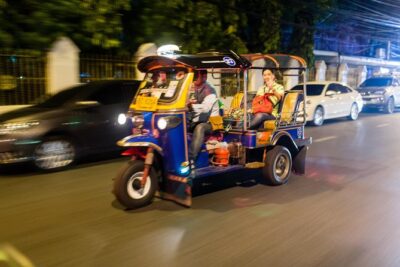
Markets, Temples and Food Night Tour by Tuk Tuk
Read our review →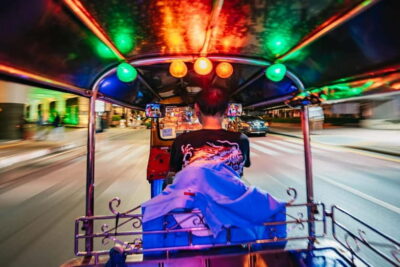
Tuk Tuk Adventure Chinatown Michelin Food & Temples
Read our review →
Evening Tour with Wat Arun, Wat Pho & Tuk Tuk Ride
Read our review →Browse the lists this tour appears in