
Review · CAMBODIA
Full-Day Kampot & Kep with a local Tuk Tuk Tours
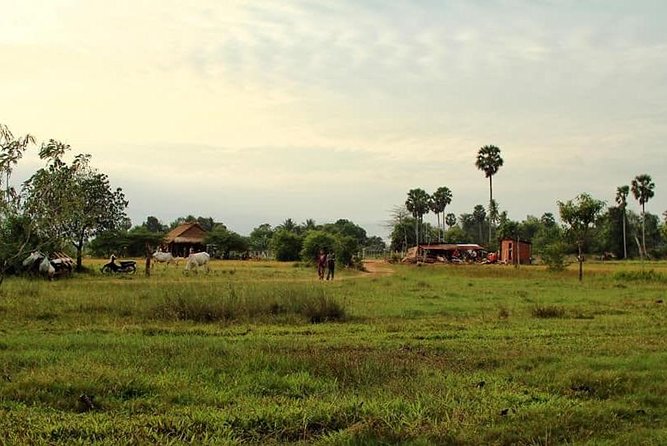
The most memorable part of this day is the chance to see rural Cambodia at working speed. Salt is scraped by hand, pepper is grown and processed at La Plantation, and a water buffalo pulls your cart past village life near Secret Lake. This is not a quick photo stop tour. It gives you several ways to understand how food and farming shape the region.
I like the private tuk tuk format, since your group can travel without strangers and ask the guide to explain what you are seeing. I also like the mix of places: the Kep seafood market feels very different from a pepper plantation, while Phnom Chhngok adds an old temple and a little adventure.
The main drawback is the tight schedule. The cave requires climbing over dark, wet rocks, and the rough tuk tuk ride can become tiring. One booking also suffered from poor communication about the buffalo-cart stop, so confirm every stop with your guide before leaving.
The day at a glance
- Hand-worked salt fields: See seawater evaporate in shallow fields before the salt is cleaned, iodized, and packed.
- Kep’s live crab market: Choose seafood from seaside vendors and have it cooked while you sit with a cold drink.
- Phnom Chhngok Cave Temple: Climb into a cave containing an 18th-century Cambodian temple.
- La Plantation pepper tour: Learn how Kampot pepper is grown, handled, and linked to local jobs and school funding.
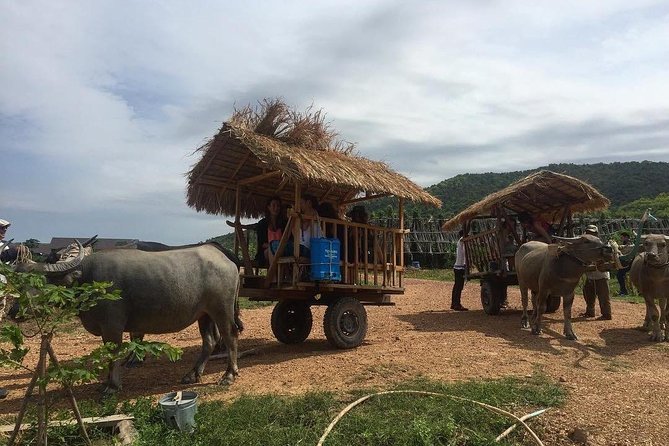
- Water-buffalo cart ride: Travel around villages and Secret Lake in a slow, low-impact way.
- Private transport and hotel service: Your group gets a tuk tuk, English-speaking guide, cold bottled water, and hotel pickup and drop-off.
Why this Kampot and Kep day feels different
Many day trips simply string together viewpoints and monuments. This one is more useful if you want to understand where local food comes from. You see salt made from seawater, crabs brought up from the coast, pepper cultivated at its source, and rice farming explained beside a lake.
The English-speaking guide matters here. The stops are more interesting when someone explains the work rather than leaving you to stare at rows of salt or pepper plants. At the salt fields, for example, the key point is not just the white surface. It is the repeated cycle of letting seawater in, blocking it off, and waiting for evaporation.
Your transport is a tuk tuk, not a large air-conditioned bus. That gives you open views and a closer feel for the countryside, but it also means more exposure to heat, dust, and uneven roads. Cold bottled water is included, which is a small but useful comfort on a long day.
The tour lasts about six to seven hours. The listed stops add up to five and a half hours, leaving the rest of the day for driving, hotel transfers, and moving between provinces. Since this is a private activity, only your own group participates. That makes the pace more manageable than a large group tour, but you still need to allow enough time for the full outing.
More Guided Rides in Cambodia:
- Full-Day Phnom Penh City & Silk Island with a local Tuk Tuk Tours
★ 5.0 · 4 reviews - Full-Day Battambang with a local Tuk Tuk Tours
★ 5.0 · 2 reviews - True 4Hour Private Tuk Tuk Tour: Discover Lisbon with a Local!
★ 5.0 · 8,008 reviews
Salt fields and the work behind the white crystals
The first stop lasts about an hour and introduces one of the simplest, most labor-heavy industries in the area. The fields are connected to the ocean, allowing seawater to flow into shallow ponds. The water is then kept away from the sea and left to evaporate under the sun.
As the water disappears, salt crystals remain. The process is repeated until enough salt has formed. Workers collect the raw salt and pile it in warehouses beside the fields before it goes to a factory.
There, it is cleaned, iodine is added, and it is packed in 50-kilogram bags for shipment around Cambodia. The entire production process at the fields is done manually, with much of the work carried out by women.
I like this stop because it makes an ordinary kitchen ingredient feel connected to real labor. You are not just looking at a scenic field. You are seeing the steps between seawater and the bag of salt used in Cambodian homes.
The visit is also a reminder that this is working ground, not a polished attraction. Conditions can be hot, and there is no promise of shade or machinery to make the process easy to watch. Keep your expectations practical and pay attention to your guide’s explanation of the work.
Kep Crab Market and a seafood lunch option
The half-hour stop at Kep Crab Market puts you beside the sea and close to the food that made this town famous. Vendors keep live crabs in pots pulled from the water. You can approach a vendor, choose crabs, and have them cooked while you wait.
The market ladies also prepare squid, clams, and prawns. Seafood can be cooked on site and served at your table, often in simple plastic bags. You can find a seat, order an Angkor beer, and wait for the meal rather than rushing through a restaurant.
Lunch is not included, but this is the obvious place to arrange it if you want seafood. Your guide can recommend a local restaurant, and the market gives you a chance to choose what you actually want rather than accepting a fixed menu.
There are small sweets too, including rice and coconut waffles, fried rice cakes, and other inexpensive treats. They cost around $0.25 each according to the tour details. That makes them an easy way to sample something small without committing to a full meal.
The stop is scheduled for only 30 minutes, so be clear about your priorities. If you want to select seafood and eat it, the time may feel short. If you prefer to look around and continue, you can keep this as a quick market visit. Personal purchases and lunch are extra, so carry some money for food and drinks.
Phnom Chhngok Cave Temple requires sturdy footing
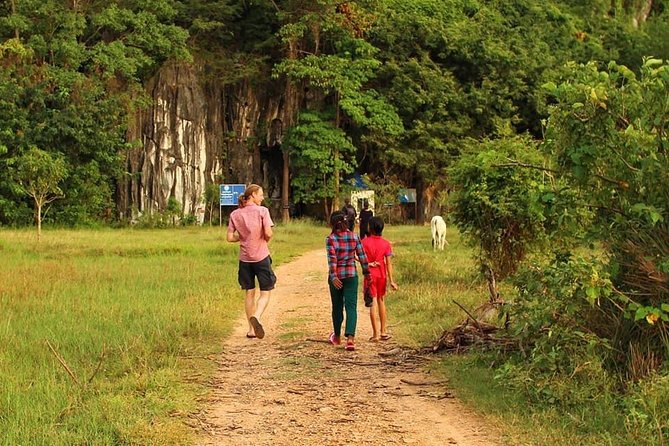
Phnom Chhngok Cave Temple is the most physically active stop. The temple was built in the 18th century inside a cave that remains a place of worship. Reaching it involves climbing and moving across dark, wet rocks.
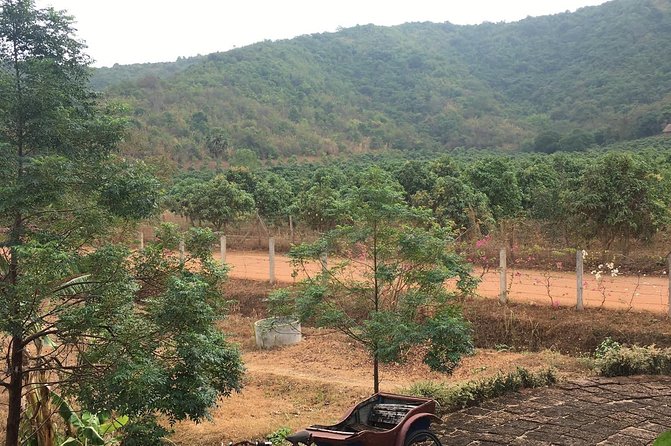
That makes the visit more than a standard temple stop. You get an old religious structure, cave formations, and views of the surrounding countryside in one visit. The setting also connects with the wider farming area around Kampot, where rice, peanuts, pepper, and sea salt are produced.
You should treat the cave as a real climb, not a quick walk from the tuk tuk. Good footwear is sensible, and you should be comfortable with uneven surfaces before booking. The tour information says most people can participate, but it also makes clear that the rocks can be wet and difficult.
The stop lasts about an hour and a half. That gives your guide time to explain the temple and lets you move through the cave without turning the visit into a rushed photo stop. Still, people who dislike enclosed spaces, slippery ground, or climbing may find this the least comfortable part of the day.
A few more rides around Cambodia worth a look
- Explore Battambang full day tour by Tuk Tuk (start from 9am-6:30pm)
★ 5.0 · 240 reviews - Full-Day Private Tuk Tuk Tour of Angkor Wat Temples
★ 5.0 · 107 reviews - Full day tour by bicycle & tuk tuk,bamboo train,bat cave,villages
★ 5.0 · 27 reviews - Phnom Penh City & Silk Island Full Day Tour by Tuk Tuk
★ 4.3 · 20 reviews
La Plantation and the story behind Kampot pepper
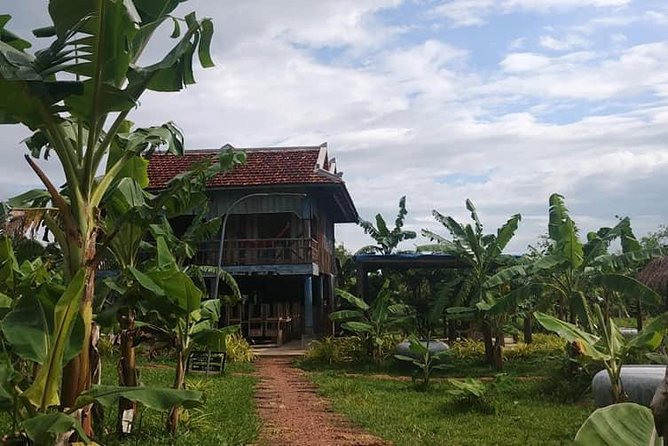
La Plantation receives about two hours, making it the longest stop. That is appropriate because the visit covers both the pepper-growing process and the social purpose behind the project.
The plantation was founded by Nathalie and Guy, a couple from France and Belgium. Their aim is to support Kampot pepper while creating local jobs and helping finance the nearby primary school. The tour presents pepper production as farming with a wider community role, not simply a product tasting stop.
A guide at the plantation explains the pepper industry and how the plantation operates. You can expect an introduction to the crop and the stages involved in producing pepper. The value here is the explanation. Without it, a pepper farm might look like rows of plants. With context, you begin to understand why Kampot pepper has an important place in local agriculture.
Two hours is generous compared with the short market stop. You can take your time, listen, and ask questions. This is likely the best stop for anyone interested in farming, food production, sustainable business, or the connection between tourism and local employment.
The tradeoff is that the day gives a large share of its time to La Plantation. If you want a rapid list of sights, that may feel slow. I think the longer visit works well for people who prefer a clear explanation over a quick walk-by.
The buffalo cart near Secret Lake
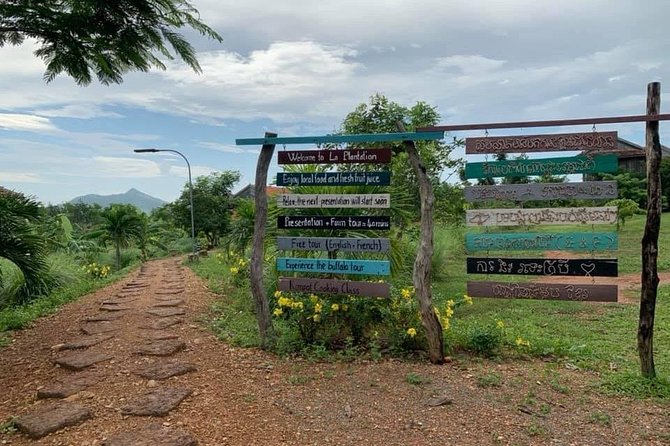
After La Plantation, you ride in a cart pulled by a water buffalo around nearby villages and Secret Lake. It is a slow form of transport, and that is exactly the point. You are not covering ground quickly. You are watching the countryside pass at the pace of the animal.
The buffalo stops at the lake to cool off in the water. During the ride, the guide explains farming activities, including rice culture, harvesting, and processing. This gives the final part of the day a direct link to the food systems introduced at the salt fields and pepper plantation.
I like this stop because it offers a simple way to see village life without turning the visit into a formal performance. The cart is also described as an eco-friendly way to explore the area. It is a calm contrast to the cave climb and the working market.
Communication is important here. On one occasion, the guide had not been told that the buffalo-cart ride was part of the plan. The ride was arranged later, but the tuk tuk had to return over rough roads, causing a delay and a tiring journey back. Before setting off, confirm that the buffalo cart is included and agree on when it will happen.
Transport, timing, and comfort
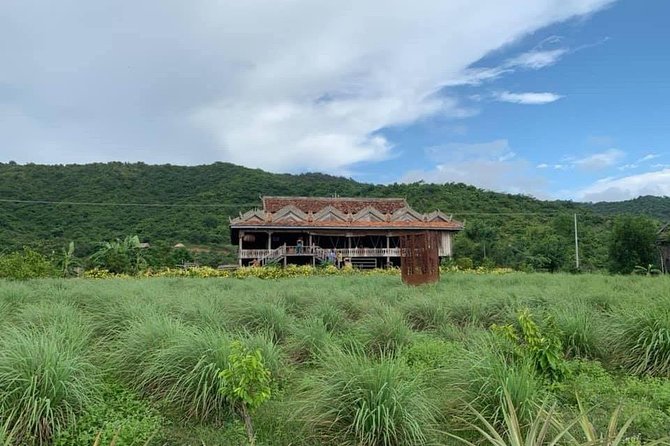
Hotel pickup and drop-off are included, along with the tuk tuk, English-speaking guide, entrance fees, and cold bottled water. The private format means your group is not combined with other people, which is helpful when you need to adjust the pace around the cave or meal.
A tuk tuk is well suited to the rural character of this outing, but it is not the smoothest vehicle. The road back from the buffalo-cart area was described as very bumpy, and a long ride over uneven roads can leave you tired. If you are sensitive to jolts, ask about the route and timing at the start.
The day is also weather dependent. If poor weather causes cancellation, you are offered another date or a full refund. You can cancel for a full refund if you do so at least 24 hours before the start time. Changes or cancellations made less than 24 hours before departure are not accepted for a refund.
Service animals are allowed, and most people can participate. The cave remains the main physical consideration. The operator does not include lunch, personal spending, or tips. A suggested tip is $5 for the guide and $3 for the tuk tuk driver.
Is $64.62 good value?
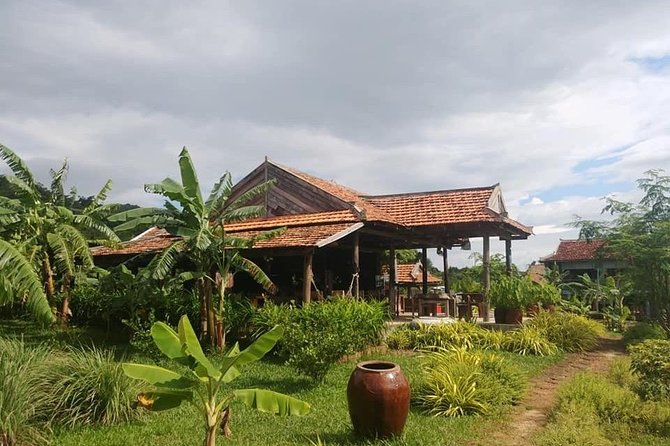
At $64.62 per person, the price is reasonable if you use the included services. You get private tuk tuk transport, hotel transfers, an English-speaking guide, cold water, and entrance fees for a full six to seven hours.
The value comes from variety. A cheaper outing that only visits one market or one plantation may cost less, but it would not cover salt production, seafood, a cave temple, pepper farming, and a buffalo-cart ride. You are paying for transport between several places as well as interpretation along the way.
The price makes less sense if you plan to skip the cave, avoid the plantation, or do not want a long tuk tuk day. Lunch, drinks, souvenirs, and personal purchases are extra. Add the suggested $8 in tips to your mental budget, along with money for the seafood stop if you choose to eat there.
Since it is a private tour, the cost is easier to justify for couples, families, or a small group sharing the experience. Solo visitors pay the full per-person rate but still receive private service.
Who should book this tour?
I would choose this day if you want working countryside rather than a string of city sights. It suits people who enjoy food production, local farming, small markets, and guides who explain how everyday life works.
It is also a good fit for a private group that wants flexibility. You can ask questions, decide whether to eat at the crab market, and make sure the buffalo-cart ride happens at the agreed time.
I would think twice if you want a polished, comfortable sightseeing day. The tuk tuk can be rough, the cave is wet and uneven, and the schedule leaves little spare time. Confirm the full route with your guide, especially the buffalo-cart stop, before leaving your hotel.
Should you book it?
Book this tour if your idea of a good day includes salt workers, live crabs, pepper plants, an old cave temple, and a water buffalo cooling off in a lake. The strongest parts are the range of local activities and the chance to ask an English-speaking guide what you are seeing.
Skip it if you dislike bumpy transport, physical climbing, or paying extra for lunch and seafood. For everyone else, $64.62 is a fair price for a private, full-day look at the food, farming, and village life around Kampot and Kep.
FAQ
Where does the tour begin?
Hotel pickup is offered, and hotel drop-off is included at the end of the tour. The tour information identifies Sihanoukville as the location.
How long does the experience last?
The tour takes approximately six to seven hours.
Is the tour private?
Yes. Only your group participates in the activity.
Is an English-speaking guide included?
Yes. An English-speaking tour guide is included.
Are entrance fees included?
Yes. The listed entrance fees are included in the tour price.
Is lunch included?
No. Lunch is not included, but the guide can recommend a local restaurant. Food, drinks, and other personal purchases are extra.
What happens if bad weather cancels the tour?
You can choose a different date or receive a full refund if the experience is canceled because of poor weather.
Just added around Cambodia
- Tuk-Tuk Tour to Silk Island & Udong Mountain★ 5.0 · 15 reviews
- Trusty Tuk Tuk★ 5.0 · 4 reviews
- Trip with Local tuk tuk to Country side & Pepper farm…★ 5.0 · 13 reviews
- Kampot Tuktu tour: Pepper farm, Salt field & Secret lake★ 5.0 · 17 reviews
- 2 Days Tuk Tuk Private Tour of Angkor★ 5.0 · 11 reviews
- Angkor Wat Sunset TUK TUK Tour★ 5.0 · 4 reviews
- Amazing full day TUKTUK tour★ 5.0 · 4 reviews
- Full Day Angkor Complex by Tuk Tuk – (Optional Sunrise)★ 5.0 · 6 reviews
Cambodia Tuk Tuk Tours, compared.
Tuk-Tuk, Bamboo Train, Killing/Bat Caves, Sunset
Read our review →
Battambang Tuk Tuk tour: Bambootrain, Killing & Bat Caves,Sunset
Read our review →
Ultimate Phnom Penh Food Tour by Tuk Tuk: 20 Tastings and Drinks
Read our review →
Afternoon tour by tuk tuk to bamboo train,bat cave,killing cave,countryside.
Read our review →
Browse the lists this tour appears in