

Review · JAIPUR
Jaipur Half-Day Heritage Tour by Women-Driven E-Rickshaw
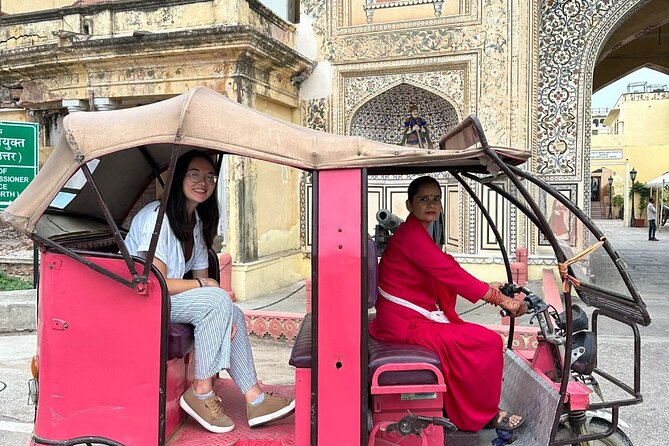
Jaipur’s heritage takes on a more personal feel from a women-driven e-rickshaw, especially when your route includes both famous monuments and working artisan spaces. You begin at the flower market, pass through the Pink City’s best-known sights, and finish at Albert Hall Museum. The tour also supports women whose driving income helps feed and support their families.
I like the private format for up to three people, since you can move at your own group’s pace rather than follow a large bus. I also like the practical mix of monuments, market life, and craft production. The main drawback is time: five hours is enough for a useful overview, but not enough for a slow visit inside every major attraction.
Key Points to Know Before You Book
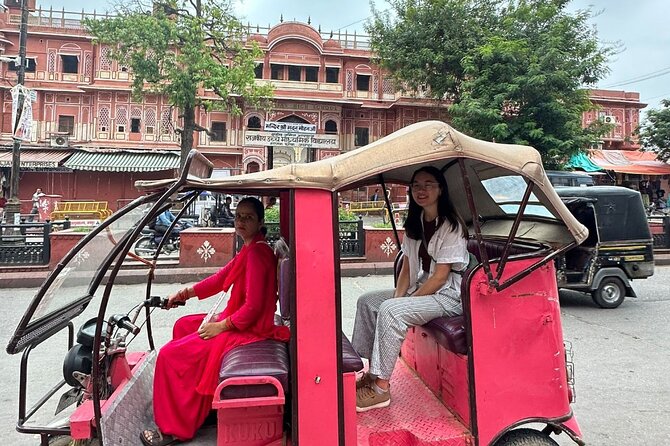
- The tour begins with Jaipur’s flower market, where early activity, color, and scent provide a lively start to the day.
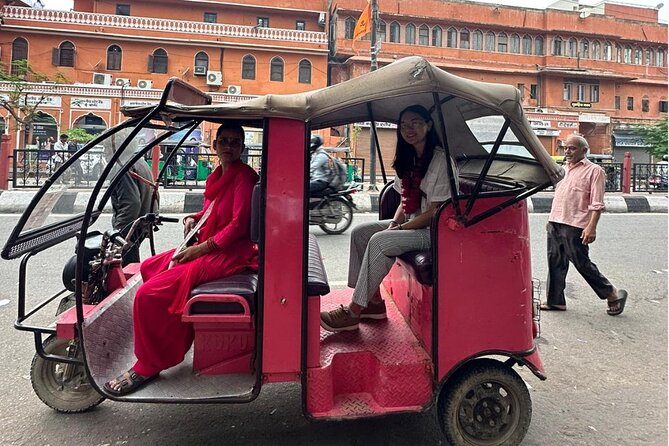
- Women drive the private e-rickshaw, giving your booking a clear social purpose as well as a local way to move around.
- Hawa Mahal, Jantar Mantar, and City Palace require extra entrance fees, totaling $12 per person for the stated prices.
- The artisan visit focuses on women’s work, including carpets, embroidered fabrics, and other handmade goods.
- Hotel and airport pickup and drop-off are included by private vehicle, while the sightseeing itself takes place in the e-rickshaw.
- Guide KK and driver Laxmi are named in the available tour feedback, a useful detail if you want to know who may lead the experience.
Why This Jaipur Tour Feels Different
Many Jaipur sightseeing outings concentrate on grand buildings and overlook the people who keep the city’s craft traditions alive. This experience gives you both sides. You see royal courtyards and astronomical instruments, then visit factories and warehouses where women work with carpets, embroidery, and other handmade goods.
The social purpose is central, not decorative. The service helps women earn a living, including widows and women supporting families in difficult home situations. For some drivers, the money from the rickshaw is the only income keeping food and household needs covered. Your booking therefore pays for a practical service while sending money into local families and communities.
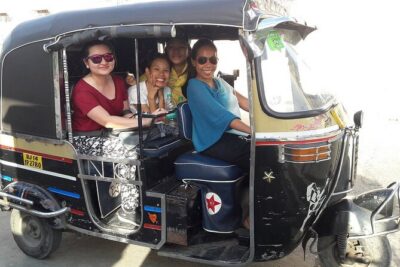
The transport matters, too. An e-rickshaw is smaller and more open than a standard car, making it a natural fit for Jaipur’s old streets. You will not get the silence or air-conditioning of a private sedan, but you do get a closer look at street life. Hotel or airport pickup and drop-off are handled by private vehicle, so the tour does not begin with the awkward task of finding the rickshaw yourself.
The experience is private for your group, with a maximum of three people. That suits couples, a small family, or friends who want to ask questions without holding up a larger group. Guide KK is identified in the available feedback, along with Laxmi as a driver, and the guide’s role includes explaining the places you see and helping the day stay organized.
More Rickshaw Tours in India
- Jaipur Heritage Walk with Rickshaw Ride
★ 5.0 · 105 reviews - Private Full Day Jaipur Sightseeing Tour By Tuk-Tuk (Rickshaw)
★ 5.0 · 30 reviews - Guided Morning E-Rickshaw Ride with Food Tasting at Jaipur
★ 5.0 · 28 reviews
Starting at Jaipur’s Flower Market
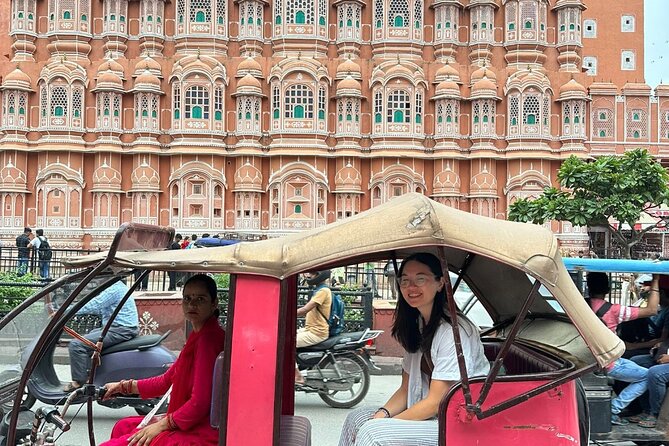
The flower market is a strong first stop because it gets you into Jaipur’s daily rhythm before you spend time inside palaces and museums. At dawn, vendors display flowers in a wash of color, and the air carries their scent. You have about 30 minutes here, enough to look around, take photographs, and watch buying and selling rather than simply passing a shopfront.
The market offers a more grounded beginning than going straight to a monument. Jaipur’s grand buildings were built for rulers, but the flower market belongs to the city’s everyday life. Look for the small details: how the blooms are arranged, how sellers handle them, and how quickly the market changes as the morning moves on.
This is also the stop most dependent on timing. The tour is designed to start the day, and a late start could change the feel of the market. The precise pickup time is not stated, so confirm it when booking if the flower market is one of your main reasons for choosing this experience.
Hawa Mahal and the Pink City
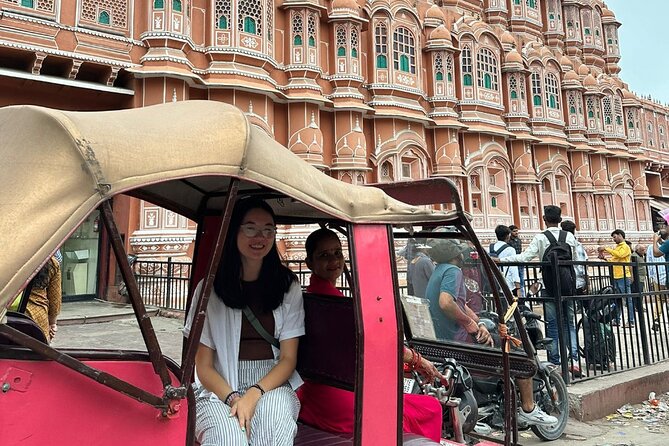
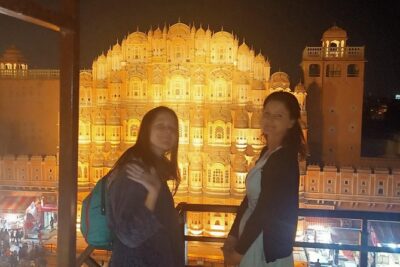
You spend about 30 minutes at Hawa Mahal, Jaipur’s famous Palace of Wind. Its many small windows and detailed facade make it one of the city’s easiest buildings to recognize, but the short stop means you should think of it as an introduction rather than a full architectural visit.
The name refers to the palace’s ventilation design. The windows allowed air to pass through and gave royal women a way to observe street life without being seen. From outside, the building looks almost like a tall screen attached to the city street, which makes it especially rewarding for photographs.
Entry is not included. The stated Hawa Mahal fee is $3 per person. If you want to go inside, budget for that cost and keep an eye on the clock. With only 30 minutes assigned here, you may prefer to focus on the facade unless your guide recommends a quick interior visit.
Reading the Sky at Jantar Mantar
Jantar Mantar receives about 45 minutes, giving you more room to understand the site than a quick photo stop would allow. This historic observatory contains large stone instruments, including the world’s largest stone sundial. Their size is the first surprise. These are not delicate instruments tucked into a room, but broad structures built to measure time and track the heavens.
A guide adds real value here because the shapes are not always self-explanatory. Without context, the curved walls and angular forms can look like abstract sculpture. With an explanation, you begin to see how shadow, position, and measurement work together.
The entrance fee is listed as $3 per person and is not included. Forty-five minutes should give you a useful look at the main instruments, though anyone with a strong interest in astronomy may want far more time. The stop is best for curious visitors who enjoy seeing science expressed through architecture.
More Rickshaw Tours in Jaipur
- Jaipur Rickshaw Tour Jantar Mantar City Palace
★ 5.0 · 18 reviews - Jaipur Private City Tour with a Women-Driven E-Rickshaw Ride
★ 5.0 · 12 reviews - Jaipur Half-Day City Tour By E-Rickshaw with Female Driver
★ 4.8 · 9 reviews - Jaipur City Tour by Women-Driven E-Rickshaw
★ 5.0 · 2 reviews
One Hour Inside City Palace
City Palace gets the longest monument visit, about one hour. That is sensible because this is a large complex of courtyards, buildings, pavilions, gardens, and temples rather than a single structure. The setting helps explain Jaipur’s royal past through a collection of spaces, not just one grand facade.
You can expect ornate architectural details and a series of courtyards that reward a slower pace. The complex includes several popular buildings and display areas, though this experience does not specify exactly which sections you will enter. Your guide can help you choose where to spend your limited time.
Entry costs $6 per person and is extra. This is the largest stated admission charge on the tour, but it is also the place where you may feel the time pressure most sharply. If you like museums, royal residences, and decorative detail, you will probably wish for more than an hour. If you mainly want a strong first look at Jaipur, the allocated time gives you a solid overview.
The three listed paid sights cost $12 per person in total: $3 for Hawa Mahal, $3 for Jantar Mantar, and $6 for City Palace. Albert Hall Museum also requires an entrance ticket, but no price is provided, so ask for the current fee before setting your budget.
A Quick Look at Jal Mahal
Jal Mahal is a 15-minute stop at Man Sagar Lake. The palace sits in the middle of the water, giving you a very different view from the crowded streets and courtyards earlier in the day.
The short visit suggests a photo and viewing stop rather than a palace tour. No admission fee is included because the experience does not list one for this stop. You should not expect a long exploration here. Instead, use the time to take in the unusual setting and let the pace of the day change for a moment.
Jal Mahal also breaks up the indoor and urban portions of the route. After Hawa Mahal, Jantar Mantar, and City Palace, the open view across the lake provides a welcome pause before the craft visit.
Meeting Women Artisans at Ramgarhmode
The visit to Ramgarhmode is the most distinctive part of the experience for anyone interested in how Jaipur’s handmade goods are produced. You spend about an hour visiting factories and warehouses connected with women artisans. The work includes carpets, embroidered fabrics, and other handcrafted items.
This is not the same as browsing a tourist market. You get a chance to see materials, labor, and finished pieces in the places where work and storage take place. The focus on women’s craftsmanship also connects directly with the purpose of the tour. Your money supports women drivers, while this stop draws attention to another area where women’s skill and labor help sustain households.
You may also find products offered for sale, but the supplied details do not promise a shopping element or require you to buy anything. Keep your expectations practical. The real value is seeing the work behind handmade goods and learning how local production fits into family income.
The stop lasts about an hour, which gives it enough weight to be more than a quick showroom visit. If you prefer monuments only, this portion may feel less essential. If you want contact with Jaipur’s working economy, it is one of the strongest reasons to choose this tour.
Ending at Albert Hall Museum
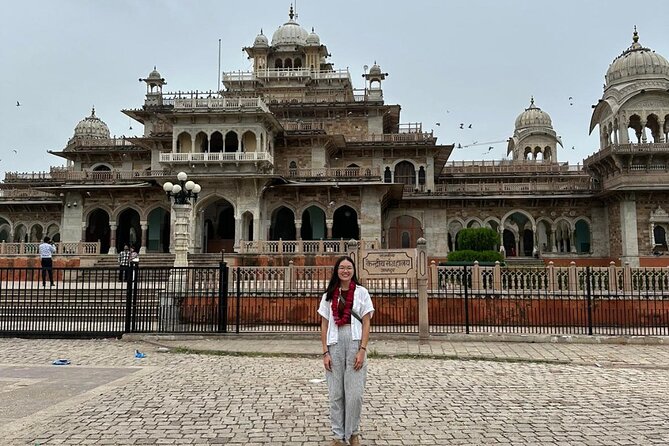
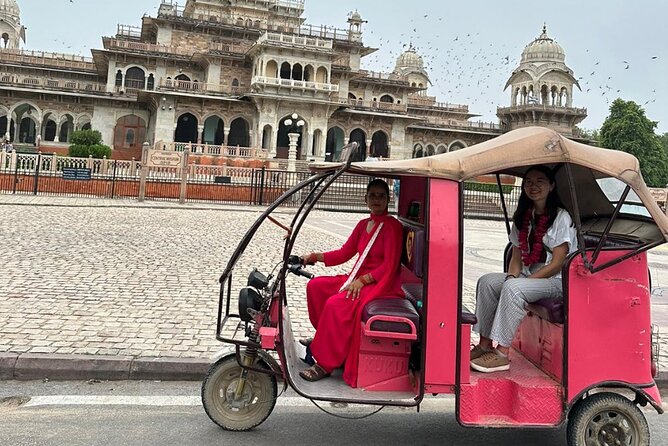
The tour ends at Albert Hall Museum, with about one hour for the visit. The museum holds a wide range of objects, including paintings, jewelry, carpets, ivory carvings, stone sculptures, metalwork, and crystal pieces. That variety makes it a useful final stop because it gathers many strands of Indian art and craft under one roof.
After seeing women’s work in factories and warehouses, you can look at finished decorative objects in a formal museum setting. The contrast is worthwhile. One stop shows production as a living job, while the other places art and craftsmanship in a historical collection.
Entrance is not included, and the price is not supplied. Ask about the current Albert Hall admission fee when you book or before you arrive. With only an hour, you will need to move selectively rather than attempt every display.
Ending here also gives the tour a clear finish. You are not left at a craft warehouse or asked to arrange your own way back after the final sight. The tour ends at the museum, while private vehicle pickup and drop-off are listed as included for the overall service. Confirm the exact end and return arrangement if you need to reach an airport or catch a train.
What the $31.02 Group Price Really Buys
At $31.02 per group of up to three people, the base price is not a per-person charge. For three people, that works out to just over $10 each before entrance fees, making the package good value if you use the included pickup, guide, bottled water, and private transport.
You also receive tea, coffee, or lassi with a samosa. That small refreshment matters on a five-hour morning filled with walking, heat, and sightseeing. The tour includes a professional guide and a private e-rickshaw driven by a woman, with private vehicle pickup and drop-off at a hotel or airport.
The extra costs are easy to calculate for the three main paid sights. Add $12 per person for Hawa Mahal, Jantar Mantar, and City Palace, then allow for the Albert Hall ticket at its current price. The total remains reasonable for a private cultural outing, but the value depends on your group size. A solo visitor pays the full group rate, while three people can share it.
Timing, Comfort, and Who Should Choose It
The stated duration is about five hours. The listed stop times add up to four hours and 20 minutes, leaving roughly 40 minutes for transfers, pickup details, and movement between places. That is workable, but the schedule is not loose. You should be ready to keep moving, especially at City Palace and Albert Hall.
Most people can participate, according to the tour information, but the day includes several heritage sites and a craft visit. You should expect time on your feet and some exposure to outdoor conditions. The e-rickshaw adds local character, but it is not the choice for someone seeking a fully enclosed, quiet vehicle throughout the sightseeing portion.
The experience fits you best if you want:
- A private day for one to three people
- A guide who can explain Jaipur’s main sights
- A social enterprise with a direct benefit for women drivers
- A blend of royal buildings, market activity, museums, and craft work
- Hotel or airport pickup and drop-off
- A compact first look at Jaipur rather than a slow, specialist visit
It is less suitable if you want extended time at each monument, a luxury vehicle for the whole day, or a tour built around one subject such as architecture or astronomy.
Should You Book the Women-Driven Jaipur Tour?
I would choose this tour if you have only half a day and want more than a checklist of palaces. The women-driven e-rickshaw, the flower market, and the artisan visit give it a human angle that a standard monument circuit can miss.
Book it for a private overview, not for exhaustive sightseeing. The extra entrance fees are clear for three main sights, though you should confirm the Albert Hall price. If supporting women’s income matters to you, the tour offers a direct and practical way to put that value into your booking.
The strongest choice is a group of two or three people who want an organized introduction to Jaipur, appreciate a named guide such as KK, and are happy to trade a little comfort and time for a closer connection with the city.
FAQ
How long does the Jaipur heritage tour last?
The tour lasts approximately five hours.
How many people can join the private tour?
The price covers a private group of up to three people.
Is hotel or airport pickup included?
Yes. Hotel or airport pickup and drop-off by private vehicle are included.
Which entrance fees are not included?
Hawa Mahal costs $3 per person, City Palace costs $6 per person, and Jantar Mantar costs $3 per person. Albert Hall Museum admission is also not included, but no price is provided.
Is the e-rickshaw driven by a woman?
Yes. The sightseeing portion uses an electric rickshaw driven by a woman.
What refreshment is included?
You receive bottled water and a choice of complimentary tea, coffee, or lassi with a samosa.
More Half-Day in Jaipur
- Jaipur Half-Day Tour with Flower Market by Tuk-Tuk or Car
★ 5.0 · 2 reviews - Budapest Private Tuk Tuk Half-Day Tour
★ 5.0 · 606 reviews - Lisbon: Half-Day Private Guided Tuk-Tuk Tour
★ 4.9 · 532 reviews - Private Half-Day Eco Tuk Tuk Tour in Lisbon
★ 5.0 · 336 reviews
More History Tours in Jaipur
- Jaipur cultural tour with artisan craft experience
★ 5.0 · 33 reviews - Jaipur Full Day Heritage of Pink City Tour By Tuk Tuk With Chai
★ 5.0 · 10 reviews - Madrid Historical Tour with Local Guide in Eco Tuk Tuk Private
★ 5.0 · 876 reviews - Explore Lisbon by Tuk Tuk: History and Viewpoints
★ 5.0 · 840 reviews
Just added around Jaipur
- Unique Jaipur Full Day Tour of Pink City Jaipur by TukTuk★ 5.0 · 18 reviews
- Travel Through the Streets of Jaipur by Tuktuk with a Local★ 5.0 · 36 reviews
- Jaipur Private Tuk Tuk Tour – Full-Day jaipur City Sightseeing★ 5.0 · 48 reviews
- Private Tour: Jaipur Sightseeing by Tuk-Tuk★ 3.0 · 2 reviews
- Private Tuk-Tuk Tour of Jaipur with Guide★ 5.0 · 29 reviews
- Ultimate Jaipur Tuk Tuk Tour with Pickup★ 5.0 · 21 reviews
- Jaipur cultural tour with artisan craft experience★ 5.0 · 33 reviews
- Private Full Day Tour of Jaipur By Tuk Tuk.★ 5.0 · 2 reviews
Jaipur Tuk Tuk Tours, compared.
Private Full Day Jaipur Sightseeing Tour By Tuk Tuk
Read our review →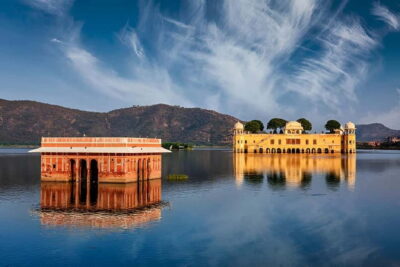


Jaipur Tour by Tuk-Tuk or Car with Flower Market
Read our review →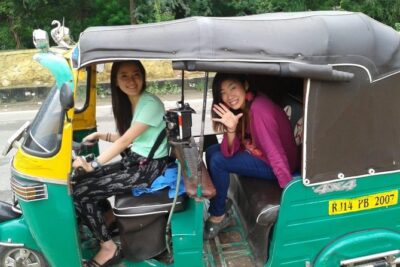
Browse the lists this tour appears in