
Review · NEW DELHI
Old Delhi: 3-Hour Tuk-Tuk/Rickshaw Tour
Old Delhi is easiest to appreciate from a tuk-tuk seat, not while trying to cross every crowded lane on foot. This three-hour ride takes you through Chandni Chowk, Khari Baoli, Jama Masjid, a Sikh community kitchen, and Jain Mandir, giving you a quick but vivid look at the city’s old core.
I especially like the chance to ride through narrow market lanes while your guide explains what you are seeing. I also like the human side of the tour: helping in a Sikh langar, or community kitchen, and stopping for chai and samosa. The main consideration is pace. Three hours goes quickly, and the markets can feel intense, especially if you are unused to crowds, traffic, and persistent shopkeepers.
Key points at a glance
- Jama Masjid comes early, with time to see the red sandstone courtyard and possibly climb a minaret if it is open.
- Khari Baoli is a sensory stop, where spices, herbs, smells, and local trade take center stage.
- The Sikh community kitchen is hands-on, giving you a practical look at service and worship rather than only a photo stop.
- The tuk-tuk saves your feet, helping you cover more of Old Delhi without fighting through every lane on foot.
- Chai and samosa are included, adding a simple local snack break near the end of the outing.
- Sunday requires a change of plan, since the main markets are closed and other local markets are used instead.
Why a tuk-tuk is the right way to see Old Delhi
Old Delhi is not a place that reveals itself in tidy sightseeing order. Its lanes twist around mosques, temples, shops, homes, shrines, food stalls, and wholesale markets. Walking gives you close contact with the details, but it also means dealing with traffic, uneven streets, crowds, and constant stops.
The tuk-tuk offers a useful compromise. You can see more ground than on foot and still remain close to street life. You will hear horns, smell cooking oil and spices, and watch daily business unfold around you, but you will not spend the entire tour trying to find your way through the traffic.
This is not a quiet ride. The vehicle is part of the experience, and the driver must work through a crowded setting. Several guides, including Vasu, Aamir, Junaid, Kaif, Kaushal Pandey, Arham, and Rupali, have been praised for making people feel at ease and adjusting the outing to their interests. Guides vary, so your experience may differ, but the tour is built around personal explanation rather than a recorded commentary.
Meet at the gate of Sunehri Masjid on Nishad Raj Marg, opposite the Red Fort parking area. Look for the green banner marked Sunehri Masjid. The Jama Masjid Metro stop on Delhi’s Violet Line is also listed as a convenient access point.
More Rickshaw Tours in India
- Old Delhi Food, Heritage&Cultural Walk with Rickshaw ride to Masterji Kee Haveli
★ 5.0 · 742 reviews - 3-hour Old Delhi Heritage Walking tour with Rickshaw Ride
★ 5.0 · 240 reviews - 3-Hour Old Delhi Heritage Walking tour with Rickshaw ride
★ 4.6 · 158 reviews
Jama Masjid: a strong opening in Old Delhi
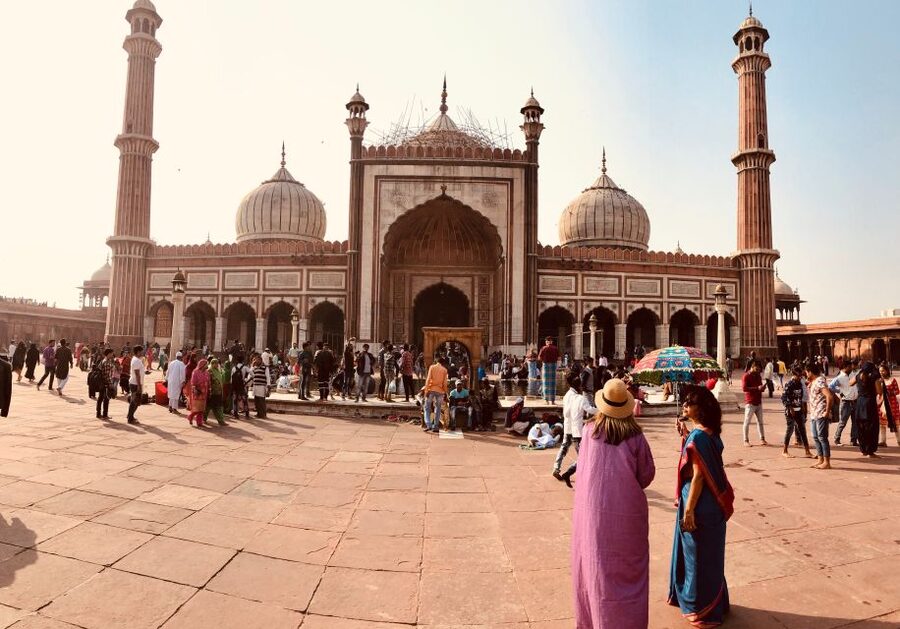
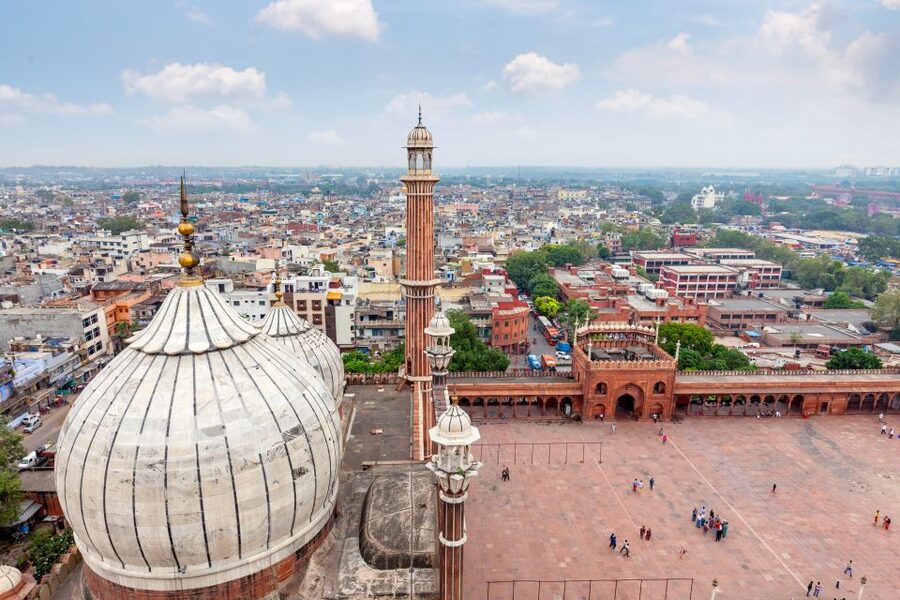
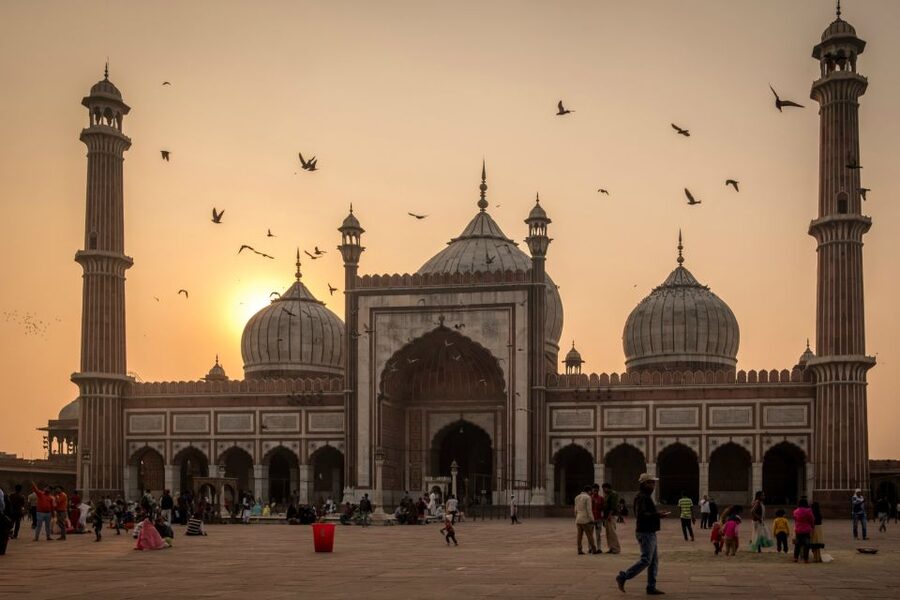
The first major stop is Jama Masjid, one of the best-known religious buildings in Old Delhi and described here as India’s largest mosque. Its broad red sandstone courtyard gives you a little breathing room after the tight streets outside.
Your guide can explain the mosque’s place in Delhi and point out details you might miss on your own. You will have time to walk around the courtyard and take in the scale of the building. If the minaret is open, you might also climb it for views over Old Delhi. That climb is not guaranteed, so treat it as a bonus rather than a promised part of the visit.
The mosque is open to all visitors, but it remains a place of worship. Dress and behavior should be respectful, and you must remove your shoes and socks in temples and places of worship. The ground can be hot, so comfortable shoes and sun protection are useful for the wider tour, even though footwear will come off at religious sites.
The mosque stop gives the tour a clear sense of place. You are not simply passing a famous building from the road. You get a short period to look, listen, and understand why this part of Old Delhi has such weight.
Chandni Chowk from the back of a rickshaw
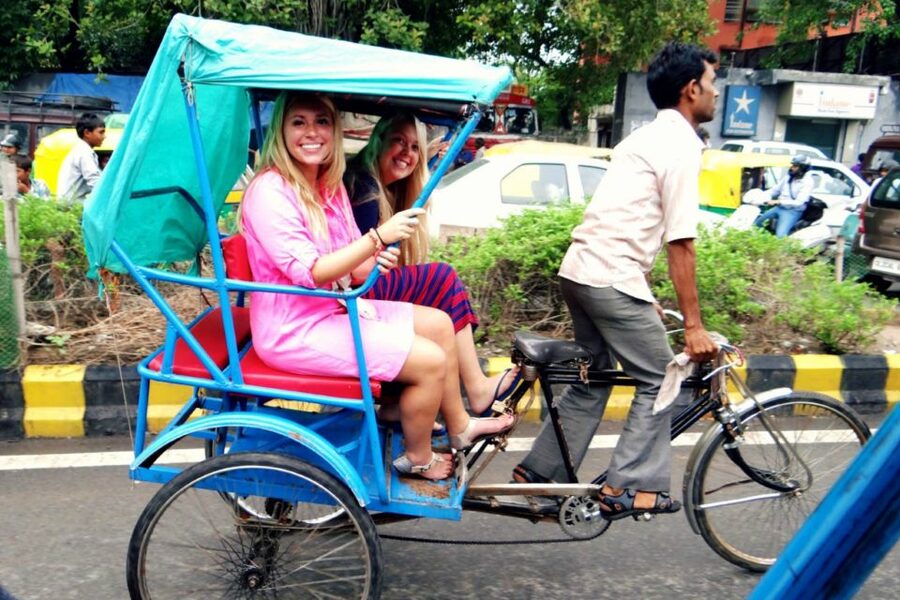
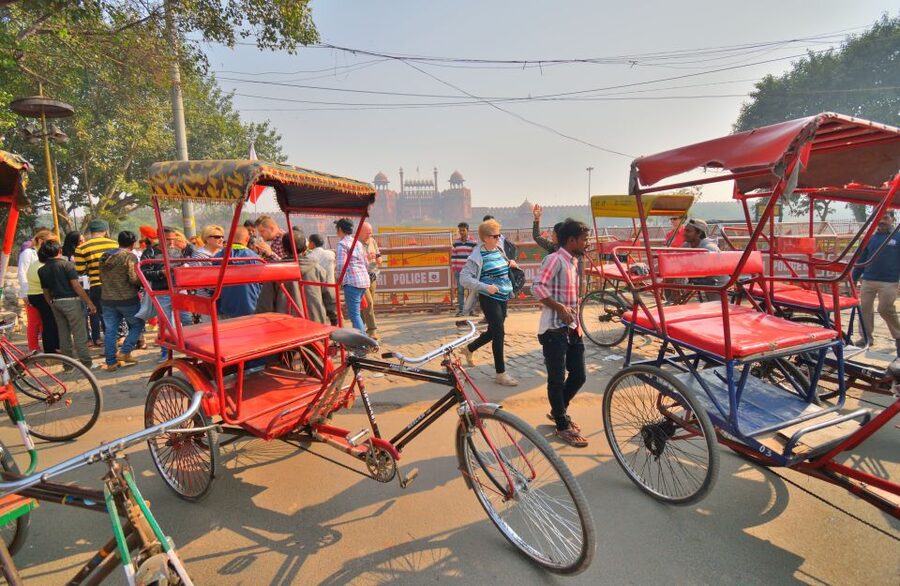
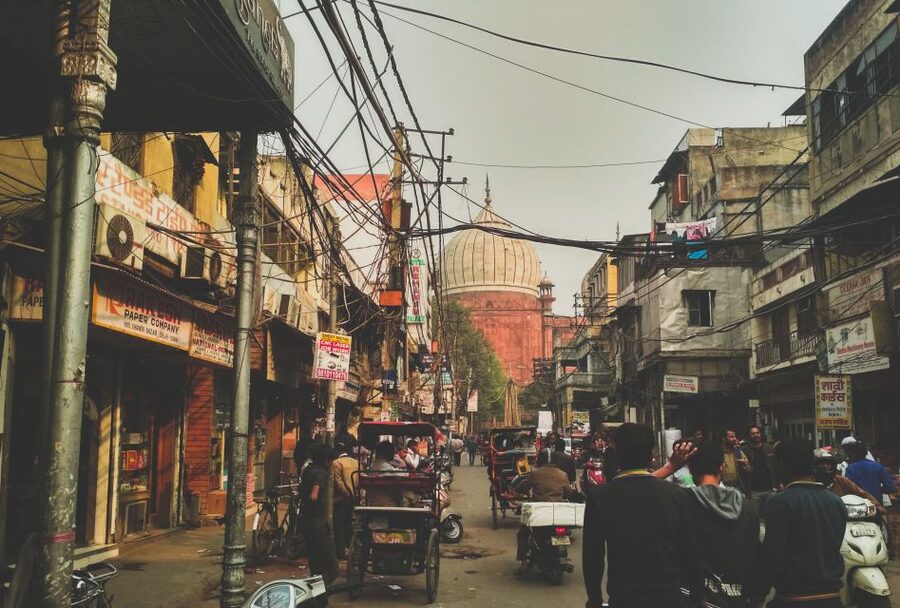
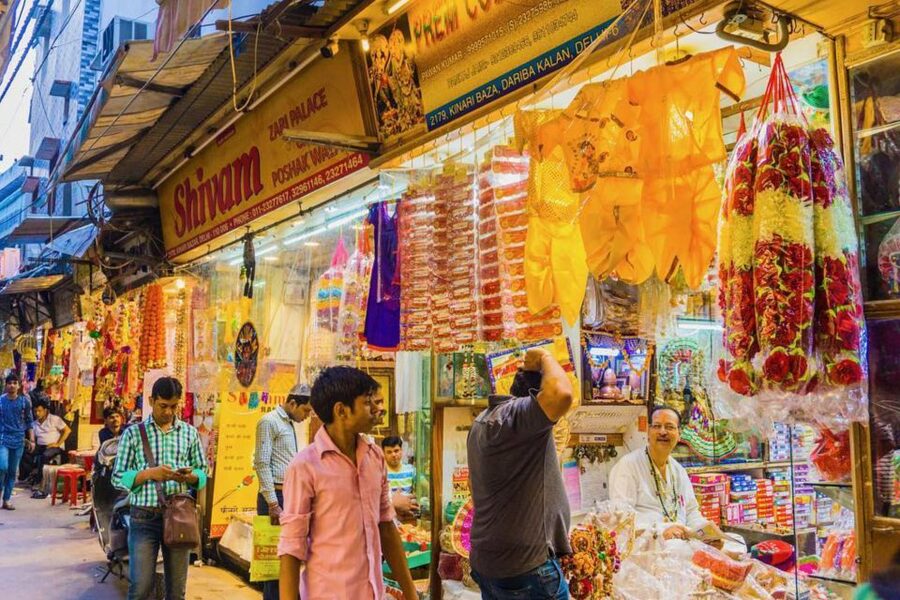
After Jama Masjid, the ride continues through the markets around Chandni Chowk. This is where the tuk-tuk earns its keep. Instead of walking every crowded stretch, you can sit back as the vehicle threads through lanes lined with shops and stalls.
Your guide explains how the bazaars serve local residents and businesses. That context matters because Chandni Chowk is more than a sightseeing district. It is a working commercial area, and the traffic reflects that. You may see goods being moved, shopkeepers serving customers, and pedestrians sharing very limited road space.
The ride can feel exciting, but it is not polished or predictable. Traffic noise, fumes, sudden stops, and tight turns are part of the setting. Keep your phone, camera, and wallet secure, particularly when the vehicle slows in dense crowds. One guide, Junaid, was especially valued for stepping in when visitors felt pressured by sellers or approached by people on the street. That kind of help can make a difference, but you should still watch your own belongings.
Some guides also take photographs during the tour. Kaif and Junaid were singled out for taking good pictures, though you should not assume every guide offers the same level of photography. If you want photos, ask politely early in the outing.
Khari Baoli and the spice trade
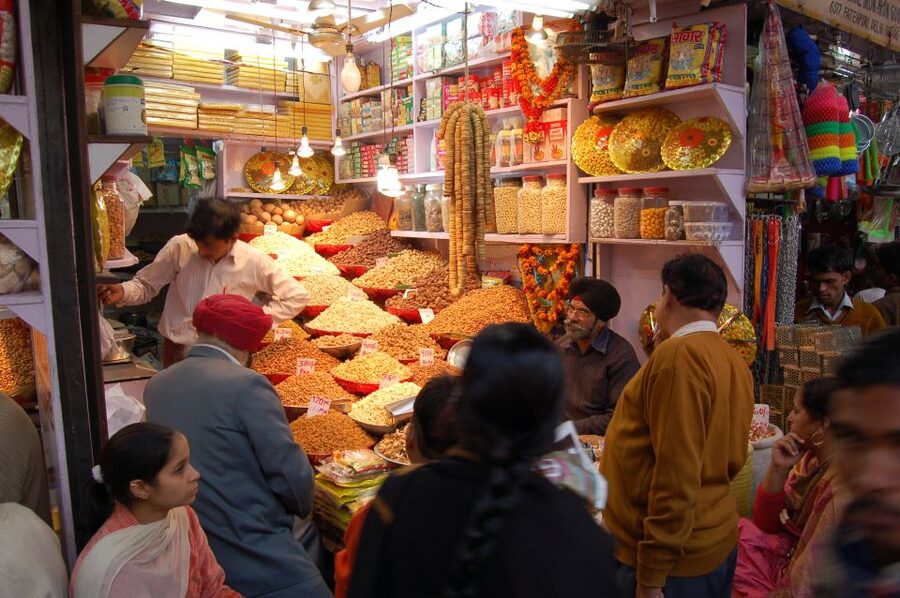
Khari Baoli is one of the tour’s most distinctive stops. It is described as Asia’s largest spice market and has operated since the seventeenth century. The point is not simply to look at bags of colorful powder. Your guide gives you a practical introduction to spices, herbs, and their traditional medicinal and health uses.
This is a good place to slow down and use your senses. You might notice the sharp smell of chilies, the sweetness of dried fruit, or the earthy scent of herbs. The market is a working wholesale area, so it can be crowded and active. That makes it interesting, but it also means you need to stay near your guide.
You may be shown spice shops or invited to smell and taste samples. Be clear if you do not want to buy anything. The tour itself includes tea and snacks, not shopping, and you are not required to purchase additional products.
The spice market also helps explain why Old Delhi feels so different from a standard monument tour. You are seeing an economic district that remains part of everyday city life. The experience is brief, but it gives you a useful connection between food, trade, medicine, and neighborhood commerce.
More Rickshaw Tours in New Delhi
- Luxury Rickshaw Tour of Old Delhi
★ 5.0 · 106 reviews - Old Delhi Heritage Walk with Rickshaw Ride
★ 5.0 · 68 reviews - Old Delhi – Hidden Gems Tour on Rickshaws with Guide & Audio Headsets
★ 5.0 · 54 reviews - Half-Day Food Tour with Cycle Rickshaw ride to Masterji Kee Haveli
★ 5.0 · 31 reviews
Chai and samosa in the middle of the action
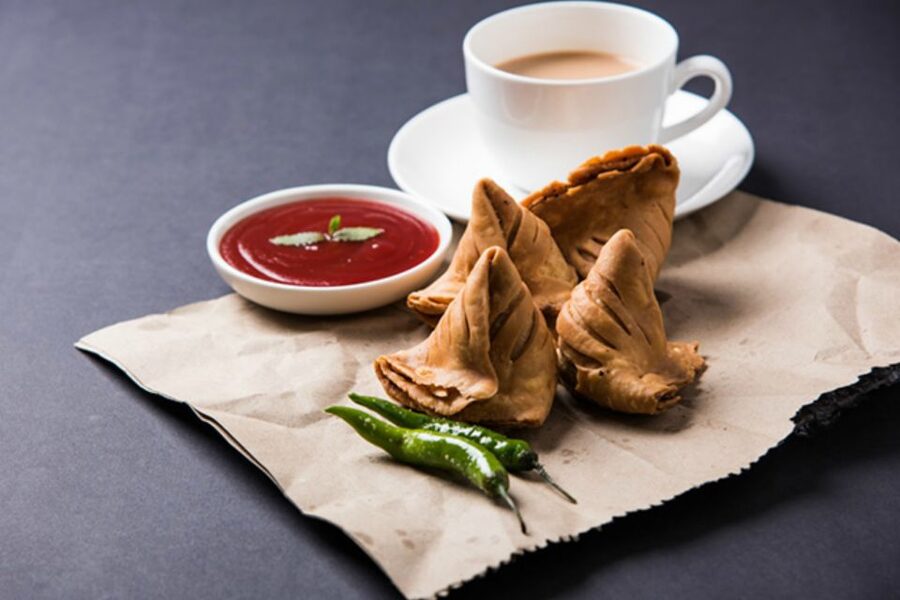
The snack stop comes at Chandni Chowk, with local tea and samosa included. It is a small detail, but it helps break up the tour and gives you a chance to absorb what you have seen.
The chai is served in the local evening tea tradition, and the samosa provides a familiar introduction to Delhi street food. The tour does not present a full food crawl, so do not book it expecting a long meal or many tastings. Think of this as a short refreshment stop within a broader Old Delhi visit.
Past feedback has also mentioned other food and drink experiences on some outings, including lassi, paratha, fruit, and spice tastings. Those details may depend on the guide, timing, or route, so I would count only on the advertised tea and snacks.
If you have food allergies or a sensitive stomach, ask your guide what is being served before eating. Water is not included, so bring your own bottle.
Gurudwara Sis Ganj and the meaning of langar
The visit to Gurudwara Sis Ganj adds a different kind of experience. This Sikh prayer house is not just a building to photograph. You can interact with local people and try your hand at langar, the community kitchen service.
Langar is one of the most valuable parts of the tour because it puts visitors in a setting where service matters more than sightseeing. You may help with a simple kitchen task, such as preparing food, depending on what is happening at the time. One past participant particularly enjoyed making rotis, though that specific activity should not be treated as guaranteed.
Follow your guide carefully here. Sikh religious sites require respectful conduct, and you must remove your shoes and socks in places of worship. The tour description also notes that you should stay close to the guide and follow instructions for your own safety.
The stop can feel more personal than the major monuments. You are given a glimpse of how a religious institution serves its community, rather than being shown only architecture and dates. Guides such as Kamran and Aamir have been praised for explaining the setting clearly and helping people take part with confidence.
Jain Mandir and the bird hospital
The final stop is Jain Mandir, associated with a charitable hospital for birds. Your guide introduces basic Jain ideas and explains the purpose of the facility.
This is a quieter change of tone after the markets and traffic. Jainism places strong value on nonviolence and care for living beings, so the bird hospital offers a practical way to connect religious belief with daily action. The visit is likely to appeal to you if you prefer cultural context and social practices over a long list of monuments.
As with the mosque and Sikh site, behave respectfully and follow local instructions. You may need to remove your shoes and socks at religious locations. The tour then returns you to the original meeting point near the Red Fort.
What the three-hour schedule really feels like
Three hours is enough for a useful introduction, not a complete exploration of Old Delhi. You will see several important areas, but each stop is relatively compact. The tuk-tuk makes the schedule workable by reducing the amount of time spent walking between sites.
The experience is best described as action-packed. You move from monument to market, from spice stalls to a religious kitchen, and then to a bird hospital. That variety is the main strength, but it can also feel like a lot of information in a short period.
A guide can make the difference. Arham has been praised for clear explanations and a reassuring manner. Vasu has been noted for asking what people wanted and tailoring the route. Isha was described as caring and approachable, while Rupali was praised for safety advice and attention to comfort. The operator uses several guides, so names cannot be guaranteed, but the strongest pattern is a friendly, personal style.
The tour is offered in English and Spanish. It does not include hotel pickup or drop-off, so you need to reach Sunehri Masjid independently and arrange your own way back afterward.
Price, comfort, and who should book
At $25 per person, the value is strong if you want a guide, transport through the old city, several cultural stops, and included tea and snacks. You are paying less for long monument visits and more for access, orientation, and a practical route through a difficult area to navigate alone.
I would particularly recommend it for a first visit to Delhi, a short stay, or an arrival day when you want a clear introduction without committing to a full-day tour. It also suits solo visitors who want help navigating the crowds. A guide can provide reassurance, explain local customs, and help you avoid wasting time.
The tour is less suitable if you want a slow photography walk, a private food tour, or an in-depth visit inside each religious building. It is also not suitable for wheelchair users or pregnant women, according to the activity information. Large bags and luggage are not allowed, and crowded lanes can be physically demanding.
Wear comfortable shoes, even though you will remove them at religious sites. Bring sunglasses, a sun hat, sunscreen, and water. Keep valuables secure, and do not let the quick pace tempt you into wandering away from the group.
Avoid Sunday if your main goal is the famous market route. The main markets are closed then, and the itinerary changes to other local markets. That can still provide a useful local experience, but it is not the same Chandni Chowk and Khari Baoli visit described for regular market days.
Should you book this Old Delhi tuk-tuk tour?
Book it if you want a compact, guided introduction to Old Delhi with transport between the main sights and a few meaningful cultural encounters. The combination of Jama Masjid, Khari Baoli, langar, Jain Mandir, chai, and a tuk-tuk ride gives you more range than a simple monument visit.
Skip it if you dislike traffic, crowds, religious-site etiquette, or a fast schedule. For most first-time visitors, though, $25 is a sensible price for three hours of orientation and local access. Choose a non-Sunday departure if the markets matter to you, arrive at the Sunehri Masjid meeting point with light luggage, and stay close to your guide.
FAQ
How long does the Old Delhi tuk-tuk tour last?
The tour lasts three hours.
How much does the tour cost?
The listed price is $25 per person.
Where does the tour meet?
The meeting point is the gate of Sunehri Masjid on Nishad Raj Marg, Lal Qila, Old Delhi, opposite the Red Fort parking area. Look for the green banner marked Sunehri Masjid.
Can I reach the meeting point by metro?
Yes. The Jama Masjid stop on Delhi’s Violet Line is listed as a convenient metro option.
Which languages are available?
The tour is offered with a live guide in English or Spanish.
Is hotel pickup included?
No. Hotel pickup and drop-off are not included.
What is included in the price?
The price includes the tuk-tuk tour, a professional English-speaking guide, tea, and snacks.
Are the markets open on Sundays?
The main markets are closed on Sundays. On that day, the itinerary changes to other local markets.
Is the tour suitable for wheelchair users?
No. The activity is listed as unsuitable for wheelchair users. It is also not recommended for pregnant women.
More 3-Hour Experiences in New Delhi
- Best Of Old Delhi: 3 Hour Tuk Tuk/Rickshaw Tour
★ 5.0 · 10 reviews - Old Delhi: 3-Hour Private Tuk-Tuk/Rickshaw Ride Tour
★ 5.0 · 4 reviews - Old Delhi: 3-Hour Guided Chandni Chowk & Tuk Tuk Tour
★ 5.0 · 2 reviews - From Delhi: 3-Hour Old Delhi Tuk-Tuk Tour with Pick-up
★ 5.0 · 2 reviews
Just added around New Delhi
- Tuk Tuk Delhi Experience★ 4.5 · 3 reviews
- Old Delhi Chandi Chowk Food Tour with Rickshaw Ride – 4-5 Hours★ 5.0 · 8 reviews
- Private Full-Day Tour visit Old and New Delhi with Rickshaw Ride★ 4.5 · 5 reviews
- Old Delhi Street Food Tour with TUK-TUK Adventures★ 5.0 · 4 reviews
- Taj Mahal Sunrise View With Tuk-Tuk★ 5.0 · 10 reviews
- Delhi City Tour: Old Delhi, Markets, Monuments & Street Food Walk★ 5.0 · 24 reviews
- Old Delhi Tour by Tuk-Tuk Street Food and Shopping Experience★ 5.0 · 12 reviews
- Old Delhi Walk, Jama Masjid, Spice Market, Sikh Temple & Rickshaw Ride★ 5.0 · 2 reviews
New Delhi Tuk Tuk Tours, compared.
Old Delhi Food, Heritage&Cultural Walk with Rickshaw ride to Masterji Kee Haveli
Read our review →
Old Delhi: Private Tour of Chandni Chowk, Tuk Tuk & Food
Read our review →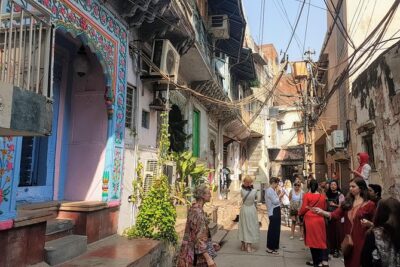
3-hour Old Delhi Heritage Walking tour with Rickshaw Ride
Read our review →3-Hour Old Delhi Heritage Walking tour with Rickshaw ride
Read our review →

Old Delhi City Tour with Tuk-Tuk Ride & Street Food
Read our review →
Private Full Day Old And New Delhi City Tuk Tuk Tour
Read our review →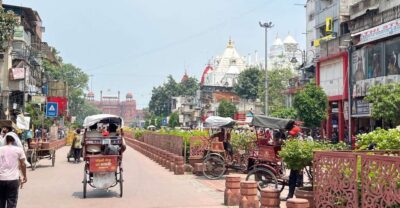
Private Chandni Chowk, Food Tasting, & Tuk-Tuk Tour
Read our review →Browse the lists this tour appears in