
Review · PORTO
Porto Guided Tour to the Historical Center on a Tuk Tuk
Porto reveals itself in layers: medieval walls, tiled churches, grand railway halls, steep lanes, and iron bridges over the Douro. This private tuk tuk tour links those pieces in about two hours, letting you cover far more ground than you could comfortably manage on foot.
I like the quick sense of geography and the chance to reach narrow cobbled streets and high viewpoints without wearing out your feet. I also like the small Port wine tasting, plus guides such as Ana, Victor, Anna, and Bernardo, who bring humor, local tips, and useful stories when they are at their best.
The main drawback is that commentary can be hard to hear while the tuk tuk is moving. Traffic may also eat into sightseeing time, and a rainy, windy day can make the open vehicle less pleasant. Ask your guide to repeat anything you miss.
Key points to know before you book
- A fast first look at Porto: The route covers the cathedral, São Bento Station, Clérigos, the riverfront area, bridges, and Vila Nova de Gaia.
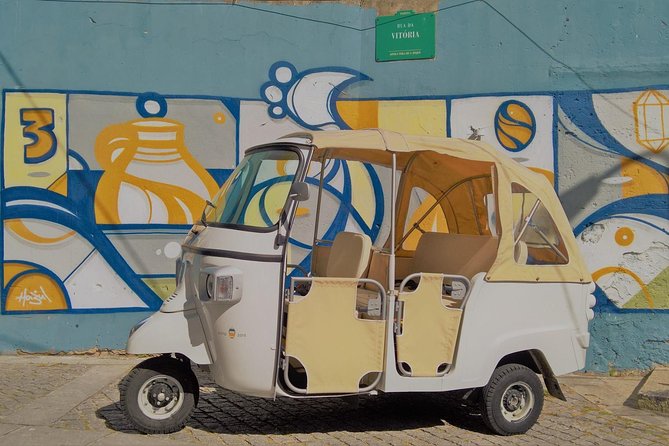
- Private transport for small groups: Each tuk tuk carries two, three, or four average-height adults, up to 75 kilograms each.
- Serra do Pilar is a highlight: The terrace gives broad views across Porto, Gaia, the Douro, and the bridges.
- Expect short stops, not long visits: Several stops last only five or ten minutes, and monument admission is not included.
- Port wine comes with the ride: A glass is included, adding a small local touch to the sightseeing.
- Best for orientation: I would take this early in a Porto visit, then return on foot to the sights you want to explore properly.
Why a tuk tuk works well in Porto
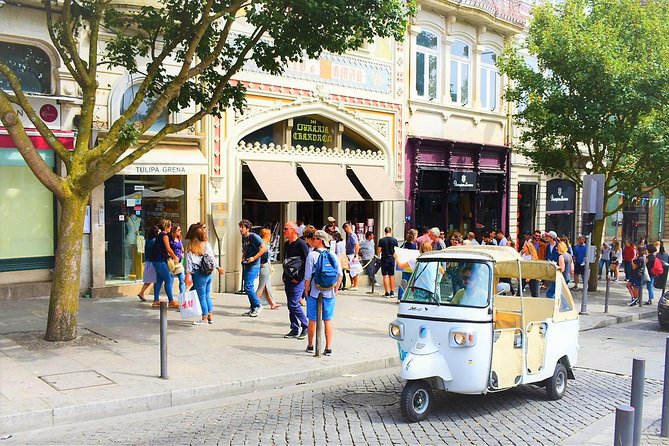
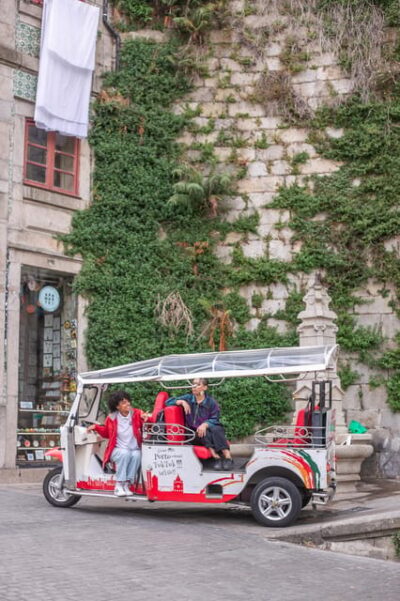
Porto is compact on a map but tiring underfoot. The historic center rises and falls sharply, and some streets are too tight for a standard sightseeing bus. A tuk tuk can slip through lanes, stop near viewpoints, and carry you between districts while you watch the city change around you.
I see this as an orientation tour rather than a full monument tour. You get a broad picture of Porto’s layout, from the cathedral hill to the Douro and across to Gaia, but the schedule does not allow lengthy interior visits. You will often pause for a few minutes, hear the main story, take photographs, and move on.
That approach suits a first day. Afterward, you will know where São Bento Station sits, how the cathedral connects to the old walls, where Clérigos rises above the center, and how to reach Serra do Pilar for the classic view across the river.
The tour is private, so your group controls the conversation more than on a large bus. If your guide is engaging, this makes a real difference. Ana is described as funny and well informed, Victor as passionate and good company, and Bernardo as especially keen to share facts about the city. Guide quality can vary, though, so do not hesitate to ask questions and request clearer commentary.
More History Tours in Porto:
- Historic Porto by Private Electric Tuk Tuk to Top Landmarks
★ 4.5 · 735 reviews - Porto: Historic Center Tuk-Tuk Tour
★ 4.5 · 244 reviews - Cruise Shore Excursion – Private Tuk Tuk Tour to the Historic Center
★ 4.5 · 47 reviews
From the theater district to Porto’s medieval wall
The route begins near R. de Augusto Rosa 180, close to the upper historic center. One early point of interest is the Carlos Alberto Theatre, a public-interest building completed in 1910 after the earlier Real Theatre burned down.
Its façade reflects the Louis XVI style popular in early twentieth-century France. The building was designed by Marques da Silva and remains linked with Porto’s wider theater tradition and the São Bento da Vitória monastery. You may not spend long here, but it is a useful reminder that Porto’s story is not only churches and wine. The city also has a long life of drama, music, and public performance.
You also pass part of the Fernandina Wall, one of Porto’s quieter historic remains. Built between 1368 and 1437, it once extended about 3,000 paces, with an average height of roughly 30 feet. Its name comes from King Ferdinand, and its construction was funded in part through a wine tax.
This is the sort of sight that can be easy to miss on a walking route. Much of the wall has disappeared, but surviving sections help explain Porto’s steep medieval shape and defensive position. I would ask the guide exactly where the remaining section lies, since the wall is not presented as a long, continuous attraction.
The cathedral hill and São Bento Station
The first substantial stop is Porto Cathedral, or Sé do Porto. Construction began in the twelfth or thirteenth century, with a Romanesque design that was enlarged and altered over many centuries. Its present appearance also reflects twentieth-century work intended to recreate a medieval impression.
You get about ten minutes here, and admission is not included. That is enough to admire the exterior and understand its position above the city, but not enough for a leisurely look inside if ticket lines or crowds slow you down. If the cathedral matters to you, mark it for a separate visit.
Nearby, the stone pillory on the cathedral terrace is a nineteenth-century reproduction made in 1945 from a 1797 drawing. The terrace itself was created after buildings around the cathedral, including the Casa do Cabido and Bishop’s Palace, were demolished in 1940 under the Estado Novo government. You have about five minutes here, with no admission fee.
The Episcopal Palace sits close by. Its origins probably reach back to the thirteenth century, though it may have replaced an older building. The palace was remodeled in 1737, possibly under the influence of Nicolau Nasoni, and has a grand façade with pilasters, decorated windows, and a bishop’s coat of arms. Again, you will see the outside rather than make a full interior visit.
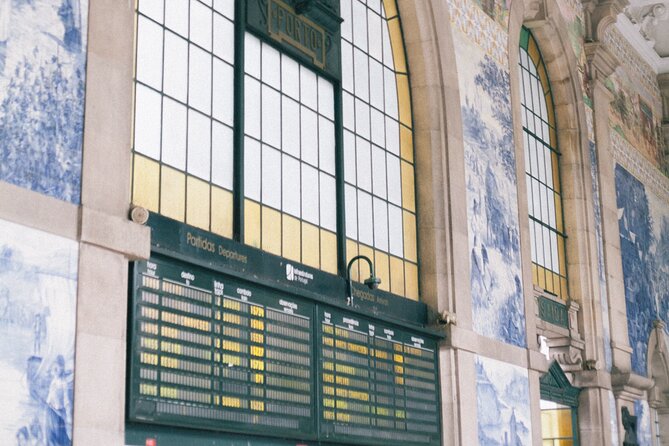
São Bento Railway Station is one of the route’s best short stops. The station opened in the early twentieth century, with a glass and cast-iron roof designed by Marques da Silva. Its entrance hall is lined with about 20,000 narrative tiles by Jorge Colaço.
You get ten minutes, and admission is free. Go inside promptly. The tile panels are the reason for the stop, and they reward a close look at their scenes of Portuguese life and history. This is a place where the short schedule works reasonably well, since the main attraction is concentrated in one hall.
Squares, fountains, churches, and Clérigos
The tuk tuk then moves through several central squares, including an area first planned in the early eighteenth century. What began as Praça Nova developed into a large urban square bordered by streets, palaces, and the old medieval wall. Much of the original setting has changed, but the open space helps you see how Porto expanded beyond its earlier defenses.
Another square, once known as Praça dos Ferradores, recalls the blacksmiths who worked there. It later took the name of Charles Albert of Sardinia, who stayed at the Palace of the Viscounts of Balsemão while exiled in Porto. A monument in the garden honors Portuguese men killed in the First World War.
The Fonte dos Leões adds a lighter note. This nineteenth-century fountain was made in France by the Val d’Osne foundry and is largely copied from the fountain in Leicester’s Town Hall Square. You get five minutes, enough for a photograph and a quick explanation of its unusual connection with England.
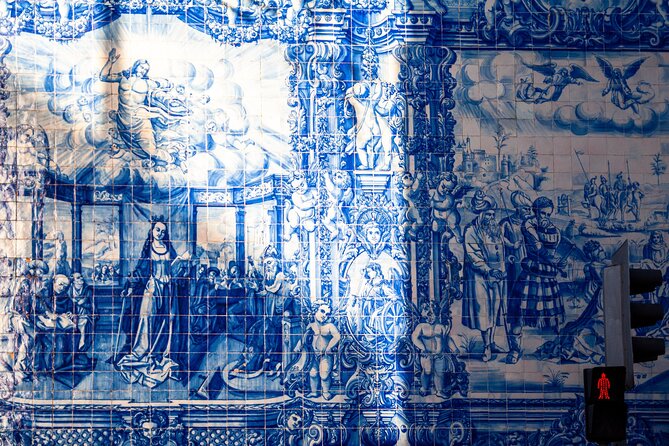
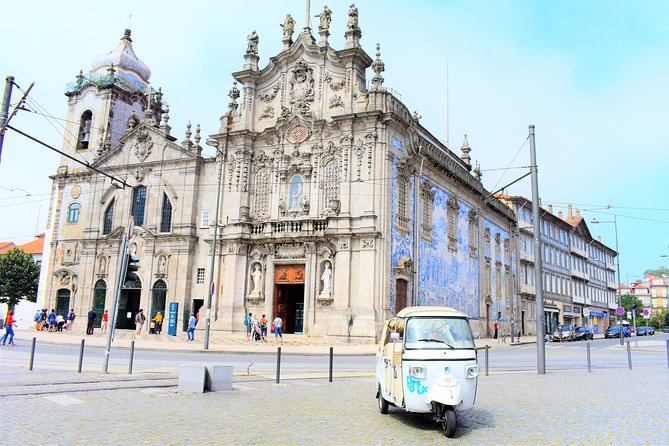
The route also passes two important churches. One has a classical façade dating from the 1850s and a Porto Rococo altarpiece linked with Nicolau Nasoni. Another, built in the second half of the eighteenth century, is known for its carved interior and tile-covered side façade added in 1912. These brief views show how much decoration Porto packs into even ordinary-looking streets, but the tour cannot give you time to study the carving or tile work in detail.
Cordoaria Garden, officially João Chagas Garden since 1924, gives the tuk tuk a patch of open space. Its name recalls rope makers who worked here for about 200 years. The public garden was laid out in 1865 and 1866 by German landscaper Emile David, with statues, modern sculpture, and later changes made for Porto’s year as European Capital of Culture.
Clérigos Tower is one of Porto’s clearest landmarks. The Baroque church and its tall bell tower can be seen from many parts of the city. The stop lasts about five minutes, and tower admission is not included. That is enough to understand the building’s place in the skyline, not enough to climb it. If you want the city view from the top, plan another visit.
A few more rides around Porto worth a look
- Porto: Guided Tour by Tuk-Tuk & Optional Douro River Cruise
★ 4.5 · 5,980 reviews - Porto: Guided Tuk Tuk Tour
★ 4.6 · 1,390 reviews - Porto: Tuk tuk vip guided tour – 1.30h
★ 4.5 · 16 reviews - Central Park Pedicab Guided Tours
★ 5.0 · 7,108 reviews
From the Bolsa Palace to the Douro
The route continues past São Bento da Vitória monastery, a late sixteenth-century complex that has served religious, musical, archival, and theatrical purposes. Part of the building is connected with the National Theatre São João, and its Noble Cloister hosts performances and events.
The Palácio da Bolsa, or Stock Exchange Palace, is another major exterior stop. This neoclassical building was designed in 1842 and belongs to Porto’s Commercial Association. Its famous Arabian Room is the main interior draw, but admission is not included and the tour does not provide a full visit. I would return separately if you want to see the rooms properly.
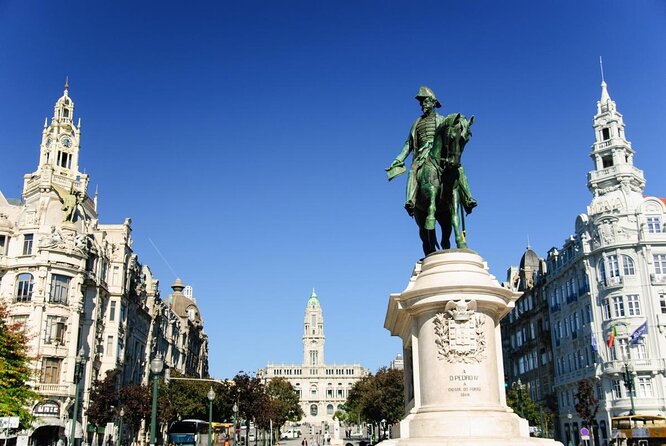
Nearby is the monument to D. Pedro, unveiled in 1866. Its two-sided pedestal recalls his donation of his heart to Porto and his arrival at Mindelo. The statue shows him offering the constitutional charter to the city. It is a compact stop, but it helps connect Porto’s streets with the political struggles of nineteenth-century Portugal.
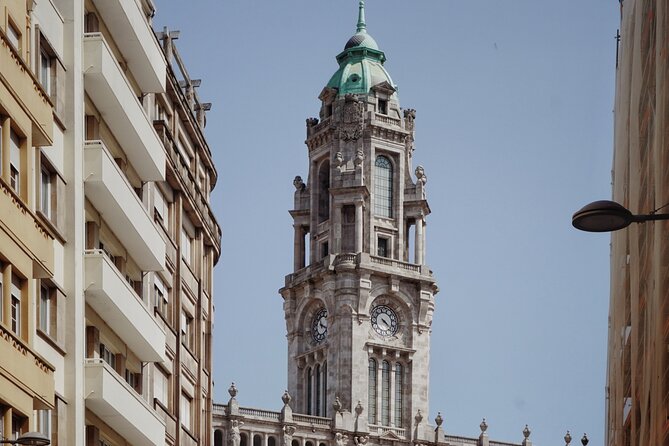
One of the more surprising sights is the historic library. The building opened in 1906 and has an Art Nouveau façade with Neo-Gothic details. Inside are painted plaster finishes, a striking red staircase, and a large stained-glass skylight carrying the library’s motto, Decus in Labore.
The library is often admired as one of the world’s most beautiful, but do not assume this tour includes entry. The tuk tuk gives you the location and the reason to return. If you are a fan of architecture or book interiors, put it high on your personal walking list.
The former Mercado Ferreira Borges is an important piece of Porto’s iron architecture. Built in 1885 to replace the old Ribeira Market, it served several purposes before becoming an entertainment venue housing Hard Club. Beside it, Infante Square includes a garden, a monument to Prince Henry the Navigator, and views toward the river.
São Francisco Church is the great interior sight in this part of the city. Construction began in the fourteenth century, while much of the lavish gilded woodwork dates from the seventeenth and eighteenth centuries. The Tree of Jesse and the catacombs are especially notable.
The church is a national monument and part of Porto’s UNESCO-listed historic center. Yet this tour does not include monument entry, so I would not treat the five-minute pass as a substitute for seeing the inside. The same advice applies to the Alfândega Nova, the former customs building on the river. Its nineteenth-century iron structure now houses the Transport and Communications Museum and a congress center, with restoration work associated with architect Eduardo Souto de Moura.
Serra do Pilar and Porto’s best wide view
The tour’s most rewarding viewpoint is at the Monastery of Serra do Pilar, across the river in Vila Nova de Gaia. Construction began in 1538 and continued until about 1670. The circular church and circular cloister are unusual, with the cloister supported by 36 Ionic columns.
You get about fifteen minutes here, the longest named stop on the route. Admission is free. Use the time for the view: Porto’s cathedral, the D. Luís I Bridge, the riverfront, Gaia, the Arrábida Bridge, Fontainhas, and the São João Bridge all come into the picture.
This is where the tuk tuk format earns its keep. Getting to the high terrace on foot involves a steep climb, while the vehicle brings you close to the outlook. I would schedule the tour in daylight and keep your camera ready, since this is the place most likely to give you a clear mental map of both sides of the Douro.
You will also see the D. Luís I Bridge, planned by Teófilo Seyrig, a disciple of Eiffel, and opened in 1886. Its two iron decks span 395 meters, and the large arch remains one of the bridge’s defining features. The upper deck now carries Porto’s metro, linking the cathedral area with Gaia.
The newer Infante Bridge opened in 2003 and replaced road traffic on the upper deck of the D. Luís I Bridge. Its arch design was considered a world record at the time. Seeing both bridges together helps explain how Porto has adapted its river crossing as traffic and public transport changed.
Price, comfort, and the small practical details
At $42.33 per person, the experience is not the cheapest way to see Porto, but the price is reasonable for a private vehicle, driver-guide, local guide, and nearly two hours of coverage. You are paying for saved walking time, access through tight streets, and the chance to connect central Porto with a high viewpoint in Gaia.
It offers better value for two to four people who want a quick first look. Larger groups may use several tuk tuks and travel together, making the arrangement less intimate. Each vehicle is intended for two, three, or four average-height adults, with a stated limit of 75 kilograms per person.
The included Port wine glass is a pleasant extra, but it should not drive your booking decision. The real value is the route and the guide. Monument entrances are not included, so budget separately if you want to enter the cathedral, Clérigos Tower, the Bolsa Palace, or other paid sights.
You can bring a service animal, and the tour is near public transport. Children must have an adult with them, and at least two people are required per booking. Times can shift with Porto traffic. The open tuk tuk can be chilly or wet, so take a raincoat when the forecast is doubtful.
Free cancellation is available until 24 hours before the start time. If poor weather forces cancellation, you can choose another date or receive a full refund. The company has also canceled when unexpected metro construction closures made the route unsafe, so keep a little flexibility in a tightly planned day.
Should you book this Porto tuk tuk tour?
I would book it on my first day in Porto if I had limited time, tired feet, children in the group, or a strong wish to see both Porto and Gaia quickly. The Serra do Pilar viewpoint, São Bento tiles, cathedral hill, and bridge views give you a strong first sense of the city.
I would not book it as my only cultural tour if you want detailed interior visits or long historical explanations at every stop. The short pauses are useful, but they leave little time for churches, the Bolsa Palace, or Clérigos Tower.
Choose an engaging guide, ask questions, and sit where you can hear clearly. If you want a fast, private introduction with a Port tasting and plenty of photo stops, this is a good fit. If you prefer slow wandering and close study of monuments, use the tuk tuk to get oriented, then explore Porto on foot.
FAQ
How long does the Porto tuk tuk tour last?
The tour lasts approximately 1 hour and 50 minutes.
Where does the tour start and end?
It starts at R. de Augusto Rosa 180, 4000-528 Porto, Portugal, and ends back at the same meeting point.
Is the tour private?
Yes. Only your group participates in the activity.
How many people fit in one tuk tuk?
Each tuk tuk holds two, three, or four average-height adults, with a limit of up to 75 kilograms per person. Larger groups use multiple vehicles and travel together.
Is Port wine included?
Yes. A glass of Port wine is included in the tour.
Are monument entrance fees included?
No. Admission to monuments is not included. Some exterior stops and São Bento Station are free to visit.
Is the tour offered in English?
Yes. English is one of the available languages.
Can children join the tour?
Yes. Children must be accompanied by an adult, and a minimum of two people is required for each booking.
What happens if the weather is poor?
The experience requires good weather. If the company cancels because of poor weather, you can choose another date or receive a full refund. You can also cancel for a full refund if you do so at least 24 hours before the start time.
Just added around Porto
- 2 Hour Private Tuktuk Tour in Porto to Monastery and Cellars★ 4.5 · 7 reviews
- 3 Hour Tuk tuk Tour in Porto★ 4.5 · 60 reviews
- 2 Hour Discover Gaia on a Private Eco-Friendly Tuk Tuk Tour★ 4.0 · 4 reviews
- Explore Porto Aboard A Classic Tuk-Tuk tour 1h★ 5.0 · 22 reviews
- Discover Porto on a 2-Hour Shared Electric TukTuk★ 4.5 · 11 reviews
- Tours in the Port DE Tuk Tuk★ 5.0 · 38 reviews
- Porto: tuk tuk adventure tours old town 1h★ 5.0 · 33 reviews
- Private Port: Tuk Tuk and boat with local guides★ 5.0 · 4 reviews
Porto Tuk Tuk Tours, compared.
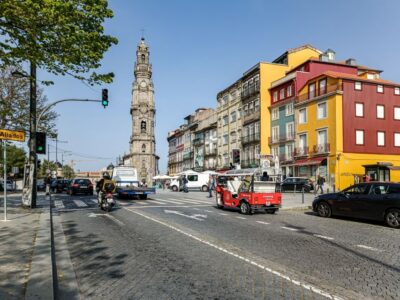
Guided Tour by Tuk-Tuk & Optional Douro River Cruise
Read our review →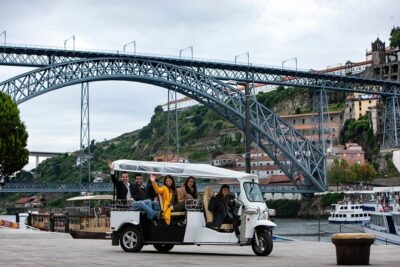
Discover Porto’s Highlights on a 2-Hour Private Electric Tuk Tuk
Read our review →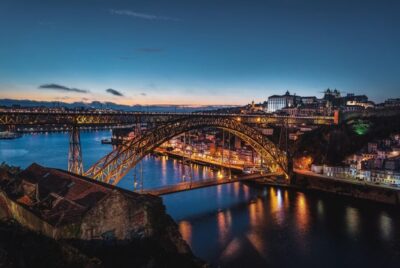
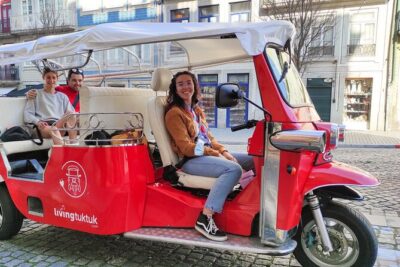
Historic Porto by Private Electric Tuk Tuk to Top Landmarks
Read our review →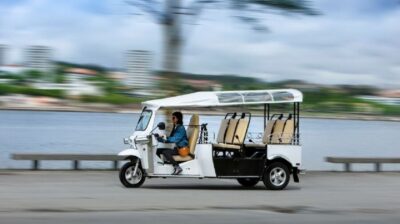
Oporto Tuk-Tuk Tour: Fast, Fun & Flexible – 1H to Full Day!
Read our review →
Browse the lists this tour appears in