
Review · BERLIN
Private Guide Up to Group 6 – ONE Rickshaw, (E)Bikes, E-Scooters
Berlin is easier to understand when its landmarks are linked by the streets between them. This private tour does that well, taking you from the TV Tower through Museum Island, Bebelplatz, Checkpoint Charlie, the Holocaust Memorial, and Brandenburg Gate by rickshaw, bike, or E-scooter.
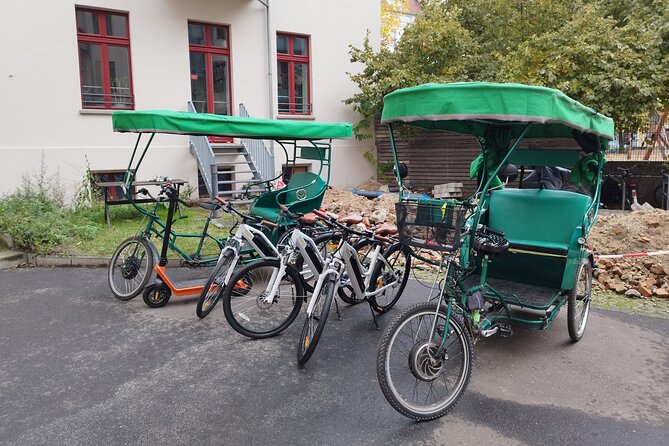
I like the choice of vehicles, especially for mixed groups. One person can ride in the rickshaw while others pedal, and the group still stops together for the same guide commentary. I also like the personal style associated with guide Levi, who brings humor, speaks Dutch well, answers questions, and has even supplied water and pretzels on past outings.
The main consideration is the price: $465.43 per group, listed for up to six people, is good value for a full group but expensive for one or two. The route also covers many major sights in about three hours, so you should expect brief stops and outdoor explanations rather than museum visits.
Key things to know before booking
- Private touring for up to six people: Your party gets the guide and vehicle arrangement to itself, with no strangers joining the ride.
- A flexible mix of transport: The group can use a rickshaw, e-bikes, regular bikes, and E-scooters, although you should confirm the exact vehicle allocation before booking.
- A strong Berlin Mitte route: The tour connects Alexanderplatz, Museum Island, Unter den Linden, Checkpoint Charlie, the Nazi-era memorial sites, and Brandenburg Gate.
- Good for less mobile members: The rickshaw brings you close to monuments and requires only a few steps to enter.
- Guide-led storytelling: Levi is specifically associated with an easygoing, humorous style and Dutch-language guiding.
- Outdoor sightseeing, not admissions: The listed stops are viewed from outside, and no lunch or attraction entry is included.
Why this private Berlin tour works well
The best feature here is not simply the vehicle. It is the way the vehicle lets your group move through central Berlin without splitting up. A family can place a less mobile member in the rickshaw while younger or more active people use bikes or E-scooters. Everyone still gathers at the same stops and hears the same explanation.
That matters in Berlin because the central sights are spread across a large area. Walking between Alexanderplatz, the Brandenburg Gate, and Checkpoint Charlie takes time, while a standard sightseeing bus can leave you feeling detached from the streets. This tour gives you a closer look at the city and lets the guide pause for photographs.
The private format also changes the pace. You can ask questions, request a photo stop, and spend a little more time on a subject that interests your group. The experience is not a formal lecture. Based on the guide style described, expect humor, conversation, and stories aimed at making Berlin easier to grasp.
Guide Levi receives particular praise for his personal approach, broad command of Berlin’s past, and Dutch language skills. His tours have also included children in the conversation, which makes this a sensible choice for families. Water and pretzels have been provided on some outings, though these should be treated as a pleasant possibility rather than a guaranteed inclusion.
The cost deserves a clear look. At $465.43, a full group of six pays about $78 per person. That is a reasonable rate for a private guide, three hours of transport, and a central route packed with major sights. For two people, the same price becomes much harder to justify. The tour makes the most financial sense for a family, group of friends, or small work party.
More Rickshaw Tours in Germany
- Berlin: Private Guided E-Rickshaw Tour
★ 4.9 · 157 reviews - Individual City Tour – Rickshaw Sightseeing in Berlin
★ 5.0 · 120 reviews - Berlin Express: Private 1-Hour E-Rickshaw Ride
★ 5.0 · 116 reviews
Starting near the Berlin TV Tower
The stated meeting point is Weinbergsweg 6, while the itinerary describes meeting near the Berlin TV Tower at Alexanderplatz. Since those details do not perfectly match, confirm the exact pickup location before you go. This is especially important if you are arriving by public transport or planning your day around Alexanderplatz.
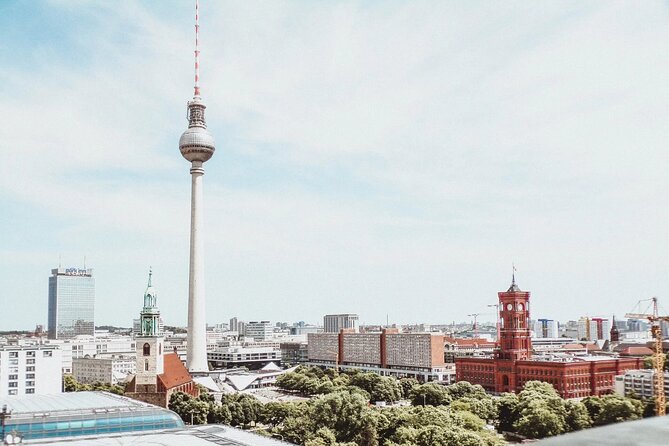
The TV Tower, or Fernsehturm, is one of Berlin’s clearest orientation points. Its tall shaft and silver sphere rise above the city, making it easy to spot from many parts of central Berlin. The tower reaches about 368 meters, with an observation deck at roughly 203 meters.
This tour does not include admission to the observation deck. Instead, the tower serves as a starting landmark and a useful introduction to Berlin’s modern identity. From here, the route moves into the city’s political, royal, cultural, Nazi, Cold War, and reunification stories.
Rotes Rathaus and the rebuilt City Palace
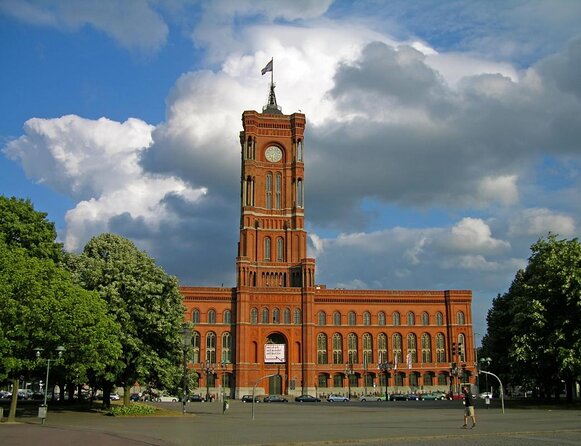
Berlin’s red-brick City Hall, the Rotes Rathaus, is presented as an important center of city government. Its architecture gives you an early example of how Berlin’s civic identity is expressed through large public buildings.
The nearby Stadtschloss, or Berlin City Palace, offers a more complicated story. Originally built as a royal residence in the 15th century, it was linked to the Hohenzollern dynasty and the development of Prussia. The palace was destroyed during World War II, then became part of a long argument about how Berlin should handle its past.
The present building, known through the Humboldt Forum, combines a Baroque exterior with modern interior spaces. You get about 15 minutes here, with no admission ticket included. That time is enough for an exterior explanation and photographs, but not for a full visit inside.
I like this stop because it shows that Berlin’s past is not always left untouched. Buildings can be destroyed, rebuilt, debated, and given new uses. The guide can help you see the palace as both a historic royal site and a modern cultural project.
Museum Island and Unter den Linden
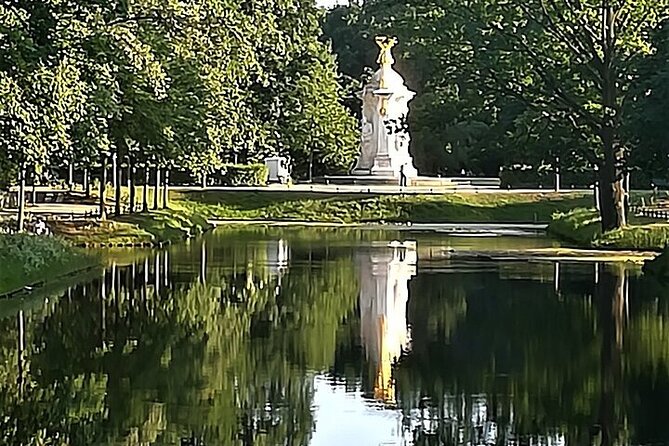
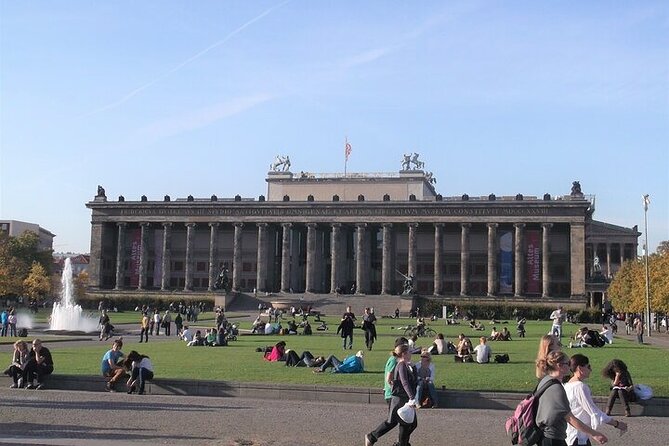
Museum Island is one of Berlin’s major cultural areas and a UNESCO World Heritage site. Several important museums sit together here, making the area a natural place to discuss the city’s interest in art, archaeology, and public culture.
The tour allows about 20 minutes at Museum Island. That is enough to view the setting and hear the main story, but not enough to explore the museums in detail. If you want to enter one, plan a separate visit for another part of your trip.
From here, the route follows Unter den Linden, Berlin’s grand boulevard. The street links several major sites and passes buildings in Baroque, Neoclassical, and modern styles. The itinerary allows around 10 minutes, so expect a quick orientation rather than a long architectural walk.
This is one of the places where the ride itself adds value. You can cover the boulevard without spending your limited sightseeing time on a long walk, then pause near notable buildings such as the State Library and Kronprinzenpalais. You remain close to the city rather than looking at it through a bus window.
More Rickshaw Tours in Berlin:
- Rickshaw Tours Berlin – Groups of up to 16 people with several rickshaws
★ 4.0 · 97 reviews - Rickshaw Sightseeing City Tours Berlin – Rikscha Tours
★ 4.0 · 55 reviews - Berlin: Private Sightseeing Tour in an E-Rickshaw
★ 4.9 · 44 reviews - One Up to 3 Rickshaws(6 GUESTS)-Taylor Made Rickshaw Berlin Tour
★ 5.0 · 20 reviews
Bebelplatz and the danger of censorship
Bebelplatz is a small square with a serious story. It was once called Opernplatz and became associated with the Nazi book burning in May 1933, when works judged to be anti-German were destroyed.
The memorial is easy to miss if you do not know where to look. A glass panel in the pavement reveals empty bookshelves below. The design is quiet and unsettling, asking you to think about missing books, suppressed ideas, and the cost of intellectual control.
The stop lasts about 10 minutes. That may sound brief, but this is not a place that needs a long list of facts. A good guide can explain the event, point out the memorial, and give you a moment to look for yourself. If you want an extended discussion, ask questions while the group is there.
Gendarmenmarkt and Berlin’s grand civic style
Gendarmenmarkt is among central Berlin’s most striking squares. The Konzerthaus sits between the French Cathedral and German Cathedral, creating a balanced architectural scene that reflects the city’s 18th and 19th-century ambitions.
The French Cathedral recalls the presence of Huguenot refugees in Berlin. The German Cathedral completes the formal arrangement, while the Konzerthaus remains a major concert venue. Together, the buildings offer a compact lesson in religion, migration, music, and state power.
The scheduled stop is about 10 minutes and does not include admission. That is enough for photographs and an overview. If you want to enter a cathedral, museum, or concert hall, you will need extra time outside this tour.
Checkpoint Charlie and the Cold War
Checkpoint Charlie is one of Berlin’s best-known Cold War sites. It was a crossing point between the American and Soviet sectors and became a symbol of the division between East and West Berlin.
The current guardhouse is a replica, and actors dressed as American military police may be present for photographs. The nearby Mauermuseum offers a fuller look at escape attempts and the history of the Wall, but admission is not included in this tour.
The stop lasts about 15 minutes. That gives you enough time to understand why the crossing mattered, but the site can feel crowded and commercial. The replica booth alone cannot explain the tension of the Cold War. The guide’s context is important here, particularly if you have not studied Berlin’s postwar division.
I would treat Checkpoint Charlie as a short historical stop, not a complete Cold War visit. The value is in connecting it with the rest of the route, especially the later discussion of the Wall’s fall and Berlin’s reunification.
Topography of Terror and the Führerbunker site
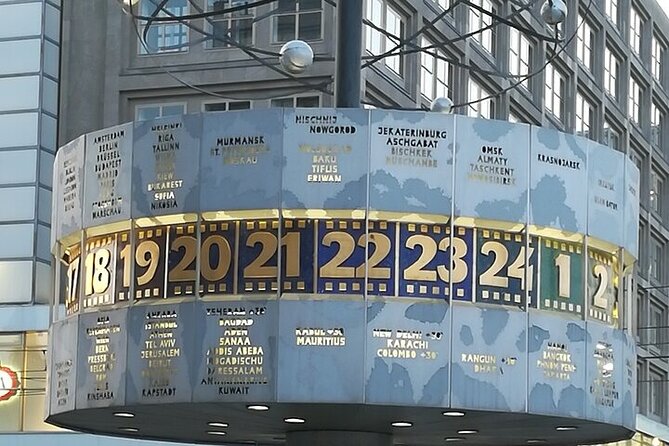
The Topography of Terror is located on the former site of the Gestapo and SS headquarters. Its exhibits document Nazi persecution and the machinery of terror through records, photographs, and surviving traces of the original site.
You have about 20 minutes here. The tour does not include admission, so the guide’s outdoor explanation will be the main part of your visit unless you return later for the museum. This is a serious stop, and the subject matter may be difficult, but it is essential to understanding Berlin’s wartime history.
The nearby Führerbunker site is more understated. The bunker itself is not open as a tourist attraction, and there is no visible structure to enter. It lies beneath a modern parking area near In den Ministergärten and Gertrud-Kolmar-Straße, with no prominent marker designed to attract attention.
The guide can explain that Adolf Hitler spent the final months of World War II there and died in the bunker in 1945. The absence of a grand memorial is intentional. The site was largely removed after the war to prevent it from becoming a pilgrimage destination for neo-Nazis.
You get about 10 minutes here. It is a useful stop precisely because it avoids turning the site into a spectacle.
The Holocaust Memorial and Brandenburg Gate
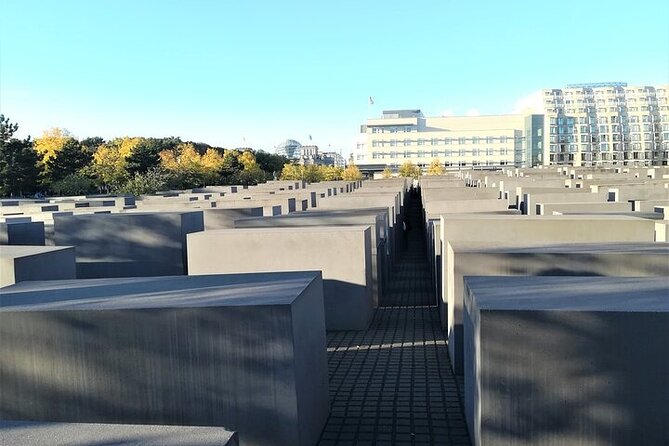
The Memorial to the Murdered Jews of Europe is made up of 2,711 concrete slabs arranged across a sloping field. The blocks vary in height, and the ground changes as you walk between them, creating a sense of uncertainty and isolation.
The tour allows about 10 minutes. That is enough to enter the memorial and experience its changing levels, but not enough for a long visit to the underground information center. You should keep your behavior quiet and respectful. This is a memorial, not simply a photo backdrop.
The final major stop is Brandenburg Gate, Berlin’s most recognizable landmark. Completed in 1791, the Neoclassical gate was commissioned by Frederick William II of Prussia and originally marked the beginning of Unter den Linden.
Its meaning changed over time. It became linked to Berlin’s division and later to reunification, making it a fitting endpoint for a route that has covered Prussian power, Nazi dictatorship, Cold War separation, and modern Germany.
The scheduled stop is about 10 minutes. You will have time for photographs and a final explanation, but you may want to return later when you can linger without a schedule.
Vehicles, comfort, and accessibility
The vehicle choice is the tour’s most practical advantage. The rickshaw is designed for people who have trouble getting around and allows the group to approach monuments without long walks. The description says entering requires only a few steps, but you should still confirm whether the seating and transfer arrangement suit your needs.
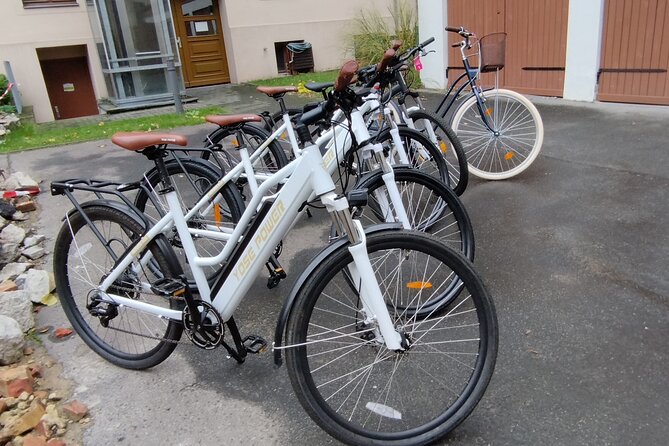
The experience is listed with a rickshaw, two regular bikes, three e-bikes, and an arrangement for up to seven people in one section of the details. Elsewhere, the tour is priced for up to six people. Because those numbers do not fully match, ask the operator to confirm the exact group capacity and vehicle mix before paying.
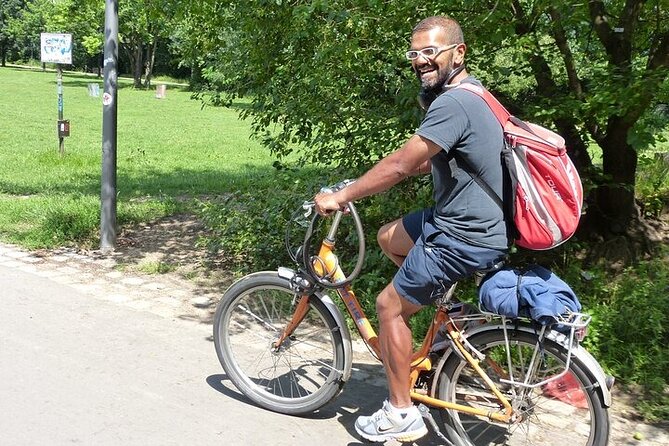
E-bikes and E-scooters can make the route less tiring, but you should be comfortable using the chosen vehicle. The tour is near public transportation, and the vehicle is listed as air-conditioned with WiFi and bottled water. It is not clear how every feature applies across the different vehicle types, so ask if those details matter to you.
Who should book this experience?
I would choose this tour for a small group that wants a private introduction to Berlin without committing to a full day. Families should find the format useful, particularly if children need variety and conversation. The guide style also appears well suited to children because questions and humor are part of the experience.
It is a strong option for groups with mixed mobility. One person can ride in the rickshaw while others use bikes or E-scooters, keeping the party together. Dutch-speaking groups should also consider it, since Levi is described as speaking Dutch well.
I would be more cautious if you want long museum visits, detailed indoor access, or a slow photographic tour. The route includes many stops, but most last only 10 to 20 minutes. You are buying orientation and storytelling, not entry to Berlin’s major institutions.
Booking value and practical details
The tour lasts about three hours and returns to the meeting point. Lunch is not included, so plan a meal before or after the ride. Bottled water is listed as included, and a mobile ticket makes the booking simple.
Free cancellation is available if you cancel at least 24 hours before the local start time. Inside that window, the cost is not refunded, and changes are not accepted.
Before booking, confirm three things: the exact meeting point, the final group capacity, and which vehicles your party will receive. Those questions matter because the information gives both Weinbergsweg 6 and the TV Tower as reference points, and it gives slightly different capacity details.
Should you book it?
Book this private Berlin tour if you want a friendly, flexible way to connect the city’s major sights and you can fill most of the available places. The strongest reasons are the mixed vehicle setup, the rickshaw option for less mobile people, and Levi’s personal, humorous guiding style.
Skip it if you are traveling alone or as a couple and want the lowest possible price. Also skip it if your priority is spending serious time inside museums. For a family or group of friends, though, the cost can be fair, and the route gives you a useful first look at Berlin’s central story without wearing out your feet.
FAQ
How long does the Berlin rickshaw and bike tour last?
The tour lasts approximately three hours and ends back at the meeting point.
How much does the private tour cost?
The listed price is $465.43 per group, with the booking described as covering up to six people.
What vehicles can the group use?
The available choices are a rickshaw, regular bikes, e-bikes, and E-scooters. The details also list two bikes, three e-bikes, and one rickshaw, so confirm the exact arrangement for your group.
Is this a private tour?
Yes. Only your own group participates in the activity.
Where does the tour start?
The listed meeting point is Weinbergsweg 6, 10119 Berlin, Germany. The itinerary also refers to meeting at the Berlin TV Tower, so confirm the exact starting location before the tour.
Is the tour suitable for people with limited mobility?
Yes. The rickshaw is specifically described as suitable for less mobile people, and the tour can stop close to monuments. Entering the rickshaw requires a few steps.
Are admission tickets included?
No. The listed stops are free outdoor visits, and admission to places such as the TV Tower observation deck, museums, or the Mauermuseum is not included.
Can I cancel for a full refund?
Yes, if you cancel at least 24 hours before the local start time. Cancellations made less than 24 hours before the start receive no refund.
More Scooter Rentals in Berlin
- Private Up to 12 Guests-ONE RICKSHAW, E-Bikes, E-Scooters
★ 5.0 · 2 reviews - Night Food Tour in Saigon By Scooter
★ 5.0 · 7 reviews
Just added around Berlin
- One Up to 3 Rickshaws(6 GUESTS)-Taylor Made Rickshaw Berlin Tour★ 5.0 · 20 reviews
- Romantic Berlin Rickshaw City and Photo Tour – incl. pick-up★ 4.0 · 9 reviews
- Rickshaw Sightseeing Tours Berlin – Highlights Berlin – Rickshaw city tour★ 3.5 · 3 reviews
- Rickshaw Tour-Cruise Ship guests arrive 9.30 upto 11.30 am Berlin★ 5.0 · 7 reviews
- Daily First Rickshaw promotion in Combi Vehicle public Group 90€★ 5.0 · 11 reviews
- Private Up to 12 Guests-ONE RICKSHAW, E-Bikes, E-Scooters★ 5.0 · 2 reviews
- Rickshaw Sightseeing City Tours Berlin – Rikscha Tours★ 4.0 · 55 reviews
- Berlin Rickshaw Tours Historical & Photo City Tour 120min – Sightseeing★ 4.5 · 11 reviews
Berlin Tuk Tuk Tours, compared.
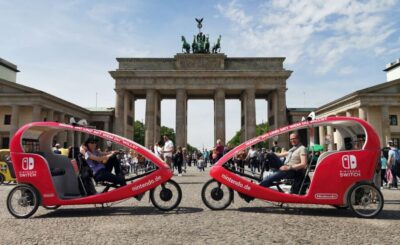
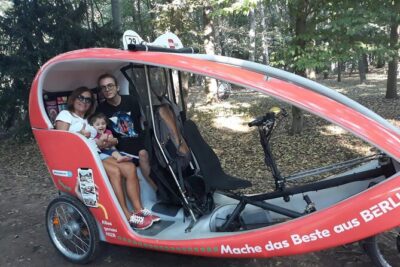
Individual City Tour – Rickshaw Sightseeing in Berlin
Read our review →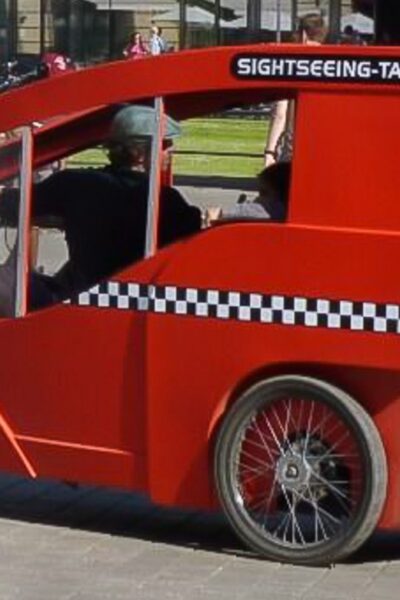

Rickshaw Tours Berlin – Groups of up to 16 people with several rickshaws
Read our review →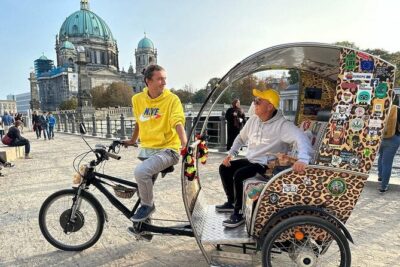
One Up to 3 Rickshaws(6 GUESTS)-Taylor Made Rickshaw Berlin Tour
Read our review →
Berlin Rickshaw Tours Historical & Photo City Tour 120min – Sightseeing
Read our review →Browse the lists this tour appears in