
Review · PHNOM PENH
Silk Island & countryside of Phnom Penh by Tuk Tuk
The best part of this outing is the quick change of pace. One moment you are in Phnom Penh traffic, and soon you are crossing the Mekong by local ferry, riding through small villages, farms, and dusty island roads. I especially like the family-run silk weaving visit and the chance to see food production, such as bean curd, without turning the day into a string of souvenir shops.
I also like the quiet riverside meal, which gives the trip a gentle finish, especially on an early-evening departure. The main trade-off is that this is a working countryside experience, not a polished attraction. Roads can be rough, the ferry is basic, and the simple restaurant may not suit anyone expecting city-style dining.
Key points at a glance
- Ferry crossings are part of the experience: You ride local ferries across the Mekong and between island communities, sometimes with the tuk-tuk aboard.
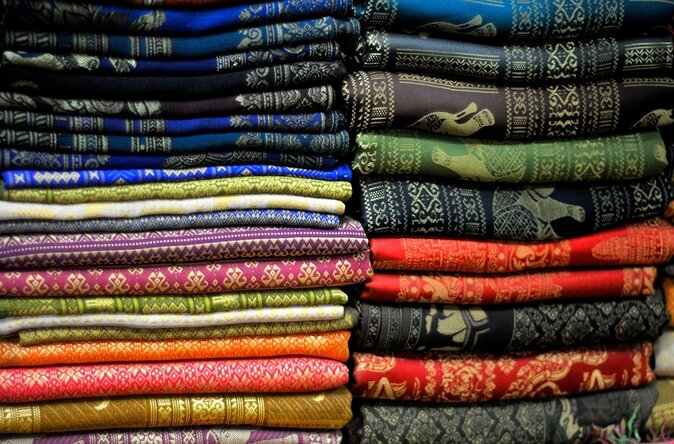
- Silk is shown as a family craft: You can see silk preparation and weaving, ask questions, and sometimes try the loom yourself.
- The countryside is the main attraction: Mango, banana, corn, lemongrass, ginger, rice, and water-lily growing areas appear along the route.
- Food stops feel local: The tour includes tropical fruit and a Khmer lunch or dinner, with vegetarian food available if requested.
- Guides make a real difference: Guides named in past experiences include Thong Chea, Sok Mon, Tida, Narith, and Mr Pi.
- The tour is small: The maximum group size is 12, with hotel pickup and drop-off by tuk-tuk or minivan depending on group size.
Leaving Phnom Penh by ferry
This half-day trip begins with hotel pickup in Phnom Penh. Your transport may be a tuk-tuk, also called a remork, or a minivan if the group is larger. The listed maximum is 12 people, though the character of the ride will feel most personal in a smaller group.
The first memorable step is the ferry crossing at the meeting point of the Mekong, Tonle Sap, and Bassac rivers. This is not a sightseeing cruise with commentary and reserved seating. It is a local crossing, used as part of daily life, and the tuk-tuk may travel with you across the water.
That makes the ferry useful as well as scenic. You get a broad view of the river, a little wind, and a clear break from Phnom Penh’s traffic. If you dislike open-air transport, heat, or the occasional jolt of a working ferry, this part may feel less comfortable. For most people, it is one of the trip’s most memorable details because it makes the countryside feel close, not staged for visitors.
From the ferry landing, the route continues through villages and toward Phsar Areyksat. Expect a mix of walking and tuk-tuk riding. The walking sections are not presented as strenuous hikes, but you should be comfortable strolling through village lanes, markets, and farm areas in warm weather.
More Countryside Tuk Tuk Tours in Cambodia
- Afternoon tour by tuk tuk to bamboo train,bat cave,killing cave,countryside.
★ 5.0 · 344 reviews - 4 hours taking tuk tuk to see Mekong dolphins and countryside
★ 4.5 · 36 reviews - Full day tour by bicycle & tuk tuk,bamboo train,bat cave,villages
★ 5.0 · 27 reviews
Phsar Areyksat and the rhythm of village life
The first stop gives you a look at everyday island life. You walk through local villages and visit a wet market, where the value lies in seeing the ingredients and routines that support Khmer cooking. This is a better fit for you if you enjoy ordinary places with a guide who can explain what you are seeing, rather than grand monuments with a long list of dates.
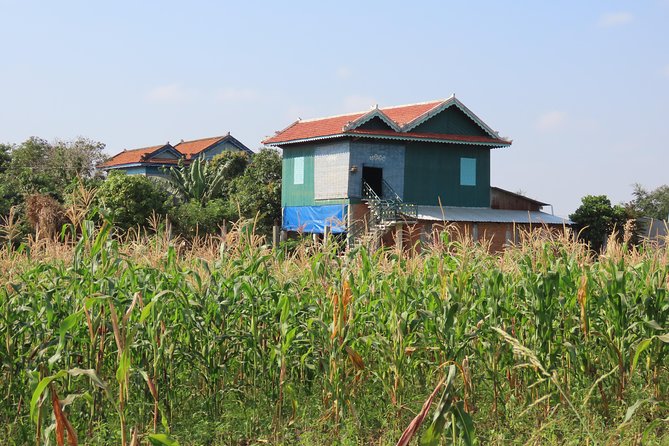
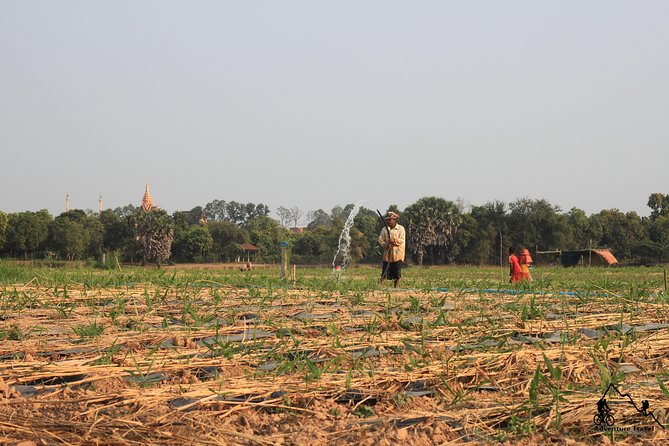
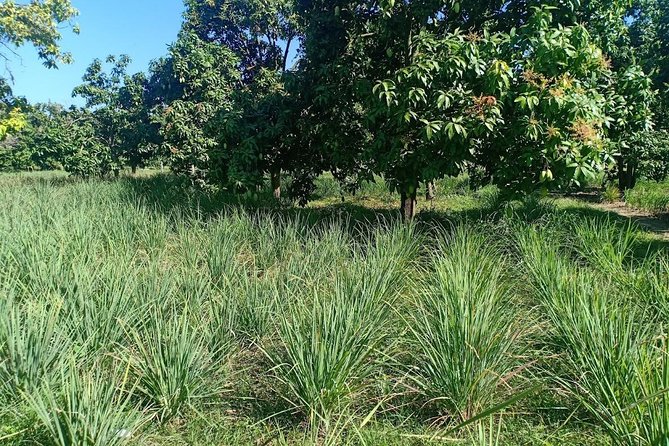
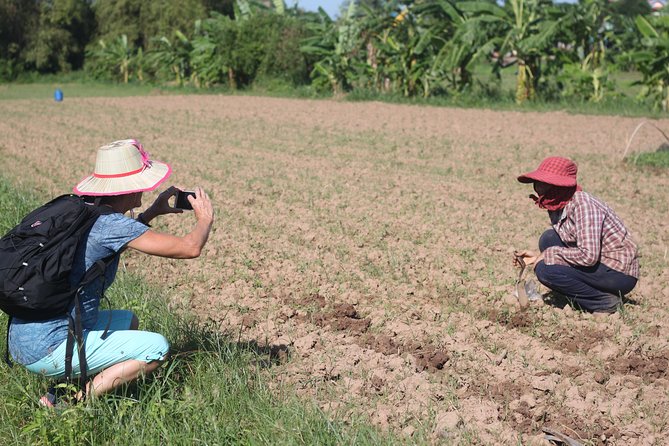
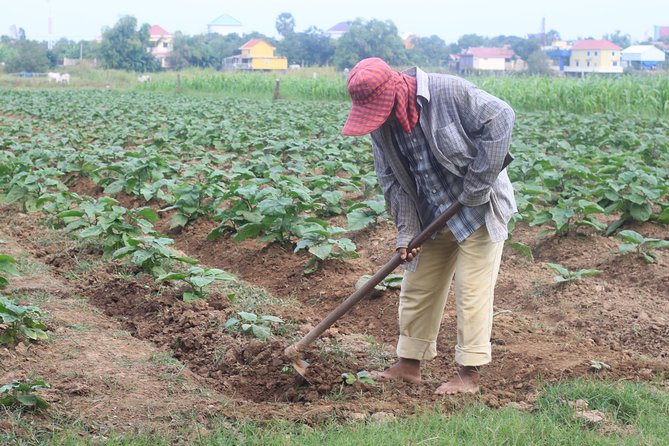
The route then passes plantations and small farm plots. Mango, banana, corn, and lemongrass are specifically part of the countryside view, while other sections may include ginger, rice, taro, or water-lily growing areas. The point is not to tour a large commercial farm. It is to see how families use small plots and rotate crops through the year.
At a village stop, you may have a short rest and tropical fruit. Small touches like this help the outing feel social rather than rushed from one appointment to the next. Some families have offered mango or other fruit, and the fruit stop is included in the tour rather than treated as a separate purchase.
The guide’s role matters here. Guides such as Thong Chea, Sok Mon, Tida, Narith, and Mr Pi have been associated with this experience at different times, so your exact guide may vary. The strongest version of the tour depends on clear explanations about farming, food, religion, and family life. You should feel free to ask questions, since the route itself is more interesting when you understand what the crops and buildings mean.
Silk weaving in a family workshop
The silk stop is the heart of the tour for many people, but it is important to set the right expectations. This is described as a family silk business, not a large industrial farm or museum. You may see the silk process, thread preparation, and hand weaving in a modest home setting.
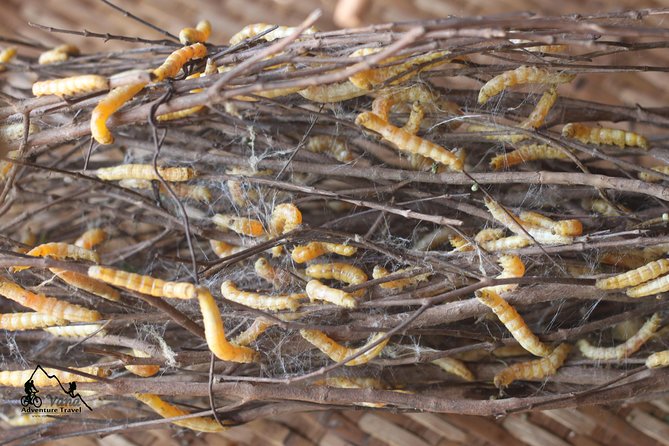
Silk production takes patience. The process begins with silkworms and continues through several careful stages before a scarf, sarong, or table runner is ready. Seeing the work up close gives you a better sense of why handmade silk costs more than a factory-made textile. Some visitors have even had a chance to try weaving.
The visit is also fairly low pressure. The purpose is to see the work and speak with the makers, not to force a purchase. Silk products may be available, and you could find it hard to leave without looking closely at the scarves and runners, but shopping is not the stated focus.
One important caution: do not arrive expecting a large display of every stage of silk farming. A small family workshop may have only a few people working when you arrive, and some finished goods may already be prepared. That does not make the visit worthless, but it does make it different from a formal production center.
Sedge mats, bean curd, and food you can understand
The route includes a look at sedge mat weaving, another traditional craft found along the Mekong. This is a useful addition because it shows that island life is not built around silk alone. Families work with local plants and turn them into practical household goods through hand skills passed down over time.
Another stop focuses on bean curd, a common ingredient in Cambodian cooking. You can see how a local business produces it and may be able to taste some. It is a simple stop, but it connects the countryside directly to the food served in homes and restaurants.
I like this part of the itinerary because it avoids treating rural Cambodia as scenery only. You are not merely looking at fields from the back of a tuk-tuk. You are seeing how plants become food, how fibers become mats, and how patience becomes fabric.
Still, the exact amount of time at farms can vary. The tour passes several growing areas, but it does not promise a long hands-on farming session at every field. You may see a range of crops from the road and have a closer visit at selected family businesses.
More Countryside Rides in Phnom Penh:
- CuChi Tunnels&Mekong Delta-Boat,TukTuk,Coconut Village SmallGroup
★ 5.0 · 3,113 reviews - From Ho Chi Minh City: Discover Mekong Delta & Coconut Village
★ 5.0 · 863 reviews - Private Tour of the Medieval Village of Ostuni by Tuk Tuk
★ 4.5 · 278 reviews - Tuk tuk Tour Tavira Total – 2h00 – Includes Tuna Museum and Fishing Village
★ 5.0 · 71 reviews
A quiet Buddhist monastery
The monastery stop adds a spiritual side to the island. You visit a Buddhist site and learn about religion in Cambodia, with some past outings including a beautifully painted nun temple. The setting is generally quieter than central Phnom Penh, and the visit gives your guide a chance to explain Cambodian religious customs and daily practice.
Dress with respect. The supplied information lists a formal dress code, so avoid beachwear and overly revealing clothing. Comfortable clothing is still sensible because you will be riding in an open tuk-tuk and walking outdoors, but cover your shoulders and knees when visiting the monastery.
This stop works best if you are curious about how religion fits into ordinary life. It is not advertised as a major architectural monument, so do not book the tour mainly for elaborate temple sightseeing. The value is the calm setting and the explanation that connects the place to local people.
The riverside meal and early-evening light
The included meal is served at a local Khmer restaurant, with some outings ending at a simple riverside or floating restaurant. You may have lunch on a morning trip or dinner on an early-evening departure. Vegetarian food is available, but you need to request it when booking.
The setting is a major part of the appeal. A meal beside the river, sometimes with a hammock nearby, gives you time to slow down after the ferry rides and country roads. Early evening can be especially pleasant, with softer light and a calmer mood.
Do not expect a polished dining room. This is a local family-style restaurant, and standards may be basic. River insects can appear around lights, particularly at dusk, and the food presentation may be less tidy than you are used to at a city restaurant. That is worth knowing before you book.
The food itself is meant to be Khmer and shared locally. Alcohol is not included, though it can be purchased. The guide and driver may eat with you, which some people enjoy because it creates an informal meal and a chance to continue the conversation. If you prefer private dining and separate staff arrangements, this may not be your ideal format.
What the tuk-tuk ride is really like
The tuk-tuk is both transport and part of the experience. You ride through Phnom Penh at the beginning and end, then continue on smaller island roads and onto local ferries. Crossing between islands with the tuk-tuk aboard can be amusing, but it is not luxury transport.
The ride is open to sun, wind, dust, and heat. The countryside may feel cooler than the city, but you should still bring water, sun protection, and clothing suited to warm weather. Drinking water is included, and the tour also includes tropical fruit.
A skilled driver matters on narrow roads and ferry ramps. The experience has used drivers such as Chelsea and Yat, among others, while guide and driver assignments can change. The supplied experiences place strong emphasis on careful driving and friendly service, but you should still expect ordinary Cambodian road conditions rather than a smooth coach ride.
Duration, price, and overall value
The price is $45 per person, and the outing lasts about three to five hours. That range is wide enough to matter. Ferry timing, traffic, group size, the amount of walking, and the chosen morning or early-evening schedule can affect the pace.
For the price, you receive hotel pickup and drop-off, an English-speaking professional guide, the tuk-tuk and driver, ferry fees, a contribution to villagers, tropical fruit, and lunch or dinner. Alcohol and souvenir photos are extra.
I consider the price fair if you want a guided introduction to rural life without arranging several separate rides yourself. A private tuk-tuk, ferry crossings, a meal, and interpretation would be difficult to coordinate independently in a short afternoon. The value is less convincing if your main goal is a serious silk-farming visit, a luxury meal, or a long agricultural workshop.
The maximum group size of 12 keeps the tour from becoming a large bus outing. Ask about the expected group size if personal attention matters to you. A smaller group should make it easier to ask questions and adjust the pace.
Who should book this experience
I would choose this tour if you want to step outside Phnom Penh without committing to a full-day excursion. It suits you if you like local food, working crafts, village roads, river transport, and conversations with a guide.
Families can also enjoy it. A family account specifically describes children aged 11, 13, and 15 taking part, and child pricing applies when a child shares with two paying adults. The mix of tuk-tuk travel, ferries, farms, and weaving gives the afternoon more variety than a single museum visit.
You may want to skip it if you need air conditioning, smooth roads, exact timing, or a spotless restaurant. It is also not the best choice if you want to spend hours at every farm or prefer a large professional silk center. The tour’s strength is contact with ordinary rural work, and that comes with uneven surfaces and modest facilities.
Free cancellation is available up to 24 hours before the start time. Within 24 hours, the amount paid is not refunded, and changes are not accepted. Most people can participate, but you should consider the walking, ferry boarding, and open-air tuk-tuk ride when deciding if it suits you.
Should you book the Silk Island tuk-tuk tour?
Book it if your idea of a good half-day means leaving the city, crossing the Mekong on a local ferry, seeing how silk and bean curd are made, visiting a monastery, and eating Khmer food beside the river. The combination feels varied, and the countryside is close enough to Phnom Penh to fit into a busy itinerary.
Go in with realistic expectations. This is a family-scale, working-world outing, not a polished cultural show. If you accept the heat, basic roads, simple meal, and changing pace, the $45 price offers a useful look at Cambodia beyond the city.
FAQ
How long does the Silk Island tour take?
The tour lasts approximately three to five hours. The timing can vary with ferry crossings, traffic, stops, and the selected morning or early-evening schedule.
What is included in the price?
The price includes hotel pickup and drop-off, an English-speaking guide, tuk-tuk transport with an experienced driver, ferry crossing fees, a contribution to villagers, tropical fruit, and lunch or dinner with local people.
Is hotel pickup available?
Yes. Hotel pickup and drop-off in Phnom Penh are included. Transport is by tuk-tuk or minivan depending on the group size.
Is vegetarian food available?
Yes. A vegetarian option is available, but you should advise the provider when booking.
How many people can join the tour?
The maximum group size is 12 people.
Is the tour suitable for children?
Most people can participate, and a child rate is available when the child shares with two paying adults. The tour includes tuk-tuk rides, ferry crossings, walking, and outdoor stops.
What is the cancellation policy?
You can cancel up to 24 hours before the start time for a full refund. Cancellations or changes made less than 24 hours before the start time are not accepted for a refund.
Just added around Phnom Penh
- Tuk-Tuk Tour to Silk Island & Udong Mountain★ 5.0 · 15 reviews
- Full-Day Phnom Penh City & Silk Island with a local Tuk Tuk Tours★ 5.0 · 4 reviews
- Killing Fields & Toul Sleng Genocide Museum Tickets With Tuk Tuk★ 5.0 · 6 reviews
- Visit Phnom Udong and Silk Island by Khmer Traditional Tuk-Tuk★ 5.0 · 4 reviews
- Phnom Penh: Silk Island Sunset Tour by Tuk Tuk★ 5.0 · 21 reviews
- Phnom Penh Night City Highlights & Local Food tour by Tuktuk★ 5.0 · 10 reviews
- Silk Island Tuk Tuk Tour★ 4.5 · 9 reviews
- Phnom Penh Full Day Private Tour By Tuk Tuk or Taxi Car★ 5.0 · 3 reviews
Phnom Penh Tuk Tuk Tours, compared.
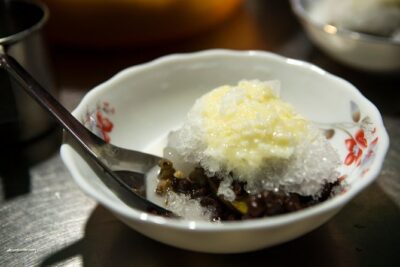
Ultimate Phnom Penh Food Tour by Tuk Tuk: 20 Tastings and Drinks
Read our review →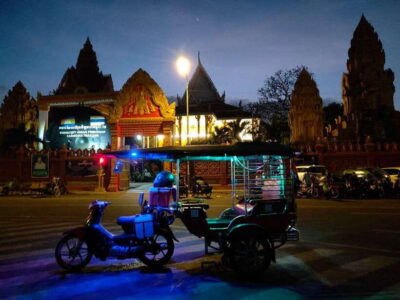
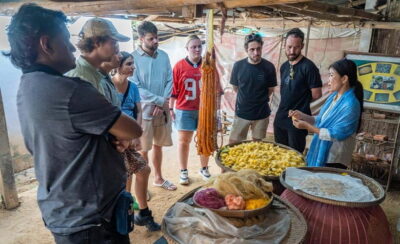
Phnom Penh to Silk Island By Tuk-Tuk with local Expert
Read our review →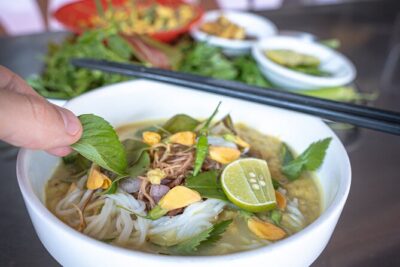
Phnom Penh’s Culinary Underground: Local Food Tour by Tuk-tuk
Read our review →
Evening Food Tour with Drinks & Tuk Tuk Included
Read our review →
Phnom Penh’s Ultimate Street Food Tour by Tuk Tuk
Read our review →
Browse the lists this tour appears in