
Review · SPLIT
Split Tour by Electric Tuk-Tuk: Top City Highlights
Split is easy to admire from its old center, but the city stretches well beyond Diocletian’s Palace. This electric tuk-tuk tour takes you along the waterfront, around Marjan, past beaches and parks, and up to broad city views without asking you to walk the whole way.
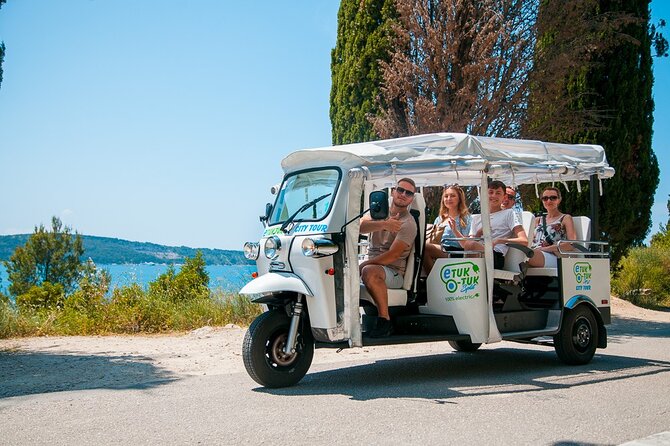
I like the quiet vehicle, which can reach streets and viewpoints that are awkward for a bus, and the small group size of no more than eight people. Guides including Luka, Marino, Tony, Emir, and Ivan have been praised for their local stories and useful restaurant advice. The main caution is consistency: some tours run close to two hours, while others finish nearer the 90-minute minimum and may skip advertised stops.
At a glance: what makes this ride useful

- You see beyond the palace: The route adds Marjan, beaches, parks, the marina, Poljud Stadium, and western waterfront views to your Split visit.
- The tuk-tuk reaches narrow areas: It is easier to move through the city than in a large tour bus, while covering more ground than a walking tour.
- Small groups keep it personal: A maximum of eight allows more room for questions and photo stops than a standard coach excursion.
- Teraca Vidilica is the main pause: The 20-minute stop gives you time for the best city and island views on the route.
- Timing affects the mood: Morning brings cooler streets and fewer people. Evening tours can include sunset and Split after dark.
- The schedule needs watching: At $50.81 per person, the tour is good value when it runs near two hours, but less attractive if it ends early.
Why an electric tuk-tuk works well in Split
The strength of this experience is coverage. Split’s historic center is compact, but Marjan Peninsula, the western coast, and the beaches are spread out. Walking between all of them takes time, especially in summer heat. A tuk-tuk lets you sample these areas in one outing, then decide where to return later.
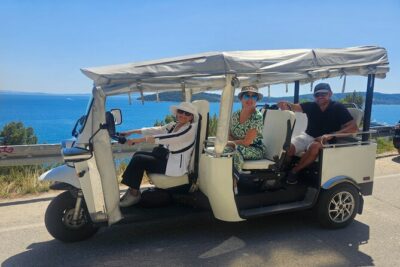
The vehicle is also quieter and less intrusive than a full-size bus. You get an open-air view as you move through the city, and you can usually hear the guide without the enclosed feel of a coach. It is not a sightseeing vehicle built for long, smooth highway travel. Think of it as a nimble local ride with commentary.
The small capacity matters. A guide can respond to questions, adjust a photo stop, or slow down when something catches your eye. That personal touch is one reason guides such as Luka, Lovre, Marino, Marko, and Emir receive particularly warm praise. The best guides add stories about neighborhoods, schools, football, parks, art, and daily life, not just a list of monuments.
Still, your experience may depend heavily on the person driving. Several strong guides are named in the feedback, but a few rides were described as thin on history. At this price, you should expect more than a scenic transfer. Ask questions early and tell the guide what interests you.
More Electric Tuk Tuk Tours in Croatia
- E-Tuk Tuk Tour in Dubrovnik
★ 5.0 · 1,459 reviews - Split: City Highlights Electric Tuk-Tuk Tour
★ 4.9 · 1,317 reviews - Dubrovnik E-Tuk Tuk Sunset Tour to Mount Srd
★ 5.0 · 216 reviews
Riva and the western waterfront

The ride commonly begins around Riva, Split’s palm-lined waterfront promenade. This is the city’s social front porch, with cafés, boats, sea views, and a direct connection to the old center. You will not need a long stop here to understand its role. The value comes from seeing how quickly the route moves from the crowded historic core to the more open coast.
Near the western end of Riva, the Church and Convent of St. Francis offers a quieter historical note. The church dates from the 13th century and includes Gothic and Baroque elements, historic religious art, and tombs connected with local figures. The tour does not include an admission ticket, and the church may be viewed from outside unless the guide or timing allows otherwise.
The route then follows the western coast, known as Zapadna Obala. This broad promenade looks toward the marina, Marjan Hill, and the islands. It is a pleasant contrast to the stone lanes of the old city, with cafés, restaurants, palm trees, and sleek waterfront design.
At ACI Marina Split, you get a sense of the city’s role as a starting point for sailing trips. The marina has more than 300 berths and sits close to both Marjan and the center. You may not spend long here, but the setting helps explain why Split is more than a historic port. It is also a working base for boats heading into the Adriatic.
Zvončac and Sustipan: quiet corners near the center
Zvončac is a small coastal park with shaded paths, Mediterranean plants, open space, and access to rocky swimming spots. It is a local-style pause, not a major monument. Families may appreciate the playground, while anyone tired of stone streets will welcome the greenery.
Sustipan is more scenic and usually receives a more meaningful stop, listed at about five minutes. The park occupies the site of a former monastery and cemetery and sits above the water with views toward the coast and nearby islands. It is a good place to take a quick photograph and get a feel for Split’s calmer side.
Do not expect a long park walk here. This is a moving city tour, not a series of extended visits. If Sustipan catches your attention, make a note of it and return later on foot. The same advice applies to the Archaeological Museum and Meštrović Gallery, which are included as points of interest but are not part of the guided admission.
The Archaeological Museum, founded in 1820, is Croatia’s oldest museum. Its collection covers prehistoric, Roman, early Christian, and medieval material, including finds from Salona and Roman sarcophagi. If ancient history is important to you, plan a separate visit. A tuk-tuk pass gives you context, not enough time to study the exhibits.
The Meštrović Gallery is devoted to sculptor Ivan Meštrović. It occupies a former villa with gardens and outdoor sculpture, and its position near the sea adds to the appeal. Art lovers should treat this as another possible return stop rather than assuming they will tour the gallery during the tuk-tuk ride.
Marjan beaches and Villa Dalmacija

The ride continues around Marjan, the wooded peninsula that gives Split some of its best sea views. Obojena Svjetlost is a small cove with clear water and a pebbled shore. It is appealing as a quick look, especially if you are deciding where to swim later, but five minutes is only enough for photographs and a short pause.
Kasjuni Beach receives a listed five-minute stop. Pine trees shade the pebble beach, and the water is suitable for swimming when conditions are right. There is also a beach bar, sun loungers, and umbrellas. If you want actual beach time, this tour is a poor substitute for a beach afternoon. It is best used as a scouting trip.
Some schedules describe Kasjuni as an optional stop, and one passenger found that it was not discussed. That is worth clarifying when you meet the guide. The route can change with timing, traffic, weather, and the interests of your group.
Villa Dalmacija adds a glimpse of the coast’s more formal side. This historic property has gardens, terraces, sea views, and a private beach area. It was built as a summer residence for high-ranking officials and is now used for private events and gatherings. You will likely appreciate the setting more than the building itself, since this is not presented as an interior tour.
At times, the ride also includes views near Obojena Svjetlost and other Marjan access points. The benefit is variety: rocky coves, pine trees, open sea, and city views arrive in quick succession. The drawback is that the stops can feel rushed if the guide is trying to fit every listed point into the minimum time.
Same streets, a different route:
- Makarska: Skywalk Tuk-Tuk Tour with Skip-the-Line Ticket
★ 4.9 · 725 reviews - Makarska: Skywalk Tour with a Tuk Tuk – Skip the line ticket
★ 5.0 · 552 reviews - Split by Private Electric Rickshaw – Palace & Hidden Gems
★ 5.0 · 412 reviews - Split: Top City Highlights Electric Tuk-Tuk Tour
★ 4.4 · 194 reviews
Poljud Stadium and Split’s football identity
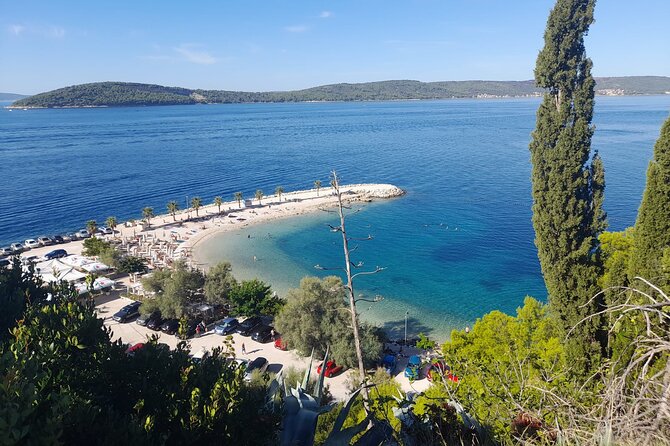
Poljud Stadium is one of the tour’s more distinctive sights. Built for the 1979 Mediterranean Games, it has a dramatic shell-like roof and is home to Hajduk Split. Even if you are not a football fan, the architecture makes a good photograph.
For families with older children, this may be one of the most memorable stops. A guide such as Marko can connect the stadium to local sports culture, while another guide may focus more on its design. The stop is generally brief, around five minutes, so do not expect a stadium visit or match-day atmosphere.
This is a useful example of what the tour does best. It shows you a part of Split that a palace-centered walking tour leaves out. You see how residents spend their time and what local identity looks like outside the main monuments.
Teraca Vidilica is the payoff
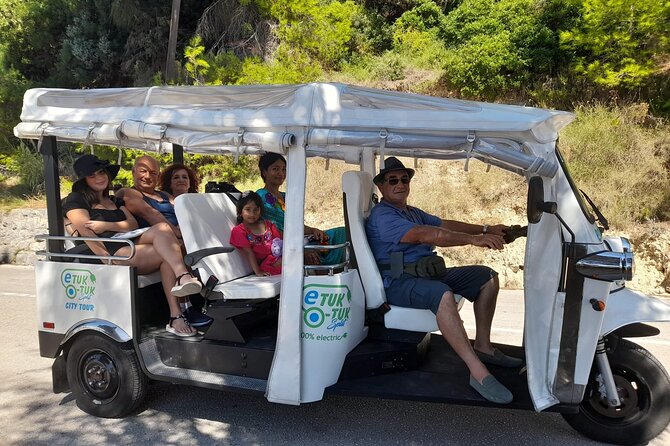
The longest scheduled stop is Teraca Vidilica, with about 20 minutes to enjoy the view. The café and restaurant sit on Marjan Hill above Split, looking across the city, the Adriatic, and nearby islands.
This is the point where the route becomes more than transportation. You can take clear photographs, have a drink or light meal if time and ordering allow, and see the relationship between the old center, harbor, coast, and hill. The restaurant serves Mediterranean-style food, seafood, and local wine, though food and drinks are not included in the tour price.
Evening departures have a special advantage here. A 6:30 p.m. start can bring sunset light and a look at Split after dark. Morning departures are better for cooler temperatures and thinner crowds. Midday can be hot, especially in summer, and one ride was moved later in the day despite already high heat. If you have a choice, I would favor early morning or early evening.
The approach to the viewpoint may include uneven roads and potholes. That is part of the tradeoff with an open tuk-tuk. You get access to places a bus cannot reach, but the ride is not always perfectly smooth.
Republic Square and the finish near the old center
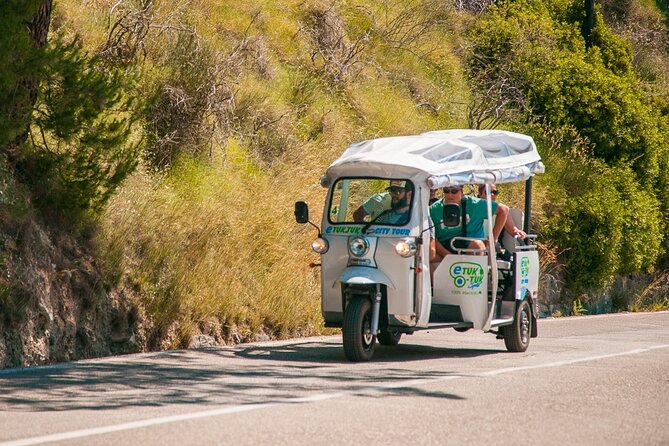
The final listed point is Republic Square, also called Prokurative. This neo-Renaissance square has colonnades, historic buildings, and an open view toward the sea. It is close enough to the center to continue exploring on foot after the ride.
Prokurative is a good ending because it brings you back toward Split’s social heart without placing you inside the tightest old-town lanes. From here, you can continue toward Diocletian’s Palace, the Riva, and other central sights. If you are staying in Split, ask the guide for a map reference and suggestions for the next stop. Marko, for example, has helped passengers find Grgur of Nin and the palace after the tuk-tuk ride.
The tour is not a replacement for walking through the palace. It gives you the wider setting first. I would pair it with a separate old-town walk, ideally early in your stay, so you can use the tuk-tuk ride to choose which beaches, parks, viewpoints, or museums deserve more time.
Price, timing, and what you really receive
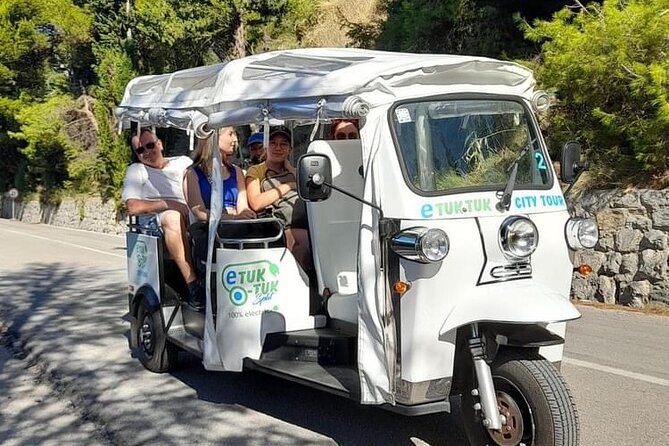
At $50.81 per person, the price is fair if you receive a full two-hour outing with an engaging guide. You are paying for a private-feeling small group, transport through spread-out parts of Split, and local explanation. A taxi could move you between locations, but it would not give you the same continuous narration or planned route.
Value drops if the ride lasts only 90 minutes and includes several brief drop-offs with little explanation. Some passengers found the experience shorter than expected or missed stops such as Kasjuni, Gripe, or Firule Beach. The advertised duration is approximately 90 minutes to two hours, so the minimum is technically within the stated range, but you should know what you are booking.
Pickup is offered, and return to the cruise ship can be arranged if requested in advance. Confirm the meeting point carefully. One pickup problem involved confusion between the ferry area and the cruise terminal, while another ride arrived late because of a mechanical issue and port congestion. If you have a ship departure to meet, leave a generous buffer.
The group limit is eight, and the tour is offered in English. Confirmation arrives at booking, public transportation is nearby, and most people can take part. Food, drinks, and entrance tickets are extra.
You can cancel for a full refund up to 24 hours before the start time. Weather can also cancel the ride, in which case you are offered another date or a refund. The same applies if the minimum number of participants is not met.
Who should book this Split tour?
I would book it during the first day or two in Split if I wanted a quick sense of the city beyond the palace. It suits cruise passengers, first-time visitors, families, people who dislike long walks, and anyone who wants to compare several beaches before choosing one for a longer visit.
It is also a practical choice in hot weather, though I would avoid the hottest part of the afternoon. The tuk-tuk helps you cover ground, but you still need to walk briefly at stops and cope with sun, wind, and uneven surfaces.
I would not choose it as my only Split experience. The old center deserves time on foot, and the Archaeological Museum or Meštrović Gallery needs a separate visit if you want to see the collections properly.
Should you book it?
Book this tour if you value breadth, views, and local conversation more than long visits at each sight. The strongest guides, including Luka, Marino, Tony, Emir, Ivan, and Marko, can turn a simple ride into a useful introduction to Split, with advice that helps shape the rest of your stay.
Before booking, confirm the pickup point, ask how long your departure is expected to run, and check whether Kasjuni or other optional stops are included. If the operator delivers the full route with a lively guide, $50.81 buys a smart overview of the city. If you want deep museum visits, beach time, or guaranteed stops at every named location, spend your money on separate visits instead.
FAQ
How long does the Split electric tuk-tuk tour last?
The tour lasts approximately 1 hour 30 minutes to 2 hours. Some departures may run closer to the 90-minute minimum.
How much does the tour cost?
The listed price is $50.81 per person.
How many people can join the tour?
The maximum group size is eight people.
Is pickup available?
Yes, pickup is offered. Return drop-off at the cruise ship can also be arranged if you request it in advance.
Is the tour offered in English?
Yes, the experience is offered in English.
Are food, drinks, and entrance tickets included?
No. The guide is included, but food, drinks, and tickets are not included.
Does the tour visit Diocletian’s Palace?
The route finishes near Split’s central area and includes places such as Riva and Republic Square, but the tuk-tuk ride is focused on areas beyond the immediate old town. A separate walking visit to Diocletian’s Palace is useful.
Can I choose a morning or evening departure?
Yes. Several tour times are offered from morning through evening. Evening departures may allow you to see sunset and Split after dark.
What is the cancellation policy?
You can cancel for a full refund up to 24 hours before the start time. Changes or cancellations made less than 24 hours before departure are not accepted for a refund. Poor weather or failure to reach the minimum group size may result in a different date or a full refund.
Just added around Croatia
- Private Zagreb Pedicab Tour★ 5.0 · 28 reviews
- Zadar: City and Wine Tour in Zadar with Eco Tuk Tuk★ 5.0 · 17 reviews
- Zadar: Sunset Panorama Tour with Eco Tuk Tuk★ 5.0 · 9 reviews
- Private Electric Rickshaw Tour of Split★ 5.0 · 50 reviews
- TUK TUK Split Sightseeing Adventures★ 5.0 · 40 reviews
- Split City Tour By Electric Rickshaw┃Riva Ride★ 5.0 · 50 reviews
- Split Eco Tuk Tuk City Tour★ 5.0 · 6 reviews
- Makarska Tuk Tuk Tour Olive Grove, Scenic Views and Tastings★ 5.0 · 3 reviews
Split Tuk Tuk Tours, compared.

Split by Private Electric Rickshaw – Palace & Hidden Gems
Read our review →

Browse the lists this tour appears in