
Review · BANGKOK
Bangkok: Cooking Class + Tuk Tuk Ride + Market Tour
The best part of this Bangkok class happens before you reach the kitchen. You take a short shared tuk-tuk ride with a local chef to Prannok Market, where you see coconut cream being made, taste a Thai dessert, and examine herbs, prawns, curry pastes, fruit, and snacks. Then you cook four full dishes in a clean, newly renovated school near Icon Siam and Wat Arun.
I like the market connection, since you learn what the ingredients look like before they land on your chopping board. I also like the practical menu: Tom Yum prawns, Pad Thai prawns, Massaman curry chicken, and mango sticky rice give you a useful spread of Thai flavors. The main consideration is the pace. Four dishes in three and a half hours is generous, but you should arrive hungry and ready to stay focused.
Key Points
- A five-minute tuk-tuk ride links the cooking school with Prannok Market, adding a small but memorable Bangkok transport experience.
- Prannok Market is more than a quick shopping stop, with stalls operating for over 60 years and ingredients ranging from rare herbs to fresh coconut cream.
- You cook four complete Thai dishes, including two prawn dishes, Massaman curry chicken, and mango sticky rice.
- June and Juney receive especially warm praise as instructors, while Lalit is also noted for careful preparation and friendly teaching.
- The school is newly renovated and spacious, with separate areas for food preparation and cooking.
- Vegetarian choices and dietary needs can be accommodated, but you must provide allergy information in advance.
A Tuk-Tuk Start Near Wat Arun
Arun Thai Cooking School is in a useful part of Bangkok, close to Icon Siam and Wat Arun. You meet on the second floor of the building, then set off by shared tuk-tuk for the nearby market. The ride lasts about five minutes, so it is not a sightseeing circuit, but it gives the outing a local feel from the start.
I like this short transfer because it avoids making the market visit feel like an isolated classroom exercise. You are not simply handed a basket of ingredients at the school. You travel with the chef, arrive at a working neighborhood market, and begin by seeing the food in its everyday setting.
The tuk-tuk is shared, so do not expect a private vehicle or a long ride through Bangkok. Its value is the atmosphere and convenience rather than distance. If you have never used a tuk-tuk, this is an easy introduction without committing to a longer city crossing.
The experience lasts about three and a half hours. Starting times vary, so check availability before booking and allow enough time to reach the school on your own. Hotel pickup and drop-off are not included. At the end, you return to the same meeting point.
A few more rides around Bangkok worth a look
- Authentic Thai Cooking with the Largest market visit &TukTuk ride
★ 5.0 · 350 reviews - Bangkok: Cooking Class with Market Visit & Tuk Tuk Ride
★ 4.8 · 27 reviews - Mekong Delta 4 Islands, TukTuk, Boat, Try Khot Cake Local Cooking
★ 5.0 · 1,148 reviews
Prannok Market and the Ingredients Behind Thai Food
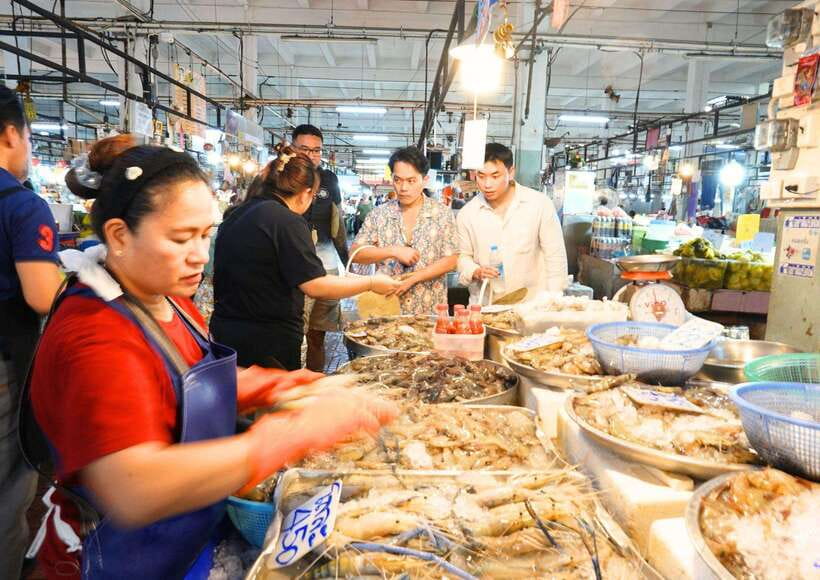
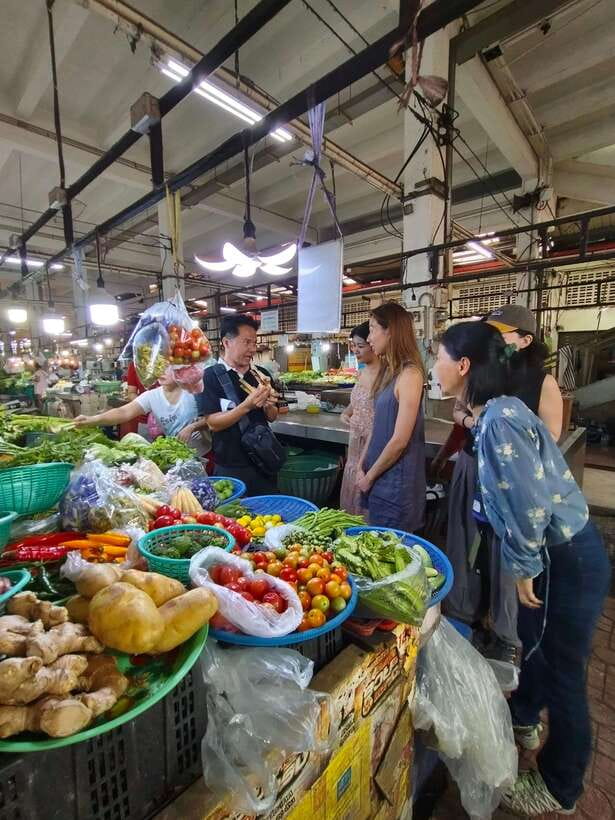
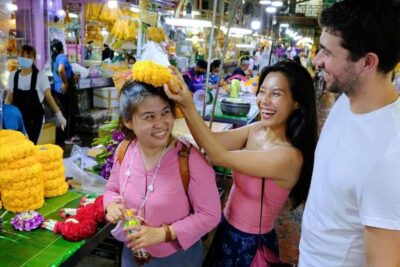
Prannok Market is the heart of the outing. The stalls have been operating for more than 60 years, and the visit gives you a closer look at the everyday ingredients behind the dishes you will prepare later.
You can expect to see:
- Fresh prawns
- Curry pastes and spices
- Tropical fruit
- Thai herbs and less familiar vegetables
- Coconut cream and coconut milk being made
- Thai sweets and snacks
The coconut preparation is one of the most useful demonstrations. It shows the ingredient in a fresh, physical form rather than as a can on a supermarket shelf. You also get a chance to taste a well-known Thai dessert, which helps set the tone for the mango sticky rice later in the class.
The market guide explains how ingredients are used, not simply what they are called. That distinction matters. Thai cooking often depends on small adjustments in herbs, curry paste, coconut, lime, and spice. Seeing these items at the market makes the later recipes easier to understand.
You also hear about local customs, including the practice of releasing live fish for good karma. This is a brief cultural detail, but it adds a useful glimpse into the beliefs and daily habits connected with the market.
The market can be busy and active, and you should wear comfortable clothing and sensible shoes for walking and cooking. Bring a sun hat and sunscreen. The school is spacious, but the outdoor portion is less controlled, especially in Bangkok heat.
Four Dishes, Four Different Thai Flavors
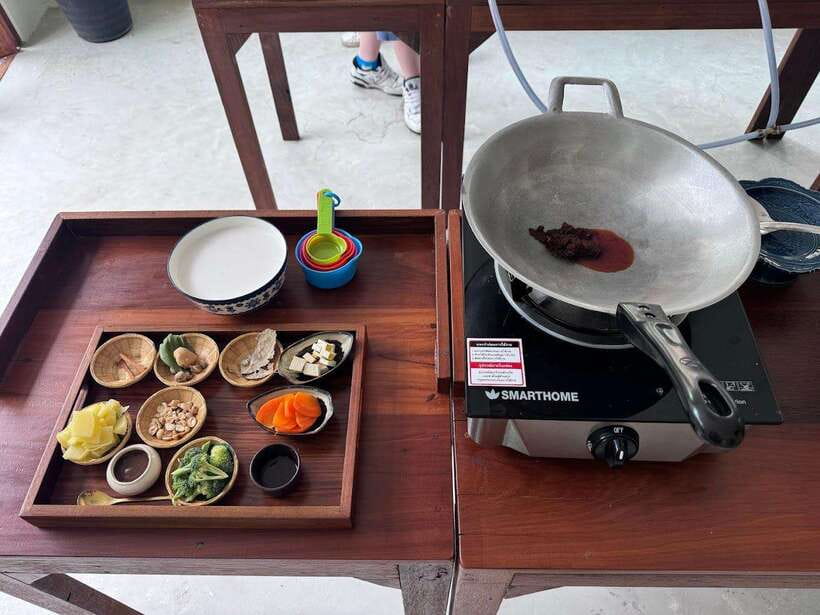
After the market, you return to the cooking school and prepare four dishes:
- Tom Yum prawns
- Pad Thai prawns
- Massaman curry chicken
- Mango sticky rice
This is a well-chosen menu for a first Thai class. It covers soup, noodles, curry, and dessert. You also work with different cooking methods and flavor groups, from sour and spicy Tom Yum to the sweet, creamy finish of mango sticky rice.
Tom Yum Prawns
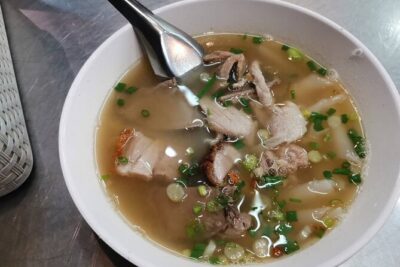
Tom Yum gives you a lesson in balance. The dish brings together hot, sour, salty, and aromatic notes, with prawns adding the main protein. The market visit helps you recognize the fresh ingredients that shape the broth.
This is a good dish to learn in person because its flavor depends on timing and proportion. A recipe alone may tell you what to add, but an instructor can show you how the ingredients come together and how the finished taste should develop.
More Market Tours in Bangkok:
- Private Tuktuk Authentic Food Tour (Chinatown-Flower Market)
★ 5.0 · 75 reviews - Bangkok TUK TUK Twilight Cultures Market and Food Taste
★ 5.0 · 13 reviews - Ayutthaya Elephant Village ATV and Floating Market by Tuk Tuk
★ 5.0 · 3 reviews - 1-Day Mekong Delta Cai Rang Floating Market-Ancient House-Pancake
★ 5.0 · 653 reviews
Pad Thai Prawns
Pad Thai is familiar to many first-time visitors, but cooking it yourself reveals more than ordering it from a restaurant. You work with prawns and the components that give the noodles their sweet, savory, and tangy character.
The recipe is also practical for home cooking. It is a dish you can repeat after the trip, especially if the instructor explains the order of preparation clearly. Several participants specifically valued leaving with enough confidence to make the dishes again at home.
Massaman Curry Chicken
Massaman curry adds a different side of Thai food. It is fuller and warmer than Tom Yum, with chicken and curry paste creating a more substantial dish. Preparing it alongside the soup and noodles gives you a wider sense of how Thai meals use contrasting flavors.
This is also where the market tour becomes especially useful. You have already seen curry pastes, spices, herbs, and vegetables before handling them in class. The ingredients are no longer anonymous items in small bowls.
Mango Sticky Rice
Mango sticky rice closes the class on a sweet note. You encounter the dessert at the market first, then prepare it yourself later. That link between tasting, shopping, and cooking gives the day a clear shape.
It is also a useful reminder that Thai cooking is not only about heat and spice. Coconut, rice, fruit, and sweetness are central parts of the food tradition, and the dessert helps round out the four-course meal.
A Spacious School Built for Hands-On Cooking
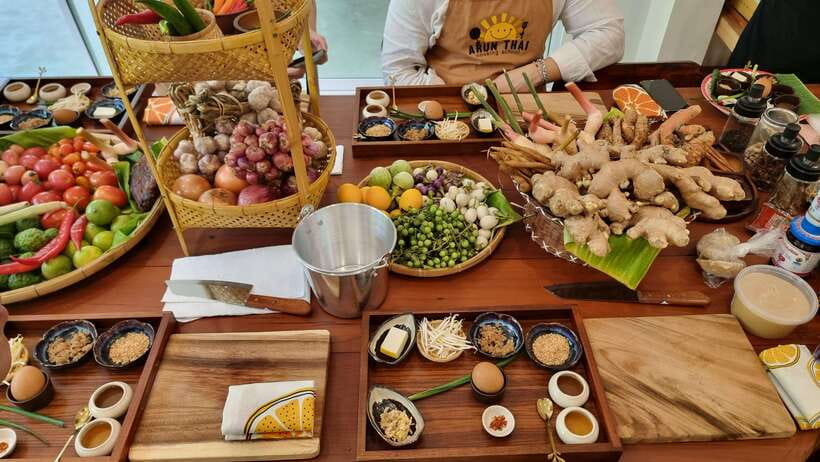
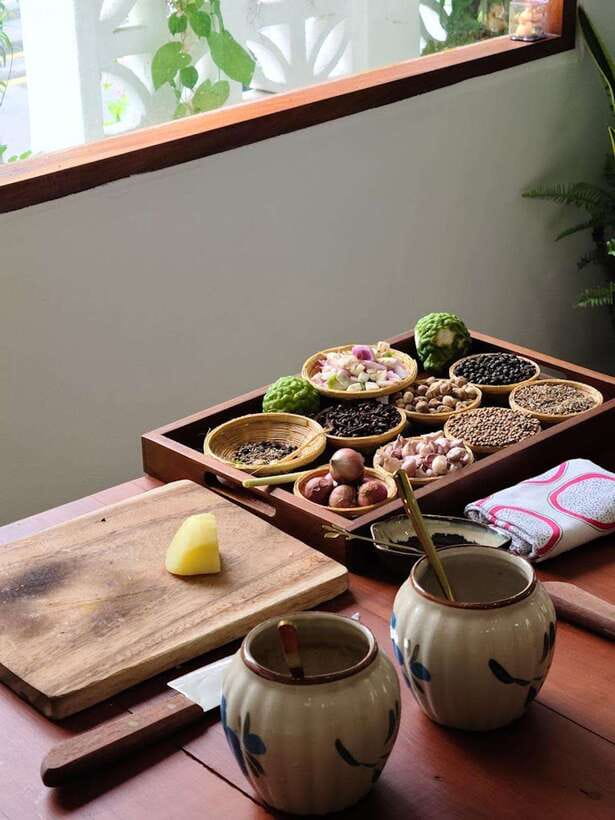
The cooking school has recently been renovated, and the facilities are described as clean, new, and spacious. The class uses separate rooms for food preparation and cooking, which helps prevent the session from feeling cramped.
You work at your own kitchen station and take part in the cooking rather than watching a demonstration from a distance. That hands-on format is important if your goal is to repeat the dishes at home. You can handle the ingredients, follow each stage, and see how the separate parts become a finished meal.
The setup also suits mixed ability levels. Beginners can follow the instructor step by step, while confident cooks still get useful exposure to Thai herbs, curry pastes, and local techniques. You do not need previous cooking experience.
One small practical point: bring your appetite. Four dishes is a substantial amount of food, and the schedule is designed around cooking and eating, not simply sampling small portions. If you are attending in the morning, this may function as breakfast and lunch combined.
The Instructors Make a Real Difference
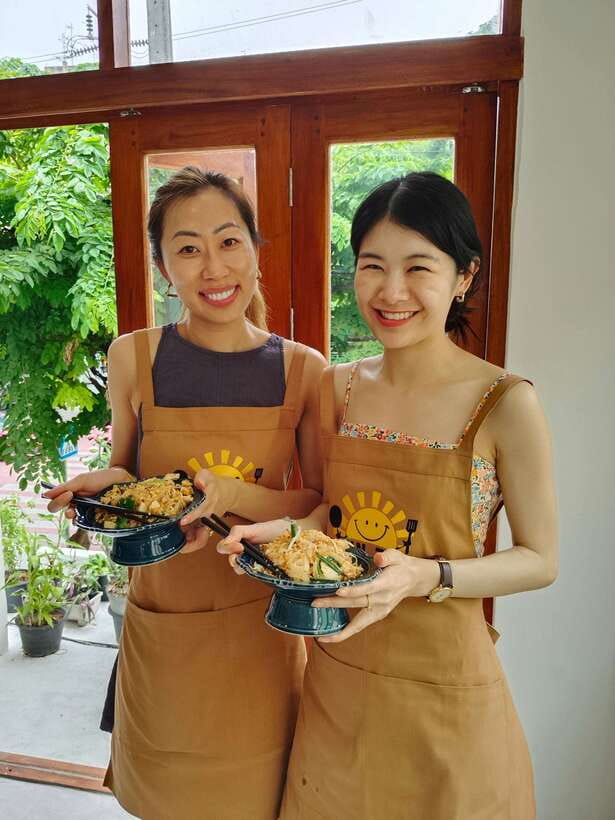
The teaching team is one of the strongest parts of the class. June, also referred to as Juney in some feedback, is repeatedly praised for clear explanations, warm teaching, and stories about Thai ingredients, food, and Bangkok. Lalit is also singled out as friendly and well prepared.
That matters because a cooking class can easily become a rushed sequence of chopping and stirring. Here, the instructors explain the purpose of the ingredients and the background of the dishes. You learn not only what to add, but why it belongs in the recipe.
June also helped one group rearrange its attendance after an earthquake disrupted plans. That flexibility is useful, though you should still rely on the stated cancellation terms rather than assuming changes are always possible.
Teaching is available in English and Chinese. Chinese classes are offered six days a week, with partial translation available on other days. If language support is important to you, check the scheduled session before booking.
How Much Value Do You Get for $42?
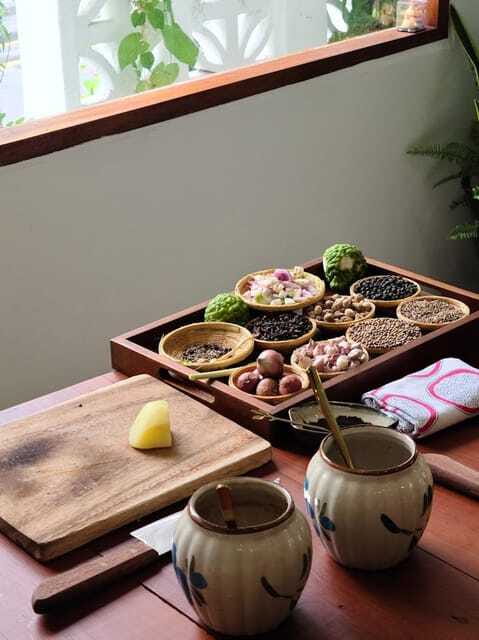
At $42 per person, the price is fair for the amount packed into three and a half hours. You receive the tuk-tuk ride, the Prannok Market tour, all cooking ingredients, the four-dish class, and refreshments.
The value is strongest if you want more than a standard recipe lesson. You are also paying for the market visit, the local transport, ingredient explanations, cultural context, and a modern kitchen. A class that only covered one or two dishes might be cheaper, but it would not give you the same range.
The menu also helps justify the cost. You are not preparing four versions of the same dish. You cover soup, noodles, curry, and dessert, with prawns, chicken, coconut, herbs, spices, and fruit appearing across the session.
The price may feel less attractive if you mainly want a market tour or if you do not enjoy cooking. The class is hands-on, and the full menu requires several hours of active attention. You should book it for the combination of market, food, and instruction, not simply for a meal.
What to Wear and What to Tell the School
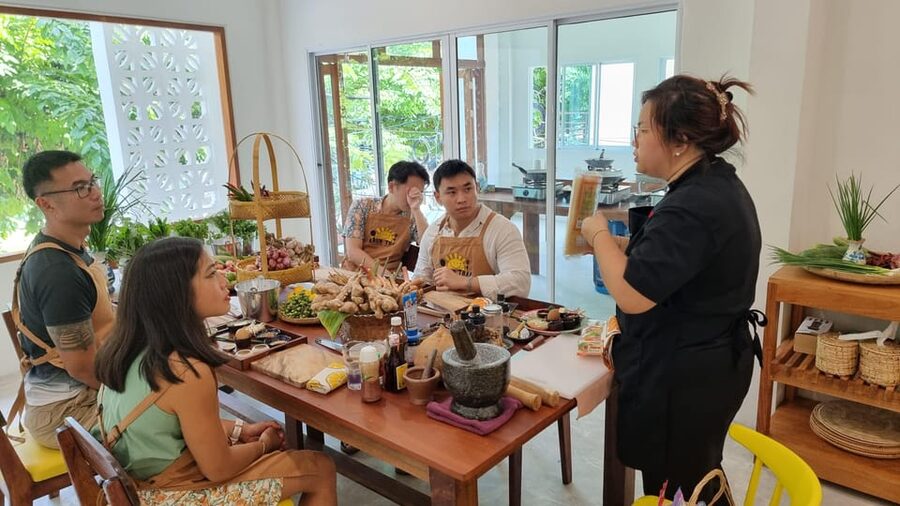
Wear comfortable clothes suitable for cooking. A sun hat and sunscreen are useful for the market portion, and you should arrive with your appetite ready.
Tell the school about allergies in advance. Vegetarian options and other dietary needs can be accommodated, but the instructors need notice to plan the ingredients. Do not wait until you arrive, especially when the menu includes prawns and chicken.
The class ends back at the school. Since there is no hotel pickup or drop-off, plan your own route to the meeting point on the second floor of Arun Thai Cooking School.
Free cancellation is available up to 24 hours before the activity for a full refund. You can also reserve now and pay later, which is helpful if your Bangkok schedule is still changing.
Who Should Book This Class?
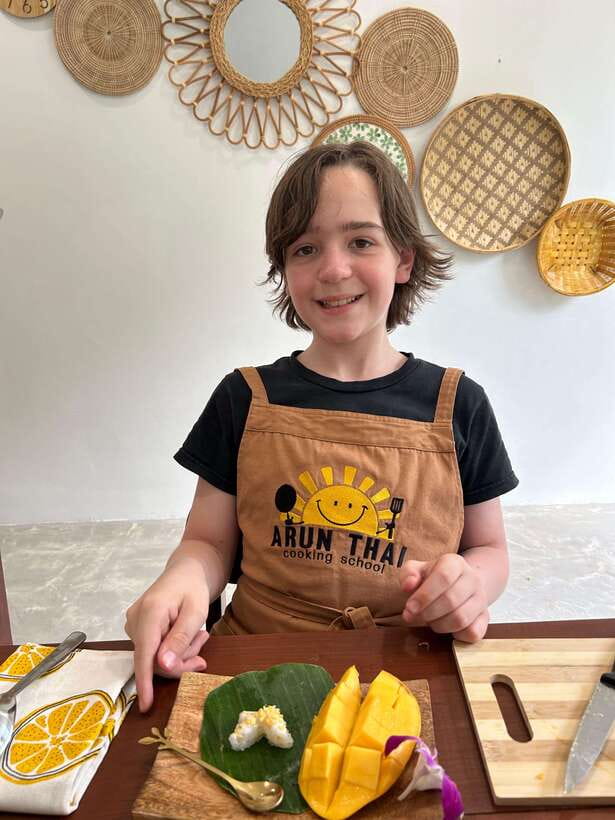
I would choose this for first-time visitors who want a food activity tied to a real neighborhood. The market gives you context, and the kitchen gives you something practical to take home.
It also suits families, couples, and small groups with mixed cooking ability. The instructors welcome beginners, and the four-dish menu gives everyone several tasks and flavors to try.
You should also consider it if you are staying near Icon Siam or planning to visit Wat Arun. The location makes it easy to combine the class with sightseeing in the same part of Bangkok, though you will need to arrange your own transport before and after.
I would think twice if you dislike shared transport, want a private class, or prefer a relaxed meal with little participation. The tuk-tuk ride is shared, the schedule is active, and the class expects you to cook.
Should You Book Arun Thai Cooking School?
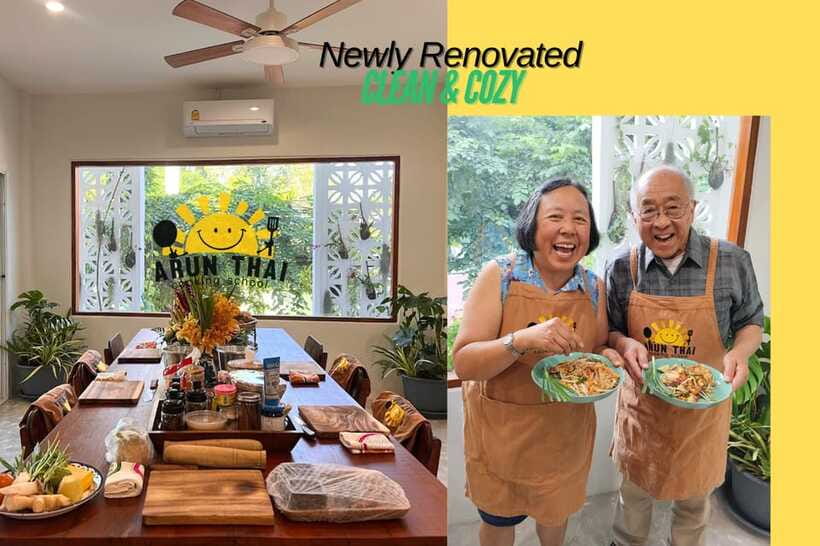
Yes, if you want a practical Thai food lesson with a genuine market stop rather than a class held entirely indoors. The best features work together: the short tuk-tuk ride, the 60-year-old Prannok Market, the coconut cream demonstration, and the four dishes you prepare afterward.
The clearest reason to book is the teaching. June and Juney are especially strong guides, and Lalit also receives praise for careful instruction. You should leave with more than a full stomach. You will have seen the ingredients in their local setting and practiced recipes you can try again at home.
Book it with three things in mind: arrive hungry, share the tuk-tuk ride, and give allergy information ahead of time. At $42, it is a good-value half-day activity for anyone who wants to connect Bangkok’s food culture with the act of cooking.
FAQ
How long does the Bangkok cooking class and market tour last?
The activity lasts three and a half hours, with starting times depending on availability.
Where does the activity begin?
You meet on the second floor of Arun Thai Cooking School. The activity also ends back at the same meeting point.
Is a tuk-tuk ride included?
Yes. A shared tuk-tuk ride to Prannok Market is included, and the trip takes about five minutes.
Which dishes will I cook?
You will prepare Tom Yum prawns, Pad Thai prawns, Massaman curry chicken, and mango sticky rice.
Is the class suitable for beginners?
Yes. All skill levels are welcome, and you cook at your own kitchen station with instructor guidance.
Are vegetarian options and dietary needs available?
Vegetarian options and dietary needs can be accommodated. You must provide allergy information in advance.
What languages are available?
Instruction is available in English and Chinese. Chinese classes are offered six days a week, with partial translation available on other days.
More Workshops in Bangkok
- Sorrento Farm by Tuk Tuk: Cheese, Limoncello & Hands-On Pizza
★ 5.0 · 628 reviews - Hue City: Cyclo, Market Tour & Cooking Class at Madam Thu
★ 5.0 · 48 reviews - Hanoi 2.5 hour Guided Sightseeing Cyclo Tour & Egg Coffee Class
★ 5.0 · 16 reviews - Hoi An Rickshaw Riding/Carpentry or Ceramic Class by Foodie Tour
★ 5.0 · 8 reviews
More Shopping Tours in Bangkok
- Chef Vu Cooking Class Plus Market Trip in Saigon Center (Pick up by Cyclo)
★ 5.0 · 477 reviews - Chiang Mai Temples and Market Tuk-Tuk Evening Night Tour
★ 4.5 · 201 reviews - Kampot: Tuk Tuk Trip to Pepper Farm, Kep, Crab Market & More
★ 4.9 · 143 reviews - Jaipur Tuk-Tuk Tour with Flower Market Visit
★ 5.0 · 124 reviews
Just added around Bangkok
- Tuk Tuk Tour in Bangkok★ 5.0 · 3 reviews
- Tuk-Tuk Tales: Bangkok Private Tour★ 4.4 · 5 reviews
- Tuk-Tuk & Longtail Boat : Bangkok Private Tour★ 4.3 · 6 reviews
- 4-Hour Hidden Bangkok TukTuk Street Food Guided Tour★ 5.0 · 23 reviews
- Tuk-tuk tour Bangkok by Night with Chinatown meal and hotel transfers★ 4.5 · 60 reviews
- Tuk-tuk Private Tour in Bangkok by Night with Chinatown meal★ 4.5 · 5 reviews
- Fun Tuk Tuk Dinner and Massage in Old Town Bangkok★ 5.0 · 7 reviews
- Tuk Tuk Bangkok Private Tour: WW2 Pad Thai, 360-Viewpoint, Chinatown (Pickup)★ 5.0 · 9 reviews
Bangkok Tuk Tuk Tours, compared.

Bangkok by Night: Temples, Markets and Food Tuk-Tuk Tour
Read our review →
Markets, Temples and Food Night Tour by Tuk Tuk
Read our review →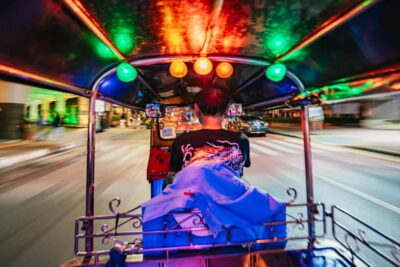

Tuk Tuk Adventure Chinatown Michelin Food & Temples
Read our review →
Evening Tour with Wat Arun, Wat Pho & Tuk Tuk Ride
Read our review →Browse the lists this tour appears in