
Review · AMSTERDAM
2 hours Amsterdam City Tour in Pedicab
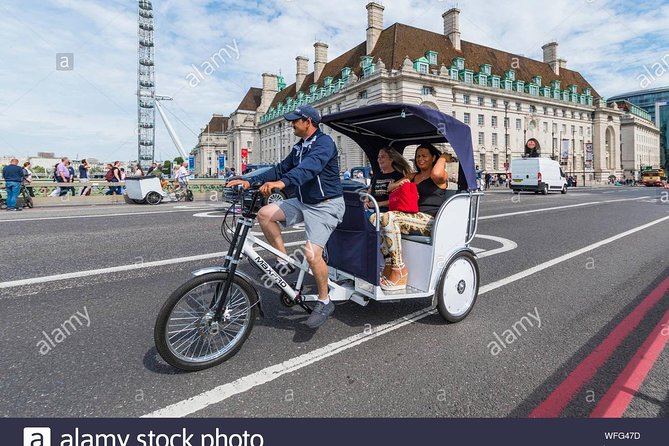
Amsterdam’s best feature is its small-scale access. A pedicab can slip along canal streets and narrow lanes that are awkward for cars, while giving you a clear view of bridges, gabled houses, churches, and daily city life. Your driver also serves as a private guide, so you are not simply being carried from sight to sight.
I like the easy pace and the freedom to stop for photos. I also like the practical value on a first visit: in two hours, you can get your bearings across several parts of Amsterdam without exhausting your feet. The main consideration is price. At $239.65 for up to two people, this is a special-occasion tour rather than a budget ride, and weather can affect the departure.
Key points to know
- Private access for up to two people: You ride with your own driver and guide rather than in a large group.
- A useful first-day orientation: The route links central Amsterdam with Museumplein, Vondelpark, the Jordaan, and Dam Square.
- Guides who personalize the ride: Alfonso, Alonso, Guido, Christian, Marco, Antonio, and Lambros are among the guides associated with recent departures.
- Comfort in changeable weather: Clear covers, plastic sides, and blankets have helped keep passengers warm and dry in rain and cold.
- Frequent photo stops: Drivers are happy to pause at points of interest and take photos of you as a couple.
- A practical choice for limited walking: The pedicab covers more ground than walking and avoids the effort of cycling.
Amsterdam by pedicab: a smart way to get your bearings
Amsterdam is easy to explore on foot until it suddenly is not. Canals force you to take indirect routes, cycle traffic demands constant attention, and the city’s most interesting lanes are often too narrow for a car or tour bus. The pedicab solves much of this.
For two hours, you sit in the back while your driver handles the traffic and points out what you are passing. You can look up at canal houses instead of watching every curb. You can also ask questions as you go, which turns a sightseeing ride into a useful introduction to the city.
The tour begins at Nieuwmarkt and returns to the meeting point, although several departures have included pickup from a hotel, apartment, cruise terminal, or another agreed location. Confirming the pickup details in advance is wise, especially if you are arriving by ship or have a tight schedule.
The guide names connected with the experience include Alfonso, Alonso, Guido, Christian, Marco, Antonio, and Lambros. Not every guide will lead every departure, but the strongest feature across the service is the personal attention. Drivers have adjusted the route to suit interests, changed pickup times when possible, and suggested restaurants or places to revisit later.
More Pedicab Tours in Amsterdam:
- Amsterdam: Private Guided City Tour by Pedicab
★ 4.9 · 130 reviews - Amsterdam: Private Pedicab Historical Sightseeing Tour
★ 5.0 · 41 reviews - Explore Amsterdam in 75 Minutes – Pedicab Rickshaw City tour
★ 5.0 · 38 reviews
Why the private format matters for two people
The listed price is $239.65 per group of up to two people. That works out to about $120 per person for a couple, but the value depends on how you use the ride.
If you have only one day in Amsterdam, the price buys more than transport. You get a private vehicle, a guide, photo stops, and a broad look at several districts in a short period. It can also help you decide where to spend the rest of your visit. A stop near Museumplein might lead you back to the Rijksmuseum, while a slow pass through the Jordaan may send you toward its shops, markets, and cafés.
This is not the cheapest way to move around Amsterdam. Walking and public transport cost much less, and a canal cruise may cover more water for a lower price. The pedicab earns its keep through flexibility and direct attention. You can ask to pause, ask what a building is, and hear about parts of the city that a standard vehicle cannot reach.
The two-person limit also matters. If your party has four people, the practical arrangement is two pedicabs. One family group used two vehicles with two guides and still toured together, but you should expect the price structure to apply to each pedicab group.
From Nieuwmarkt through the old center
Nieuwmarkt is the starting point, placing you close to Amsterdam’s older central districts. From here, your guide begins with the city’s basic story: canals, changing neighborhoods, water management, and the way Amsterdam developed around trade and movement.
The exact first section can vary, but the early route is intended to give you the feel of central Amsterdam. You may pass churches, old streets, canals, and important public buildings while your guide explains what you are seeing. Some guides have included St. Nicholas Church, Central Station, the Royal Palace, several squares, and the Red Light District in their central-city route.
That variety is useful, but do not expect a long stop at every sight. A two-hour ride is designed for an overview. You will see more places than you could comfortably visit on foot, but major museums and the Anne Frank House are viewed from outside unless you arrange separate admission for another time.
One particularly useful subject is Amsterdam’s water system. The city sits below sea level in places, and guides explain how canals, pumps, and flood controls have shaped its streets and buildings. This gives the ride more meaning than a simple list of names and dates.
Museumplein and the city’s great museums
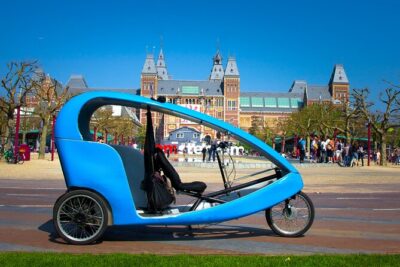
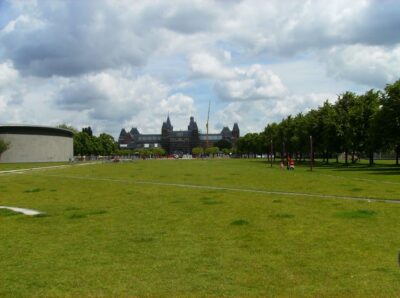
The route continues to Museumplein, or Museum Square, in Amsterdam-Zuid. This broad public space is home to the Rijksmuseum, Van Gogh Museum, Stedelijk Museum, and Concertgebouw.
You get about 10 minutes here, with no admission ticket included. That is enough for a quick look at the setting, a few photographs, and a useful orientation to the museums. It is not enough time to visit one of them, so plan any museum entry for before or after the pedicab tour.
I like this stop because it helps you understand Amsterdam’s cultural center without spending your first hours inside one building. If you are choosing between museums, your guide may help you understand where each one is and how to return later. If you already have tickets, ask how the timing works before setting off.
Museumplein is also a change of mood from the tighter canal streets. You move from old urban lanes into a more open civic space, which helps show how varied Amsterdam can feel within a short distance.
A few more rides around Amsterdam worth a look
- Amsterdam: 2-Hour Sightseeing Tour by Rickshaw
★ 4.7 · 81 reviews - Amsterdam Pedicab City Tour (2 hours)
★ 5.0 · 22 reviews - 2 Hours Private Amsterdam Rickshaw Tour
★ 5.0 · 16 reviews - Discover Porto’s Highlights on a 2-Hour Private Electric Tuk Tuk
★ 4.5 · 1,860 reviews
A gentle pass through Vondelpark
Vondelpark lies west of Museumplein and near Leidseplein. It is a large public park of about 47 hectares, opened in 1865 and named after the 17th-century writer and poet Joost van den Vondel.
The pedicab offers a pleasant way to see the park without turning the visit into a long walk. The park includes an open-air theater, a playground, and food facilities. Depending on the route and timing, you may pass through or along sections of it while the guide explains its place in city life.
This is one of the better parts of the ride for families and anyone managing limited energy. Children can keep seeing new places without being asked to march from one attraction to the next. Older visitors also avoid the strain of crossing Amsterdam’s uneven and busy streets on foot.
The limitation is time. You will not explore every path or stop at every facility during a two-hour city circuit. Think of Vondelpark as a scenic part of the route, not a full park visit.
Prinsengracht and the Anne Frank House
The ride then reaches Prinsengracht, one of Amsterdam’s best-known canals. The Anne Frank House is located here, close to the Westerkerk, on the edge of the Jordaan.
Your guide can explain the setting and the importance of the house, but this tour does not include entry to the museum. Anne Frank House tickets are handled separately, and the pedicab stop should not be treated as a substitute for the interior visit.
This is an emotionally weighty part of the route. The view from the street can help you place the building within the canal district, but the experience remains a short exterior stop unless you return with a timed ticket. If seeing the museum matters to you, arrange that independently and use the pedicab ride to understand the surrounding area.
The nearby Westerkerk adds another recognizable landmark. From the pedicab, you can take in the canal, church, narrow houses, and passing bicycles without having to search for the location yourself.
The Jordaan: Amsterdam at its most characterful
The Jordaan is one of the strongest reasons to choose a pedicab. Its streets and canals are full of small details, and the vehicle can move through areas that are less practical for cars.
The district began as a working-class neighborhood and is now one of the city’s more expensive areas. It has art galleries, specialty shops, restaurants, and regular markets at Noordermarkt, Westerstraat, and Lindengracht. The former Rozengracht is now a main traffic route, while smaller lanes preserve the intimate feel that makes the Jordaan so appealing.
Your guide may point out connections with Rembrandt, who spent the last years of his life here and was buried in the nearby Westerkerk. The Anne Frank House sits on the Jordaan’s edge, adding another layer to the district.
This is a place where the guide’s local knowledge matters most. You will see the attractive façades, but the explanation of how the neighborhood changed gives the streets context. Ask where you should return for lunch, shopping, or a quieter walk. Several guides have offered restaurant suggestions, which can be more useful than a hurried list of famous places.
The drawback is that the Jordaan can be crowded with bicycles and pedestrians. Drivers have been praised for safe handling, but you still need to remain alert when getting in or out. The pedicab is a comfortable sightseeing seat, not a private bubble separated from city traffic.
Dam Square and the central finish
Dam Square is Amsterdam’s main public square and one of its most recognizable meeting places. The Royal Palace and other important buildings surround it, and events often fill the space.
A stop here gives you a clear sense of Amsterdam’s civic center. It is also a useful place to connect the quieter canal districts with the grander public face of the city. Your guide can point out the buildings and explain how the square fits into the city’s development.
Dam Square is not always the calmest photo stop. It can be busy, and the open space has less of the intimate canal atmosphere found in the Jordaan. Still, it belongs on a first overview because so many central routes lead back to it.
The activity ends back at the meeting point, though individual arrangements have sometimes ended at a requested location. Confirm this before departure if you need to reach a restaurant, museum, train connection, or cruise transfer immediately afterward.
Comfort in rain, wind, and cold
Amsterdam weather can change quickly. Clear plastic covers, zip-up sides, and blankets have been used to keep the seating area comfortable in cold or wet conditions. Guides have also adjusted the covers when rain began or stopped during the ride.
That protection is a real advantage over walking or cycling, especially in winter. You can still see through the clear front and sides, and you are not responsible for navigating slippery streets or bicycle traffic.
The experience requires good weather, so cancellation is possible if conditions are poor. If the operator cancels, you are offered another date or a full refund. You can cancel for a full refund up to 24 hours before the start time, but changes or cancellations inside that window are not accepted.
Who will get the most from this ride
I would put this near the start of a first Amsterdam visit. The tour gives you a broad mental map, and you can return later to the museums, markets, churches, and neighborhoods that catch your interest.
It suits couples who want a private introduction, families who want to reduce walking, and older people who prefer a seated sightseeing option. It also works well for a short port call or a visit lasting only one day. Drivers have been attentive with older passengers, including a 90-year-old rider, and the format lets you cover more ground without cycling.
It is also a practical choice if you cannot ride a bicycle. Amsterdam’s cycling culture is part of its charm, but joining it is not comfortable for everyone. The pedicab lets you experience the city’s streets without taking on that responsibility.
You should consider another option if your main goal is interior museum visits, a long stop at the Anne Frank House, or the lowest possible price. Two hours passes quickly, and much of the value comes from moving between sights rather than spending extended time at them.
Booking timing, pickup, and participation
The tour is offered in English and includes a mobile ticket. It is commonly booked well ahead, with an average booking lead time of about 57 days, so reserve early if your dates are fixed.
Pickup is offered, and past departures have included hotel, apartment, cruise terminal, and other agreed locations. The listed starting point is Nieuwmarkt, with the activity returning there. Send clear arrival and accommodation details when arranging pickup.
Most people can participate, and service animals are allowed. The meeting area is near public transportation. This is a private activity, so only your group takes part, with a maximum of two people per listed booking.
Should you book the Amsterdam pedicab tour?
Book it if you want a private city overview, have limited time, or would rather sit comfortably than walk or cycle through Amsterdam’s busy streets. The combination of narrow-lane access, photo stops, local explanation, and weather protection makes the ride especially useful early in your stay.
I would be less quick to recommend it to a budget-minded visitor who enjoys walking and already knows the city. At $239.65 for two people, it is a deliberate splurge. For a first visit, a cruise stop, a family with tired legs, or a couple wanting personal attention from guides such as Alfonso or Alonso, it can be money well spent.
FAQ
Where does the Amsterdam pedicab tour start?
The listed meeting point is Nieuwmarkt in Amsterdam.
Where does the tour finish?
The activity ends back at the meeting point. Some departures have arranged a different drop-off location, so confirm this before setting out if you need to reach a specific place.
How long is the pedicab tour?
The tour lasts approximately two hours.
How many people can join one booking?
The price covers one private group of up to two people. Larger groups may need more than one pedicab.
Is hotel pickup available?
Pickup is offered. Past arrangements have included hotels, apartments, and a cruise terminal, but you should confirm the exact pickup location when booking.
Is the tour offered in English?
Yes. The activity is offered in English.
What happens if the weather is poor?
The experience requires good weather. If it is canceled because of poor conditions, you are offered another date or a full refund. You can also cancel for a full refund up to 24 hours before the start time.
Just added around Amsterdam
- 1,5 hours Amsterdam Rickshaw Tour★ 5.0 · 24 reviews
- Explore Amsterdam in 75 Minutes – Pedicab Rickshaw City tour★ 5.0 · 38 reviews
- 2.5 hours Amsterdam Pedicab Tour★ 5.0 · 7 reviews
- Amsterdam Pedicab City Tour (2 hours)★ 5.0 · 22 reviews
- 1 Hour Private Amsterdam Rickshaw Tour★ 5.0 · 11 reviews
- 1 hour Amsterdam City Tour in Pedicab★ 4.5 · 3 reviews
- 2 Hours Private Amsterdam Rickshaw Tour★ 5.0 · 16 reviews
- Amsterdam: Private Guided Pedicab & Rickshaw Highlights Tour★ 5.0 · 5 reviews
Amsterdam Tuk Tuk Tours, compared.
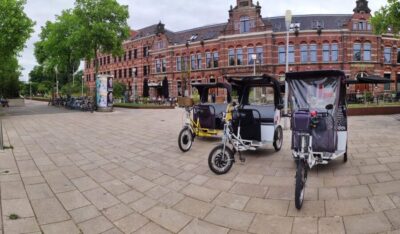
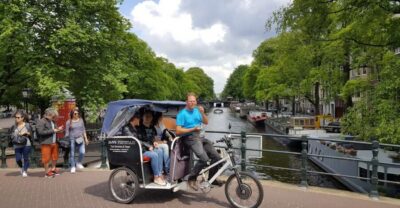

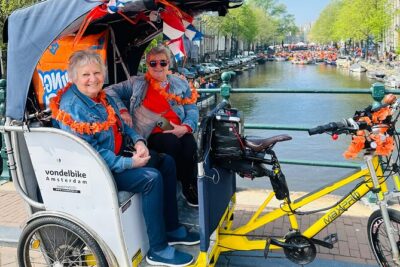
Explore Amsterdam in 75 Minutes – Pedicab Rickshaw City tour
Read our review →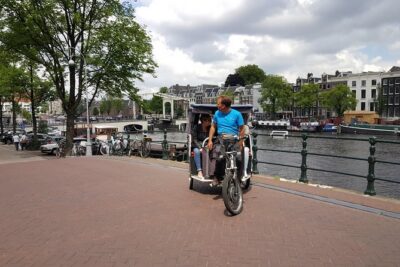

Browse the lists this tour appears in