
Review · BERLIN
Daily First Rickshaw promotion in Combi Vehicle public Group 90€
Berlin is a city made for connecting the dots, and this four-hour rickshaw tour does that with unusual ease. You move from Alexanderplatz and Museum Island to the Cold War border, Nazi-era memorials, Potsdamer Platz, and Brandenburg Gate without spending the day figuring out trains or wearing out your feet.
I like the small private format, limited to two people, and the chance to stop for photos almost anywhere along the route. I also like the practical comfort: a roof, blankets in wet or cool weather, bottled water, WiFi, and a driver who can bring you close to major sights. The main consideration is price, especially for one or two people, and the rickshaw is not a substitute for entering Berlin’s museums.
- A compact Berlin overview: Cover Alexanderplatz, Museum Island, Bebelplatz, Gendarmenmarkt, Checkpoint Charlie, Potsdamer Platz, and the government district in about four hours.
- A private ride for up to two: You avoid a large group and can discuss your interests directly with the guide.
- A strong choice for limited mobility: You only need a few steps to enter the rickshaw, and you can often view monuments without getting out.
- A flexible photo-focused route: Stops are built in, and the guide can pause so you can take pictures.
- Comfort in changing weather: The rickshaw has a roof, and blankets are available when Berlin turns cool or wet.
- A morning departure can help: A 9:00 a.m. start is suggested for quieter sights and a calmer ride.
Berlin by Rickshaw: A Four-Hour Orientation
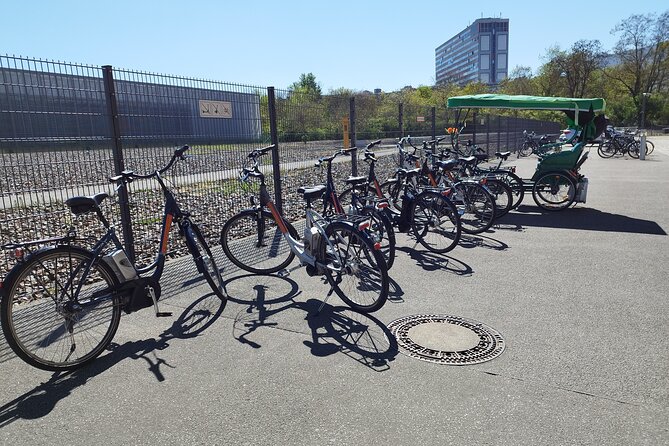
This is not a museum tour with long indoor visits. It is a moving introduction to Berlin, built around major landmarks, short stops, historical explanation, and close-up views from the seat of a rickshaw.
That format matters in Berlin. The city’s key sights are spread across districts that once belonged to different political systems. Alexanderplatz, Checkpoint Charlie, the Holocaust Memorial, and Brandenburg Gate are not next door to one another. A private vehicle lets you link them in one sitting.
The rickshaw also gives you a different point of view. You sit low, close to the street, with fewer barriers between you and the buildings. You can stop beside monuments for photographs, then continue without the repeated boarding, walking, and route planning that comes with public transport.
The tour is listed for a maximum of two people. Extra rickshaws can be added for larger parties, but the experience is most naturally suited to a couple, friends traveling together, or one guest with a companion.
The meeting point is Weinbergsweg 6 in Berlin, and the ride returns there at the end. The experience is offered in English, with mobile ticketing and confirmation at booking. It is near public transportation, so reaching the starting point should fit easily into a Berlin sightseeing day.
Alexanderplatz and Museum Island
The ride begins at the Berliner Fernsehturm, Berlin’s 365-meter TV Tower in Alexanderplatz. You do not get admission to the tower as part of this tour, but the square gives you an immediate sense of Berlin’s eastern center.
From here, the route passes the Red Town Hall, Marien Church, and Neptune Fountain before reaching Museum Island. This opening stretch is useful because it introduces several layers of Berlin at once: the monumental TV Tower from the former East, older civic buildings, and the grand cultural quarter along the River Spree.
Museum Island is a UNESCO World Heritage site and one of Berlin’s major cultural centers. The route takes in views of the Berlin Cathedral, the City Palace, the Altes Museum, the Bode Museum, and the Neues Museum.
You have about 15 minutes here, with no admission charge for the stop itself. That gives you time for photographs and an overview, but not enough for a museum visit. If you want to see the Ishtar Gate, Egyptian collections, or other interiors, plan a separate visit on another day.
I like this early stop because it helps you understand Berlin’s layout before the tour turns toward political and wartime sites. You can see how royal buildings, museums, churches, and modern reconstruction sit close together.
More Rickshaw Tours in Germany
- Berlin: Private Guided E-Rickshaw Tour
★ 4.9 · 157 reviews - Individual City Tour – Rickshaw Sightseeing in Berlin
★ 5.0 · 120 reviews - Berlin Express: Private 1-Hour E-Rickshaw Ride
★ 5.0 · 116 reviews
Bebelplatz and the Memory of Book Burning
Bebelplatz offers one of the tour’s most serious moments. The square belongs to the Forum Fridericianum, a group of important buildings that includes the State Opera, Humboldt University, the State Library, and St. Hedwig’s Cathedral.
The site is also linked to the Nazi book burning of May 10, 1933. Books labeled un-German were destroyed here in a public display of ideological control. A short stop of about 10 minutes gives your guide a chance to explain why this square is more than an attractive collection of buildings.
You should expect the tone to change here. This is not simply a pretty plaza for quick photographs. It is a place to consider how censorship and political hatred can move from public spectacle to wider persecution.
Because the stop is brief, listen closely and ask questions if you want more context. The tour gives you a citywide framework, not a long seminar at each location.
Gendarmenmarkt’s Grand Civic Buildings
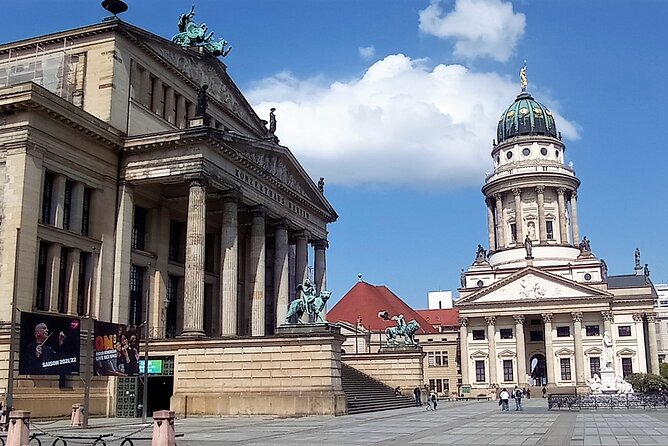
Gendarmenmarkt is one of Berlin’s most impressive squares, with the former Royal Concert Hall in the center and the German Cathedral and French Cathedral on opposite sides.
The 10-minute stop is mainly for views and pictures. The square’s scale makes it easy to appreciate from the rickshaw, especially if walking long distances is difficult. Statues and surrounding facades add detail, so this is a place where a guide’s explanation can help you notice more than the central buildings.
The drawback is that restoration work or events can affect the appearance of the square. No such condition is specified for this tour, so check what is open on your date if Gendarmenmarkt is especially important to you.
Checkpoint Charlie and the Former Wall Strip
Checkpoint Charlie brings the tour into Berlin’s Cold War story. This former crossing point became a symbol of the division between East and West Berlin, a division that lasted 28 years before the Wall fell in 1989.
The stop lasts about five minutes, so you should treat it as a concise historical pause rather than a full museum visit. You will see the area connected with the former border strip and pieces of the Berlin Wall that serve as reminders of the city’s separation.
Checkpoint Charlie can feel more commercial than solemn, and that is worth knowing before you go. The value here lies in the location and the explanation, not in spending a long time at one monument.
The rickshaw helps because the route connects Checkpoint Charlie with the other sites that explain Berlin’s twentieth century. You are not seeing the crossing in isolation. It forms one part of a larger route through dictatorship, division, reunification, and modern Berlin.
More Rickshaw Tours in Berlin:
- Rickshaw Tours Berlin – Groups of up to 16 people with several rickshaws
★ 4.0 · 97 reviews - Rickshaw Sightseeing City Tours Berlin – Rikscha Tours
★ 4.0 · 55 reviews - Berlin: Private Sightseeing Tour in an E-Rickshaw
★ 4.9 · 44 reviews - One Up to 3 Rickshaws(6 GUESTS)-Taylor Made Rickshaw Berlin Tour
★ 5.0 · 20 reviews
Topography of Terror and Potsdamer Platz
The Topography of Terror documentation center focuses on crimes committed during the Nazi era. It is located beside the former Gestapo and SS headquarters area, making the setting important as well as the exhibits.
The planned stop is around 10 minutes, enough for an exterior visit and an introduction. Admission is not included as a separate tour feature, so you should not expect time to explore the full documentation center during the ride.
Nearby, the Martin-Gropius-Bau presents changing exhibitions. Past exhibitions have included work by Ai Weiwei and David Bowie. The building itself is a notable prewar structure, and your guide can point out how the area mixes museums, political buildings, and memorial sites.
The former Prussian Landtag is also part of this section of the route. Its late nineteenth-century building connects the area to earlier Prussian government. You get a quick look at several periods of Berlin’s public life without having to cross the city on foot.
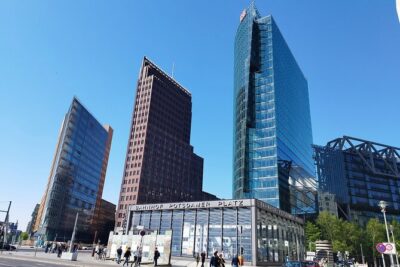
Potsdamer Platz then shifts the mood again. After reunification in 1990, this damaged and divided area became one of Europe’s largest construction sites. The Sony Center and surrounding high-rises now represent the city’s modern commercial identity.
This contrast is one of the route’s strengths. Within a short span, you see Nazi persecution, older state power, Cold War division, and post-reunification construction.
The Holocaust Memorial and Brandenburg Gate
The Memorial to the Murdered Jews of Europe is made up of concrete blocks arranged across a large open field. The 10-minute visit allows you to walk among the blocks or view them from the edge, depending on your comfort and mobility.
The memorial commemorates the six million Jews murdered under National Socialism. It asks for quiet attention rather than a quick landmark photograph. The changing height of the blocks and the uneven ground create a different feeling as you move through the site.
You can visit the memorial’s underground information center separately, but this tour stop is not designed as a full indoor visit. If you want names, family stories, and detailed documentation, set aside extra time.
Brandenburg Gate follows as one of Berlin’s most recognizable landmarks. The gate once marked a route between parts of the city and later became closely tied to division and reunification. Here, the tour moves from remembrance toward the present-day capital.
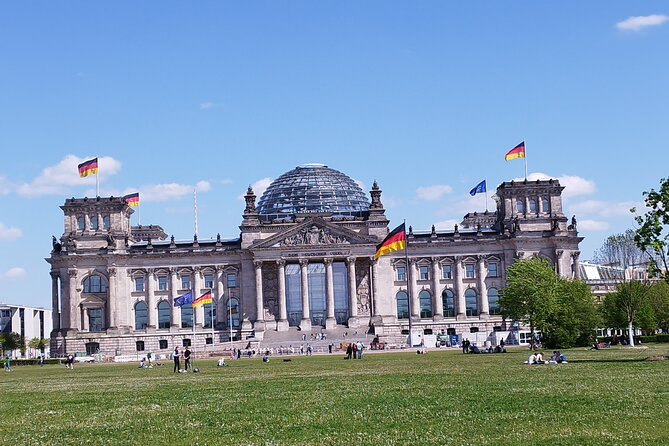
The route also includes the Memorial to the Murdered Sinti and Roma and the government district, including the Reichstag, Bundestag, and Chancellery. These final views help show Berlin as a working political capital, not just a collection of historic monuments.
What the Ride Feels Like in Real Weather
The rickshaw has a roof, and blankets are provided. That is more important than it may sound. Berlin weather can change during a four-hour outdoor ride, and you are exposed to the temperature even when the vehicle offers cover.
One ride continued through a rainstorm, with the guide pulling over to explain more about Berlin. That detail points to a useful strength of the format: the guide can pause rather than rushing you from one fixed point to the next.
Still, you should dress for outdoor conditions. The roof and blanket can help with rain and cold, but they do not turn the ride into an indoor activity. Comfortable clothing and shoes remain sensible, especially if you plan to step out at the memorials and squares.
The vehicle includes WiFi and bottled water. Alcoholic beverages are also listed as included, though no serving details are given. If that matters to your plans, confirm the arrangement when booking rather than assuming a particular drink or quantity.
Guide Style, Photo Stops, and Personal Attention
The strongest part of this experience is the guide interaction. Levi is named in the tour feedback, and the ride is described as friendly, humorous, safe, and flexible. Other guide names are not provided, so you should not assume Levi will lead every departure.
The guide can adjust attention to your interests. If you care about architecture, twentieth-century politics, photography, or Berlin’s divided past, say so early. A private ride gives you a better chance of shaping the conversation than a large coach tour.
Frequent photo stops are another real advantage. The driver can position the rickshaw close to landmarks, and the guide may help with photographs. That is useful for couples who want pictures together rather than another set of solo shots.
You can also stop for snacks, according to the tour details. No specific snack stop is promised, so think of this as flexibility rather than a planned food experience.
Price, Group Size, and Overall Value
The supplied information gives two different price signals: a Daily First Rickshaw promotion at 90 euros and a listed price of $216.74 per group of up to two. Because those figures do not match, check the final price shown for your date before paying.
At the higher listed amount, this is not a budget sightseeing ride. It can still offer fair value if you want private guiding, minimal walking, door-to-door movement between distant sights, and a calm introduction to Berlin in one morning or afternoon.
The value is strongest for two people sharing the vehicle. A solo rider pays the group price alone, while a larger party may need extra rickshaws. Compare the cost with a standard walking tour or public transport only if you are comfortable giving up the comfort and personal attention of the private ride.
Admission tickets to the TV Tower and museum interiors are not included. That keeps the tour focused and lets you choose which museums deserve a separate visit, but it also means your total sightseeing budget will be higher if you add entries later.
Who Will Get the Most From This Tour
I would choose this for a first visit to Berlin, especially if you want a broad orientation before deciding where to return on foot. It also suits couples who want a private ride and people who prefer not to spend hours changing trains between distant sights.
It is particularly helpful for less mobile guests. You need only a few steps to enter the rickshaw, and you can get close to monuments without leaving the seat. The guide can stop for photographs, and you can choose how much walking to do at each location.
Families should check the maximum of two people carefully. An extra rickshaw may be needed, and the supplied information does not explain how children are handled or how larger groups are divided.
History-focused visitors may find the explanations useful but brief. If you want full museum visits or long discussions at each memorial, book separate time at Museum Island, the Topography of Terror, the Holocaust Memorial information center, and other sites.
Practical Details Before You Book
The tour lasts approximately four hours and returns to Weinbergsweg 6. It is offered in English, uses a mobile ticket, and is near public transportation.
A 9:00 a.m. departure is specifically recommended because the sights may be less crowded then. That early start also leaves you with much of the day available for museums, food, or a second visit to the place that caught your attention.
Free cancellation is available if you cancel at least 24 hours before the local start time. Cancellations or changes inside that window are not refunded or accepted.
Should You Book the Berlin Rickshaw Tour?
Book it if you want a comfortable private overview with a real sense of Berlin’s distance and contrasts. The route covers a lot, the guide can adapt the conversation, and the rickshaw makes the city easier for guests who limit their walking.
Think twice if your main goal is museum interiors, deep historical study, or the lowest possible price. This is a moving tour with short stops, not a replacement for focused visits.
For the best fit, reserve the morning departure, confirm the actual price, and treat the ride as your Berlin orientation. Then return on your own to the museums and memorial centers that deserve more time.
FAQ
How long does the Berlin rickshaw tour last?
The tour lasts approximately four hours and returns to the meeting point at Weinbergsweg 6 in Berlin.
How many people can ride in one rickshaw?
The activity has a maximum of two travelers. Extra rickshaws can be added for larger groups.
Is the tour offered in English?
Yes. The experience is offered in English.
Are admission tickets included?
The stops themselves do not include admission to the Berliner Fernsehturm or museum interiors. The listed stops at Museum Island and the other outdoor locations have no separate admission charge for the tour visit.
Is this tour suitable for guests with limited mobility?
Yes. The tour is described as suitable for less mobile guests because you need only a few steps to enter the rickshaw. You can also view many monuments from the vehicle and stop close to them for photographs.
What is included in the price?
The price includes the rickshaw, an experienced tour guide, WiFi on board, bottled water, and alcoholic beverages. Tips are not included.
Can I cancel for a full refund?
Yes, if you cancel at least 24 hours before the experience start time. Cancellations or changes made less than 24 hours before the start are not accepted or refunded.
Just added around Berlin
- One Up to 3 Rickshaws(6 GUESTS)-Taylor Made Rickshaw Berlin Tour★ 5.0 · 20 reviews
- Romantic Berlin Rickshaw City and Photo Tour – incl. pick-up★ 4.0 · 9 reviews
- Rickshaw Sightseeing Tours Berlin – Highlights Berlin – Rickshaw city tour★ 3.5 · 3 reviews
- Rickshaw Tour-Cruise Ship guests arrive 9.30 upto 11.30 am Berlin★ 5.0 · 7 reviews
- Private Up to 12 Guests-ONE RICKSHAW, E-Bikes, E-Scooters★ 5.0 · 2 reviews
- Rickshaw Sightseeing City Tours Berlin – Rikscha Tours★ 4.0 · 55 reviews
- Private Guide Up to Group 6 – ONE Rickshaw, (E)Bikes, E-Scooters★ 5.0 · 3 reviews
- Berlin Rickshaw Tours Historical & Photo City Tour 120min – Sightseeing★ 4.5 · 11 reviews
Berlin Tuk Tuk Tours, compared.
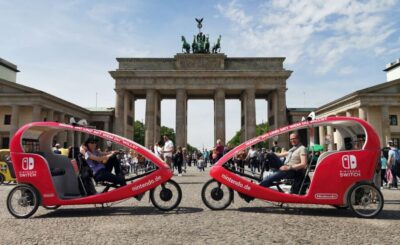
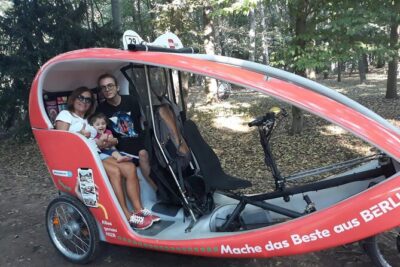
Individual City Tour – Rickshaw Sightseeing in Berlin
Read our review →
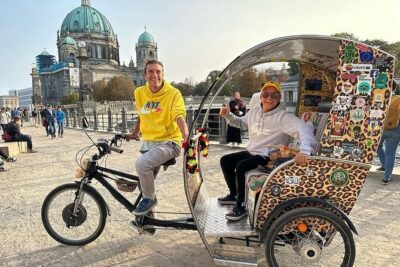
Rickshaw Tours Berlin – Groups of up to 16 people with several rickshaws
Read our review →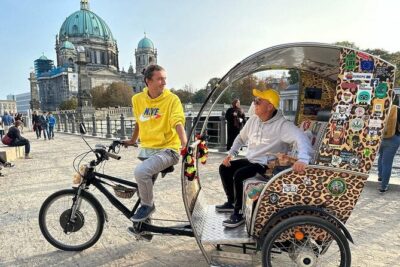
One Up to 3 Rickshaws(6 GUESTS)-Taylor Made Rickshaw Berlin Tour
Read our review →
Berlin Rickshaw Tours Historical & Photo City Tour 120min – Sightseeing
Read our review →Browse the lists this tour appears in