
Review · CHIANG MAI
Half day Best of Chiang Mai City by Tuk-Tuk Private tours
Chiang Mai’s story comes into focus from the back seat of a tuk-tuk. This three-hour outing links old city gates, temples, the Three Kings Monument, and Warorot Market, giving you a quick first look without asking you to find every stop yourself. I like the hotel pickup and drop-off, and I like the mix of major sights with a local market where residents shop.
The two departure choices are handy if you arrive late, have a morning flight, or want to keep the other half of your day free. The main caution is the ride itself: one account found the tuk-tuk in poor shape, with torn upholstery and a hard passenger seat. That matters on a warm, noisy road trip, even though another rider found the driver punctual and steady.
Key points to know before booking
- Wat Chedi Luang gives the tour its strongest historical stop, with its earthquake-damaged chedi and former connection to Bangkok’s Emerald Buddha.
- The Silver Temple offers something different, with a silver-colored ordination hall and Chiang Mai’s traditional silversmith work.
- Warorot Market is a practical local stop, covering food, flowers, clothing, jewelry, souvenirs, and household goods.
- A tuk-tuk handles the city connections, so you do not need to map the old town and market on your own.
- The tour lasts about three hours, making it useful as an orientation rather than a full day of sightseeing.
- The group is capped at 10 people, with an English-speaking guide, water, seasonal fruit, and accident insurance included.
Why this short tuk-tuk tour works as a Chiang Mai orientation
This outing is built for the first day or two of a Chiang Mai stay. Instead of spending your opening hours sorting out distances between the old city, temples, and market, you get a basic map of the city while a driver handles the route.
At $55, the value rests less on the length of the tour than on the private transport, guide, and hotel service. You are paying to connect several points with little planning. If you already know Chiang Mai well, three hours may feel thin. If you have just arrived, the trip can help you decide which places deserve a longer return visit.
The ride also gives you a look at the city between stops. A tuk-tuk is not silent or especially plush, but it puts you close to the street. You will hear traffic and feel the movement of the city in a way a sealed vehicle does not provide.
The tour is described as private, yet the maximum group size is 10. That means you should not assume a one-party vehicle unless the booking terms make that clear. A smaller group can keep stops moving at a good pace, but a full vehicle gives you less room in the back of the tuk-tuk.
A few more rides around Chiang Mai worth a look
- Private Chiang Mai Old City Half Day Tuk Tuk Tour
★ 4.5 · 157 reviews - Chiang Mai: Exploration of Old City by Private Tuk-Tuk
★ 4.3 · 127 reviews - Chiang Mai: Private Tuk Tuk Tour of City Temples With Pickup
★ 4.4 · 84 reviews
Starting at Chiang Mai’s old city gates
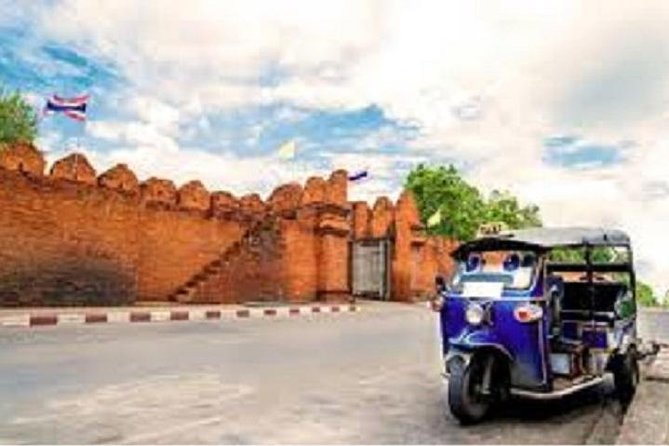
The route begins with the canal and the old city walls. Chiang Mai Gate and Tha Phae Gate are the key early stops, with remaining sections of defensive walls that once protected the city from foreign attacks.
These gates are useful for orientation. The old city is not an abstract historic district on a map anymore. You see its shape, its moat, and the points where roads enter the central area. Tha Phae Gate is also tied to the city’s better-known market areas, so noticing its location helps if you return on your own.
Do not expect a long archaeological visit at the gates. They are brief city landmarks, best understood as part of the wider route. The value comes from seeing how the old city was organized before you begin visiting its religious buildings.
The guide should help explain what you are seeing, rather than simply point out a wall and move on. Since guide names are not provided, you cannot request a particular guide in advance based on the available information. The tour does include an English-speaking guide, which is important at places where architectural details and religious customs benefit from explanation.
Wat Chedi Luang and the damaged great stupa
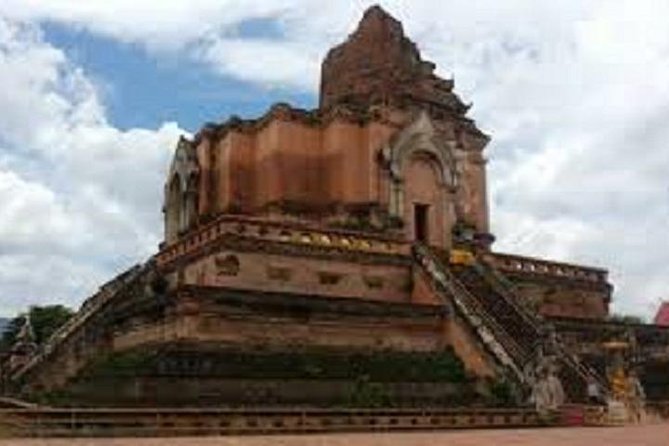
Wat Chedi Luang is the trip’s most substantial historical stop. Its name means Temple of the Big Stupa, and the main chedi was built during the 14th and 15th centuries.
The building once held the Emerald Buddha, now displayed at Bangkok’s Grand Palace. That detail links this Chiang Mai temple to one of Thailand’s best-known religious objects, but the site is worth seeing even without that connection. Its scale gives you a sense of the importance Chiang Mai once held within the Lanna kingdom.
An earthquake in 1545 destroyed the top 30 meters of the chedi. Repairs have been made, but damage remains visible around the lower edges. I find that detail more useful than a polished restoration would be. The broken stone and uneven surfaces show how the building changed over time.
You will want your camera here, but take a moment to look closely at the lower structure. The stop is not only about a tall religious monument. It is also a lesson in how earthquakes, repairs, and changing religious use shape an old building.
The limitation is time. On a three-hour route with several stops, you are receiving an introduction, not a slow study of the temple grounds. If Wat Chedi Luang catches your interest, mark it for a longer return visit.
Three Kings Monument and Chiang Mai’s civic center
The Three Kings Monument follows the old city temple stop. The monument honors the three rulers associated with Chiang Mai’s founding, and it gives you another way to read the city’s past.
This is a short stop rather than a full museum visit. Its value comes from its position in the city and its connection to Chiang Mai’s founding story. After seeing old walls and a major temple, the monument adds a civic and royal layer to the tour.
You may find this part less visually dramatic than Wat Chedi Luang or the Silver Temple. Still, it helps prevent the tour from becoming a string of unrelated photo stops. The itinerary moves from defense, to religion, to political history.
More City Tours in Chiang Mai:
- Chiang Mai City Tuk Tuk Tour – Half Day
★ 5.0 · 45 reviews - Half-Day Private Night Tour by Tuk Tuk in Chiang Mai City
★ 4.0 · 19 reviews - Chiang Mai Tuk Tuk: Old City Private Day Tour
★ 4.3 · 13 reviews - Sunlight or Moonlight: Chiang Mai City Tuk Tuk Tour
★ 5.0 · 7 reviews
The Silver Temple and Chiang Mai’s craft tradition
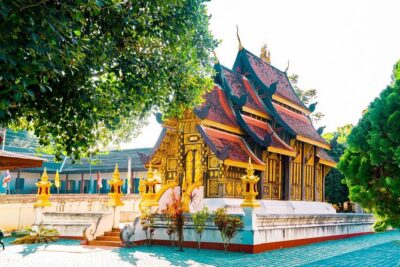
Wat Srisuphan, commonly called the Silver Temple, gives the route a different look. The silver-colored ordination hall uses alloy and zinc-silver, so it catches the light in a way that separates it from the darker stone and brick of the older sites.
The temple was first founded in 1501 under King Mengrai and was renovated in 2004. The building’s appearance is not simply old masonry preserved in place. It reflects Chiang Mai’s continuing silversmith tradition and the work of local artisans.
The temple is also connected with the Ancient Lanna Arts Study Centre, known as Sala Sip Mu Lanna. Artisans pass silverworking techniques to a new generation there, and visitors are encouraged to see them at work. That makes this stop especially useful if you want more than temple architecture. You get a look at a living craft tradition tied to the area.
Keep in mind that the itinerary refers to four temples, but the named description specifically identifies Wat Chedi Luang and Wat Srisuphan. The other temple stops are not clearly named in the supplied details. If particular temples matter to you, ask the operator for the full stop list before booking.
Warorot Market, where Chiang Mai shops
The final major stop is Warorot Market, a large shopping area used by local residents. This is where the tour shifts from monuments to everyday commerce.
You can find fresh and dried fruit, vegetables, seafood, clothing, jewelry, watches, beauty products, fireworks, souvenirs, and a large flower market. The range is broad enough that you may need to decide what interests you before you arrive. If you are looking for edible gifts or small keepsakes, this is likely more useful than a market aimed only at sightseeing.
The market also gives you a practical price reference. The tour information describes prices as among the lowest in Chiang Mai, though your final cost will depend on what you buy and how you bargain. Personal shopping is not included, so bring your own spending money.
I like this stop because it puts the temples in context. Chiang Mai is not only a collection of old buildings. It is also a working city where people buy food, flowers, clothing, and household items. The market can be crowded and visually busy, so keep track of your belongings and note where the tuk-tuk will meet you.
On the way, you will also see the areas associated with the Sunday Market and the Night Bazaar. The tour does not turn this into an evening market visit, but knowing where these districts are can help you plan another outing.
What the tuk-tuk ride is really like
The tuk-tuk is the transport and part of the experience. You sit close to the street while the driver moves between the old city, temples, and market. That saves you from arranging separate rides and gives the route a clear rhythm.
Comfort can vary. One account describes a driver who arrived on time and drove steadily, which is reassuring for anyone who found Bangkok’s tuk-tuks too fast or unpredictable. Another account reports torn upholstery and an old, hard passenger seat. I would treat the vehicle as practical city transport, not as a padded sightseeing car.
The ride may also be noisy and exposed. That is part of the appeal for some people, but it can be tiring if you prefer quiet transport. The supplied details do not promise air conditioning, so dress for a tuk-tuk ride rather than expecting a climate-controlled vehicle.
Hotel pickup and return are included. That is a real benefit in Chiang Mai, especially at the start of your stay when you may not know the city’s street layout. Pickup is listed for 8:30 a.m. or an afternoon departure, but the details give conflicting afternoon times, listing both 12:30 p.m. and 1:30 p.m. Confirm the exact pickup time before the day of the tour.
The expected return is about 11:30 a.m. for the morning option or 4:30 p.m. for the afternoon option. The schedule leaves little room for long visits, so arrive ready to move when the guide says it is time to go.
Timing, group size, and what is included
The tour takes about three hours and accepts a maximum of 10 people. That is enough time for an overview, but not enough for a slow visit to every temple, a long market lunch, and extended shopping.
Included in the price are:
- Hotel pickup and return by tuk-tuk
- An English-speaking guide
- Drinking water
- Seasonal fruit
- Accident travel insurance
Souvenir photos and anything you purchase at the market cost extra. Child pricing applies only when a child shares with two paying adults, and the minimum booking is two people.
The stated dress code is formal. Since the route includes temples, dress conservatively and follow the guide’s instructions at each religious site. The supplied information does not set out specific clothing rules, so confirm any temple requirements if this is a concern.
Most people can take part, and service animals are allowed according to the tour details. Confirmation is provided when you book. Free cancellation is available if you cancel at least 24 hours before the start time. A cancellation made later than that, or changes made inside the 24-hour window, are not accepted for a refund.
Who will get the most from this $55 outing
I would recommend this tour to a first-time visitor who wants a quick city map and does not want to negotiate several tuk-tuk rides alone. It also suits people with only one free morning or afternoon, and anyone who prefers a guide to explain the basic story behind each stop.
It is a good match for photographers because the route includes gates, a damaged ancient chedi, a silver-colored temple, a monument, and a market. The mix gives you more visual variety than a temple-only outing, even though the core of the trip remains temple sightseeing.
Families may appreciate the short duration and hotel service, but younger children may find the market and repeated temple stops less engaging. The child rate has a specific condition, so check that before booking.
I would think twice if your main goal is a relaxed temple visit. Three hours, four temples, a monument, gates, and a market means the schedule is full. I would also reconsider if you need a comfortable vehicle. The condition of the tuk-tuk may vary, and one account found the seating notably hard and worn.
The current score is 4.4 out of 5 from five submitted ratings. That is a useful sign, but it is a small sample. The strongest practical praise is for punctual pickup and a steady driver. The clearest criticism is that the route offers limited variety for some people and that the vehicle may be rough around the edges.
Should you book this Chiang Mai half-day tour?
Book it if you want easy transport, a quick introduction, and several classic sights in one short outing. The combination of Wat Chedi Luang, the Silver Temple, historic gates, Three Kings Monument, and Warorot Market gives you enough context to plan the rest of your Chiang Mai stay.
Skip it if you already know the old city, want long temple visits, or dislike exposed tuk-tuk rides. Before paying, confirm the afternoon pickup time and ask which four temples are included by name. Those two checks will tell you whether the schedule and sightseeing mix fit your plans.
FAQ
How long does the tour last?
The tour lasts approximately three hours. The morning option is expected to return around 11:30 a.m., while the afternoon option is expected to return around 4:30 p.m.
What departure times are available?
The tour offers morning and afternoon departures. The details list an 8:30 a.m. morning pickup, but the afternoon time is shown as both 12:30 p.m. and 1:30 p.m., so confirm the exact time before the tour.
Is hotel pickup included?
Yes. Pickup and drop-off at your hotel or guesthouse in Chiang Mai are included by tuk-tuk.
Which places does the tour visit?
The route includes Chiang Mai Gate, Tha Phae Gate, Wat Chedi Luang, the Three Kings Monument, Wat Srisuphan, and Warorot Market. The tour is described as visiting four temples, but only two are named in the available details.
Is an English-speaking guide included?
Yes. An English-speaking tour guide accompanies the tour.
What is included in the $55 price?
The price includes hotel pickup and drop-off by tuk-tuk, an English-speaking guide, drinking water, seasonal fruit, and accident travel insurance. Personal shopping and souvenir photos are not included.
Can I cancel for a full refund?
Yes, if you cancel at least 24 hours before the experience start time. Cancellations or changes made less than 24 hours before the start time are not accepted for a refund.
Just added around Chiang Mai
- Half Day Chiang Mai City and Culture tour by Electric Tuk Tuk (Private Tour)★ 5.0 · 4 reviews
- Sunlight or Moonlight: Chiang Mai City Tuk Tuk Tour★ 5.0 · 7 reviews
- Private Evening! Crisscross Chiang Mai’s Night by the classic Tuk Tuk★ 4.5 · 6 reviews
- Half Day Chiang Mai City and Cultural by TukTuk, Samlor & Red car (Private Tour)★ 5.0 · 6 reviews
- Chiang Mai City Tuk Tuk Tour – Half Day★ 5.0 · 45 reviews
- Half Day Private Chiang Mai Trishaw Ride and Mae Ping River Cruise★ 4.5 · 6 reviews
- Full Day Chauffeur Driven Tuk Tuk Adventure in Chiang Mai including rafting★ 5.0 · 19 reviews
- Chiang Mai Private Tuk Tuk Tour Half Day Old City Adventure★ 5.0 · 2 reviews
Chiang Mai Tuk Tuk Tours, compared.
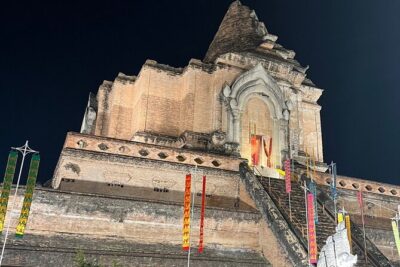
Chiang Mai Temples and Market Tuk-Tuk Evening Night Tour
Read our review →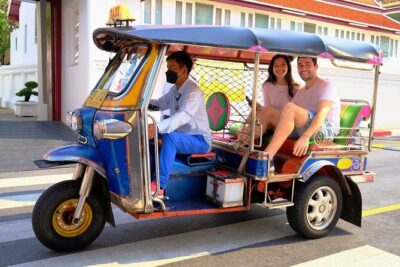
Full-Day Guided Tuk Tuk Chiang Mai Adventure and Rafting
Read our review →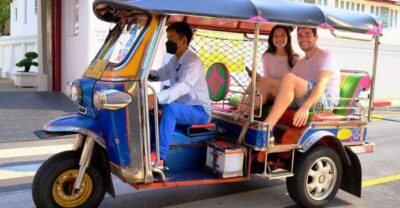
Chiang Mai Temples and Market Tuk Tuk Night Tour
Read our review →
Private Tuk Tuk Tour of City Temples With Pickup
Read our review →
11 Day Tuk Tuk Adventure in Northern Thailand
Read our review →Browse the lists this tour appears in