
Review · PARIS
Best of Paris Private Rickshaw bike Tour with guide
Paris is wonderfully compact from the seat of a rickshaw. In about two hours, you can connect the Louvre, Notre Dame, the Latin Quarter, the Seine, the Eiffel Tower, the Arc de Triomphe, and several grand squares without spending your day underground or stuck in a tour bus. I like the private format, which lets you ask for photo stops and adjust the pace.
I also like the mix of a live host and multilingual audio commentary. Guides such as Ama, Ibrahim, Chayo, Vince, and Ahmid have been praised for their patience, helpfulness, and eye for good photo points. The main caution is traffic and road closures: one ride had to skip half the planned sights because of public events and diversions, and one guest found the guide hard to hear.
Key points to know before booking
- A private ride links both banks of the Seine with major sights in a short time.
- The standard route takes about two hours, though options range from 45 minutes to three hours.
- The Louvre is the meeting and return point, at 99 Rue de Rivoli, Carrousel du Louvre.
- You get live hosting in English or French, plus audio commentary in eight languages.
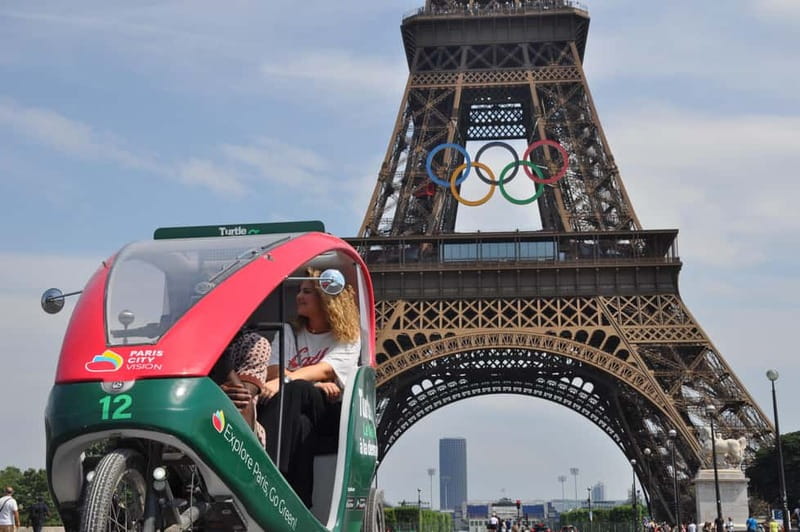
- Photo stops are built into the route, including the Eiffel Tower, Notre Dame, Trocadéro, and Arc de Triomphe.
- Traffic can change the plan, so treat the route as a flexible overview rather than a guaranteed visit to every stop.
Why a Paris rickshaw works so well
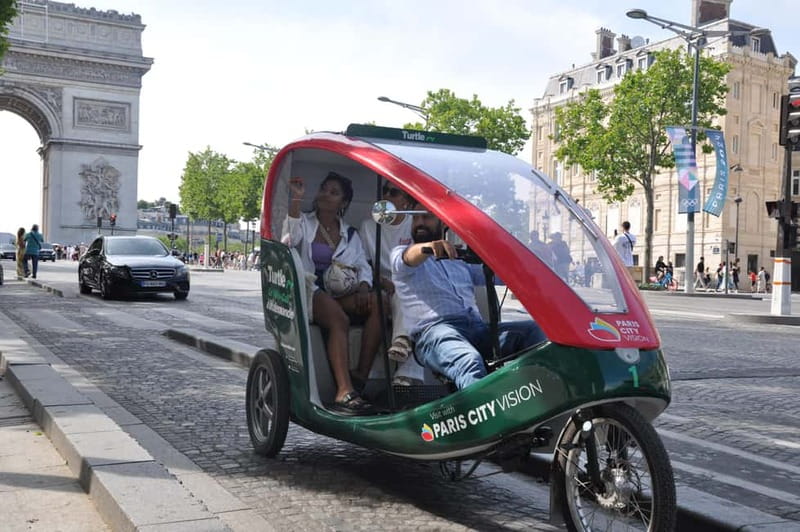
Paris is easy to walk in small pieces, but its famous sights are spread across a surprisingly wide area. The Louvre sits in the first arrondissement, Notre Dame is on the Île de la Cité, the Pantheon and Sorbonne are in the Latin Quarter, and the Eiffel Tower is far to the west. A rickshaw gives you a useful middle ground between walking and a large vehicle.
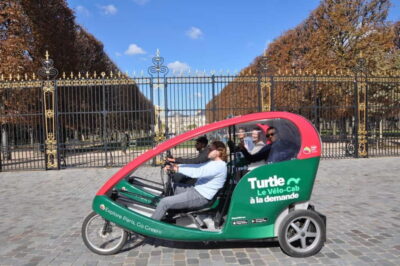
You see the streets at eye level, not through a sealed window. You can pause for a photograph, hear the city around you, and cover ground without committing to a full-day walking route. The small vehicle also helps on streets where a coach would be awkward.
I would think of this as a Paris orientation ride, not a museum tour or a substitute for visiting the monuments inside. You will see the exteriors and hear commentary, but the stops are mainly for photos and brief explanations.
The private setup matters. You are not sharing the ride with a large group, and the host can respond to your interests. If the Eiffel Tower matters most, say so early. Ama has been praised for customizing time and destinations, while Ahmid was specifically appreciated for stopping at striking viewpoints.
More Rickshaw Tours in France
- Paris: 2 hours Emily Tour in a Private Rickshaw bike
★ 4.7 · 38 reviews - Sightseeing tour of most iconic parisian monuments (rickshaw)
★ 5.0 · 37 reviews - Paris : Private guided tour in Rickshaw bike – Napoléon
★ 4.5 · 23 reviews
From the Louvre to Hôtel de Ville
The official meeting point is at 99 Rue de Rivoli, by the Carrousel du Louvre. This is a practical starting place because the Louvre is one of Paris’s easiest landmarks to recognize, though the exact meeting arrangement can vary by the option you book.
The route begins with the Louvre, whose long palace frontage gives you an immediate sense of Paris at full scale. You will not enter the museum on this activity, so plan a separate visit if you want the Mona Lisa, the Egyptian collection, or the grand galleries.
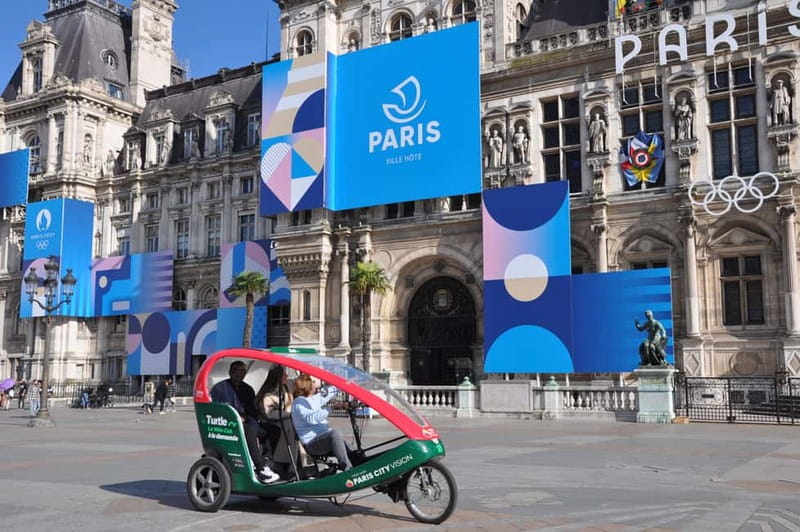
The ride then heads toward Hôtel de Ville, Paris’s city hall. Its ornate façade makes a strong early photo stop, and the area places you close to the Seine and the historic center. This part of the route helps you see how royal, civic, and commercial Paris fit together rather than treating each monument as an isolated postcard.
Notre Dame, the Sorbonne, and the Pantheon
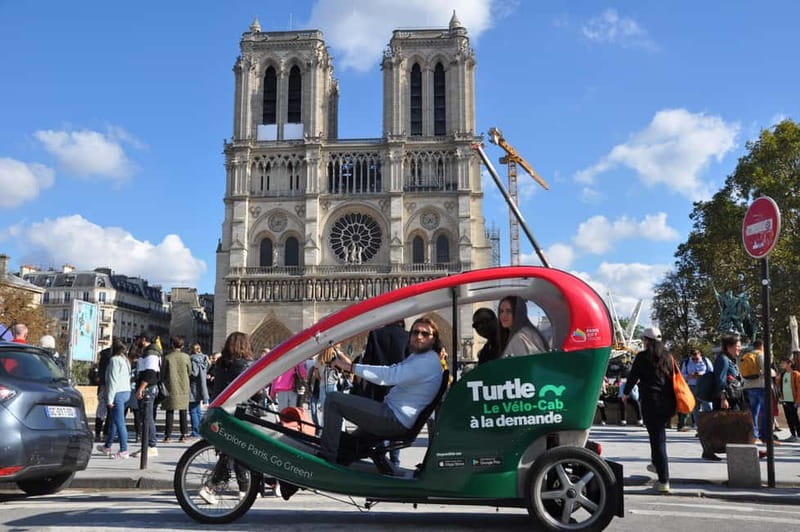
Notre Dame is one of the key stops. From outside, you can appreciate its position on the Île de la Cité and its familiar Gothic form. The stop is especially useful if you want a quick look at the cathedral before returning later for a closer visit.
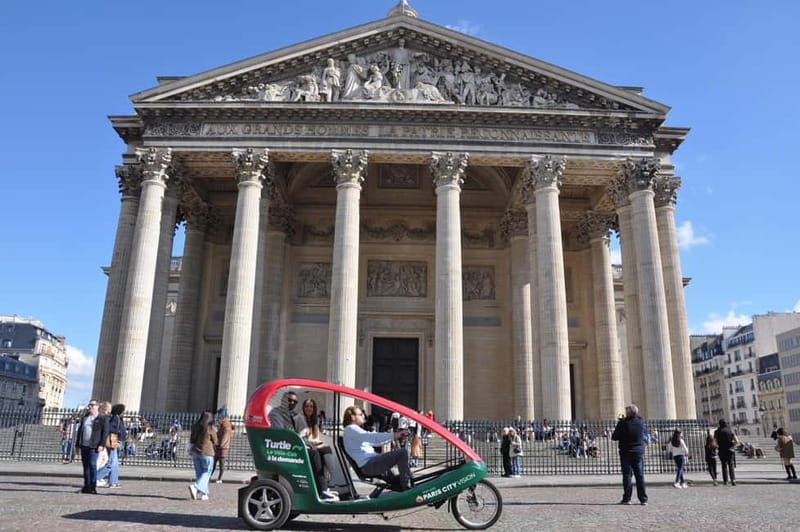
The ride continues toward the Sorbonne and the Pantheon. This is where Paris feels more academic and political. The Sorbonne anchors the Latin Quarter, while the Pantheon occupies a powerful position on the Montagne Sainte-Geneviève.
The Pantheon is a good example of why a guide adds value. Its exterior can look formal and severe if you do not know what it represents. Commentary can place it within France’s civic story, while a short stop lets you photograph the dome and colonnade without giving up the rest of the route.
Expect photo stops, not extended sightseeing time. If you want to enter the Pantheon, you will need a separate ticket and a longer visit.
Luxembourg Gardens and Saint-Germain-des-Prés
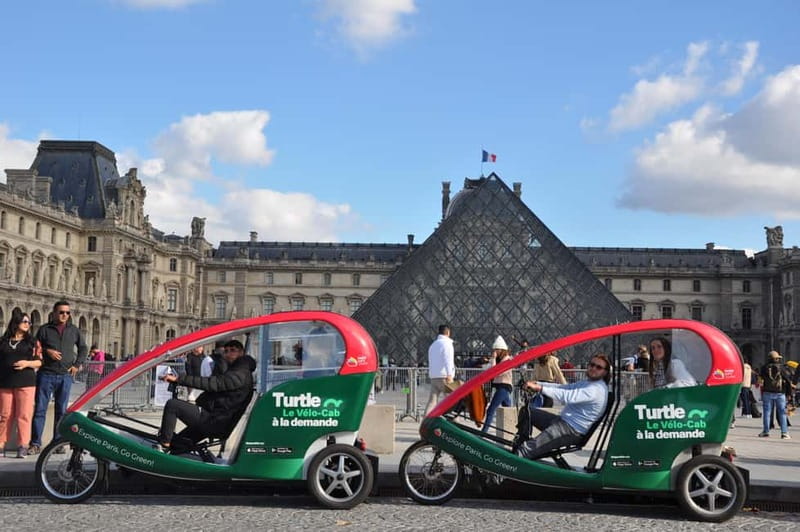
The route passes the Luxembourg Gardens, one of the city’s most pleasant open spaces. From a rickshaw, you get a sense of its scale and setting, but the tour does not give you time to wander through the paths or sit beside the fountains.
That is an important distinction. The ride is good at showing you where places are and how they relate to one another. It is less suited to quiet time in a garden, browsing a church interior, or lingering over a café.
Saint-Sulpice and Saint-Germain-des-Prés bring a different mood. Saint-Sulpice is known for its imposing church façade and broad square, while Saint-Germain-des-Prés has long been linked with cafés, publishing, art, and intellectual life. You can see several sides of Paris in quick succession: royal grandeur, student life, religious architecture, and neighborhood streets.
I like this middle section because it breaks up the monument parade. You are not only ticking off famous names. You are also passing through areas that give the city its day-to-day character.
More Rickshaw Tours in Paris
- Paris: Private guided tour in Rickshaw bike – Gustave Eiffel
★ 4.6 · 22 reviews - Paris : Private guided tour Rickshaw bike – Saint-Germain
★ 4.7 · 15 reviews - Paris Private Sightseeing Guided Tour by Electric Rickshaw
★ 5.0 · 8 reviews - Private City-Tour by rickshaw bike in Paris : The “Napoléon”
★ 5.0 · 8 reviews
Following the Seine toward the Eiffel Tower
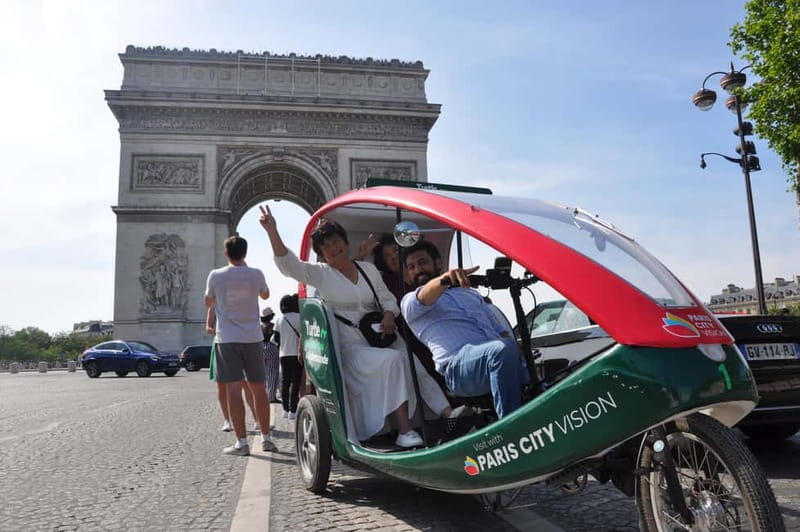
The Seine is the natural spine of this ride. The route uses the river and its bridges to connect the eastern sights with western Paris, including Pont de l’Alma and Pont de Bir-Hakeim.
Pont de l’Alma is a useful reference point near the Eiffel Tower area. Pont de Bir-Hakeim, with its distinctive structure, is another strong photo location. These bridges show why Paris is often best understood from the river corridor: monuments, avenues, and neighborhoods line up around it.
The Eiffel Tower is the headline stop for many people. You will have time for photographs and a view of the tower from the city streets, but this tour does not include tower entry. If you want the second floor or summit, arrange that separately.
The Paris Statue of Liberty is another unusual stop. It is smaller than its New York counterpart and sits on an island in the Seine, but it adds an unexpected link between the two cities. From the rickshaw, you can include it in your overview without making a separate trip across town.
Trocadéro, the Arc de Triomphe, and the Champs-Élysées
Place du Trocadéro is one of the best places on this route for an Eiffel Tower photograph. The broad open space and elevated position give you a clear view across the river. This is a stop worth protecting if weather or traffic forces the guide to shorten the plan.
The route then reaches the Arc de Triomphe and the Champs-Élysées. These are grand, formal Paris at its most theatrical. The Arc connects twelve major avenues, while the Champs-Élysées runs toward the Place de la Concorde and the gardens beyond.
A rickshaw is useful here because the avenue can be tiring on foot, especially after several hours of sightseeing. At the same time, road conditions can affect the ride. Paris sometimes closes major streets for marches, sporting events, ceremonies, or other public gatherings. One particularly difficult outing was rerouted because of a sports event near the Louvre and a women’s march along the Seine.
The guide in that case, Ibrahim, apologized repeatedly even though the closures were outside his control. He replaced some major stops with smaller streets and picturesque corners. That is a good sign of practical guiding, but it also shows why you should not book this as a rigid promise to see every listed sight.
Grand Palais, Pont Alexandre III, and the return route
The Grand Palais and Pont Alexandre III bring the tour back toward central Paris. The Grand Palais is known for its monumental glass roof and Beaux-Arts design, while Pont Alexandre III is one of the city’s most decorated bridges.
These stops are especially good for photographs. They also help connect the western monuments with the administrative and ceremonial heart of Paris. The route passes the National Assembly, then continues toward Place Vendôme and the Palais Garnier.
Place Vendôme is associated with luxury, grand façades, and the famous column at its center. The Palais Garnier, home of Paris’s historic opera house, gives you another chance to see the city’s nineteenth-century ambition from the outside.
The route finally returns to the Louvre area. Depending on the booked option, the drop-off is again at 99 Rue de Rivoli or the Carrousel du Louvre. That makes the ride easy to combine with an afternoon museum visit, a walk through the Tuileries, or a meal nearby.
The listed route also includes Sacré-Cœur Basilica. Because the full sequence contains more sights than any two-hour ride can treat at length, confirm with the host how much time is available for Montmartre and Sacré-Cœur on your selected duration. The 45-minute option will necessarily be much more selective than the three-hour version.
What the guide and audio setup are really like
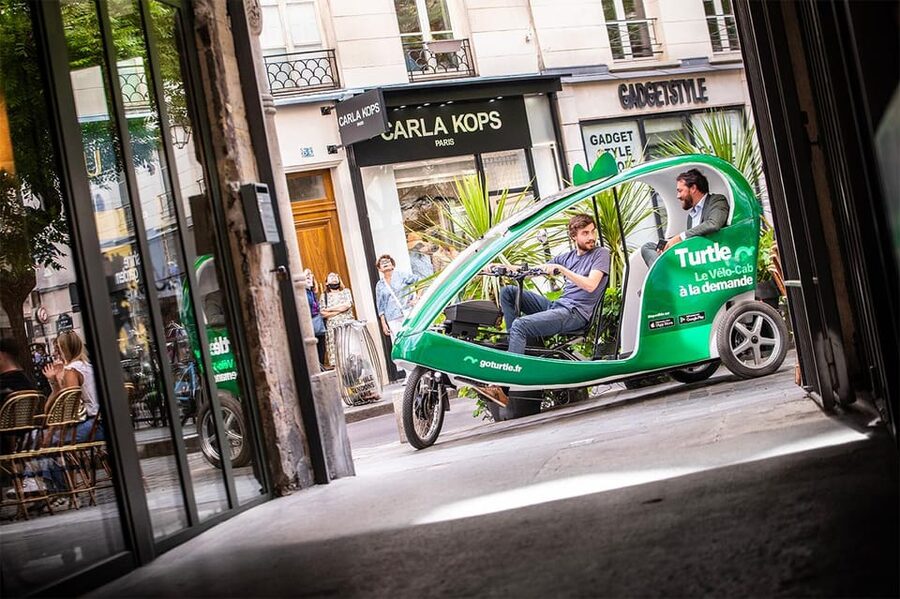
The activity combines a live host or greeter with an onboard audio guide. English and French are the host languages, while recorded commentary is offered in Dutch, German, English, French, Italian, Spanish, Japanese, and Chinese.
That combination can work well. The audio gives you organized background information, while the host handles the practical side of the ride, points out photo locations, and responds to requests. I would still ask at the start how the commentary will be delivered and where the speaker is positioned.
One guest specifically had trouble hearing the guide. A rickshaw is open to street noise, motorcycles, traffic, and passing crowds. Sit where you can hear clearly, and tell the host at once if the volume is low. Do not wait until the end of the ride.
The named guides praised in the supplied feedback include Ama, Ibrahim, Chayo, Vince, and Ahmid. Their strengths were slightly different: Ama was noted for flexibility, Ibrahim for making the best of road closures, Ahmid for photo points, Chayo for courtesy and a punctual drop-off, and Vince for patiently showing the Eiffel Tower area.
Timing, private value, and who should book
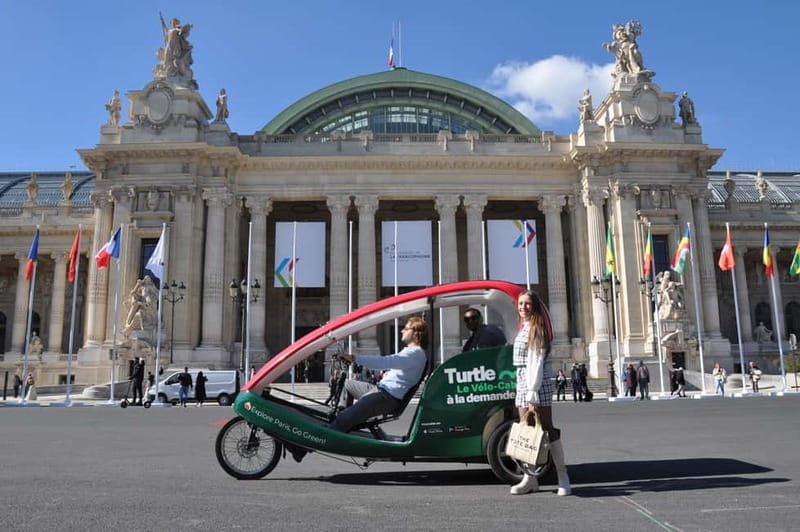
The experience is offered in several lengths, from 45 minutes to three hours, with starting times depending on availability. The two-hour version is the sensible choice if you want the main sequence of sights without turning the ride into a very quick checklist.
A 45-minute ride suits a first look, a late arrival, or a final evening recap. A three-hour option gives the host more room to pause and adapt, although traffic can still change the timing.
There is no price supplied here, so I cannot call it a bargain or an expensive outing without seeing your dates and group size. The value comes from the private vehicle, the broad coverage, and the time saved between distant monuments. For two or more people, compare the total cost with separate taxis, public transport, and a large group tour. A solo traveler may find the private format harder to justify unless convenience is the main goal.
I think this works best for:
- First-time visitors who want a clear map of central Paris
- Families or small private groups
- People who tire easily during long walks
- Visitors with only one free afternoon
- Anyone who wants photo stops without navigating several Metro changes
- Returning visitors who want a quick refresher of the main monuments
It is less suitable if your priority is entering museums, walking every neighborhood, or receiving a long historical lecture at each stop. It is also not the best choice if you need a fixed route with no chance of traffic-related changes.
Free cancellation is available up to 24 hours before the activity, and you can reserve while keeping payment until later. Alcohol and drugs are not allowed. These are small practical points, but they are worth checking before you finalize your plans.
Should you book this Paris rickshaw tour?
Book it if you want a private, flexible overview of Paris with strong photo opportunities and less walking between far-flung sights. The ride covers an impressive range, from Notre Dame and the Pantheon to the Eiffel Tower, Trocadéro, Arc de Triomphe, Grand Palais, and Palais Garnier.
I would choose the two-hour option for a first visit and tell the host your top three priorities before setting off. Put the Eiffel Tower and Trocadéro high on the list if photographs matter most. Keep your expectations flexible when major streets are closed.
Skip it if you want substantial time inside monuments or prefer to explore at walking speed. For everyone else, this is a smart way to get your bearings, save your legs, and see how Paris’s great sights connect.
FAQ
Where does the Paris rickshaw tour start?
The listed starting point is 99 Rue de Rivoli, at the Carrousel du Louvre. The meeting point can vary depending on the option booked.
Where does the tour finish?
The listed drop-off options are 99 Rue de Rivoli and the Carrousel du Louvre.
How long is the rickshaw tour?
Available durations range from 45 minutes to three hours. The described Best of Paris route takes about two hours.
Is the tour private?
Yes. The activity is offered for a private group.
What languages are available?
The host or greeter speaks English or French. The audio guide is available in Dutch, German, English, French, Italian, Spanish, Japanese, and Chinese.
Does the tour include entry to the Eiffel Tower or Louvre Museum?
The activity provides exterior photo stops and sightseeing. Entry to the Eiffel Tower and Louvre Museum is not included in the supplied tour information.
Which Paris landmarks are included?
The route can include the Louvre, Hôtel de Ville, Notre Dame, the Sorbonne, the Pantheon, Luxembourg Gardens, Saint-Sulpice, Saint-Germain-des-Prés, the Seine, Pont de l’Alma, the Eiffel Tower, Pont de Bir-Hakeim, the Paris Statue of Liberty, Trocadéro, the Arc de Triomphe, Champs-Élysées, Grand Palais, Pont Alexandre III, the National Assembly, Place Vendôme, Palais Garnier, and Sacré-Cœur Basilica.
Can I cancel for a full refund?
You can cancel up to 24 hours in advance for a full refund. The activity also offers reserve now and pay later booking.
More Rides on Two Wheels in Paris
- Private City-Tour by rickshaw bike in Paris: The “Saint-Germain”
★ 5.0 · 4 reviews - Penang George Town All-In-One Heritage Tour By Bicycle & Trishaw (Metro Bike)
★ 5.0 · 168 reviews - Half-Day Food Tour with Cycle Rickshaw ride to Masterji Kee Haveli
★ 5.0 · 31 reviews - Central Park Tour Bike and Pedicab
★ 5.0 · 26 reviews
Just added around Paris
- Ultimate Paris Tour by Electric TukTuk – 4 Hours★ 5.0 · 7 reviews
- Paris Private Sightseeing Guided Tour by Electric Rickshaw★ 5.0 · 8 reviews
- Paris with a Tuk Tuk – Private 2-Hour TukTuk Tour★ 4.5 · 34 reviews
- Private Tour of Paris in Tuktuk★ 5.0 · 32 reviews
- 4 Hour Grand Paris Tour by Electric Tuk Tuk See Almost Everything★ 5.0 · 5 reviews
- Private Highlights of Paris Tuk-Tuk Experience★ 5.0 · 26 reviews
- Private City-Tour by pedicab in Paris : The “Gustave Eiffel”★ 4.5 · 7 reviews
- Private City-Tour by rickshaw bike in Paris: The “Saint-Germain”★ 5.0 · 4 reviews
Paris Tuk Tuk Tours, compared.
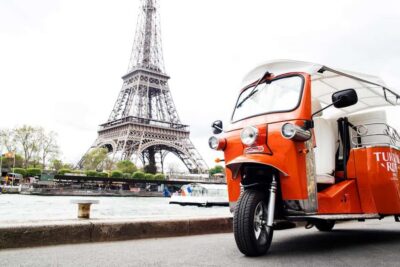
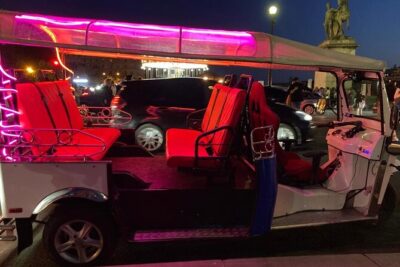
Paris Tuk-Tuk: 2, 4 or 6H First Highlights & Parisian Areas
Read our review →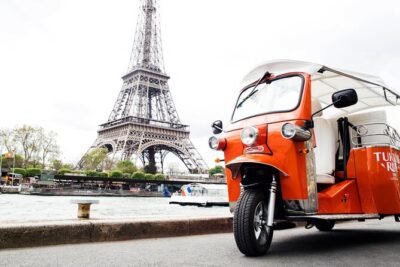
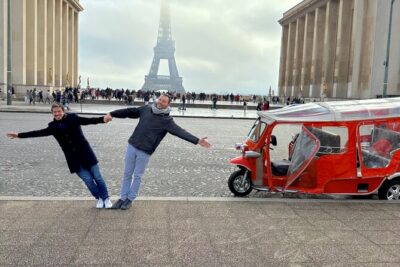
Premium private tour of Paris in an Electric TukTuk (4 hours)
Read our review →
Browse the lists this tour appears in