
Review · PORTO
Porto: Fun Private Tuk Tuk Tour
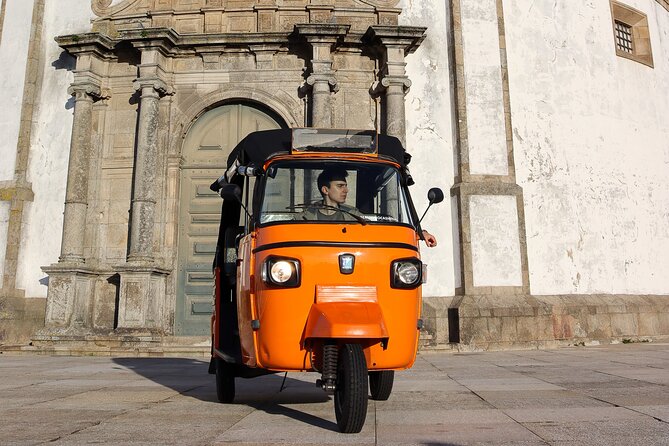
Porto’s steep streets make a tuk tuk more than a novelty. It is a practical way to cover the city’s high viewpoints, riverfront districts, and major monuments without turning your first afternoon into a hill-climbing workout. This private 90-minute ride also crosses into Vila Nova de Gaia, giving you a quick look at both sides of the Douro.
I like the private format, since your guide can adjust the route instead of repeating sights you already know. I also like the mix of big landmarks and local details, from the Eiffel-linked Dona Maria Pia Bridge to tucked-away viewpoints and photo stops. The main caution is time: most stops last only one to five minutes, so this is an overview, not a substitute for visiting Porto’s interiors.
Key points to know
- Porto and Gaia in one ride: The route links the city center, riverfront, bridges, and Serra do Pilar.
- A strong first-day choice: You get a useful sense of Porto’s hills, districts, and major sights before exploring on foot.
- Guides shape the experience: Past guides including Leandro, Ana, Tanya, José, Tiago, Carlos, Bruno, and Pedro have been praised for local knowledge, humor, photos, and flexibility.
- Rain protection matters: The tuk tuk can keep you moving in wet weather, but the activity requires good weather and may be canceled if conditions are poor.
- Short walking section: Weather permitting, you walk a few meters near Cordoaria Garden to see Carmo and the Carmelites.
- Private does not mean slow: You see a lot, but several stops are quick drive-bys or brief photo pauses.
Why a tuk tuk works well in Porto
Porto is compact, but it is not flat. The center rises sharply from the Douro, and the route between the cathedral, Clérigos, Cordoaria, Ribeira, and Gaia can be tiring on foot. A tuk tuk lets you cover those distances while saving your energy for the places you want to enter later.
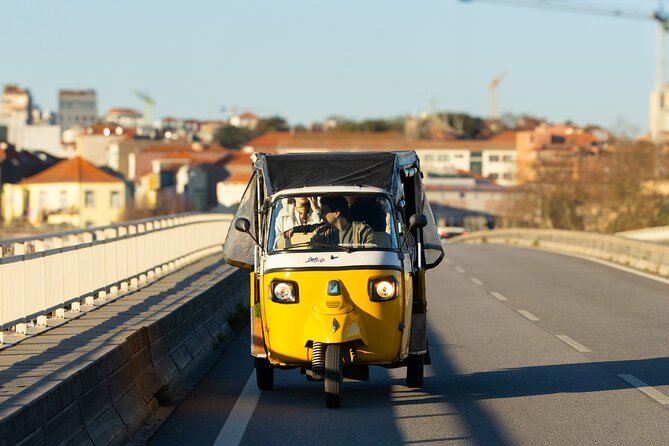
You also get a useful sense of how the city fits together. The ride begins near Praça da Batalha, moves toward the historic core and river, crosses into Gaia, then returns through central Porto and its upper viewpoints. That broad sweep is difficult to match in a short walk.
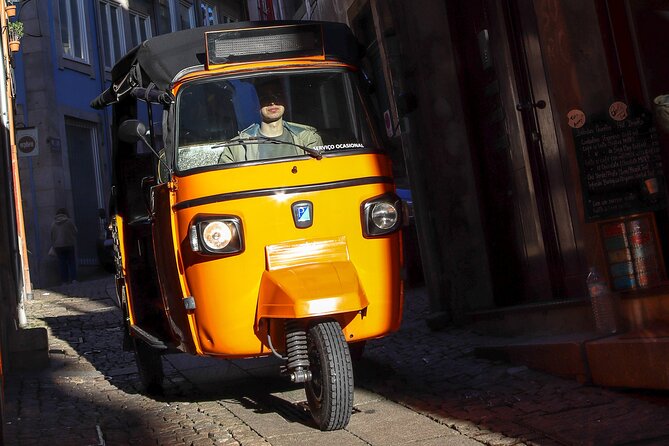
The open-air vehicle adds fun, too. You are close to the street rather than sealed inside a bus. That makes it easier to notice steep lanes, tiled façades, old walls, and sudden views of the river. It can be breezy and exposed, so bring a light layer even on a mild day.
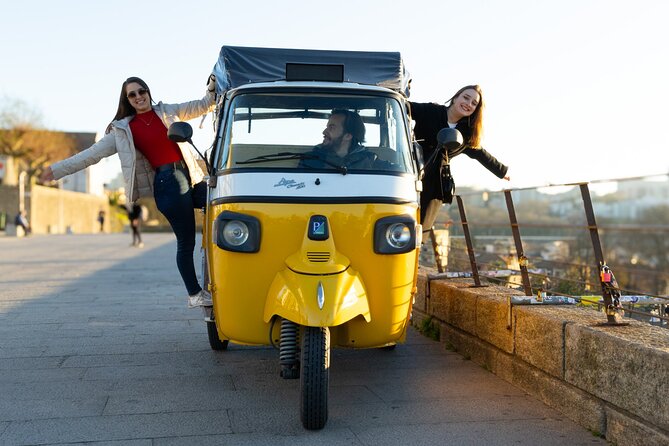
This tour is private, meaning only your group takes part. That matters most if you want to ask questions, adjust the pace, or skip places you have already visited. Several guides have also adapted routes for rain, personal interests, and limited time.
A few more rides around Porto worth a look
- Discover Porto’s Highlights on a 2-Hour Private Electric Tuk Tuk
★ 4.5 · 1,860 reviews - Historic Porto by Private Electric Tuk Tuk to Top Landmarks
★ 4.5 · 735 reviews - Porto: Private Sightseeing Tour by Electric Tuk Tuk
★ 4.8 · 305 reviews
Starting at São João National Theatre

The meeting point is the São João National Theatre at Praça da Batalha. The theater dates to 1798 and was rebuilt in 1920 by José Marques da Silva. Its neoclassical exterior gives you a fitting starting point in a part of Porto where cultural life, old streets, and major routes meet.
You do not receive a full theater visit as part of the ride. Think of this as the departure landmark and an easy place to find your guide. Confirmation arrives at booking, and the location is near public transportation.
A private tuk tuk is especially useful here because the route can begin without requiring you to navigate Porto’s steep upper streets alone. Your guide handles the driving while explaining the city around you.
Medieval walls and the climb to Serra do Pilar
One of the early sights is the Fernandine Wall, a surviving section of Porto’s 14th-century defenses. King Fernando I ordered the larger medieval wall system as the city expanded. Much of it disappeared in the 19th century, but sections remain around Ribeira and Morro da Sé.
This is a quick historical marker rather than a long wall walk. Your guide can help you understand how tightly packed medieval Porto once was and how the city grew beyond its defensive limits.
The route then reaches the Monastery of Serra do Pilar in Vila Nova de Gaia. Its circular church and Renaissance design make it one of the Douro region’s most distinctive monuments. The site also gives you a broad view across Porto, the river, and the bridges.
The planned pause here is about five minutes, so expect a viewpoint stop rather than a full monastery visit. That short stop can still be valuable because the view explains Porto better than any map. You see the two cities, the river crossing, and the high and low levels that shape the way you move around the area.
Porto’s bridges, from Eiffel to modern engineering
The Douro bridges are not just background for photographs. They tell the story of changing transport and engineering in northern Portugal.
You pass the São João Bridge, a railway bridge opened in 1991 and designed by Edgar Cardoso. It replaced the older Maria Pia railway bridge, which had been designed by Gustave Eiffel and opened in 1877. The Maria Pia Bridge is no longer in railway service, but its iron arch remains one of the most graceful sights along the river.
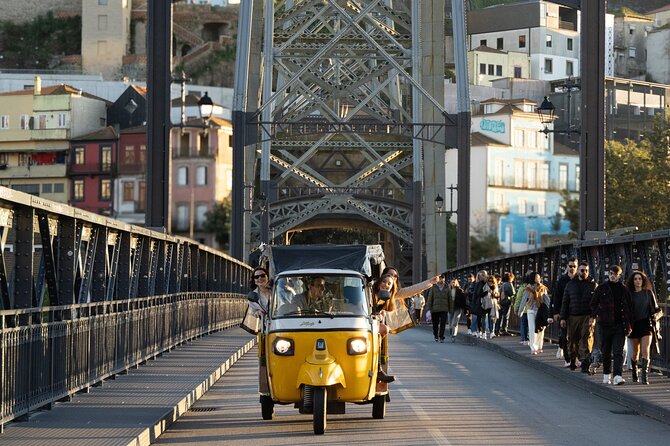
The route also includes the Dom Luís I Bridge, Porto’s most famous crossing. Designed by Théophile Seyrig and opened in 1886, it has two metal decks connecting Porto and Gaia. Today, pedestrians, vehicles, and the metro use its levels.
The bridge stops are brief, often one to three minutes, so you will not have time for a long walk across the span. Still, the tuk tuk gives you several angles and lets your guide explain how the crossings connect the two cities.
You also see the Arrábida Bridge, opened in 1963. Its large reinforced-concrete arch was a major engineering achievement at the time. This contrast between the iron Maria Pia, the metal Dom Luís I, and the concrete Arrábida gives the route real structure. You are not simply collecting bridge photographs; you are watching Porto’s transport story change over more than a century.
Same streets, a different route:
- Porto: Guided Tour by Tuk-Tuk & Optional Douro River Cruise
★ 4.5 · 5,980 reviews - Porto: Guided Tuk Tuk Tour
★ 4.6 · 1,390 reviews - Porto Guided Tour to the Historical Center on a Tuk Tuk
★ 4.5 · 418 reviews - Oporto Tuk-Tuk Tour: Fast, Fun & Flexible – 1H to Full Day!
★ 4.7 · 280 reviews
Ribeira, Infante Garden, and the Bolsa district
Back in Porto, the ride includes the Infante D. Henrique Garden near Ribeira. A statue honors Prince Henry the Navigator, a central figure in Portugal’s 15th-century maritime expansion. The garden sits close to the Palácio da Bolsa and Ferreira Borges Market.
The Ferreira Borges building dates to 1885. Its iron structure and neoclassical design once served a commercial market, while today it is used for cultural events and exhibitions. It is a useful example of how Porto has reused older public buildings rather than treating them only as museum pieces.
The Palácio da Bolsa was built in the 19th century for Porto’s Commercial Association. Its best-known interior is the Arab Room, noted for its ornate decoration. The building is part of Porto’s UNESCO-listed historic center, but this tour does not include an interior visit. The two-minute stop is enough to point out the building and its place in the city, not enough to appreciate the grand rooms.
That distinction is important when you plan your day. Use this tuk tuk ride to mark places for a later return. If the Arab Room interests you, schedule a separate visit rather than expecting the tuk tuk stop to cover it.
Miragaia and the lower Douro
The Miragaia district offers a slower, more intimate contrast to the larger monuments. It lies beside the Douro and is known for narrow streets, colorful homes, and medieval roots. Merchants and artisans once lived in this part of the city, and its older scale remains visible.
The scheduled pause is around three minutes. You may not have time to wander far, but the ride gives you a glimpse of the riverfront character and a chance to ask your guide where to return on foot.
The Church of São Francisco is another major sight along this part of the route. Its Gothic structure dates to the 14th century, while the interior is covered in elaborate Baroque gilded woodwork. The Jesse Tree sculpture is one of its noted features.
Again, the church is presented from the outside during the tuk tuk route. I see this as a strength if your aim is orientation, but a limitation if you want religious art and architecture in detail. Put São Francisco on your walking list if you have time.
Cordoaria, Carmo, and the short walking section
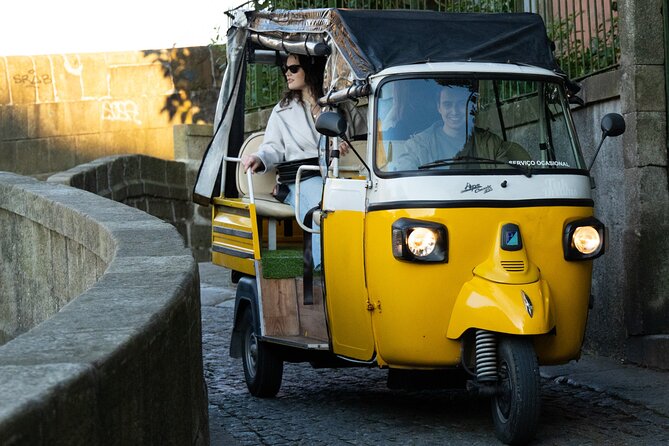
Weather permitting, the tuk tuk stops near Jardim de João Chagas, better known as Cordoaria Garden. The garden dates to the 19th century and includes old trees and sculptures, including The Boys by Juan Muñoz.
Here, you take a short walk of only a few meters. This is one of the better moments to leave the vehicle because the nearby monuments are close together and easier to appreciate at street level.
The walk includes the Church of Carmo and the Church of the Carmelites. Carmo is an 18th-century Baroque-Rococo church famous for its large blue-and-white tile panel on the side façade. The Carmelites dates to the 17th century and has a Baroque façade and gilded interior.
The narrow house between the two churches is one of the area’s curious details. It is easy to miss when moving quickly through Porto, which is why the short guided walk adds value.
The Carmo admission is not included, while the Carmelites entry is included according to the tour information. Since the time here is only a few minutes, treat the stop as a quick look rather than a full church visit.
Clérigos, Crystal Palace, and Porto’s best views
The Clérigos Tower is one of the city’s clearest landmarks. Built in the 18th century by Nicolau Nasoni, the Baroque tower rises 75 meters above the center. The route passes the tower, but does not include time to climb it.
If you want the panorama from the top, return independently. The tuk tuk gives you the location and context, while a separate visit gives you the full experience.
The ride continues to the Crystal Palace Gardens, now home to the Rosa Mota Pavilion. The gardens offer broad views over the Douro and quieter green spaces away from the tight streets of the center. A five-minute stop is enough for a look and a few photos, though not a long garden walk.
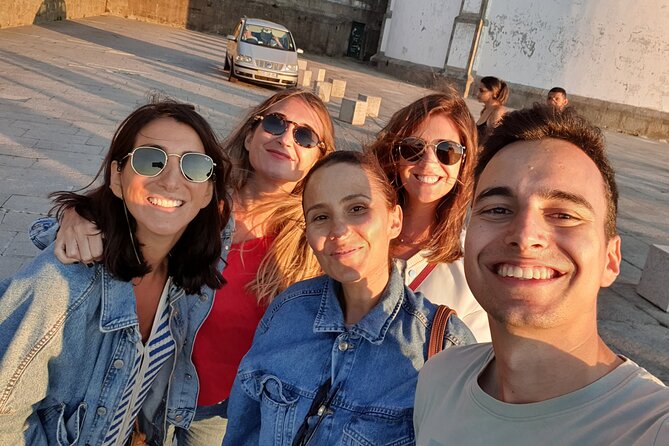
Passeio das Virtudes is another viewpoint area with terraced gardens and views toward the river. These upper viewpoints are among the most useful parts of the route because they show how Porto’s streets drop toward the water. Guides have also been praised for taking photos at scenic points, which is handy if you want a picture with your group rather than another solo snapshot.
São Bento Station and Porto Cathedral
Near the end, the route reaches São Bento Railway Station. Opened in 1916, it is famous for its interior azulejos, which depict scenes from Portuguese history and culture.
This is a stop worth revisiting on foot. Two minutes lets you step inside and glimpse the tile panels, but the station rewards a slower look. It is also a working transport hub, so you can combine a return visit with a train journey if your plans allow.
The final major sight is Porto Cathedral, or Sé do Porto. Its core dates from the 12th and 13th centuries, with later Gothic and Baroque changes. Set high in the historic center, it gives you another strong view over Porto and the Douro.
The cathedral stop is also brief. You get the location, the exterior, and the city setting. If you want the cloisters or a longer interior visit, plan that separately.
The tuk tuk returns to the São João National Theatre meeting point. The entire experience lasts about 90 minutes, so the route is tightly paced and broad rather than slow and detailed.
What $57.45 buys you
At $57.45 per person, the value depends on how many people are in your private group and how you use the time. You are paying for private transportation, a local guide, and a route that links Porto with Gaia in one compact outing. Group discounts may also be available, though the exact saving is not specified.
For a solo visitor or a couple, the price is higher than a public sightseeing ride. The private format can justify that difference if you want questions answered, photo help, or a route shaped around your interests.
I would see the tour as good value on your first or second day in Porto, especially if hills are a concern or your time is short. It is less useful if you want long interior visits, extended walks, or a detailed history lesson at each monument.
The experience has a 4.9 rating from 90 reviews and is recommended by 98 percent of customers. The strongest pattern is clear: guides such as Leandro, Ana, Tanya, José, Tiago, Carlos, Bruno, and Pedro are often praised for warmth, local tips, humor, flexibility, and photos.
There have also been occasional service problems. One booking involved a 25-minute late arrival and an unfocused guide, while another found the tuk tuk seats in poor condition. The operator acknowledged the seating issue and said the vehicle received better seats afterward. These are not reasons to reject the tour outright, but they are fair reminders that the guide and vehicle can shape the day.
Who should book this Porto tuk tuk ride
I would book it early in a Porto stay if you want to get your bearings fast. The route shows you where to return for São Bento, São Francisco, Clérigos, the cathedral, the gardens, and the riverfront.
It suits:
- First-time visitors with limited time
- People who prefer not to walk Porto’s steep streets
- Families or private groups wanting their own guide
- Solo visitors who want an easy city introduction
- Anyone who enjoys viewpoints and photography
- Visitors who want Porto and Gaia in one outing
I would choose another format if you want a full-day cultural tour or long time inside the Palácio da Bolsa, Carmo, São Francisco, Clérigos Tower, or Porto Cathedral. Those places appear on the route, but most are viewed quickly.
Book with good weather in mind. The activity requires suitable conditions, although one guide managed to keep a rainy outing worthwhile and the covered tuk tuk offered welcome shelter. If poor weather causes cancellation, you can receive another date or a full refund. Free cancellation is available up to 24 hours before the start time.
Should you book it?
Yes, if you want a lively, efficient introduction to Porto and Gaia without tackling every hill on foot. The best part is the combination of private transport, local commentary, bridge views, and flexibility. Ask your guide to focus on places you have not yet seen, and use the ride to choose where you want to spend more time later.
Do not book it expecting a deep visit to every monument. Ninety minutes moves quickly. For most people, this works best as an orientation ride near the start of a Porto stay, followed by slower walks and interior visits on your own.
FAQ
How long does the Porto tuk tuk tour last?
The tour lasts approximately 1 hour and 30 minutes.
Where does the tour start?
It starts at the São João National Theatre, Praça da Batalha, 4000-102 Porto, Portugal.
Where does the tour end?
The activity ends back at the meeting point at the São João National Theatre.
Is the tour private?
Yes. Only your group participates in the activity.
What is included in the price?
Private transportation and a local guide are included.
Are admission tickets included?
Most listed stops are viewing points with no admission charge. Admission to Carmo is not included, while admission to the Church of the Carmelites is included. The tour does not provide full interior visits to every monument on the route.
Is the tour offered in English?
Yes, the tour is offered in English.
Can the route be adjusted?
The private format allows attention to your group’s interests, and guides have adjusted routes and stops for some groups. The exact changes depend on the guide and available time.
What happens if the weather is poor?
The experience requires good weather. If the operator cancels because of poor conditions, you will be offered another date or a full refund. You can also cancel up to 24 hours before the start time for a full refund.
Just added around Porto
- 2 Hour Discover Gaia on a Private Eco-Friendly Tuk Tuk Tour★ 4.0 · 4 reviews
- 2 Hour Private Tuktuk Tour in Porto to Monastery and Cellars★ 4.5 · 7 reviews
- 3 Hour Tuk tuk Tour in Porto★ 4.5 · 60 reviews
- Explore Porto Aboard A Classic Tuk-Tuk tour 1h★ 5.0 · 22 reviews
- Discover Porto on a 2-Hour Shared Electric TukTuk★ 4.5 · 11 reviews
- Tours in the Port DE Tuk Tuk★ 5.0 · 38 reviews
- Porto: tuk tuk adventure tours old town 1h★ 5.0 · 33 reviews
- Private Port: Tuk Tuk and boat with local guides★ 5.0 · 4 reviews
Porto Tuk Tuk Tours, compared.
Guided Tour by Tuk-Tuk & Optional Douro River Cruise
Read our review →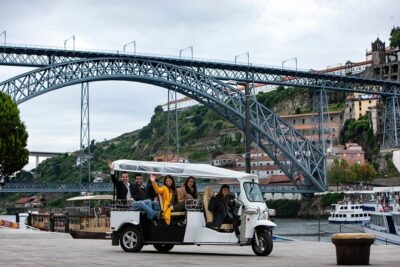
Discover Porto’s Highlights on a 2-Hour Private Electric Tuk Tuk
Read our review →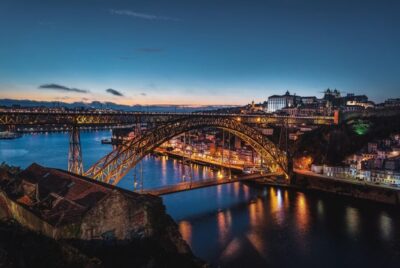
Historic Porto by Private Electric Tuk Tuk to Top Landmarks
Read our review →
Porto Guided Tour to the Historical Center on a Tuk Tuk
Read our review →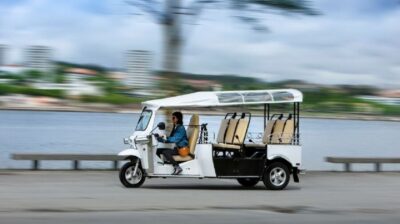
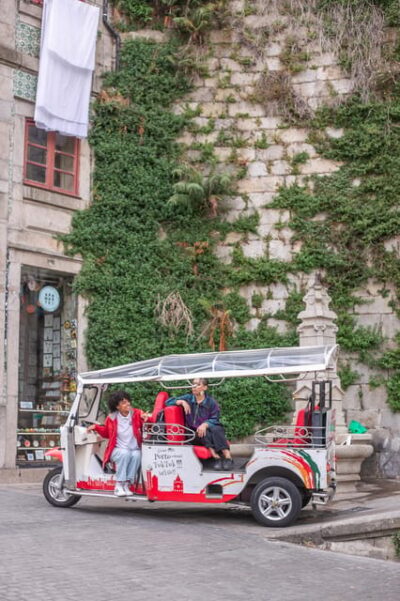
Oporto Tuk-Tuk Tour: Fast, Fun & Flexible – 1H to Full Day!
Read our review →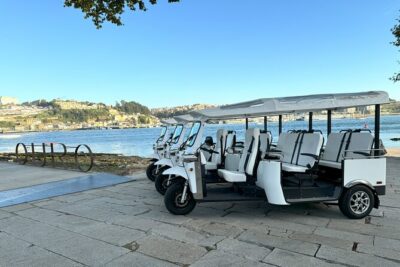
Browse the lists this tour appears in