
Review · ROME
Rome by Ape Calessino Auto Rickshaw
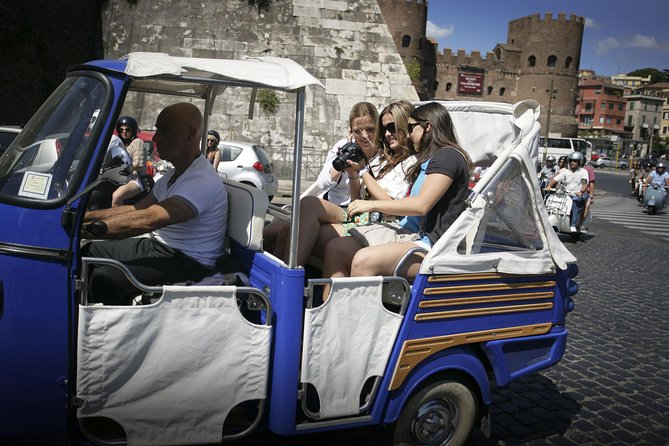
Rome is a city where ancient ruins, busy roads, and grand churches all compete for your attention. This private Ape Calessino tour gives you a clever way to cover a lot of ground in three hours, from the Colosseum and Baths of Caracalla to the Appian Way, Aventine Hill, and Vatican area.
I like the easy hotel pickup and the personal route. I also like the chance to see Rome from several viewpoints while riding in a small Italian vehicle that draws plenty of attention. Guides including Ricardo, Marco, Michael, and Mimmo have been praised for good local stories and flexible routing. The main drawback is that this is a panoramic tour, so entrance fees and extended visits inside the Colosseum, Baths of Caracalla, and Vatican are not included.
Key points at a glance
- A 1960s Italian ride: The Ape Calessino is the Italian-designed vehicle later made famous in Asia as the tuk tuk.
- Private for up to three: Your group gets the vehicle and guide to itself, making it easier to ask questions or request a small route change.
- Ancient Rome in one sweep: The route can include the Colosseum, Imperial Forum, Circus Maximus, Baths of Caracalla, Appian Way, and Pyramid of Cestius.
- Great hilltop views: Aventine and Janiculum Hills add wide views that you miss when walking among Rome’s tight streets.
- A pleasant food stop: Caffè, cappuccino, gelato, and even a pastry recommendation may be part of the break.
- Best as an orientation tour: You see many important areas quickly, then return later to explore your favorites on foot.
Why the Ape Calessino works well in Rome
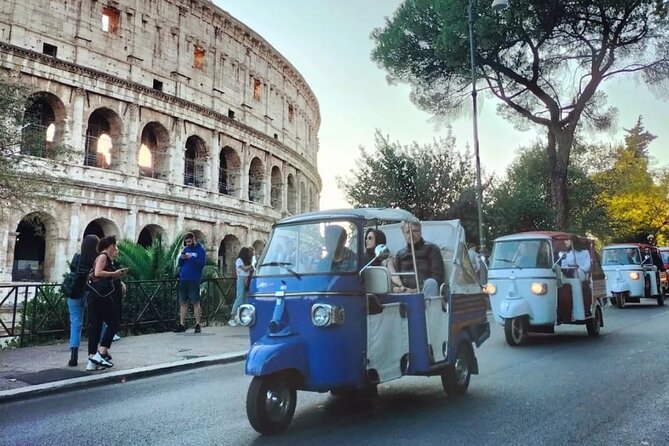
Rome is not a compact sightseeing city in the way Florence or Venice can be. The Colosseum, Appian Way, Vatican, Baths of Caracalla, and Janiculum Hill are spread across different parts of town. Walking between them would take much of a day, while a standard car can feel too sealed off from the streets.
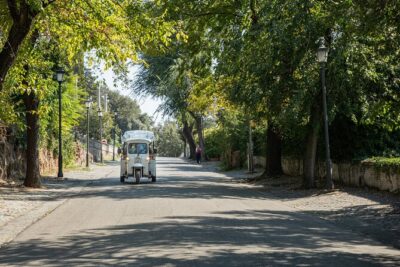
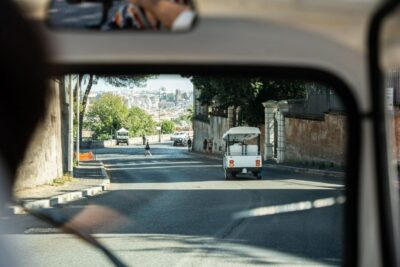
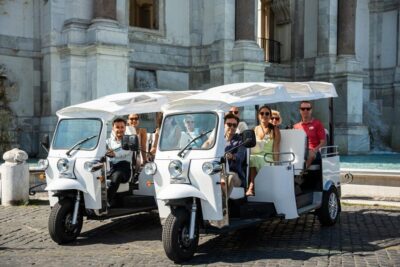
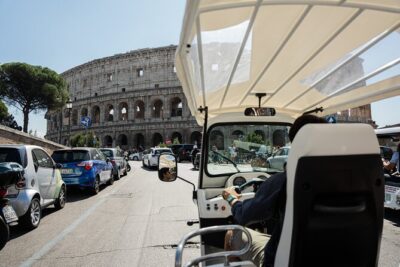
The Ape Calessino offers a middle ground. You sit in the open back of a small three-wheeled vehicle, close enough to hear the city and see more than you would through a regular car window. It is not a luxury vehicle, and you should expect a compact ride rather than a spacious one. Still, the format suits Rome well.
The tour is private, with space for up to three people. That matters because your guide can answer your questions without managing a large group. The route can also bend a little toward your interests. Several guides have adjusted the experience to include places their clients especially wanted to see.
The ride is especially useful on your first day in Rome. You get a broad sense of the city’s layout, see several major sights, and learn which areas deserve a slower return visit. I would not use it as a substitute for entering the Colosseum or Vatican Museums, but I would use it to get your bearings fast.
More Rickshaw Tours in Italy
- Florence Private Transportation in Rickshaw
★ 5.0 · 730 reviews - Florence: Private Transport by Rickshaw
★ 5.0 · 659 reviews - Bari: Old Town Guided Eco-Friendly Rickshaw Tour
★ 4.9 · 355 reviews
Hotel pickup keeps the start simple
Pickup and drop-off are offered at your hotel, Airbnb, or private accommodation in Rome. That removes one small but real problem: figuring out where to meet a vehicle in a city with confusing streets and many similar-looking piazzas.
The tour runs in all weather, so dress for the forecast. The open-sided vehicle may feel pleasant on a sunny day and less comfortable in rain or cool wind. Helmets are required for all participants, and they are provided.
Children must be accompanied by an adult. Most people can participate, and the tour operates near public transportation, but the supplied information does not give detailed vehicle dimensions or specific mobility arrangements. If you need those details, ask the operator before booking.
Baths of Caracalla and the Roman love of leisure
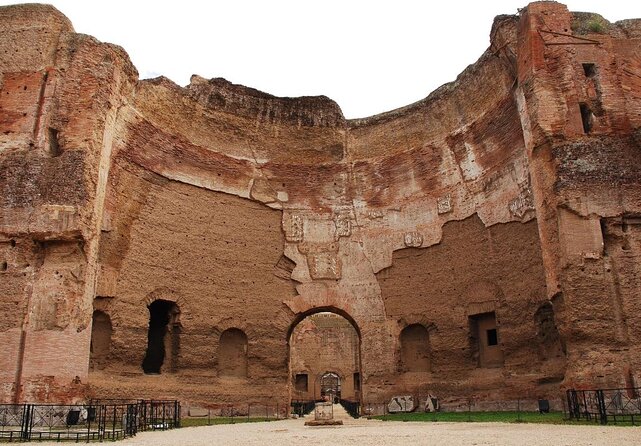
The Baths of Caracalla are among Rome’s most impressive ruins, even when viewed from outside on a short stop. Construction began under Septimius Severus in AD 206 and finished under his son Caracalla in AD 216. The complex could serve about 1,600 bathers at one time.
This was not simply a place to wash. Roman baths were social centers, with rooms for exercise, conversation, rest, and entertainment. The main sequence included a cold room called the frigidarium, a warm tepidarium, and a hot caldarium. Open-air pools, gardens, marble decoration, mosaics, frescoes, and sculpture completed the setting.
Your stop here is listed at about 10 minutes, and admission is not included. That makes it a look-and-learn stop rather than a full archaeological visit. You can see the scale of the surviving walls and hear how the Romans used public leisure, but you will need a separate ticket and more time if you want to explore the interior properly.
I like this stop because it adds a different side of Roman life. The Colosseum shows public spectacle. The Baths of Caracalla show the daily pleasures and social habits of a vast empire.
Circus Maximus and the scale of ancient sport
The Circus Maximus occupied a long valley between the Aventine and Palatine Hills. It was built for chariot racing and became one of the largest arenas ever made. Under Constantine, it measured roughly 2,000 by 600 feet and may have held about 250,000 people.
Today, it can be difficult to picture the ancient building from the open ground. Your guide’s explanation helps you read the broad oval space and imagine the low central barrier around which chariots raced. Two Egyptian obelisks once decorated that central spine, and the site supplied the kind of spectacle later made familiar by films such as Ben-Hur.
The stop is mainly panoramic. You will not be entering a preserved stadium with intact seating. That is both the strength and limitation of this portion of the tour: you can grasp the site’s huge footprint quickly, but you need imagination and a good explanation to bring it to life.
More Rickshaw Tours in Rome:
- Tokyo Asakusa Rickshaw Tour
★ 5.0 · 1,375 reviews - Bruges: Guided Rickshaw Tour
★ 4.9 · 1,199 reviews - Old Delhi Food, Heritage&Cultural Walk with Rickshaw ride to Masterji Kee Haveli
★ 5.0 · 742 reviews - Kyoto: Arashiyama Customized Rickshaw Tour & Bamboo Forest
★ 5.0 · 432 reviews
The Appian Way offers an older, quieter Rome
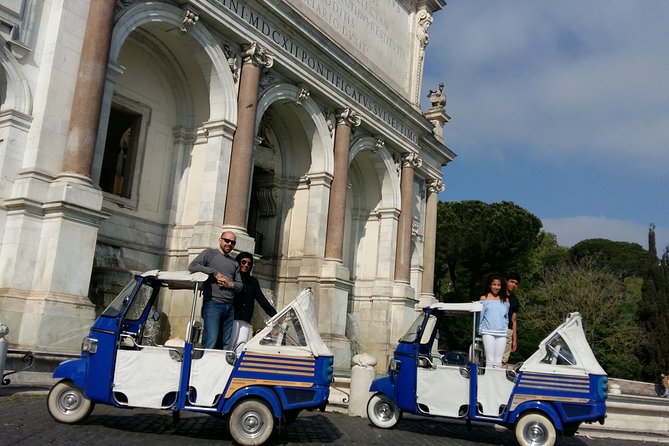
The Appian Way, or Via Appia Antica, began in 312 BCE under the censor Appius Claudius. It was Rome’s first major road and one of its most important routes to southern Italy, the Greek world, and eastern Mediterranean ports.
The road was built for serious use. It averaged about 20 feet wide, with a slightly raised surface to help drain water. Heavy foundation stones supported tightly fitted lava blocks, a durable method that helped sections of the road survive for centuries.
The first miles were lined with tombs, monuments, milestones, and inscriptions. Your stop is listed at about five minutes, with no admission included. That is enough for a quick look and a few photographs, but not enough for a long walk along the road.
The Appian Way is valuable because it changes the pace. Rome’s center can feel crowded and noisy. Here, the ancient road gives you a clearer sense of how the city connected to the wider Roman world. If this section catches your interest, ask your guide where a longer independent visit would make sense.
Pyramid of Cestius and the city’s unexpected layers
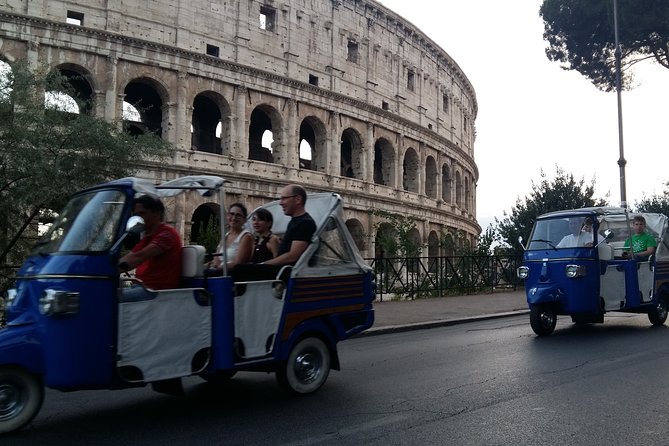
Near the Aurelian Walls, the Pyramid of Cestius looks like a piece of ancient Egypt dropped into Rome. The 36-meter pyramid dates from the first century BCE and was built as the tomb of Caius Cestius, a powerful Roman magistrate.
The white marble monument was incorporated into the city walls about three centuries later. An inscription records that it took only 330 days to build. The brief stop is free and lasts about five minutes, making it an easy photo opportunity without adding ticket costs.
This is the kind of sight that makes a private route useful. It is not always part of a standard first-time Rome schedule, yet it tells an interesting story about Roman taste, status, and the city’s habit of absorbing older monuments into newer defenses.
The Aventine Keyhole gives you a framed view of Saint Peter’s
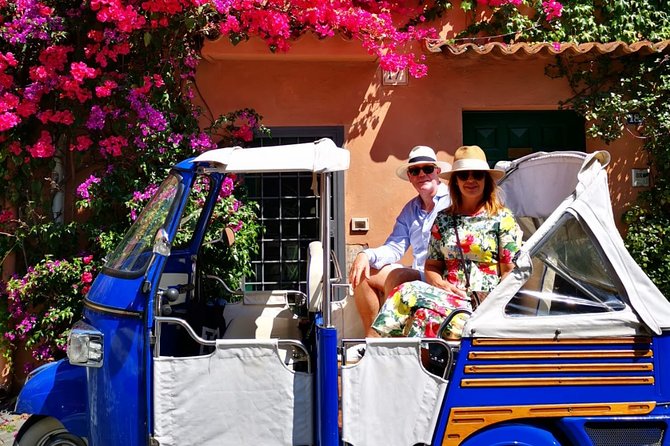
The keyhole at Piazza dei Cavalieri di Malta is a small stop with an outsized effect. Look through the closed-looking door of the Knights of Malta, and Saint Peter’s Basilica appears at the end of a carefully framed view.
The stop is free and listed at about five minutes. You may need to wait briefly if other people are looking through the keyhole, but the visit itself is simple. This is not a grand monument visit. It is a quick visual surprise, and it works because the view combines three countries in one glance: Rome, the Vatican, and the headquarters of the Knights of Malta.
Bring patience rather than expecting a long photo session. The keyhole view is best experienced with your own eye, and a phone camera may not capture the same effect.
Campo de’ Fiori brings the modern city back into focus
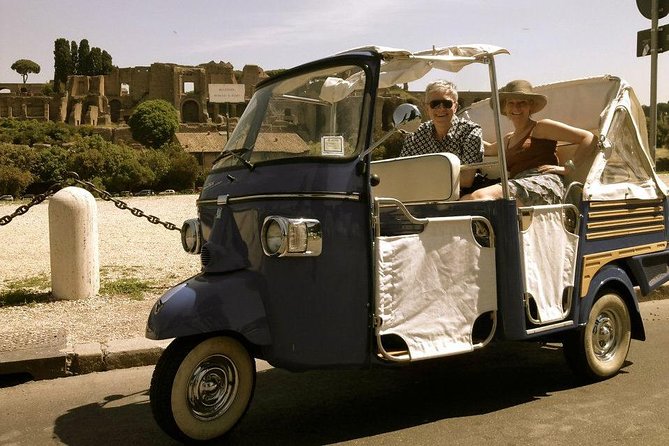
Campo de’ Fiori means field of flowers, though the square is now better known for its daytime market and evening food-and-drink scene. Shops, cafés, restaurants, bars, churches, museums, and monuments fill the surrounding streets.
The stop is listed at about five minutes and is free. That gives you a quick taste of the area rather than time for a full market visit or meal. If your tour runs during the day, you may see market activity. At night, the square takes on a different character as people meet for aperitivo and cocktails.
Campo de’ Fiori is also well placed for later exploring. It is within walking distance of Piazza Navona, the Pantheon, Via del Corso, Trastevere, and the Colosseum. I would treat this stop as a useful pointer to an area you can return to on foot.
Colosseum, Imperial Forum, and Vatican views without the crowds inside
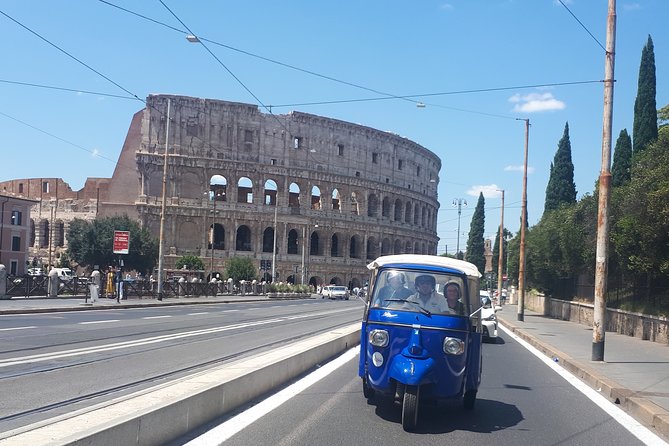
The route takes you past the Colosseum and Imperial Forum, two of the essential sights of ancient Rome. Your guide explains the Colosseum’s violent public spectacles and the political world around it. The Forum adds the remains of temples, government buildings, and public spaces that shaped Roman civic life.
The tour is panoramic, so you do not receive admission to the Colosseum. That distinction matters. You will see the exterior, hear the story, and take photographs, but you will not walk through the arena or underground areas as part of this experience.
The same rule applies to the Vatican. The Vatican is included as part of the wider route, but this is not a Vatican Museums or Sistine Chapel entry tour. If those interiors are priorities, book timed admission separately and allow several hours for them.
The advantage is speed and breadth. In three hours, you can see the city from outside rather than spend the whole period in one monument. The disadvantage is that the stops are short, so you should plan follow-up visits.
Hilltop views make the route more than a street tour
Ape Calessino tours are not limited to the central ruins. The route climbs both Aventine and Janiculum Hills, giving you views that are hard to get while walking between ground-level monuments.
The Aventine brings the famous Knights of Malta keyhole and broad city views. Janiculum adds another high point over Rome. The ride lets you reach these hills without spending your energy on steep streets, then move on to the next part of the city.
These viewpoints are among the strongest reasons to choose this experience over a simple central walking tour. You see Rome as a connected city, not just a string of individual monuments. Take a moment to look beyond the famous buildings and notice how the historic center, domes, and hills fit together.
Coffee, gelato, and a pause from sightseeing
A coffee, cappuccino, or gelato stop is included. The break gives you a chance to stretch your legs, ask questions, and reset before the final part of the route.
Food advice can be one of the best parts of a private tour. Marco has recommended pastries, including lobster-tail pastries, and the food stop can become a useful introduction to Roman café habits. The exact choice may vary, but the included refreshment adds a human pause to a fast sightseeing schedule.
Do not expect a full meal. Three hours is a short window, and the purpose is a snack break rather than a restaurant experience. Still, a cappuccino or gelato helps keep the tour from becoming a nonstop stream of ruins and dates.
Guide style and personal attention
The operator uses driver-guides and professional guides, with English offered. Ricardo has been praised for answering questions and showing less familiar corners of Rome. Marco has been noted for friendly service and pastry suggestions, while Michael has been described as a local with plenty to share. Mimmo has led tours with a humorous approach and strong preparation.
Guide quality matters more than the vehicle here. The Ape Calessino gets you from place to place, but the guide supplies the context that connects a bathhouse, a racecourse, a pyramid, and a medieval square into one Roman story.
Because the tour is private, you can ask for clarification instead of waiting for a group explanation to finish. You may also be able to adjust the focus toward ancient sites, hill views, food, or less familiar corners, subject to time and traffic.
Is $505.23 a fair price for three hours?
The listed price is $505.23 for a private group of up to three people. For three people, that works out to about $168 per person. For two people, it is about $253 per person, and a solo booking pays the full group rate.
That is expensive compared with a group walking tour. The price becomes easier to justify if you value hotel pickup, a private guide, a flexible route, and transport between widely separated parts of Rome. You are paying for convenience and personal attention, not for long interior visits.
For a couple or small family with limited time, the cost may make sense as an orientation ride at the start of a Rome stay. If you are traveling alone or mainly want to enter the Colosseum and Vatican Museums, the value is weaker. You may get more from booking individual timed-entry visits and using public transportation or walking between them.
Free cancellation is available up to 24 hours before the start time. Changes or cancellations inside that window are not accepted for a refund.
Who should book this Rome tour?
I would recommend it to first-time visitors who want a fast overview, small groups who dislike large coach tours, and anyone who finds Rome’s hills or long distances tiring. It also suits families who want to keep moving without asking children to walk between every major sight.
It is a good match for people who enjoy local stories, unusual photo stops, and a little style. The colorful Ape Calessino is part of the fun, and the vehicle itself adds personality to the day.
I would be more cautious if you want detailed museum time, extended archaeological walks, or the lowest possible price. This tour shows you the outside of many places. Plan separate visits if you want to go inside the Colosseum, Baths of Caracalla, or Vatican sites.
Should you book the Ape Calessino tour?
Book it if you want a private, lively introduction to Rome and would rather see many districts than spend three hours in one monument. The mix of ancient ruins, hilltop views, the Appian Way, a pyramid, the Aventine keyhole, and a coffee or gelato break gives you a useful first look at the city.
Skip it if your main goal is interior access or a slow archaeological study. For everyone else, especially a group of three splitting the price, this is a practical way to cover Rome’s wide spread of sights while leaving room for questions, photos, and a little Roman pleasure along the way.
FAQ
How long is the Ape Calessino tour?
The tour lasts approximately three hours.
How many people can join the private tour?
The price covers a private group of up to three people.
Is hotel pickup available?
Yes. Pickup and drop-off are offered at your hotel, Airbnb, or private accommodation in Rome.
Is the tour conducted in English?
Yes. English is one of the languages offered.
Are entrance fees included?
No. The tour is panoramic and does not include entrance fees for the Colosseum, Baths of Caracalla, or Vatican.
Is a coffee or gelato included?
Yes. A caffè, cappuccino, or gelato is included.
Are helmets required?
Yes. All participants must wear helmets, and helmets are provided.
What happens if the weather is poor?
The tour operates in all weather conditions, so you should dress appropriately for the forecast.
Just added around Rome
- Rome:Tuk-Tuk Private Tour of the City Center★ 5.0 · 15 reviews
- Private 2 Hour VIP Tuk Tuk Tour with Hotel Pickup and Prosecco★ 5.0 · 45 reviews
- Rome Tuk-tuk Tour with Hotel Pickup and Prosecco★ 5.0 · 22 reviews
- Private Electric Tuk Tuk Tour in Rome★ 5.0 · 19 reviews
- Private Electric Tuk Tuk Tour in Rome★ 4.5 · 33 reviews
- Rome 2h Tuk-tuk Tour with Prosecco & Hidden Gems★ 5.0 · 7 reviews
- Private Tuk Tuk Tour in Rome★ 5.0 · 22 reviews
- Rome: Timeless Electric Tuk-Tuk Photography Service★ 5.0 · 4 reviews
Rome Tuk Tuk Tours, compared.
Private Electric Tuktuk Tour of Rome with Prosecco and Pickup
Read our review →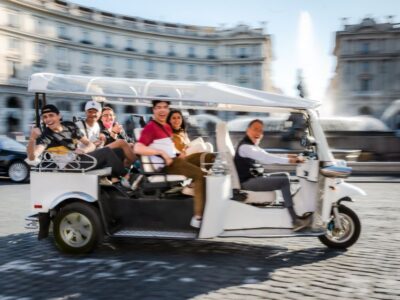
2-Hour Vip Tuk-tuk tour with Hotel Pickup and Prosecco
Read our review →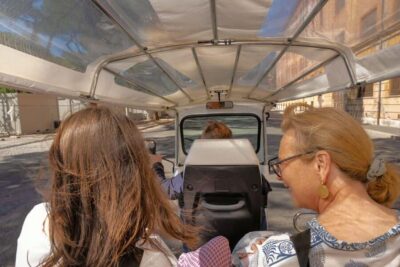
Private Tuk Tuk Tour with Hotel Pickup and Prosecco
Read our review →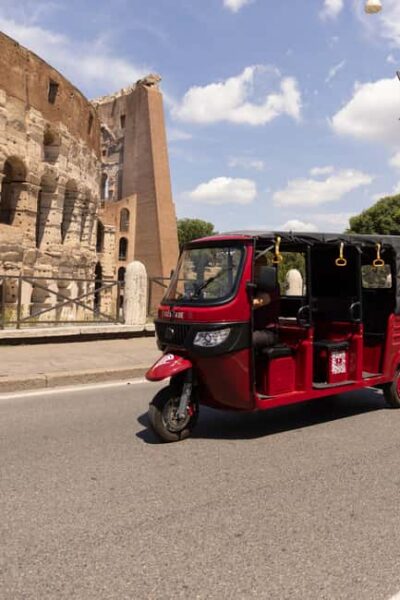
Private 2 Hour VIP Tuk Tuk Tour with Hotel Pickup and Prosecco
Read our review →
Browse the lists this tour appears in