Review · SIEM REAP
Private Tour in Angkor Wat by Tuk Tuk
Angkor Wat at sunrise is the headline here. You leave Siem Reap early, settle into a private tuk-tuk, and reach the world’s largest religious monument as the morning light begins to change its towers and reflecting pools. From there, you continue to Bayon, Ta Keo, Ta Prohm, and Banteay Kdei.
I like the private format, since you are not tied to a large group or a fixed pace. I also like the practical touches: bottled water is included, and the tuk-tuk can carry a cooler stocked with drinks and snacks if you arrange it ahead of time. The main consideration is that the Angkor Park entrance fee costs extra, and a full route can make for a long, hot day.
Key points to know before booking
- Sunrise at Angkor Wat: Start early for the most atmospheric view of the park’s best-known temple.
- Five major temples: The route covers Angkor Wat, Bayon, Ta Keo, Ta Prohm, and Banteay Kdei.
- Private tuk-tuk transport: Your group travels alone, with room to adjust the pace and stops.
- Guide named Sok Saroom: The operator presents Sok Saroom’s TukTuk Adventures, with an English-speaking driver and guide.
- Cooler available by request: Arrange beers, soft drinks, and snacks before departure.
- Flexible duration: The experience is planned for about 5 to 10 hours, depending on your chosen pace and schedule.
Sunrise at Angkor Wat sets the tone
The best reason to choose this tour is simple: it gets you to Angkor Wat before the main heat of the day. The temple covers a huge area, and the early start gives you cooler conditions for the first major visit.
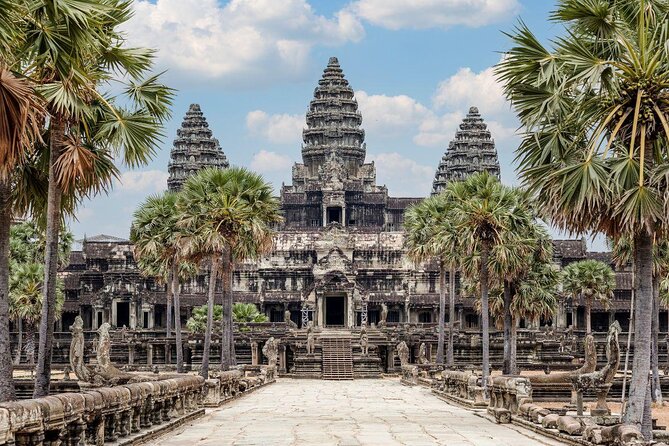
At sunrise, the five towers and long ponds create the classic Angkor view. Light changes quickly, so the scene is not static. One minute the towers are dark silhouettes. A short time later, carved galleries, stone steps, and the temple’s broad outline begin to show.
The planned visit to Angkor Wat lasts about three hours. That is enough time to see the main approach, move through the central complex, and look at the carved stone work without treating the temple as a quick photo stop. You should still wear practical shoes, since the site involves walking over uneven surfaces and climbing steps.
The early start also helps with the day’s rhythm. You see Angkor Wat first, when the air is generally more comfortable, then continue to the Bayon area and the jungle-wrapped temples. If you are not interested in sunrise photography, ask about a later start, since the operator offers flexible arrangements. The listed hours run from 5:30 AM to 5:00 PM.
More Temple Tuk Tuk Tours in Cambodia
- Siem Reap: Angkor Wat Private Tuk-Tuk Tour
★ 4.9 · 2,222 reviews - Angkor Wat Private Tuk-Tuk Tour (sunrise Option) & more
★ 5.0 · 439 reviews - Angkor Wat Private Tour by Tuk-Tuk with English Speaking Driver
★ 5.0 · 142 reviews
A private tuk-tuk gives you room to set the pace
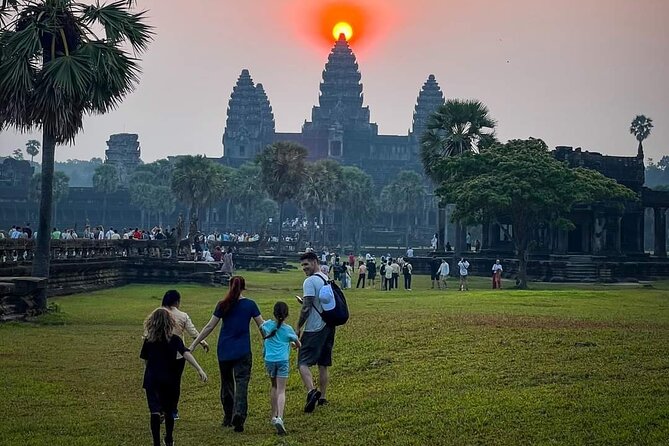
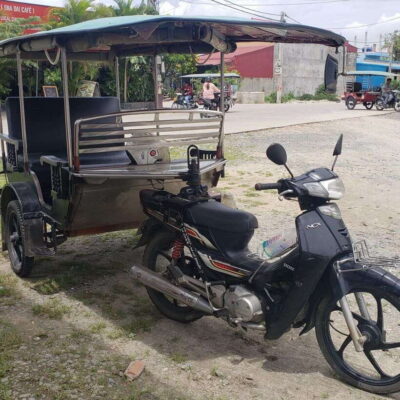
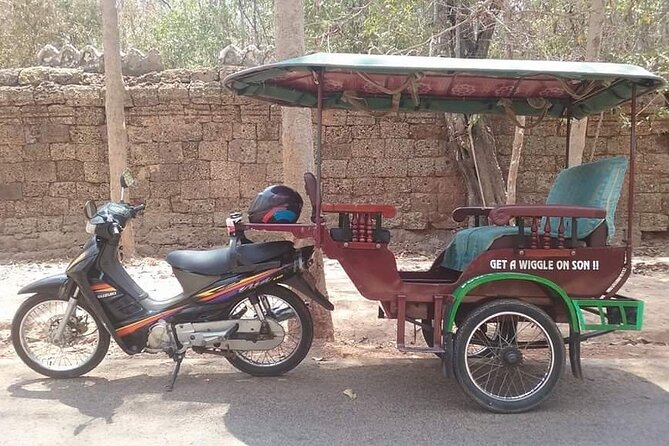
A tuk-tuk is a sensible way to move around the Angkor complex. You get open-air views on the road between temples, rather than sitting inside a sealed vehicle, and the ride suits a short transfer from one site to the next.
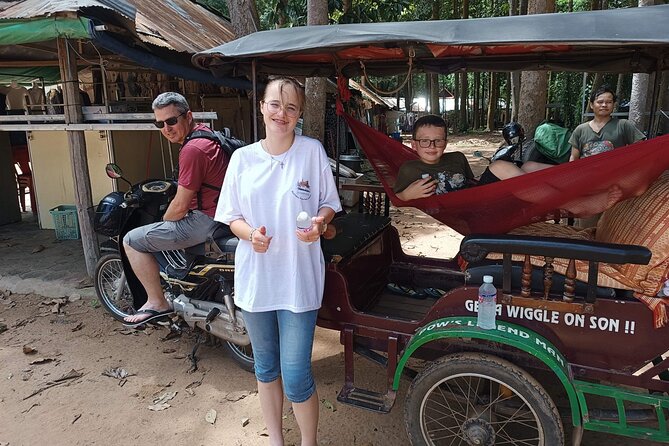
The private setup matters more than it may first appear. Your group can spend longer at a temple that catches your attention or move on when you have had enough. You are not waiting for strangers to finish photographs or listening to a guide explain every stop at the same speed.
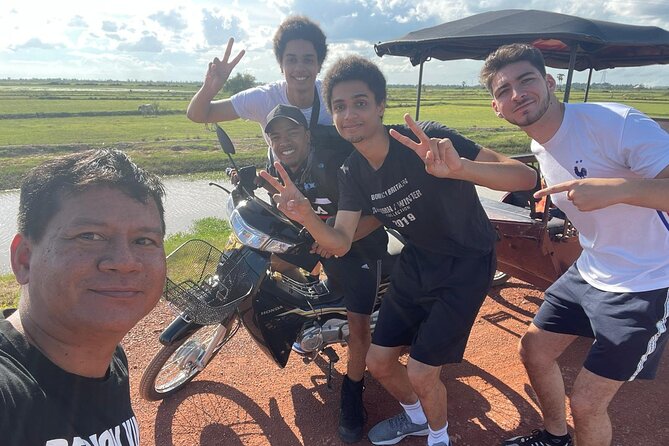
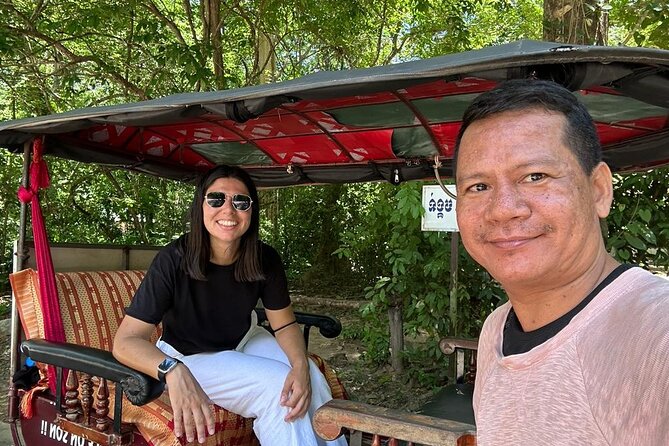
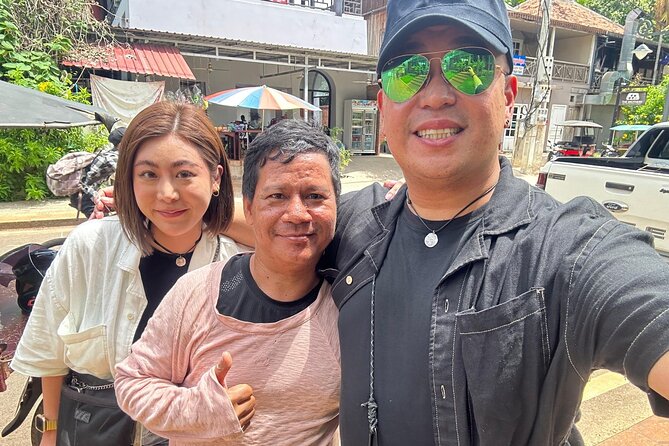
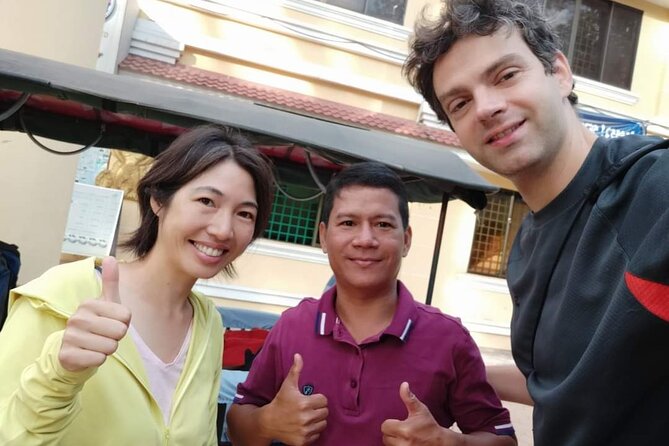
The tour includes private transportation, bottled water, local tax, and an English-speaking driver and guide. The operator is Sok Saroom’s TukTuk Adventures, and the guide named in the booking material is Sok. He is described as punctual, friendly, attentive to what you want to see, and ready with suggestions for other places around Siem Reap.
That personal service is one of the strongest reasons to choose this option. A private guide can help you make practical choices during a busy temple day. You can also ask for a one-day visit or a longer, multi-day plan if five temples are not enough.
The tuk-tuk has a large cooler. Beers, soft drinks, and snacks are not included, but you can request a custom supply before the tour. That is useful in Cambodia’s heat, especially if you want to avoid interrupting the route for a long restaurant stop. Bottled water is included, but food and other drinks are not.
Angkor Wat: three hours with Cambodia’s great monument
Angkor Wat deserves the longest visit on this route. Built as a vast religious complex, it is the largest religious monument in the world and covers roughly 400 acres. Its scale can be hard to grasp from the entrance, where the first view is already impressive but only hints at what lies ahead.
You will see long galleries, major towers, courtyards, and detailed stone carvings. The temple was built for religious use, and its design leads you inward through a series of spaces rather than presenting everything at once.
Three hours gives you time to appreciate that design. It also gives you a chance to pause instead of rushing from one famous view to the next. I would use the first part of the visit for the broad layout and the best-known exterior views, then leave time for the carved walls and interior areas.
A guide is especially useful here because the site is large and the symbolism is not always obvious at a glance. Ask Sok to point out the details that would be easy to miss. The description promises an English-speaking driver and guide, but it does not specify the level of formal guiding at every individual stop, so tell him before departure how much explanation you want.
The downside is timing. If you spend the full three hours at Angkor Wat, the rest of the day can feel packed. That is not a flaw in the temple, but it is a reason to decide in advance whether you want a broad overview or a slower look at fewer places.
Bayon’s stone faces and the center of Angkor Thom
The second major stop is Bayon Temple, scheduled for about two hours. Bayon is known for its many large stone faces, which look out from the temple’s towers in different directions. The effect is unusual and often more memorable than a simple row of buildings.
Bayon also helps you understand how the religious life of the Angkor Empire changed. It is described as the empire’s one Buddhist temple and reflects a period when royal beliefs and temple design were shifting.
Give yourself time to walk slowly here. Bayon is not best understood from one viewpoint. You need to move around the structure, look up at the towers, and examine the lower carvings. The route also presents Bayon as a record of medieval Cambodian life, so ask the guide to explain what the carvings show if that is a priority for you.
Two hours is a generous allowance compared with many quick temple circuits. It may suit you if you care about details and want time for photographs. If your group is more interested in getting to Ta Prohm, you can ask Sok to shorten the stop. The benefit of a private tour is that this conversation is possible.
More Temple Tuk Tuk Tours in Siem Reap
- Siem Reap: Angkor Wat Private Tour by Tuk-Tuk
★ 4.5 · 117 reviews - Full-Day Private Tuk Tuk Tour of Angkor Wat Temples
★ 5.0 · 107 reviews - Private one-day tuktuk ‘small tour’ of the oldest Angkor temples
★ 5.0 · 104 reviews - Angkor Wat Private Tour in a Tuk Tuk
★ 5.0 · 69 reviews
Ta Keo offers a simpler, more severe profile
Ta Keo receives about two hours on the planned route. Compared with Angkor Wat and Ta Prohm, it is often the quieter and less immediately familiar stop. That can be a welcome change after the grand scale of the first two temples.
The temple is important for Khmer architecture because it was the first built entirely from sandstone, according to the tour information. Its design marks a technical change, and the structure has a strong, stepped form.
The practical issue is the climb and the exposed stone. You should expect a more demanding walk than at a flat courtyard. Wear shoes with a secure sole, carry the water provided, and take your time on the steps. The open setting can also feel hot once the sun is high.
Ta Keo is a good stop for someone who wants more than the famous postcard locations. It gives the day a different texture and shows how temple construction developed. If you are traveling with someone who has limited stamina, ask about the amount of climbing before setting the schedule. The supplied information says most people can participate, but it does not give details about step-free access.
Ta Prohm brings roots, stones, and film-famous views
Ta Prohm is scheduled for two hours and is likely to be one of the most anticipated stops. Built in 1186, it was originally called Rajavihara, or Monastery of the King, and was dedicated to the mother of King Jayavarman VII.
The temple’s appeal comes from the way trees and stone share the same space. Large roots have grown over parts of the structure, and the effect is dramatic without needing much explanation. You can see why Ta Prohm has become one of Angkor’s best-known locations.
There is more here than a single root-covered doorway. Allow time to look at the galleries, courtyards, carved details, and collapsed sections. A guide can help you separate the temple’s original purpose from its modern fame.
The drawback is that Ta Prohm can feel crowded at popular points, even on a private tour. Your guide controls the transport and timing, but not the number of people at the temple. The flexible schedule helps: Sok may be able to adjust the order or linger in less crowded sections, but no private tour can guarantee solitude.
Banteay Kdei closes the circuit on a quieter note
The final stop is Banteay Kdei, with about one hour planned. It is described as a fine example of Angkorian art, with pinkish stone and detailed carvings. The temple began in 967, giving it an earlier place in the overall sequence of the day.
One hour is enough for a focused look, but it will not support the same slow pace as Angkor Wat. I would use this stop to examine the stone color, carvings, and layout after the larger monuments. It can feel like a calmer way to finish rather than another major architectural spectacle.
Banteay Kdei is also useful for comparison. After seeing the scale of Angkor Wat, Bayon’s faces, Ta Keo’s high structure, and Ta Prohm’s tree roots, you can look at how different materials and designs shape the mood of a temple.
The route lists a total of five stops, but the stated duration is about 5 to 10 hours. That is a wide range. Your actual day will depend on how long you stay at each site, the timing of sunrise, and whether you add stops or arrange a longer plan.
What the $45 price really covers
At $45, this is a reasonable price for a private tuk-tuk, driver, guide, bottled water, and local tax, especially if you split the cost among two or more people. The value improves if you want flexibility rather than a fixed group schedule.
The price does not include the Angkor Archaeological Park entrance ticket. The supplied cost is listed as US$11 to US$37 depending on the overall stay, so confirm the current fee and the ticket length that applies to your visit before you go. Food and drinks are also extra.
Do not compare the $45 directly with the cost of a large shared bus without checking what matters to you. A cheaper group trip may provide transport but less control over the timing. Here, you are paying for a private vehicle, a named local operator, and the ability to shape the day around your interests.
The cooler is a small but useful value point. If you request drinks and snacks in advance, you can make the long temple circuit more comfortable. Ask for the added cost before booking those supplies, since they are not included.
Who will get the most from this Angkor tour?
I would choose this experience if you want to see the major Angkor highlights in one day and prefer a private setting. It suits couples, families, and small groups that want to set their own pace.
It also fits you if sunrise matters, if you want an English-speaking local guide, or if you like having someone suggest what to see next. Sok’s role appears to include more than driving, with recommendations tailored to what you want from Siem Reap.
You may want a different plan if you prefer a slow, specialist temple study. Five sites can be a lot in one day, particularly with three hours at Angkor Wat and two hours at each of Bayon and Ta Keo. Ask for a multi-day arrangement if you want more time at each place.
The tour is not presented as a food experience, a cycling trip, or a formal archaeology program. Its strength is simple: private transport, a flexible route, and access to the most important temples with local help.
Booking details worth checking
Pickup is offered, and confirmation is sent within 48 hours, subject to availability. The activity runs Monday through Sunday, from 5:30 AM to 5:00 PM, which suits the sunrise start.
Service animals are allowed, and the experience is near public transportation. Most people can participate, but the temples include uneven ground and steps, so consider your own comfort when choosing the pace.
Free cancellation is available if you cancel at least 24 hours before the start time. Changes or cancellations made within 24 hours are not accepted for a refund, and the cut-off follows local time.
Should you book this private Angkor Wat tuk-tuk tour?
Book it if you want the classic Angkor route without joining a large group. The combination of sunrise at Angkor Wat, a private tuk-tuk, bottled water, an English-speaking guide, and flexible timing gives you a practical way to see five major temples.
Before paying, confirm the pickup point, the current park entrance charge, and whether the person guiding you will be Sok Saroom himself or another member of the team. I would also discuss how much time you want at each temple, especially if you prefer Ta Prohm and Bayon over Ta Keo.
Skip it only if you want a slower multi-day visit or a highly specialized history tour. For a first day in Siem Reap, the $45 private format offers good control and a sensible route, as long as you budget separately for the park ticket, meals, and optional drinks.
FAQ
Is the Angkor entrance fee included?
No. The Angkor Archaeological Park entrance fee is separate. The supplied price is listed as US$11 to US$37, depending on the overall length of your stay.
How long does the private tuk-tuk tour last?
The experience lasts approximately 5 to 10 hours. The final length depends on your chosen schedule and how much time you spend at each temple.
Which temples are included?
The planned route includes Angkor Wat, Bayon Temple, Ta Keo, Ta Prohm Temple, and Banteay Kdei.
Is hotel pickup available?
Pickup is offered. Confirm the exact pickup location and time when you book.
Are food and drinks included?
Bottled water is included. Food and other beverages are not included, but you can request beers, soft drinks, and snacks for the tuk-tuk cooler in advance.
Is this a private tour?
Yes. Only your group participates, and private transportation is included.
More Angkor Wat Tuk Tuk Tours in Siem Reap
- Angkor Wat Tour by Tuk-Tuk with English Speaking Driver
★ 4.5 · 65 reviews - Siem Reap: Angkor Wat Tour Explore The Most Iconic Temples
★ 4.9 · 47 reviews - The Angkor Temples from Sunrise by Tuk Tuk
★ 5.0 · 44 reviews - Angkor Wat 1 Day with Sunrise Combined tour with (Tuk Tuk)
★ 5.0 · 43 reviews
Just added around Siem Reap
- 2 Days Tuk Tuk Private Tour of Angkor★ 5.0 · 11 reviews
- Angkor Wat Sunset TUK TUK Tour★ 5.0 · 4 reviews
- Amazing full day TUKTUK tour★ 5.0 · 4 reviews
- Full Day Angkor Complex by Tuk Tuk – (Optional Sunrise)★ 5.0 · 6 reviews
- Full-Day Angkor Temple Discovery with Banteay Srei by Tuk-Tuk★ 5.0 · 7 reviews
- Siem Reap Morning Market & Food Tour by Tuk Tuk★ 5.0 · 5 reviews
- Siem Reap Evening Street foods Tours by Tuk Tuk★ 5.0 · 37 reviews
- Guided Private Tuk Tuk Tour Angkor Wat and Small Circle and Five Extras★ 5.0 · 3 reviews
Siem Reap Tuk Tuk Tours, compared.
Apsara Dance Show & Dinner with Tuk-Tuk Transfers
Read our review →
Angkor Wat Private Tour by Tuk-Tuk with English Speaking Driver
Read our review →