
Review · SPLIT
Split by Private Electric Rickshaw – Palace & Hidden Gems
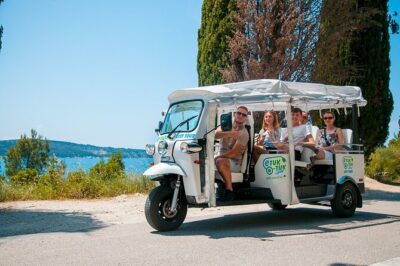
Split’s best surprise is how much ground a small electric rickshaw can cover. In one outing, you can pass Roman gates and palace cellars, then roll through Marjan Forest Park to quiet viewpoints and beaches. It is a smart way to connect Split’s crowded center with its greener coast.
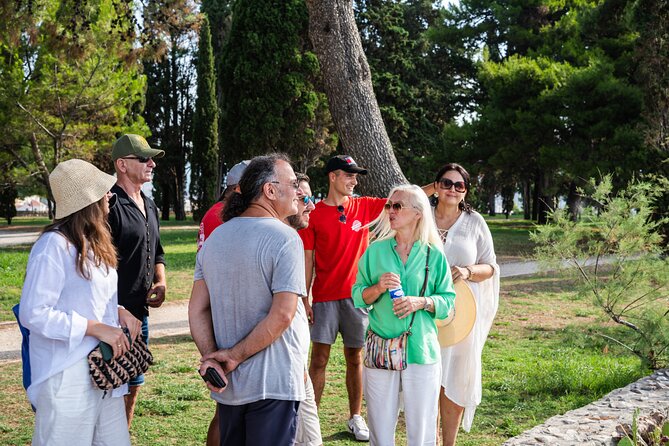
I like the private format, since your guide can adjust the pace and stop for photos or requests. I also like the easy access to Marjan, where cars are restricted and the rickshaw can reach places that would take far more effort on foot. Guides such as Toma, Mounass, Rosa, and Mario are often praised for friendly, clear local insight.
The main consideration is the small vehicle. Each rickshaw holds up to two adults and one child, so a larger party needs more than one rickshaw. Also, the shortest route may feel like a quick overview rather than a full Split experience.
Key points at a glance
- Three route choices: Pick a brief city tour or a longer outing that reaches Marjan’s beaches and viewpoints.
- Private electric transport: Your group rides alone, with no engine noise or exhaust from the rickshaw.
- Roman Split in one sweep: See the Riva, Prokurative, Croatian National Theater, Diocletian’s Palace, and its historic gates.
- Marjan access: The longer trip reaches Sustipan, Obojena Svjetlost, Kašjuni, Marjan Park, and Bene Beach.
- Useful for cruise stops: Pickup is available at the cruise terminal, and the ride returns to the starting point.
- A small-capacity experience: One rickshaw carries two adults and one child, so larger groups will need several vehicles.
Why a rickshaw works so well in Split
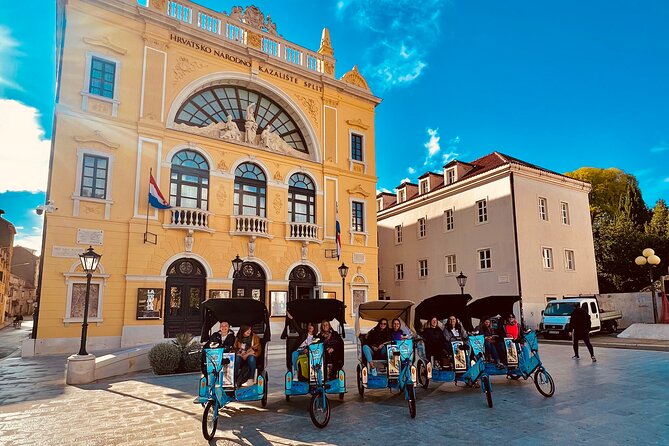
Split is easy to explore in pieces, but the pieces are spread out. The old center is compact and best seen on foot. Marjan Forest Park, the beaches, and the western waterfront take more time and energy to reach. An electric rickshaw bridges that gap.
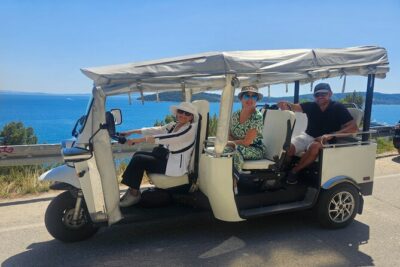
You sit above the street at a relaxed pace while your guide handles the driving and explains what you are seeing. You get the feel of the city instead of simply being carried past it. At the same time, you avoid a long uphill walk in the heat.
The vehicle is especially useful in areas where larger motor traffic is limited. One of the strongest parts of the longer route is Marjan, where cars are not allowed in the park but bikes and rickshaws can enter. That gives you access to forest roads, sea views, and beaches without turning the outing into a strenuous hike.
The ride is private, so you do not have to follow the interests or pace of another group. If you want more time for pictures at the waterfront, or if a particular viewpoint catches your eye, it is worth asking. The exact amount of sightseeing depends on which of the three itineraries you choose. The advertised duration ranges from 30 minutes to about two and a half hours.
More Rickshaw Tours in Croatia:
- Private Electric Rickshaw Tour of Split
★ 5.0 · 50 reviews - Split City Tour By Electric Rickshaw┃Riva Ride
★ 5.0 · 50 reviews - Hvar Adventure Tour: Explore with a 4-6 Seater eTuk Tuk Rickshaw!
★ 5.0 · 44 reviews
Starting beside the port and Riva
The meeting point is at Trajektna Luka Split, near Bačvice. If you arrive by cruise ship, pickup is offered directly in front of the cruise terminal. That is a useful detail when your time in port is tight and you do not want to search for a meeting point across town.
The first major stop is the Riva, Split’s palm-lined seafront promenade. Cafés and historic buildings frame the harbor, and the Adriatic is right beside you. This is a fine place to get your bearings before turning inland toward the old city.
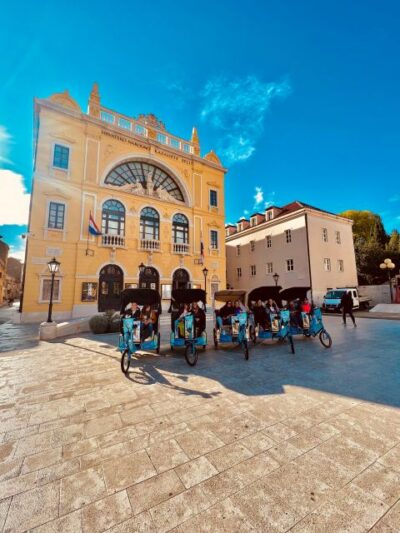
You then pass Prokurative, formally Republic Square. Its arched buildings have a Venetian feel and make a good photo stop just inland from the waterfront. The Croatian National Theater follows, with its elegant facade and long role in Split’s cultural life.
These early stops are brief, usually around five minutes each. That is enough for a look and a few photographs, but not enough for a detailed visit inside any building. Think of this section as a city orientation, not a theater or architecture tour.
Roman gates and the heart of Diocletian’s Palace
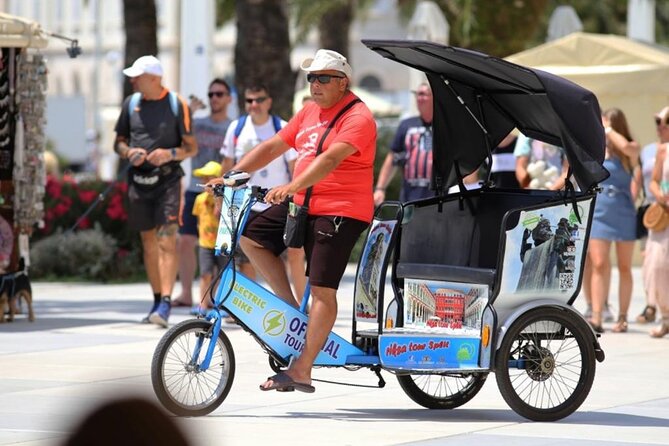
The main historical portion centers on Diocletian’s Palace, a Roman complex dating back about 1,700 years and recognized as a UNESCO World Heritage Site. The palace is not an isolated monument surrounded by open lawns. It forms the core of modern Split, with streets, shops, homes, and cafés woven into the ancient structure.
The route takes you around the palace and toward several of its original entrances. The Golden Gate on the north side is the grandest of the four gates, with carved details that hint at the power of the Roman emperor who built the complex. Nearby, the statue of Grgur Ninski adds a more local tradition. Rub the bishop’s bronze toe for good luck, as generations of visitors have done.
The Silver Gate on the east side gives you another look at Roman construction. Its old decorative silver is gone, but the stonework and reliefs remain. On the south side, the Bronze Gate once provided access from the sea to the palace basements. It was a practical entrance for servants and supplies, a useful reminder that imperial life depended on ordinary work.
The cellars are another highlight. These underground chambers reveal the engineering beneath the palace and help you understand how the upper rooms were supported. The stop is listed as very brief, so you should not expect an extended underground tour. Your guide’s explanation is likely to be the main value here.
The route also reaches the old fishermen’s port of Matejuška. Colorful boats and the working harbor give you a different view of Split from the polished promenade. The palace and Riva provide a strong backdrop for photographs, but the real appeal is the sense of a living coastal neighborhood.
The western waterfront and Sustipan
The longer route moves beyond the old center toward Zvončac Park and Sustipan. Zvončac provides a small green break from stone streets, while Sustipan sits on a promontory with broad views over the Adriatic and nearby islands.
Sustipan once had religious and defensive roles. Today, the appeal is quieter: greenery, old stone walls, open sea, and a chance to pause away from the main city flow. The listed stop lasts about 15 minutes, giving you more time here than at most central landmarks.
The Museum of Croatian Archaeological Monuments is also part of the wider route. It presents ancient sculptures, pottery, and other objects from Croatia’s past. The tour information does not include an interior admission visit or a set museum duration, so you should treat it as a sight along the route unless your guide confirms otherwise.
More Hidden Gems Rides in Croatia:
- Hidden Gems of Zadar Eco tuk tuk Tour
★ 5.0 · 52 reviews - Zadar: Hidden Gems Eco Tuk Tuk Tour
★ 4.8 · 50 reviews - Lyon: Private Pedicab Tour of Top Landmarks & Hidden Gems
★ 4.9 · 168 reviews - Old Delhi – Hidden Gems Tour on Rickshaws with Guide & Audio Headsets
★ 5.0 · 54 reviews
Marjan Forest Park and Meštrović’s world
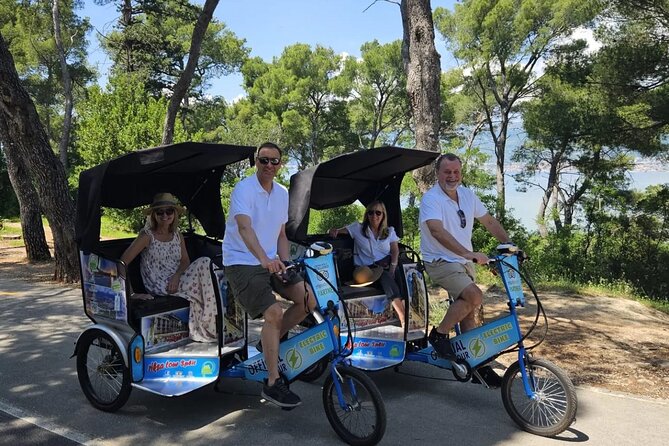
Marjan is where the rickshaw earns its keep. The forested park covers about 178 hectares, with pine trees, Mediterranean plants, rocky edges, paths, and views across the water. A visit here changes the mood completely. After Roman walls and busy streets, you get shade, open air, and a more local side of Split.
The Meštrović Gallery sits in a villa connected with Ivan Meštrović, one of Croatia’s best-known sculptors. The collection includes sculpture, drawings, and architectural work, with gardens and views toward the sea. The itinerary gives this stop only a minute, so do not plan on touring the gallery unless you arrange extra time separately. The building and setting are still worth seeing from outside.
The ride continues to Obojena Svjetlost Beach, a scenic cove with clear water, golden sand, and a relaxed coastal feel. Kašjuni Beach, below Marjan Hill, offers another attractive stop, surrounded by pine trees and a mix of pebbles and sand. These are photo and orientation stops rather than long beach visits, with about five minutes listed at each.
You may also pass Tito’s Villa, a former seaside residence associated with Yugoslav leader Josip Broz Tito. The attraction here is the location and the historic connection. Since the information provided does not promise an interior visit, expect to view it from the route.
Bene Beach and the longest version
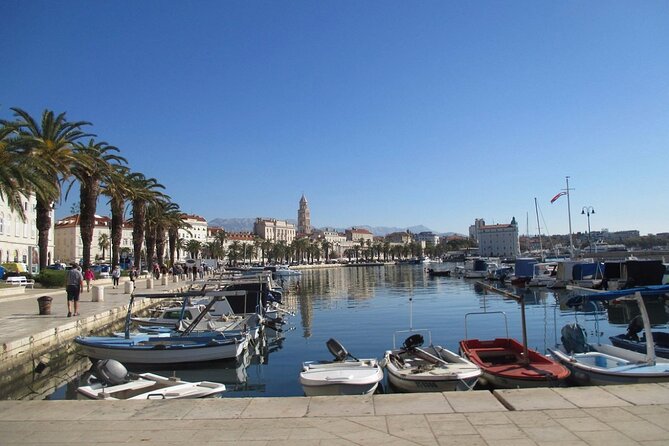
The longest itinerary spends about 45 minutes in Marjan Park and around 20 minutes at Bene Beach. That is the route I would choose if you want more than a quick city introduction.
Bene is surrounded by pine trees and has calm, shallow water with a pebbly shore. The setting suits a break, especially after seeing the old town in warm weather. A free drink is included on the largest tour at Va Bene Café by the sea. The exact drink is described as a soda or pop, although some ride descriptions refer more generally to refreshments.
The park section may include views toward Poljud Stadium, whose unusual structure is easy to spot against the greenery. You may also see places connected with filming for Mamma Mia. The ride gives you a broad sense of Split’s setting: palace at the center, wooded hill above the coast, and islands beyond the water.
Remember that the listed time at Bene includes the stop, not a full swimming afternoon. If you want a long beach session, you should ask the operator about timing before booking. The tour is built to show you several parts of Split, not to replace a dedicated beach day.
Guides, pace, and the feel of the ride
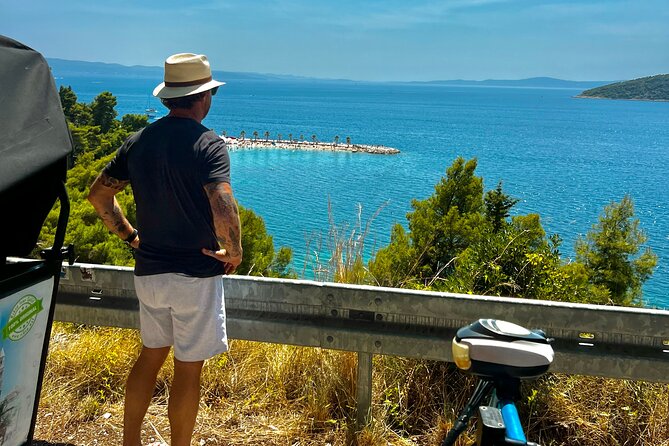
The guide makes a large difference on a short city tour. Names that appear with this experience include Toma, Mounass, Rosa, Mario, Marco, Tin, Manuela, Ella, and Roza. The strongest pattern is a guide who combines local facts with an easy manner and adapts to the group.
Toma is repeatedly praised for explaining both the old center and Marjan. Mounass has been especially accommodating with cruise timing and is described as friendly without talking nonstop. Rosa is known for enthusiasm and personal warmth, while Mario is praised for pointing out favorite places and taking photographs.
I would not book this for a formal lecture. The appeal is conversation from a local guide while you move through the city. You can ask what an area is like today, not just when a gate was built. That makes the ride useful at the start of a stay, since you can return later to the places that interest you most.
The pace is also kind to your feet. Split’s stone streets can be tiring, and Marjan requires more effort than the Riva. The rickshaw gives you a comfortable overview without removing the option to walk around afterward.
Price, group size, and practical value

At about $48.39 per person, this is not the cheapest way to see Split. It becomes more reasonable when you consider that the price covers a private electric vehicle, a driver-guide, and access to several areas that are awkward to combine independently in a short visit.
The value is strongest for cruise passengers, first-time visitors, older travelers, families, and anyone who wants to limit walking. It is also useful for a group that wants a private outing instead of joining a larger bus.
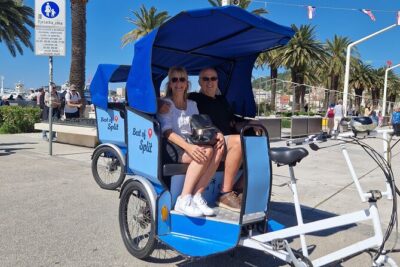
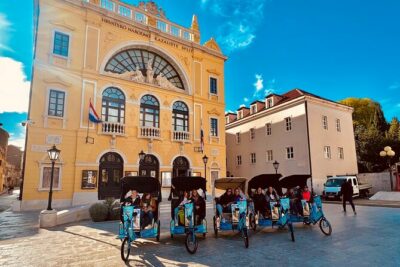
Capacity needs careful attention. One rickshaw holds a maximum of two adults and one child. A group of six adults, for example, needs several rickshaws, and the guides may coordinate the vehicles. That arrangement has worked for larger parties, but you should confirm the setup when booking.
The tour is offered in English, with a mobile ticket and pickup available. It ends back at the meeting point. The experience depends on good weather, and a poor-weather cancellation brings either another date or a full refund. Free cancellation is available up to 24 hours before the start time, while later changes or cancellations are not refunded.
This experience often sells out, and the average booking lead time is about 57 days. I would reserve early if you are visiting by cruise ship or need a particular departure time.
Which route should you choose?
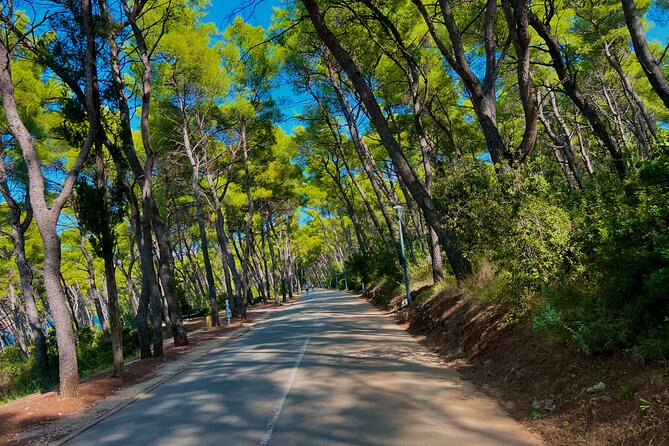
Choose the short city route if you want a quick introduction to the Riva, palace, gates, and old center. It works well before a meal or as a first look at Split, but it will not give you much time in Marjan.
Choose a middle route if you want the historic center plus waterfront areas, Sustipan, and selected coastal viewpoints. This offers a better balance for a half-day sightseeing plan.
Choose the longest route if you want Marjan Park, Bene Beach, a sea drink, and the city’s Roman core in one outing. It is the best value for a cruise stop or a first afternoon in Split, though you still need time later if you want to visit museums or swim at length.
Should you book the Split electric rickshaw?
I would book it if you have limited time, dislike long walks, or want to connect the old town with Marjan and the beaches. The private format, small vehicle, and access to car-free park areas make it more useful than a simple ride around the center.
I would skip it if your main goal is a slow interior visit to Diocletian’s cellars, the Meštrović Gallery, or the archaeology museum. The stops are short, and you will get more from those places with a separate walking visit.
For most first visits, I would choose the longest route and book well ahead. You get Roman Split, working harbor views, forest roads, beaches, and a drink by the sea without wearing out your feet. That is a fair trade for the price, especially when your day in Split is short.
FAQ
Where does the tour start?
It starts at Trajektna Luka Split, 21000, Bačvice, Split. Cruise passengers can be picked up directly in front of the cruise terminal.
Where does the tour end?
The activity ends back at the meeting point.
How long does the tour take?
The available itineraries range from about 30 minutes to approximately two hours and 30 minutes.
How many people fit in one rickshaw?
Each rickshaw can carry a maximum of two adults and one child.
Is the tour private?
Yes. Only your group participates in the private tour or activity.
What happens if bad weather cancels the tour?
You will be offered a different date or a full refund. Free cancellation is also available when you cancel at least 24 hours before the scheduled start time.
Just added around Croatia
- Private Zagreb Pedicab Tour★ 5.0 · 28 reviews
- Zadar: City and Wine Tour in Zadar with Eco Tuk Tuk★ 5.0 · 17 reviews
- Zadar: Sunset Panorama Tour with Eco Tuk Tuk★ 5.0 · 9 reviews
- Private Electric Rickshaw Tour of Split★ 5.0 · 50 reviews
- TUK TUK Split Sightseeing Adventures★ 5.0 · 40 reviews
- Split City Tour By Electric Rickshaw┃Riva Ride★ 5.0 · 50 reviews
- Split Eco Tuk Tuk City Tour★ 5.0 · 6 reviews
- Makarska Tuk Tuk Tour Olive Grove, Scenic Views and Tastings★ 5.0 · 3 reviews
Split Tuk Tuk Tours, compared.
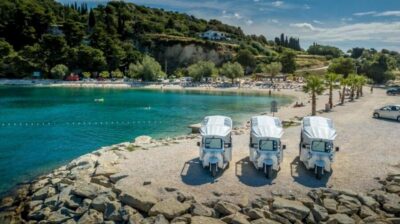
Split Tour by Electric Tuk-Tuk: Top City Highlights
Read our review →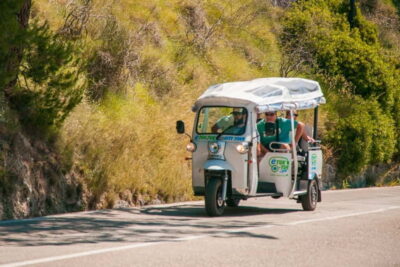

Browse the lists this tour appears in