
Review · NEGOMBO
From Negombo: City Tour & Fishing Village Tour by Tuk-Tuk
Negombo’s character comes into focus at Lellama seafood market, where catamarans and the morning catch show you the city’s working side. This is not just a drive past monuments. It links fishing, Portuguese and Dutch-era sites, Christian and Hindu worship, and a Buddhist temple in one compact tuk-tuk outing.
I like the private format, since your guide can adjust the pace and explain what you are seeing. I also like the clear price of $40 per person, which covers transport, entrance fees, fuel, parking, water, refreshments, taxes, and an English-speaking guide. The main consideration is the short four-hour schedule. Several stops are brief, and the fish market may be closed on certain religious holidays, as happened on Good Friday.
Key points at a glance
- Lellama fish market: See Negombo’s fishing trade, local catamarans, and fishermen bringing in the catch.
- Six contrasting sights: Visit a Catholic church, Hindu temple, canal, colonial fort, Buddhist temple, and seafood market.
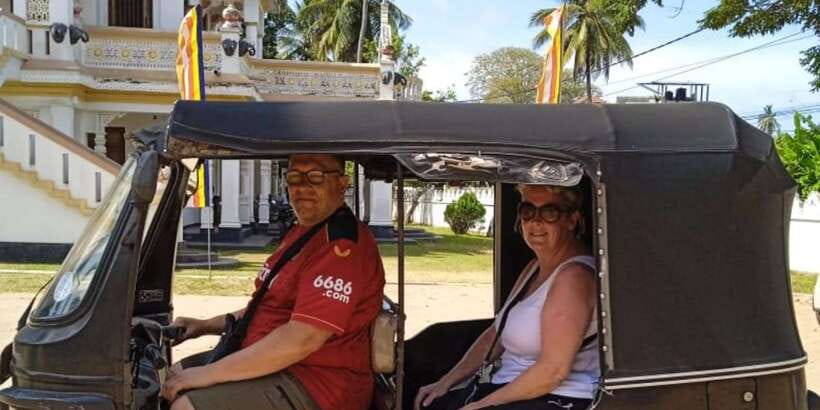
- Tuk-tuk transport: Hotel pickup and return keep the morning simple, while the open-sided ride gives you a close view of city life.
- Angurukaramulla Temple: Look for the dragon’s mouth entrance and a 300-year-old moss-covered library ruin.
- Personal guiding: Guides including Samantha, Fernando, Simon, and other local drivers have been praised for punctuality, explanations, kindness, and photography.
- Flexible booking: You can cancel up to 24 hours ahead for a full refund and reserve without paying immediately.
Why this four-hour Negombo tour works
Negombo is often treated as a place to sleep before an early flight from the nearby airport. That misses the point. The city has its own identity, shaped by fishing, several faiths, canals, and European colonial rule.
This tour gives you a useful first look without asking you to spend a full day on the road. The tuk-tuk is well suited to Negombo. You sit close to the streets, see daily activity at a relaxed speed, and avoid the formality of a larger vehicle.
The route is also well balanced. You are not visiting six churches or six colonial sites. Instead, each stop adds a different piece to the city. The fish market shows work and trade. St. Mary’s Church and the Kali Amman Kovil show two religious traditions. Hamilton Canal and Dutch Fort explain the city’s past connections. Angurukaramulla Temple provides an unusual final stop.
The experience is offered as a private group tour, with an English-speaking guide. That matters here because the value is not only in looking at buildings. You need someone to explain why a fish market matters to Negombo, how the canal was used, and what to notice at the temples.
More Countryside Tuk Tuk Tours in Sri Lanka
- Explore Bentota Village: Guided Tuk Tuk Safari
★ 5.0 · 21 reviews - Unseen Sigiriya: Village & Rock Viewpoints by Tuk Tuk
★ 4.7 · 14 reviews - Village Expedition in Yala By Tuk-Tuk from Hambantota Harbor
★ 4.5 · 9 reviews
Lellama market and the catamarans
The morning starts with hotel pickup, listed for Waikkal, Kammala, Negombo, Wattala, and Katunayake. The first major stop is Lellama, the local seafood market.
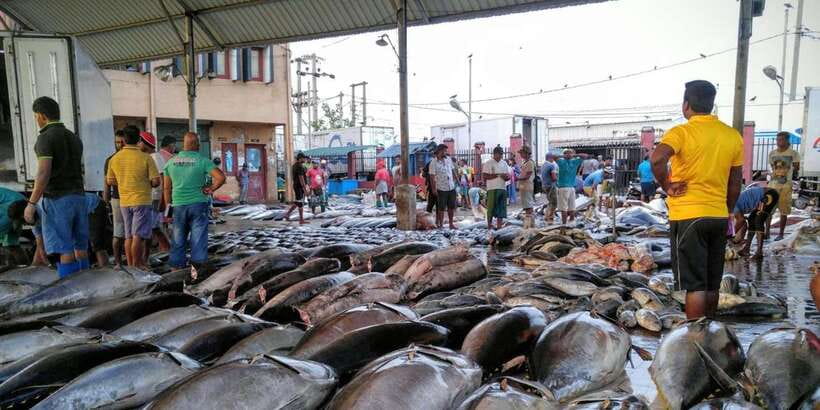
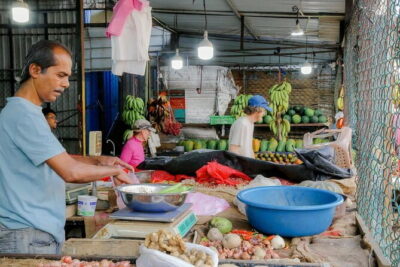
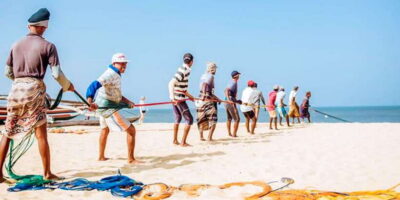
This is likely to be the most memorable part for anyone who prefers everyday life to polished attractions. The focus is on Negombo’s fishing industry, including the traditional catamarans and fishermen bringing in the day’s catch. You get a direct look at the work that supports this coastal city.
I would give this stop your full attention rather than treating it as a quick photo break. Watch how the market operates, notice the boats, and ask your guide about the fish trade. The scene may be wet, noisy, and practical rather than pretty. That is precisely its value.
Market conditions can affect the visit. On Good Friday, the fish market was closed, and the guide added other sites instead. If your visit falls on a public holiday or religious day, it is sensible to expect changes. A good guide can adjust the route, but the market itself cannot be guaranteed as an active morning scene.
If seafood markets are not your thing, this may be the least comfortable stop. Still, it gives you something a row of monuments cannot: a view of how Negombo works today.
St. Mary’s Church and Negombo’s Catholic story
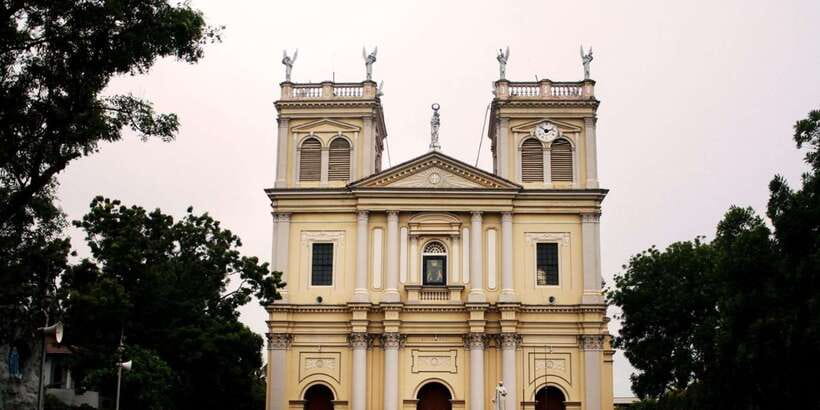
St. Mary’s Church brings you into Negombo’s Christian past. The church reflects the influence of the Portuguese colonial period, and construction resumed in 1874 before completion in 1922.
The building is included as a sightseeing and walking stop, so you should have time to look at its design and religious details. Your guide can also connect the church to Negombo’s long-standing Catholic identity.
This stop works well after Lellama. The market shows a living community, while the church gives you a quieter place to consider how outside powers and local communities shaped the city. You do not need to be religious to appreciate that contrast.
Dress with respect at religious sites and follow any instructions from the guide. The schedule is tight, so you may not have time for a long visit or a detailed service experience. Think of St. Mary’s as a focused cultural stop rather than a full church tour.
One detail from the tour experience is worth noting: a group of eight visitors using four tuk-tuks found a visit to St. Sebastian Church especially moving, and their guides added that stop. St. Sebastian Church is not part of the named standard route, so do not assume it is included every time. But the example shows that the route may be adapted when conditions require it.
Sri Singama Kali Amman Kovil
The next stop changes the mood again. Sri Singama Kali Amman Kovil is a Hindu temple known for its murals and sculptures.
This is a good place to slow down and look closely. The appeal is visual, with painted surfaces and sculpted religious figures that differ sharply from the church interiors and colonial remains elsewhere on the route. Your guide can help you understand what you are seeing, though the advertised guiding language is English only.
Temple visits work best when you are respectful and unhurried. Follow local rules on footwear, clothing, photography, and where you may walk. The available details do not specify exact dress requirements or camera rules, so listen to your guide rather than assuming.
The stop is brief enough to fit the morning, but that also means you should not expect a long religious lecture. You are getting an introduction to one of Negombo’s Hindu places of worship, not a specialist temple study.
More Countryside Rides in Sri Lanka:
- Tuk Tuk safari and Picnic in The Tea Plantation from Ella,Haputale & Bandarawela
★ 5.0 · 7 reviews - Negombo: Fishing Village Highlights Private Tour by Tuk Tuk
★ 4.6 · 5 reviews - Private Tuk-Tuk Village Tour – From Bentota Hotels
★ 3.0 · 3 reviews - Village Expedition in Yala By Tuk-Tuk from Hambantota Harbor
★ 5.0 · 2 reviews
Hamilton Canal, a 14.5-kilometre waterway
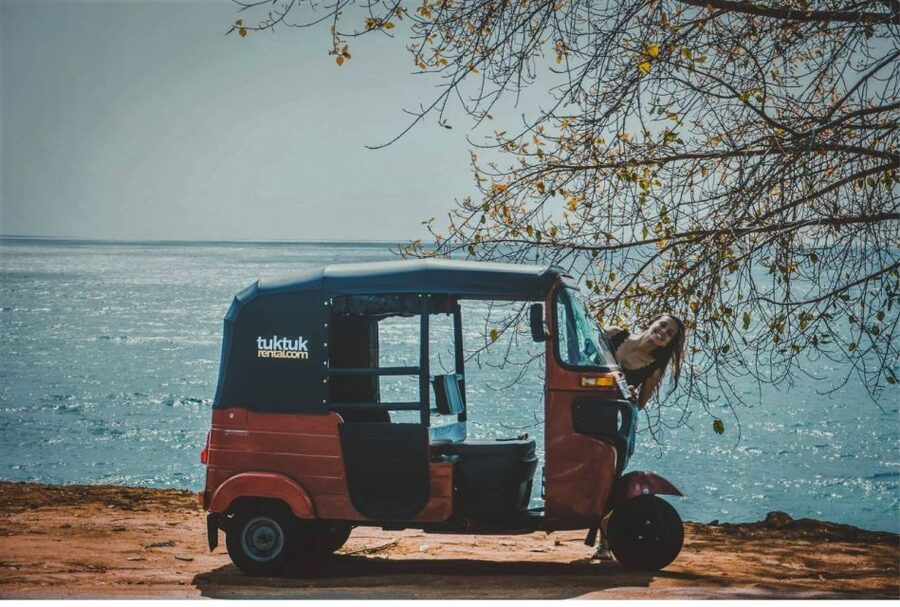
Hamilton Canal offers a change from buildings and religious sites. The canal runs for 14.5 kilometres between Puttalam and Colombo and was built by the British in 1802.
Its importance comes from transport and trade. A canal may not sound as dramatic as a fort, but it helps explain how goods and people moved through the area during the colonial period. This is one of those stops where the guide’s explanation makes the view more meaningful.
Do not expect a long boat ride. The tour describes a sightseeing and photo stop, not a canal cruise. You will see the waterway as part of a wider city tour and learn about its role in Negombo’s past.
This is also a practical reminder of the tour’s pace. You are seeing several locations in four hours, so the canal visit is meant to provide context rather than become a separate excursion.
Negombo Dutch Fort and the city’s colonial remains
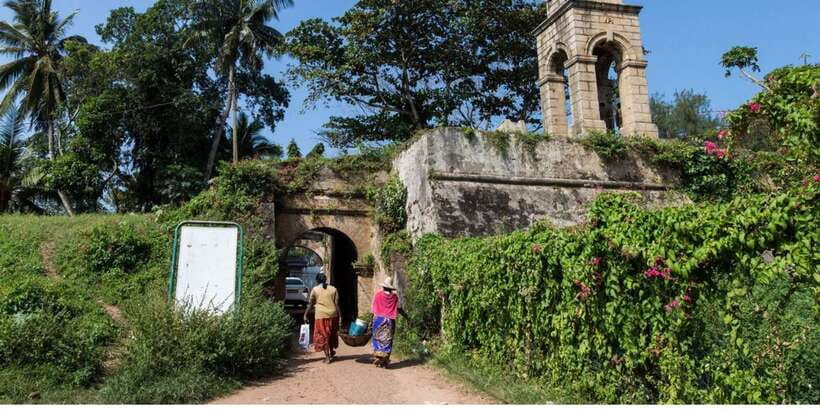
Negombo Dutch Fort is another short stop with a layered past. The original fort was built by the Portuguese and later rebuilt by the Dutch in a pentagonal form during the 1640s.
That sequence matters. The fort is not a single-period monument. It shows how control of Negombo shifted between European powers, with the city’s coastal position giving it strategic value.
The attraction today is the historical setting and remaining architecture rather than a large, complete fortress complex. Keep your expectations realistic. You are visiting a surviving colonial site within a living city, not entering a vast European castle.
I like the way this stop fits with Hamilton Canal. The canal explains movement and trade, while the fort points to control and defense. Together they make the colonial chapter easier to understand than either site would on its own.
You will have time for photos, sightseeing, and a walk. Since the route includes several other places, the visit may feel brief if you enjoy military history. If forts are your main interest, this tour gives you an introduction, not an exhaustive examination.
Angurukaramulla Temple and the dragon’s mouth

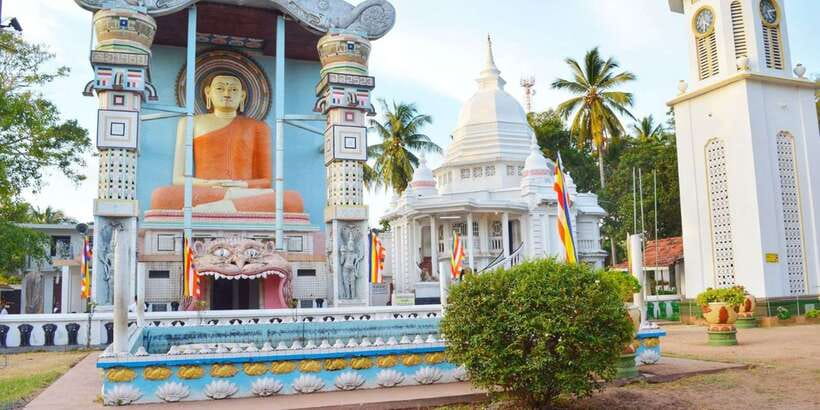
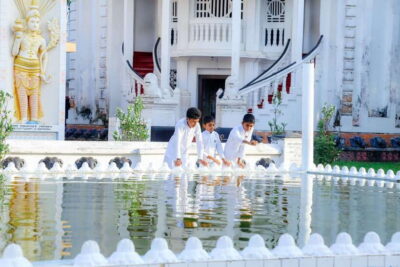
The final named attraction is Angurukaramulla Temple, one of Negombo’s best-known Buddhist temples. Its most unusual feature is the dragon’s mouth entrance, believed to keep evil spirits away.
That entrance gives the visit an immediate sense of place. It is a memorable detail, easy to spot, and different from the church, Hindu temple, canal, and fort you have already seen.
Within the temple grounds, you can also find the remains of a 300-year-old ancient library covered in moss. This is the sort of detail that rewards a slow look. The ruin is not just another photo backdrop. It gives you a physical link to older religious and educational traditions.
The visit includes sightseeing, walking, free time, and photographs. It is a strong ending because it combines living religious practice with an old ruin. Take care to behave respectfully, especially around active worship spaces, and ask before photographing people or ceremonies.
The schedule supplied for the tour places the temple around 10:30, although another line gives 10:00 as the return point. Since the overall duration is four hours, you should confirm the exact start and finish time when booking. The route itself is clear, but the printed timing appears compressed.
What the tuk-tuk format adds
A private tuk-tuk is a practical choice for this route. The vehicle is small enough for city streets and lets you move between sites without arranging separate taxis. Hotel pickup and return are included, with drop-off options in Waikkal, Negombo, Wattala, Katunayake, and Kammala.
The ride is part of the experience. You are closer to street life than you would be inside a coach, and the short transfers keep the morning moving. The tradeoff is comfort and space. Tuk-tuks are not designed for sprawling out, so pack lightly and keep your phone, passport copy, and other essentials secure.
The group is private, though a larger booking may use several tuk-tuks. One group of eight used four vehicles and had several drivers. That arrangement can work well, but it may mean your group is split between vehicles during transfers. If you book for a larger party, confirm how many tuk-tuks and guides will be used.
The package includes fuel surcharge, driver charges, parking, entrance fees, government taxes, water, and refreshments. That makes the stated $40 per person easier to judge because many small costs are already covered.
Is $40 per person good value?
For a four-hour private outing, $40 per person is reasonable if you want a guided introduction rather than simply hiring a tuk-tuk for transport. You are paying for several stops, a guide, hotel pickup and return, entrance fees, fuel, parking, taxes, water, and refreshments.
The value is strongest for first-time visitors staying in or near Negombo. You can see a wide range of sights in one morning without working out the route yourself. The guide also adds context and can respond when a stop changes, as happened when the fish market was closed on Good Friday.
The value is less clear if you already know Negombo well or mainly want a slow morning at the market. The schedule covers many sites, so no single stop receives a long, detailed visit. You are buying breadth, convenience, and local explanation.
The four reviews available for this experience give it a perfect 5 rating. Specific praise centers on punctuality, cultural explanations, photography, kindness, and flexibility. Samantha was praised for explaining the city and adjusting the route when the market was closed. Fernando, Simon, and other drivers were praised for looking after a larger group. Those details matter more than a star score because they show what the guide can add to the morning.
Who should book this tour?
I would recommend it to first-time visitors with a half-day available in Negombo, especially if you want to see more than the beach and hotel area. It also suits people who enjoy a mix of working life, religion, architecture, and local history.
It is a good fit before or after a flight if your schedule allows four hours, but you should leave a safe buffer for airport plans. The pickup areas include Katunayake and Negombo, which is useful for airport-area accommodation, but the tour does not promise airport transfers or flight coordination.
Families and small private groups may appreciate the tuk-tuk setup and the flexible guiding. The experience also works for visitors who prefer a local guide to explain what they are seeing rather than reading brief signs at each stop.
You may want a different experience if you need long visits, extensive historical detail, or a relaxed pace. The market can be affected by holidays, and the route includes several short stops. It is a city sampler, not a specialist tour of one subject.
Practical advice before you go
Bring a charged smartphone and a passport or identity card. A copy is accepted, according to the tour information.
Wear comfortable clothing suitable for walking and religious sites. The tour includes churches, a Hindu temple, and a Buddhist temple, so modest dress and respectful behavior are sensible. The supplied details do not set out exact clothing rules, so follow your guide’s instructions at each location.
Keep your morning flexible. The listed schedule moves quickly and contains a timing inconsistency around the final temple and return. Ask for the confirmed pickup time and expected return time before setting another appointment.
The tour includes complimentary water and refreshments, but you should still start the morning prepared for warm conditions. Bring your phone for photos, but ask before taking pictures inside religious places or near people working at the market.
Cancellation is free up to 24 hours before departure for a full refund. You can also reserve now and pay later, which helps if your Negombo plans are still shifting.
Should you book it?
Book this tour if you want a compact, private introduction to Negombo with a local guide, simple transport, and costs mostly settled in advance. The strongest parts are the fishing market, the mix of faiths, the dragon’s mouth at Angurukaramulla Temple, and the chance to see the city beyond its hotels.
Think twice if your priority is one slow, in-depth attraction. Four hours is enough for a useful overview, but not enough for long visits everywhere. Also confirm the market schedule and exact timing if your visit falls on a religious holiday or sits close to a flight.
For most first-time visitors, $40 per person is a fair price for the range of places covered and the convenience of hotel pickup. The tour gives you a clear first picture of Negombo: a working fishing city with Portuguese, Dutch, British, Christian, Hindu, and Buddhist chapters all close together.
FAQ
How long does the Negombo tuk-tuk tour last?
The tour lasts four hours.
What locations offer pickup?
Pickup is available from Waikkal, Kammala, Negombo, Wattala, and Katunayake. The information also states that pickup is available from all hotels in Waikkal.
Which attractions are included?
The named stops are Lellama seafood market, St. Mary’s Church, Sri Singama Kali Amman Kovil, Hamilton Canal, Negombo Dutch Fort, and Angurukaramulla Temple.
Is the tour private?
Yes. It is offered as a private group experience.
What language does the guide speak?
The live guide service is offered in English.
Are entrance fees included?
Yes. Entrance fees for the sightseeing places mentioned in the program are included.
What is included in the $40 price?
The price includes hotel transportation by tuk-tuk, fuel surcharge, driver charges, parking fees, entrance fees, refreshments, water, and government taxes.
Can I cancel the booking?
Yes. You can cancel up to 24 hours in advance for a full refund. You can also reserve now and pay later.
More Fishing in Sri Lanka
- From Colombo: Negombo Fishing Village Tour by Tuk-Tuk
★ 5.0 · 2 reviews - Tuk tuk Tour Tavira Total – 2h00 – Includes Tuna Museum and Fishing Village
★ 5.0 · 71 reviews - Private Tuk Tuk Tour on Câmara de Lobos, Fishing Village
★ 5.0 · 3 reviews
Just added around Sri Lanka
- Village Expedition in Yala By Tuk-Tuk from Hambantota Harbor★ 5.0 · 2 reviews
- Tuk Tuk Tales of Colombo From Cruies★ 4.6 · 4 reviews
- Tuk Tuk Kandy City Tour By Local Guide★ 5.0 · 3 reviews
- Trincomalee: Tuk-Tuk city tour with a guide★ 5.0 · 4 reviews
- Rent a Tuk Tuk & Explore★ 5.0 · 2 reviews
- Sigiriya and Dambulla Private Day Tour by Tuk-Tuk or Car★ 5.0 · 28 reviews
- Tuk Tuk Rentals★ 5.0 · 15 reviews
- Tuk Tuk Nuwara Eliya Tea Falls Adventure★ 5.0 · 44 reviews
Negombo Tuk Tuk Tours, compared.
Negombo city tour by Tuk Tuk Hotel Pickup & Guide
Read our review →
Private Half-Day Tuk-Tuk Tour with Hotel Transfers
Read our review →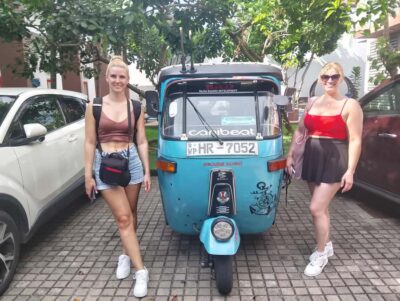
Fishing Village Highlights Private Tour by Tuk Tuk
Read our review →
Browse the lists this tour appears in