

Review · SRI LANKA
Village Expedition in Yala By Tuk-Tuk from Hambantota Harbor
Yala is more than safari country. This tour takes you into the villages beyond the park, where you can watch pottery being made, see rice fields and vegetable gardens, and ride beside quiet lakes in a tuk-tuk. I especially like the hands-on clay-pot activity and the chance to visit a real village home for tea. The big caution is the transfer from Hambantota Harbor, which takes a good part of the morning.
I also like the small-group limit of eight people, plus the guides who have earned praise for clear English and local knowledge. Nalin and Manju are two guides named in past bookings. Just know that the tuk-tuk ride itself may not be private, and one unhappy booking involved three tuk-tuks carrying six people who felt the village contact was too limited.
Key points to know before booking

- You leave Hambantota Harbor at 8:30 a.m. and return to the passenger pier at about 1:30 p.m.
- The drive to Yala takes time, with the scheduled transfer placing you at the tuk-tuk starting point around 9:45 a.m.
- You can make your own clay pot on a traditional wheel at a village pottery home.
- The tour includes lakes, fruit bats, rice fields, vegetable gardens, and village homes, not only a tuk-tuk ride.
- Ceylon tea with village women gives the visit a simple, personal finish.
- The group is capped at eight, but the tuk-tuk arrangement should be confirmed if a private ride matters to you.
A different side of Yala, beyond the safari gate

Most visitors come to Yala hoping to spot elephants, leopards, and birds. This excursion takes a quieter route. You are not heading into the national park for wildlife viewing. Instead, you are seeing how people live around the rural areas near Yala, using a tuk-tuk as your local transport.
That difference matters. The appeal here is not a packed schedule of major sights. It is the chance to watch ordinary work: pottery, farming, food production, and household routines. You get a look at the human side of the region, along with views of lakes and open countryside.
The tour costs $90 per person. That is a fair but not bargain-level price for a shore excursion. The fee covers harbor pickup and drop-off, an air-conditioned vehicle for the longer transfer, the local guide, tuk-tuk travel, site and activity costs, bottled water, and government taxes. Meals and tips are extra.
For a cruise passenger, the price also buys a planned return to the ship’s pier. That can be worth paying for when you do not want to arrange several independent rides in an unfamiliar area. The value is strongest if you want local contact and a guided day rather than a standard sightseeing loop.
More Countryside Tuk Tuk Tours in Sri Lanka
- Explore Bentota Village: Guided Tuk Tuk Safari
★ 5.0 · 21 reviews - Unseen Sigiriya: Village & Rock Viewpoints by Tuk Tuk
★ 4.7 · 14 reviews - Tuk Tuk safari and Picnic in The Tea Plantation from Ella,Haputale & Bandarawela
★ 5.0 · 7 reviews
Leaving Hambantota Harbor at 8:30 a.m.
Your day begins at the passenger pier in Hambantota Harbor. The operator plans to meet you there at 8:30 a.m. and take you by air-conditioned vehicle toward the village expedition’s starting point.
The schedule gives roughly 75 minutes for this first transfer, with arrival at about 9:45 a.m. One past booking described the drive to the tuk-tuk area as about 40 minutes, so the exact time may depend on the route and conditions. Either way, you should expect a meaningful amount of time in the vehicle before the village portion begins.
That is the main practical drawback. The tour lasts about six hours, but the tuk-tuk and village activities occupy only part of that window. If you want a full day with almost no road time, this may feel slow. If you are visiting Hambantota from a cruise ship, the arranged transport is more useful.
The air-conditioned vehicle is also important in Sri Lanka’s heat. You will have bottled water during sightseeing, but carry anything else you need for comfort. Wear light clothing and walking shoes rather than shipboard sandals.
Your first look at village life by tuk-tuk
At the starting point, you meet your local tuk-tuk guide and begin the rural visit. The smaller vehicle fits the setting well. It lets you travel along local roads at a slower pace and gives you a more open view than a coach window.
The exact guide depends on the date. Nalin has been named as a guide for a booking that included several village trades, while Manju handled another group from the harbor. Manju was noted for fluent English, prompt communication, and strong knowledge of local places and history. Those details matter because the quality of the commentary can shape a visit like this.
The tour is designed for no more than eight people. That is a sensible cap for a village outing, though you should not assume that one tuk-tuk equals one private party. A past group of six rode in three tuk-tuks and felt the arrangement did not give them the village atmosphere they expected.
If you care about privacy, ask the operator how many people will share each tuk-tuk before you pay. The tour is small, but small does not always mean private.
Fruit bats and the lake route

The first stated stop is a bat nest area. The tour description does not promise a wildlife safari or close-up animal encounter. Instead, you are likely to see fruit bats hanging in trees, a sight that gives the morning a distinctly local character.
One past booking specifically included fruit bats among its roadside stops. You may also see them from a respectful distance rather than stopping for a long formal presentation. That is part of the charm: the bats are tied to the ordinary scenery, not placed in a show.
From there, you continue toward several scenic lakes and reservoirs. The tuk-tuk ride around the lake is one of the outing’s stronger features. Water, village roads, and open views give you a break from built-up port areas, and the guide can point out temples and landmarks along the way.
The exact names of the lakes are not provided, so do not book this expecting a famous single viewpoint. The pleasure comes from the ride and the setting. A past excursion included detailed English explanations of temples and landmarks around a lake and water reservoir, with particular praise for the guide’s driving.
You should still keep expectations realistic. This is not a dedicated birding trip, and the schedule does not promise a long stop for photography. It is a scenic village route with nature along the way.
More Countryside Rides in Sri Lanka:
- Negombo: Fishing Village Highlights Private Tour by Tuk Tuk
★ 4.6 · 5 reviews - From Negombo: City Tour & Fishing Village Tour by Tuk-Tuk
★ 5.0 · 4 reviews - Private Tuk-Tuk Village Tour – From Bentota Hotels
★ 3.0 · 3 reviews - Village Expedition in Yala By Tuk-Tuk from Hambantota Harbor
★ 5.0 · 2 reviews
Making a clay pot with a village artisan
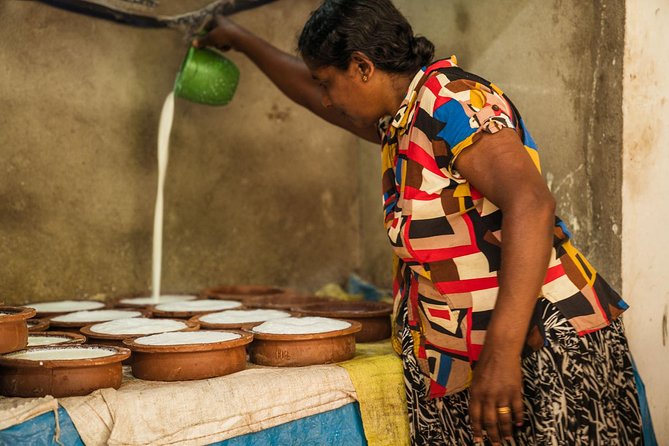
The pottery stop adds something many sightseeing tours leave out: participation. At a village house, you learn how Sri Lankan clay pots are made and can try shaping your own on a traditional wheel.
The value is not only the souvenir. Pottery shows you a working village skill, and the wheel gives you a direct feel for the material and technique. Your pot may not look like the artisan’s finished work, which is exactly the point. You see how much practice sits behind a simple household vessel.
This is also a good stop for families and anyone who prefers doing something to simply looking. The activity cost is included, so you do not need to budget a separate workshop fee.
The description calls this a clay-pot-making house rather than a large commercial studio. That suggests a more personal visit, though the quality of the interaction will depend on the guide, timing, and how much time the group has. If you want to take your pot home, ask the guide how it will be handled. The provided details do not confirm whether it is fired, packed, or ready to carry immediately.
Inside a rural home with tea
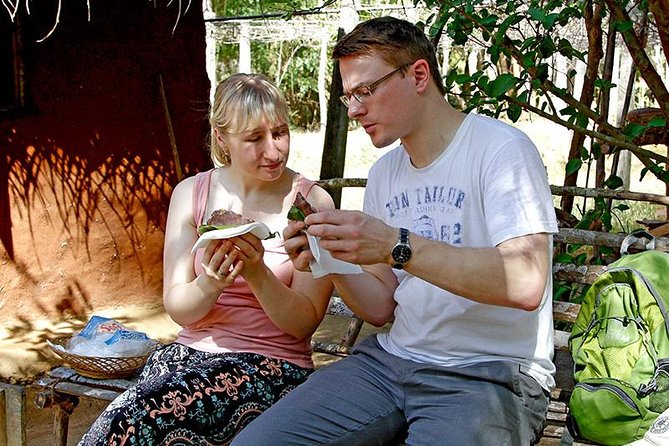
After the pottery visit, you go to a village house to see daily life. The focus is on chores, rice fields, and vegetable gardens. This is the part of the trip that gives the outing its human purpose.
You are not simply looking at scenery. You can see how food is grown and how household work fits with village life. The visit is modest rather than staged as a large cultural performance. That can be a strength for you if you prefer a direct introduction to local routines.
The tour also includes a cup of Ceylon tea prepared by village women. It is a small detail, but it gives the visit a natural pause. You can sit, drink tea, and speak with the people you have just met rather than rushing from one photo stop to the next.
Meals are not included, so do not treat the tea as lunch. The supplied details promise a cup of tea, not a full meal or cooking lesson. If you need substantial food during the morning, plan accordingly or ask the operator what is practical before departure.
More local trades may be part of the day
The core schedule names pottery, a village home, lakes, bats, fields, and tea. Past bookings also included stops connected with curd making, honey making, and salt farming. These extra encounters may depend on the route, the day, or what the guide arranges locally.
That flexibility can work in your favor. A guide may adjust the visit if you have already taken a Yala or Udawalawe safari, as one past group did. Instead of repeating wildlife stops, the guide focused on local sights, fruit bats, and roadside produce.
Do not assume every booking includes every trade. The safest approach is to tell the operator what you have already seen and what interests you most. If you have done a safari, say so. The tour is at its best when the guide uses the time to show you something new.
Getting back to the ship on time

The village exploration is scheduled to finish around noon. You then return to the tour starting point and transfer by vehicle back to Hambantota Harbor, with drop-off at the passenger pier around 1:30 p.m.
For cruise passengers, this timing is central to the tour’s value. A harbor excursion needs a clear return plan, and this one includes both pickup and drop-off. Still, you should check your ship’s all-aboard time yourself and allow a margin for road delays.
The operator provides confirmation at booking. At least two people are required for the activity to operate, and the maximum group size is eight. The tour also depends on good weather. If poor weather or an insufficient group forces cancellation, you are offered another date or experience, or a full refund.
Cancellation is free up to 24 hours before the start time. Inside that period, the amount paid is not refunded, and changes are not accepted. Cut-off times use local time in Sri Lanka.
Who will enjoy this six-hour outing?
I would choose this tour if you want to see rural Sri Lanka without planning several separate transfers. It suits cruise passengers, first-time visitors, families, and anyone who prefers local work and daily life to a second safari.
The pottery activity makes it more engaging for children, though the walking and vehicle time mean comfortable clothing and shoes are still important. People interested in photography should enjoy the lakes, bats, fields, tuk-tuks, and village activity.
You may want to skip it if you have only a few hours in port, dislike long road transfers, or expect a private tuk-tuk for your own party. It is also not the right choice if your main goal is wildlife. The tour may show fruit bats, but it is not presented as a national park safari.
The guide can make a big difference. Nalin and Manju are names associated with strong English communication and attentive service, but you cannot select them from the information provided. Ask about the assigned guide and tuk-tuk setup if those details matter to you.
Is the $90 price worth it?
At $90, this is not the cheapest way to see the countryside. But comparing the price with a single tuk-tuk ride misses what is included. You are paying for a return transfer from the harbor, an air-conditioned vehicle, local guiding, the tuk-tuk route, entry and activity costs, water, and tax.
The handmade pottery session and village-home visit add value because they are not just transport stops. You are getting guided contact with local work, plus the convenience of a return to the ship.
The price is less attractive if your group can arrange a much cheaper private vehicle and only wants to see a lake. It is also less attractive if your group expects a fully private experience but is placed across shared tuk-tuks.
Should you book the Yala village expedition?
Book it if you want a gentle, personal look at rural life near Yala, especially if you have already done a safari. The best parts are the clay wheel, the lake ride, fruit bats, village tea, and the chance to see rice and vegetable growing as part of everyday life.
Before booking, confirm the pickup details, the expected transfer time, and whether your party will have a private tuk-tuk. With those points clear, this is a useful shore excursion for seeing a side of Sri Lanka that a standard wildlife drive will not show you.
FAQ
Where does the tour begin?
The tour begins with pickup at the passenger pier in Hambantota Harbor.
What time is pickup?
Pickup is scheduled for 8:30 a.m.
When does the tour return to Hambantota Harbor?
Drop-off at the passenger pier is scheduled for about 1:30 p.m.
How long does the experience last?
The full experience lasts approximately six hours.
What transport is used?
You travel from the harbor by air-conditioned vehicle, then explore the village area by tuk-tuk with a local guide.
How many people can join?
The activity has a maximum of eight travelers, and at least two people are required for it to operate.
What activities are included?
The tour includes visiting the bat nest area, seeing lakes, riding around a lake by tuk-tuk, visiting a pottery house, making a clay pot, visiting a village home, seeing rice fields and vegetable gardens, and drinking a cup of Ceylon tea.
Is food included?
Meals are not included. A cup of Ceylon tea prepared by village women is included in the village visit.
What should I wear?
Wear comfortable clothing and walking shoes.
What happens if bad weather cancels the tour?
If poor weather causes cancellation, you are offered a different date or experience, or a full refund.
Just added around Sri Lanka
- Village Expedition in Yala By Tuk-Tuk from Hambantota Harbor★ 5.0 · 2 reviews
- Tuk Tuk Tales of Colombo From Cruies★ 4.6 · 4 reviews
- Tuk Tuk Kandy City Tour By Local Guide★ 5.0 · 3 reviews
- Trincomalee: Tuk-Tuk city tour with a guide★ 5.0 · 4 reviews
- Rent a Tuk Tuk & Explore★ 5.0 · 2 reviews
- Sigiriya and Dambulla Private Day Tour by Tuk-Tuk or Car★ 5.0 · 28 reviews
- Tuk Tuk Rentals★ 5.0 · 15 reviews
- Tuk Tuk Nuwara Eliya Tea Falls Adventure★ 5.0 · 44 reviews
Sri Lanka Tuk Tuk Tours, compared.
Private Tuk-Tuk City Tour with All Entry Fees
Read our review →

Colombo Tuk Tuk City Tour -Sightseeing Entry Fees & Food Included
Read our review →
Colombo Private Tuk-Tuk City Tour with All Entry Fees Included
Read our review →
Private Tuk-Tuk City Tour with Guide & All Tickets
Read our review →

Kandy to Ambuluwawa & Kandy City Guided Tuk Tuk Day Tour
Read our review →
Colombo Local Food Tour by Tuk Tuk – All Inclusive
Read our review →Browse the lists this tour appears in