
Review · EVENING EXPERIENCES
Kathmandu Sunset Tour by Rickshaw Including Durbar Square Visit
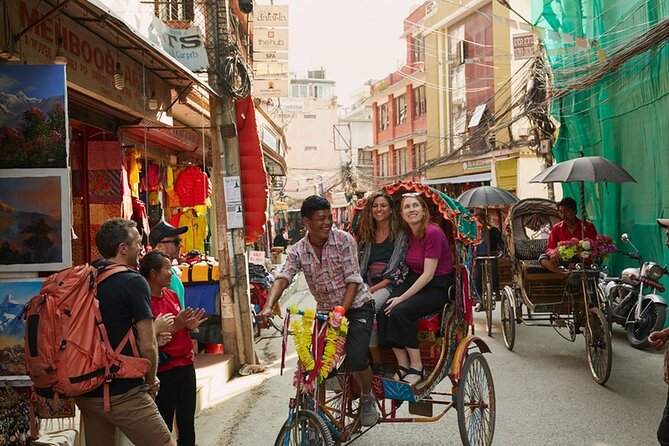
Kathmandu’s evening traffic can feel like a moving puzzle, and this tour gives you a front-row seat. You ride from Thamel through crowded lanes, Asan’s spice market, and old temple streets before walking through Durbar Square as daylight fades. The rickshaw turns transport into part of the sightseeing.
I like the mix of motion and time on foot, especially the stop at Asan and the long visit to Kathmandu Durbar Square. I also like the small group limit of 12, along with guides such as Nikita and Sanjeeb, who are described as warm and eager to explain their city. The main drawback is timing: in low light, uneven streets and the ride back to your hotel may take extra planning.
Key points to know before you book
- The 6 pm departure catches Kathmandu at a useful hour: Shopkeepers are still active, temples are lit by the fading sky, and the city’s nightlife is beginning.
- Asan is more than a quick photo stop: You pass food stalls, spices, vegetables, clothing, electronics, and small shrines in Kathmandu’s oldest food market.
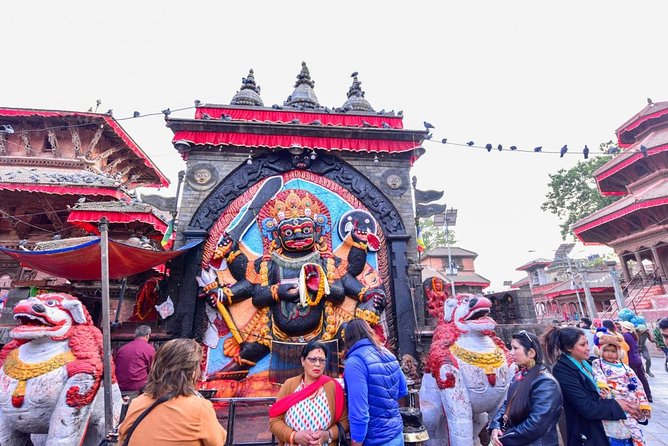
- Durbar Square receives the longest stop: You have about 85 minutes to walk among temples, palaces, courtyards, and the white Rana-era Gaddhi Baithak.
- The rickshaw uses narrow local streets: This is a close-up view of daily life, but traffic, horns, pedestrians, and rough pavement are part of the deal.
- The $50.30 price includes the rickshaw and Durbar Square entry: Food and drinks cost extra, but the fee supports heritage preservation.
- The experience suits first-time visitors best: It gives you a quick sense of central Kathmandu, though some sights may overlap with a broader city tour.
Why a rickshaw is a smart way to meet Kathmandu
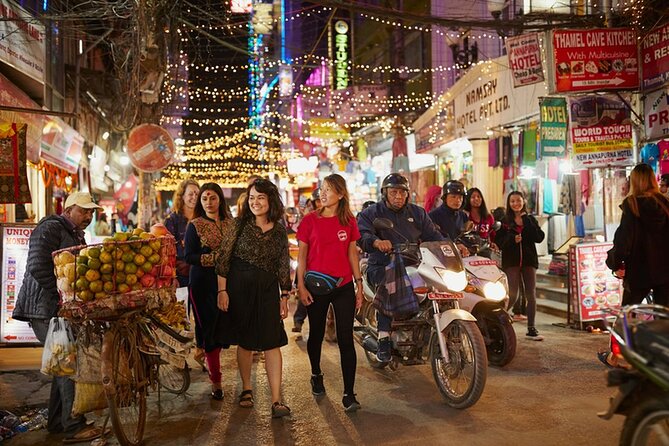
You begin at Hotel Marshyangdi in Thamel at 6 pm. This tourist quarter is packed with hotels, restaurants, shops, spas, clubs, and tour offices, so it is an easy place to start a first evening in Kathmandu.
The rickshaw changes the pace of the outing. You are not sealed inside a car, and you are not trying to walk through every crowded lane while watching your footing. From your seat, you can look down side streets, watch pedestrians squeeze past motorbikes, and notice storefronts selling scarves, baked goods, clothing, and small household items.
Your driver pedals through streets that would be hard to understand from a map. The route is not about getting from point A to point B as fast as possible. It is about seeing the city at street level, with horns, vendors, shrines, and the smell of food all arriving together.
The ride is also a practical choice for a short introduction. In two and a half hours, you cover several central areas without spending the whole evening on foot. Guides named Nikita and Sanjeeb have led this experience, and the strongest praise has centered on friendly explanations and skilled driving through uneven, crowded streets.
Still, keep your expectations realistic. A rickshaw is open to the street, so it does not offer quiet or much separation from traffic. The ride can be lively, and the pavement is not always smooth. If you want a calm, polished sightseeing trip, this may feel rough around the edges. If you want a direct look at Kathmandu’s daily rhythm, that roughness is part of its value.
More Rickshaw Tours in the world:
- Tokyo Asakusa Rickshaw Tour
★ 5.0 · 1,375 reviews - Bruges: Guided Rickshaw Tour
★ 4.9 · 1,199 reviews - Old Delhi Food, Heritage&Cultural Walk with Rickshaw ride to Masterji Kee Haveli
★ 5.0 · 742 reviews
Thamel to Asan, from tourist center to food market
The first section takes about 15 minutes and runs from Thamel toward Asan. Thamel is useful as a starting point, but it is not the most traditional part of the route. Its shops and restaurants cater heavily to visitors, so the real change begins as the rickshaw moves into the older market streets.
Asan is the first major stop and receives about 50 minutes. It is described as Kathmandu’s oldest food market, and the variety is the point. You may see spices, herbs, vegetables, clothing, electronics, and other everyday goods packed into a small area. The market is a working place, not a display arranged for sightseeing.
That distinction matters. You get a look at where people shop, meet, and pass through the city. The lanes can be crowded, so stay alert as you pause near stalls and shrines. Your guide helps connect what you see to the religious life of the area rather than leaving you to guess why a small temple sits beside a shop.
One important stop is Annapurna Temple. Annapurna is associated with abundance, and the name refers to food and fulfillment. The temple gives the market a clear religious context: food is not just a commercial product here, but part of a wider system of belief and daily practice.
The route also passes Seto Machindranath, known as Janabaha Dyo, a deity honored by both Hindus and Buddhists in Kathmandu. You also see Aakash Bhairab, linked with Yalambar, described as the first king in Nepal Bhasa tradition. These are the kinds of details that make the ride more useful than a simple circuit of attractive streets.
The stop at Asan is best for you if you enjoy small observations. Look at the mix of old monuments and modern shops. Notice how a temple may sit close to a market stall or a busy junction. Listen to the guide’s explanation, but also leave room to watch the activity around you.
Do not expect a long, quiet visit at each shrine. This is a moving city tour, and the route continues through narrow streets toward Durbar Square. The reward is range: you see commerce, worship, transport, and street life in one compact section.
Entering Kathmandu Durbar Square at sunset
The main stop lasts about 85 minutes, making it the heart of the experience. Kathmandu Durbar Square contains more than 50 temples and shrines within a small area, along with palaces, courtyards, and historic buildings connected with the Malla kings who ruled Kathmandu from the 12th through the 18th centuries.
This is where the evening timing helps. The fading light can outline temple roofs and carved wooden structures, while shops, food stalls, and people continue their evening routines nearby. The square does not become a silent museum after dark. Its appeal comes from the meeting of old monuments and present-day Kathmandu.
Your guide explains the monuments before you explore on foot. That guidance matters because the square can feel crowded with details. A carved doorway, a shrine in a courtyard, and a palace facade may each have a different story, but without context they can blur together. A good guide gives you a framework so you can spend your free time looking rather than simply trying to identify buildings.
One building to watch for is Gaddhi Baithak. Its white exterior reflects European influence and makes a sharp contrast with the older wooden temples and palace structures around it. It was built during the Rana period, and ceremonial programs still take place from its balcony.
That contrast is one of the square’s most interesting features. Kathmandu’s old center is not a single period preserved in isolation. You see layers of royal history, religious practice, later political power, shops, food sellers, and ordinary city life occupying the same few blocks.
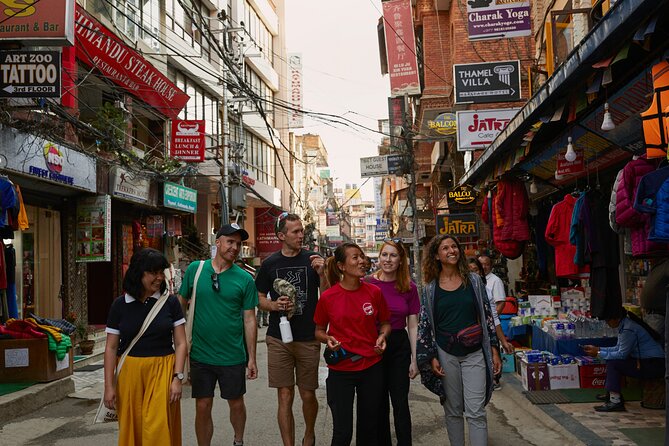
You have time to sit on a bench and watch people, or to continue through the nearby shops. Freak Street offers a link to Kathmandu’s 1960s hippie era, and you can browse the businesses that now line the area. A cup of chai from a local vendor or pub is not included, but it makes a sensible addition if you want to warm up during the walking stop.
The entrance fee is included in the tour price. That is convenient, but it also has a wider benefit: the fee contributes to the upkeep and preservation of Kathmandu Durbar Square. For a short tour, this makes the visit feel more complete than simply passing the complex from outside.
One practical point: evening light is atmospheric, but it is not ideal for every detail. You may prefer this timing for mood and people-watching, while a daylight visit is better if your main goal is close study of carvings and architecture. The tour gives you an evening introduction, not a full architectural inspection.
The return ride through Kathmandu’s night traffic
After your time in Durbar Square, you board the rickshaw again and return to Hotel Marshyangdi. The second ride brings a different mood. Vendors, motorbikes, pedestrians, and rickshaw horns form the soundtrack, and the city begins shifting toward nighttime activity.
The return route is part of the experience, not dead time. You see the same central area after dark, when shop lights and food stalls change the feel of the streets. The contrast with the earlier ride helps you notice how quickly Kathmandu’s public spaces change as the sun goes down.
The return is also where you should think about your own plans. The activity ends at the original meeting point, not at your hotel. One person who had trouble finding a way back arranged a separate rickshaw ride, and the useful lesson is simple: agree on the price before setting off in an independent rickshaw. Do not assume the tour’s included transport covers your onward trip.
Lighting can be limited in parts of Kathmandu, and the streets may remain busy. If you are unfamiliar with the city, plan your route back before the tour starts. The operator may be able to help arrange transport, but any extra ride is separate from this activity.
A few more rides around the world worth a look
- Bangkok by Night: Temples, Markets and Food Tuk-Tuk Tour
★ 5.0 · 3,752 reviews - Bangkok: Markets, Temples and Food Night Tour by Tuk Tuk
★ 4.9 · 2,371 reviews - Battambang: Tuk-Tuk, Bamboo Train, Killing/Bat Caves, Sunset
★ 4.9 · 1,436 reviews - Battambang Tuk Tuk tour: Bambootrain, Killing & Bat Caves,Sunset
★ 5.0 · 799 reviews
What the $50.30 price really covers
At $50.30 per person, the tour is not the cheapest way to see Durbar Square. You are paying for more than admission, though. The price includes the rickshaw hire, a local guide and driver, the walk through the square, and the entrance fee.
The value is strongest if you want a guided first look at central Kathmandu without arranging several separate pieces yourself. You get a small group capped at 12 people, which gives the guide a better chance to answer questions and keep the route together. You also support drivers directly because the company hires rickshaws from the people who operate them.
Food and drinks are not included. That is not a major problem, since Asan and Durbar Square offer chances to buy chai or snacks, but you should bring money if you want to add those stops. The price also does not include your transport after the tour ends.
The tour is carbon neutral and operated by a B Corp certified company. Those claims will not change what you see on the street, but the local business model is more concrete: the rickshaw drivers receive direct work, and the Durbar Square entrance fee supports cultural preservation.
I see the price as fair for a visitor who values orientation, local transport, and a guide’s explanations. It is less attractive if you already plan a full Kathmandu city tour that includes Thamel, Asan, and Durbar Square. One person noted the overlap, and that is worth taking seriously. Check your other bookings before paying for a second pass through the same central sights.
Who will enjoy this evening outing most
This is a good fit if you have just arrived in Kathmandu and want a quick sense of the city before exploring on your own. The route gives you several useful reference points: Thamel, Asan, Durbar Square, and Freak Street. Afterward, those names will mean something on a map.
It also suits you if you prefer a relaxed introduction rather than a long walking tour. You still walk for about 85 minutes in Durbar Square, but the rickshaw handles much of the distance between districts.
Families can join, and children under six are admitted free. Most people can take part, according to the tour information, but you should be comfortable with crowded streets, uneven pavement, and an open vehicle. The activity is not designed as a quiet or formal heritage lecture.
The tour works especially well during a festival. One evening coincided with a local celebration, bringing drums, chanting, dancing, and large crowds into the route. Festivals are not guaranteed, so treat this as a possible bonus rather than something to plan around.
You may want to skip it if you dislike traffic noise, have little interest in markets, or want every sight in bright daylight. You may also want a different tour if you need more time inside the monuments or a detailed focus on architecture.
Small-group size, guide quality, and practical comfort
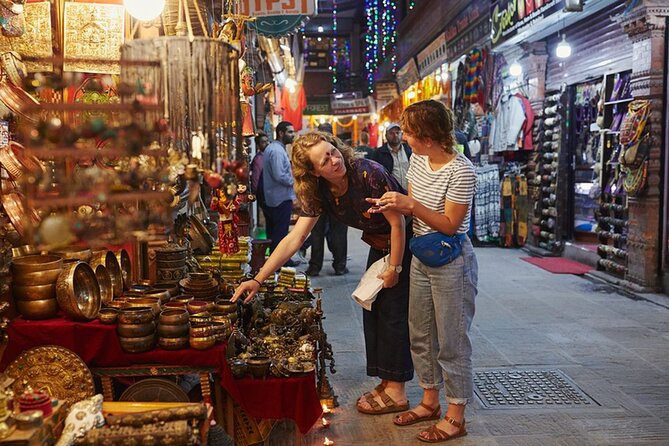
A maximum of 12 people is a useful limit in Asan’s tight lanes. A large group would be harder to keep together, especially when the route passes food stalls, shrines, and moving traffic. The group size also makes it easier to hear the guide before and after the rickshaw sections.
Guides such as Nikita and Sanjeeb have been singled out for clear teaching, a welcoming manner, and affection for Kathmandu. That personal connection matters here. The tour depends on someone pointing out small religious and historical details that you would probably miss from the back of a vehicle.
The driver’s skill matters just as much. The rickshaw moves through narrow, uneven, crowded streets, and one guide-driver team was praised for handling those conditions well. You should still expect stops, tight turns, horns, and occasional jolts. Wear comfortable shoes for the square and clothing suited to an evening outside.
Confirmation arrives when you book, and the activity uses a mobile ticket. You can cancel for a full refund up to 24 hours before the 6 pm start time. Changes or cancellations made inside that window are not accepted for a refund.
Should you book the Kathmandu Sunset Tour?
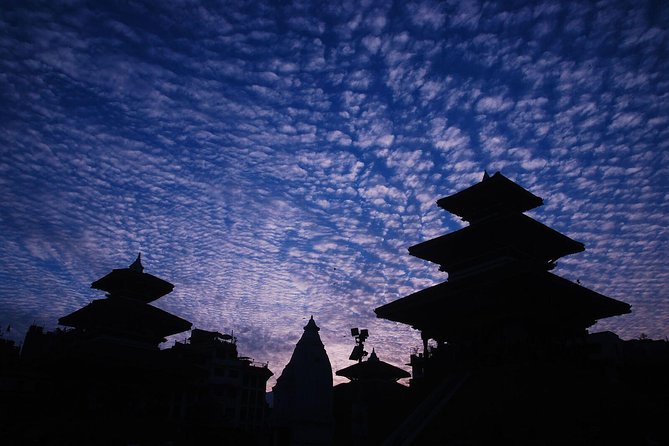
Book it if you want a friendly, compact introduction to central Kathmandu that combines local transport, market streets, shrines, and a proper stop in Durbar Square. The best parts are the ride through Asan, the guide’s explanations, the changing evening light, and the chance to watch Kathmandu move around you rather than simply passing it from a car.
Think twice if you have already booked a similar central Kathmandu city tour. There is likely to be overlap, and daylight may serve you better if detailed architecture is your priority.
For a first evening, I would choose this tour for its range and ease. You get a useful orientation, entry to one of the city’s major historic sites, direct support for rickshaw drivers, and enough free time to look around on foot. Just plan your ride home, carry a little money for chai or snacks, and agree on any separate rickshaw fare before you leave.
FAQ
Where does the Kathmandu Sunset Tour begin?
The tour begins at Hotel Marshyangdi on Chaksibari Marg in Kathmandu.
What time does the tour start?
The stated start time is 6 pm.
How long does the experience last?
The tour lasts approximately 2 hours and 30 minutes.
Where does the tour end?
The activity ends back at the original meeting point, Hotel Marshyangdi.
Is the Durbar Square entrance fee included?
Yes. The Kathmandu Durbar Square entrance fee is included.
Is the rickshaw ride included in the price?
Yes. Rickshaw hire is included, along with a local guide and driver.
Is food included?
No. Food and drinks are not included, though you may have opportunities to buy chai or snacks during the visit.
How many people can join the tour?
The maximum group size is 12 people.
Can children join the tour?
Yes. The tour is child-friendly, and children under six may join free of charge.
Can I cancel for a full refund?
Yes. You can cancel at least 24 hours before the start time for a full refund. Cancellations or changes made less than 24 hours before the start time are not accepted for a refund.
Just added around the world
- Village Expedition in Yala By Tuk-Tuk from Hambantota Harbor★ 5.0 · 2 reviews
- Winter Champagne Tour by Rickshaw★ 4.3 · 10 reviews
- Valencia: Tuk Tuk Modern Tour★ 5.0 · 6 reviews
- Valencia: Visit the Historic Center of Valencia by Tuk Tuk★ 5.0 · 2 reviews
- Valencia: TukTuk Tours★ 4.9 · 39 reviews
- Udaipur Local Sightseeing Tour by Tuk-tuk (Rikshaw)★ 4.5 · 3 reviews
- Valencia: 1-hour Private Tuk Tuk Tour★ 4.9 · 60 reviews
- Tuktuk tour in historical old lisbon, city center and Belem★ 4.8 · 5 reviews
Evening Experiences, compared.
Bangkok by Night: Temples, Markets and Food Tuk-Tuk Tour
Read our review →
Markets, Temples and Food Night Tour by Tuk Tuk
Read our review →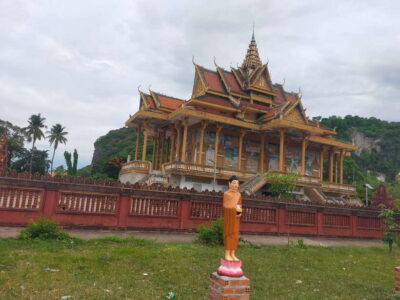
Tuk-Tuk, Bamboo Train, Killing/Bat Caves, Sunset
Read our review →
Battambang Tuk Tuk tour: Bambootrain, Killing & Bat Caves,Sunset
Read our review →
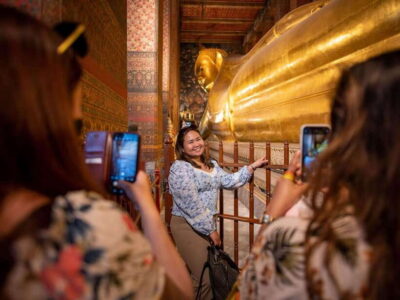
Evening Tour with Wat Arun, Wat Pho & Tuk Tuk Ride
Read our review →
Bangkok Tuk-Tuk Tour by Night with Chinatown Street Food Meal
Read our review →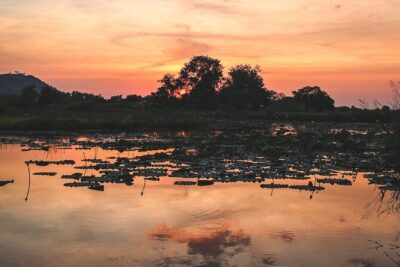
Browse the lists this tour appears in