
Review · PORTO
Porto Tuk Tuk: Clérigos, Seaside & Viewpoints – with Options
Porto is a city of steep streets, river overlooks, grand churches, and salty Atlantic air. This private tuk-tuk tour gives you a fast look at all of it, from Batalha Square and Clérigos to Fontainhas, the Douro, Gaia, and the seaside. It is a smart way to get your bearings before spending the rest of your stay on foot.
I like two things right away: you cover a lot of ground without climbing every hill, and a private guide can adjust the pace and route. Guides such as João, Ricardo, Elena, Pedro, and Helena have been praised for good local tips, personal stories, and an easy willingness to stop for photos or answer questions.
The catch is the vehicle itself. Some tuk-tuks have a low roof or limited side visibility, and the ride can be bumpy on Porto’s old streets. If you want a clear view in every direction, or you dislike rough roads, a walking tour may suit you better.
Key points to know before you book
- A useful first look at Porto: The route links the historic center, river viewpoints, Gaia, gardens, and the coast in about three hours.
- Private means flexible: Only your group rides, so you can ask for photo stops, questions, or small route changes.
- Fontainhas gives you a fine first panorama: This ten-minute stop looks across the city and helps you understand Porto’s steep layout.
- Palácio de Cristal adds breathing room: The gardens offer a peaceful break, fountains, sculptures, and Douro views.
- The guide makes the difference: João, Ricardo, Elena, Pedro, Helena, Diogo, Tiago, and Ruben have all been praised for friendly, personal guiding.
- Check the vehicle before committing: Side panels, a low roof, and limited visibility can affect how much you see while moving.
Why a tuk-tuk works well in Porto
Porto rewards walking, but it does not always make walking easy. Streets rise and fall sharply, the old center is compact but tiring, and several good viewpoints sit above the main sights. A tuk-tuk handles the climbs while letting you move between districts faster than you could on foot.
You will not get the same close-up feel as a walking tour. Much of the experience is viewed from the seat, with brief stops for photos and orientation. Still, the format is useful when you have only a short stay, arrive by cruise ship, or want to save your legs for later.
The private setup is especially helpful. You are not sharing the ride with a large group, and the guide can respond to your interests. Ask for more churches and history, more viewpoints, more of Gaia, or more coastal scenery. The route is not a fixed museum visit, so speak up early.
The tour is offered in English and costs about $42.34 per person. That price has good value for a private three-hour ride if you are traveling with a small group and want transport, commentary, and sightseeing in one package. It is less compelling if you plan to visit only the old center, since much of that area is easy to cover by foot.
The booking information can show several duration choices, including one, two, three, or four hours, while the main experience is presented as a three-hour outing. Check the exact option you select. That small detail matters, especially if you are fitting this around a train, cruise departure, or restaurant booking.
More Viewpoint Tuk Tuk Tours in Portugal
- Porto Tuk Tuk Tour: Clérigos, Scenic & Viewpoints – 1H to 4H
★ 4.6 · 55 reviews - Lisbon: Old Town TukTuk Tour and Scenic Viewpoints in Alfama
★ 5.0 · 974 reviews - Explore Lisbon by Tuk Tuk: History and Viewpoints
★ 5.0 · 840 reviews
Starting at Batalha Square
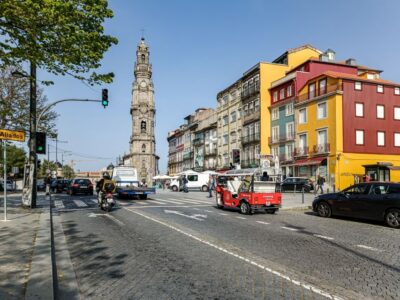
The meeting point is at R. de Alexandre Herculano 251, close to Porto’s historic center and Batalha Square. Batalha is a sensible place to begin because it sits near several major sights, including the São João National Theatre and the Church of Santo Ildefonso.
This is not just a place to gather and leave. Batalha helps set the tone for Porto. You are already surrounded by old stone, tiled façades, and the layered streets that make the city so distinctive. From here, the tuk-tuk can move into areas that would take more effort to reach on foot.
At the start, tell your guide what you want from the ride. Guides such as Pedro have been praised for asking about interests before shaping the route. Ricardo has been praised for answering questions and helping with restaurant suggestions. That kind of conversation is worth using. A private tour is most valuable when it becomes your tour, not simply a standard circuit.
Fontainhas viewpoint and Porto’s steep profile
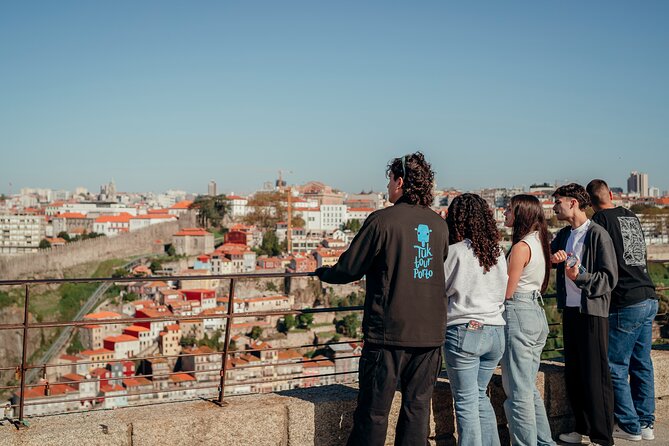
The Fontainhas Viewpoint is listed as a ten-minute stop. That may sound brief, but it is enough for a look, a few photographs, and a quick explanation of how Porto fits together.
From Fontainhas, you can take in the layered city and the Douro area below. The viewpoint also makes the tuk-tuk’s purpose clear. Porto’s hills are not a minor detail. They shape the streets, the views, and the effort needed to move from one neighborhood to the next.
Your guide may point out the city’s bridges and the relationship between Porto and Vila Nova de Gaia. The short stop is not designed for a long visit or a museum entry. Think of it as a visual lesson in the city’s layout.
If photography matters to you, ask where the vehicle will stop and how much time you have. Some riders have found it hard to photograph through the tuk-tuk’s sides or beneath a low roof. The best images will usually come at the designated stops, not while the vehicle is moving.
The Luís I Bridge and Porto’s river connection
The route includes views of the Luís I Bridge and the Maria Pia Bridge. The Luís I Bridge is one of Porto’s most recognizable structures, linking Porto with Gaia across the Douro. Its upper and lower levels give the riverfront a strong sense of height and movement.
The Maria Pia Bridge, associated with Gustave Eiffel, adds another piece of the city’s engineering story. The bridge was built between 1875 and 1877, while the Luís I Bridge was built between 1881 and 1886 under engineer Théophile Seyrig, who had worked with Eiffel. The tour description connects both bridges with Eiffel, so your guide can help sort out their different roles and dates.
This is one of the moments when a live guide adds value. A photograph of a bridge is easy to take. Understanding why there are several major crossings, how Porto and Gaia face one another, and why the river shaped local trade makes the view more meaningful.
You may cross into Gaia or see it from Porto, depending on the selected route and the guide’s plan. Several guide-led routes include Gaia, Afurada, port-related stops, or views from the opposite bank. Ask at the beginning if those places matter to you.
More Viewpoint Rides in Porto:
- Funchal: Best Viewpoints Guided Tuk Tuk Tour
★ 4.9 · 402 reviews - Mijas: Panoramic city tour in an electric Tuk Tuk
★ 5.0 · 329 reviews - Assisi: Panoramic Tuk Tuk Tour
★ 4.9 · 220 reviews - Lisbon on a Tuk Tuk Tour: History & Viewpoints
★ 4.9 · 204 reviews
Palácio da Bolsa and the old commercial quarter
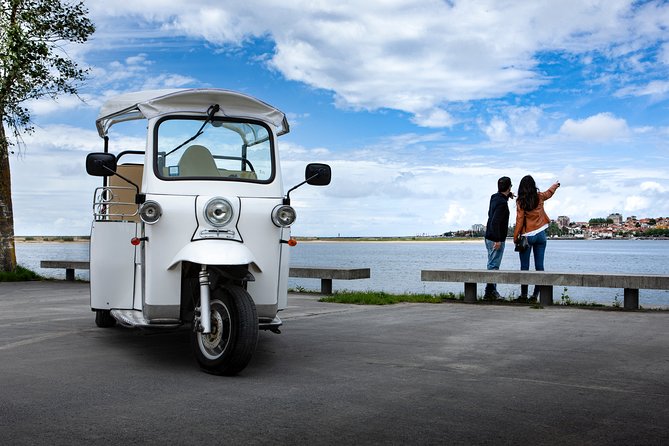
The Palácio da Bolsa is another important sight along the route. Construction began on October 6, 1842, and the building combines Tuscan and neoclassical design with later English and Arabic influences.
The exterior gives you a sense of Porto’s former commercial power. Inside, the Arab Room is the famous showpiece, with ornate decoration that is far removed from the restrained stone exterior. The tuk-tuk tour does not include monument admission, so you should not expect an interior visit as part of the $42.34 price.
That limitation is worth keeping in mind. You will see and hear about important buildings, but this is an overview rather than a ticketed architectural tour. If the Palácio da Bolsa matters to you, return later for an interior visit and allow separate time and money for admission.
The same applies to other monuments. Tickets and entrance fees are not included. The private guide can help you decide what deserves a return visit, which is one reason this works well near the start of your Porto stay.
Palácio de Cristal gardens and the Douro views
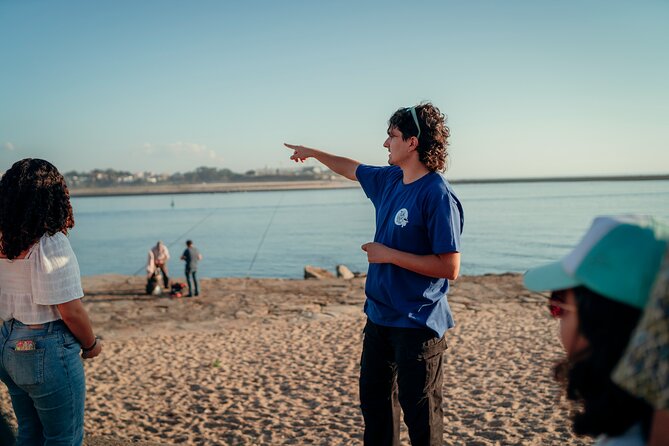
The 15-minute stop at the Jardins do Palácio de Cristal is one of the tour’s calmer sections. The original 19th-century palace is gone, replaced by the Rosa Mota Pavilion, but the gardens remain.
You can expect fountains, sculptures, landscaped paths, and broad views toward the Douro. This stop is less about checking off a famous building and more about giving you space to pause. Porto can feel dense and steep in the center, so the gardens provide a welcome change of pace.
I would use these fifteen minutes for photographs and orientation. Look toward the river, notice how high the gardens sit above it, and ask your guide about places you might want to revisit. The stop is free, which keeps the tour price focused on the private vehicle and guide rather than admission charges.
Do not expect a long garden walk. Fifteen minutes passes quickly, and the route includes several districts. If you want a slow visit through Palácio de Cristal, plan to return independently.
The riverfront, Gaia, and the Atlantic side
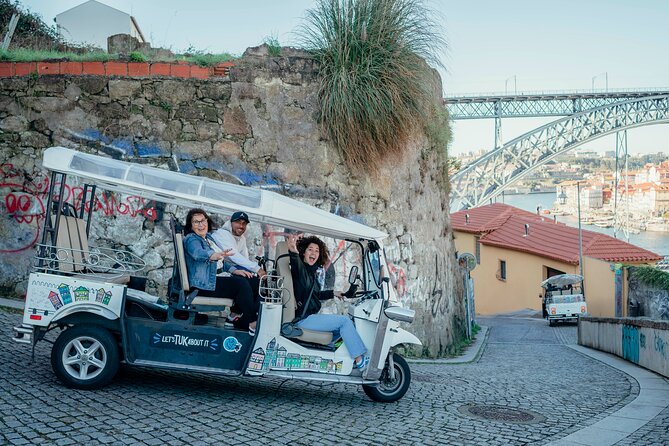
The experience is built around more than Porto’s central streets. It also reaches riverfront areas, Gaia, and seaside neighborhoods. Some routes include Afurada, a traditional fishing village with colorful homes, outdoor fish cooking, a communal washhouse, and a more local feel than the main sightseeing streets.
Those details are among the most appealing parts of the experience. Seeing fish cooked outdoors or noticing a shared washhouse gives you a glimpse of daily life rather than another grand façade. These stops may depend on the route option and the guide, so ask clearly if Afurada is a priority.
The seaside section can include ocean views, a stone-walled fortress, beaches, and the Foz area. The change is striking. In one ride, you move from old churches and steep lanes to open water and coastal air.
You may also pass through Ribeira, see Porto Cathedral and Clérigos, visit a market, or stop for a quick port tasting in Gaia. These additions appear in the way the guides shape individual private rides. They are useful possibilities, but you should confirm what is planned rather than assume every one will fit into three hours.
Guides who bring the route to life
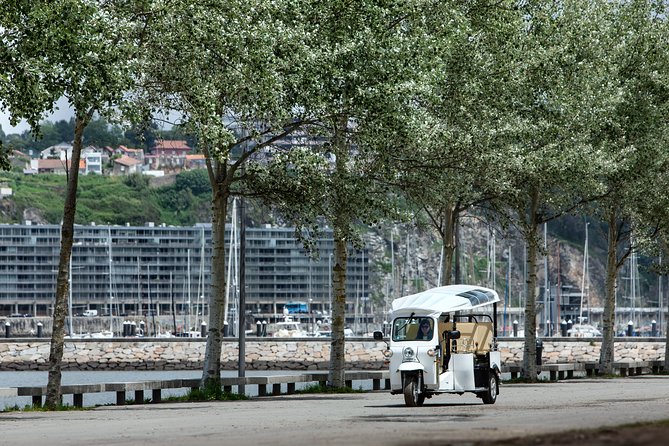
The strongest part of this experience is the guide. João has been praised for choosing good lookouts and making the ride personal through shared interests. Ricardo is noted for patience, clear answers, flexibility, and practical restaurant advice.
Elena has been praised for combining popular sights with less familiar places. Helena has guided rides toward Afurada and shared local connections to Porto and Gaia. Pedro has been praised for tailoring the route, explaining the city’s past, and adding a short port tasting in Gaia.
Other praised guides include Diogo, Tiago, Ruben, Rafael, Vinnie, and Joel. Diogo adjusted the route for someone who had already taken a historical walking tour. Tiago was praised for taking time with questions, while Ruben was noted for making small route changes without fuss.
These details point to a useful strategy: tell the guide what you have already seen. If you have visited the cathedral or taken a walking tour, ask for viewpoints, Gaia, Afurada, or the coast instead. If this is your first hour in Porto, ask for the main historic sights and a simple explanation of the city’s layout.
The commentary may not always be perfectly structured. One rider found the explanation random and had to request a stop at the cathedral. That is a fair warning. Be polite but direct about the sights you care about.
Comfort, visibility, and weather
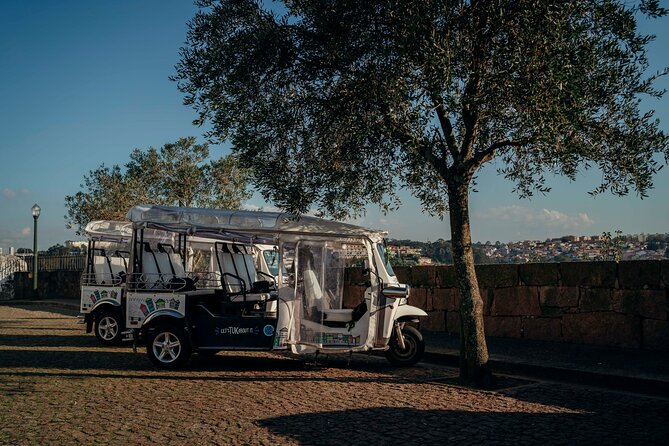
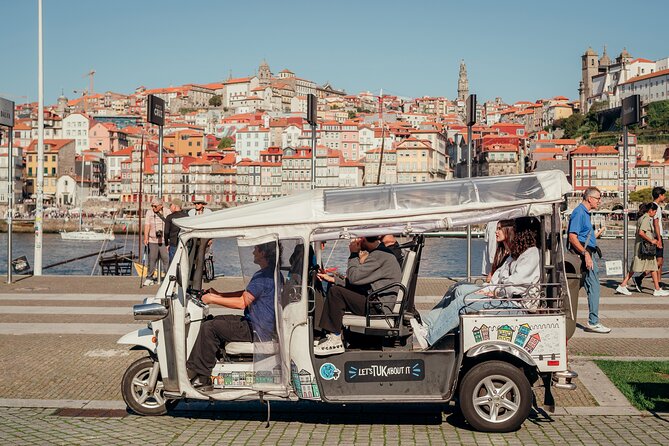
Tuk-tuks are fun, compact, and suited to narrow streets. They are not luxury vehicles. Several people have found the ride bumpy, and some have had trouble seeing through the sides. A low roof can make it harder to photograph buildings as you pass.
You can reduce the problem by treating the ride as a series of stops rather than a moving photo session. Keep your camera ready for viewpoints, and ask the guide to pause when a building matters to you. If you have mobility concerns, confirm the vehicle setup before booking, since the information only says most people can participate.
Children under seven are not allowed. Service animals are allowed, and the meeting point is near public transportation. Snacks are not included, so bring water or plan to buy something before or after the ride.
The experience requires good weather. If poor weather forces a cancellation, you will be offered another date or a full refund. You can also cancel for a full refund up to 24 hours before the start time. Changes or cancellations inside that window are not accepted.
Who should book this Porto tuk-tuk tour?
I would recommend it to first-time visitors who want a city overview before choosing where to spend more time. It also suits cruise passengers, couples, families with children aged seven or older, and anyone who would rather avoid Porto’s steep climbs.
It is a good match for you if you like local conversation, flexible sightseeing, and a mix of famous sights and ordinary neighborhoods. It is especially useful when you want to see the river, Gaia, and the coast without arranging several separate rides.
I would hesitate if your main goal is detailed interior visits, long walks through gardens, or uninterrupted views from the vehicle. The tuk-tuk can be noisy and rough, and the roof or side panels may limit photography. A private walking tour followed by public transport could suit you better if you want depth at fewer places.
Should you book it?
Book this tour if you want to see Porto’s range quickly, from Batalha and Fontainhas to the Douro, Gaia, and the Atlantic side. The private format, friendly guides, and flexible route give it a strong edge over a large bus.
Before you go, ask about the vehicle’s side openings, confirm the exact duration, and name your priorities. Request Afurada or the coast if those matter more than another pass through the center. With realistic expectations about the bumpy ride and short stops, this is a useful and enjoyable way to begin a Porto stay.
FAQ
How long does the Porto tuk-tuk tour last?
The experience described here lasts about three hours. Booking choices may show different durations, including one, two, three, or four hours, so check the exact option selected.
What is the price?
The listed price is $42.34 per person. It includes a private tour and private guide.
Where does the tour start?
It starts at R. de Alexandre Herculano 251, 4000-053 Porto, Portugal, near Batalha Square.
Where does the tour end?
The activity ends back at the meeting point.
Are tickets and food included?
No. Monument entrance tickets and snacks are not included.
Are children allowed?
Children under seven years old are not allowed. Most other participants can take part, and service animals are allowed.
Can I cancel for a refund?
Yes. You can cancel at least 24 hours before the start time for a full refund. Cancellations or changes made less than 24 hours before the start are not accepted. If poor weather causes the operator to cancel, you will be offered another date or a full refund.
Just added around Porto
- 2 Hour Discover Gaia on a Private Eco-Friendly Tuk Tuk Tour★ 4.0 · 4 reviews
- 2 Hour Private Tuktuk Tour in Porto to Monastery and Cellars★ 4.5 · 7 reviews
- 3 Hour Tuk tuk Tour in Porto★ 4.5 · 60 reviews
- Discover Porto on a 2-Hour Shared Electric TukTuk★ 4.5 · 11 reviews
- Tours in the Port DE Tuk Tuk★ 5.0 · 38 reviews
- Explore Porto Aboard A Classic Tuk-Tuk tour 1h★ 5.0 · 22 reviews
- Porto: tuk tuk adventure tours old town 1h★ 5.0 · 33 reviews
- Private Port: Tuk Tuk and boat with local guides★ 5.0 · 4 reviews
Porto Tuk Tuk Tours, compared.
Guided Tour by Tuk-Tuk & Optional Douro River Cruise
Read our review →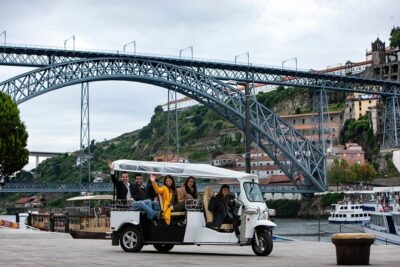
Discover Porto’s Highlights on a 2-Hour Private Electric Tuk Tuk
Read our review →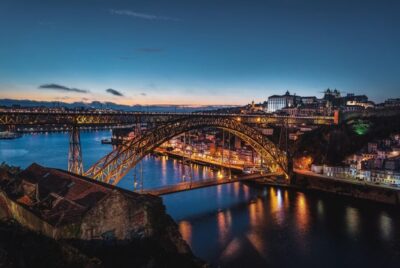
Historic Porto by Private Electric Tuk Tuk to Top Landmarks
Read our review →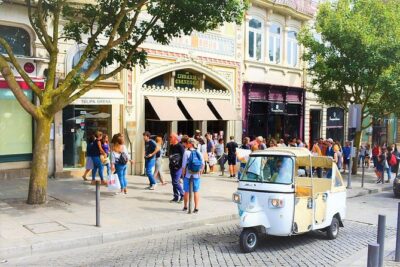
Porto Guided Tour to the Historical Center on a Tuk Tuk
Read our review →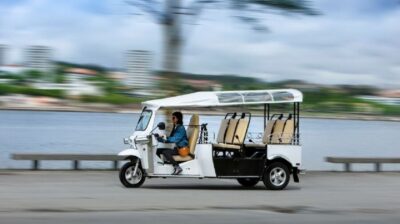
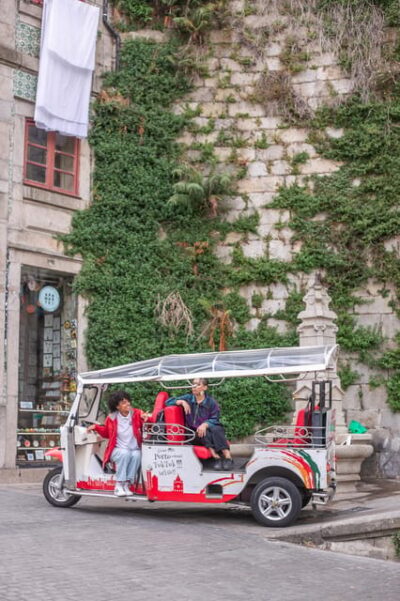
Oporto Tuk-Tuk Tour: Fast, Fun & Flexible – 1H to Full Day!
Read our review →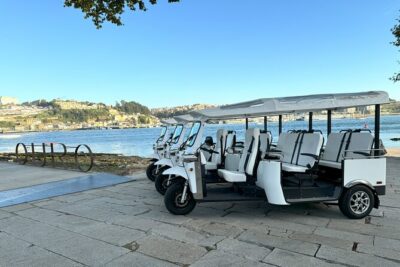
Browse the lists this tour appears in