Review · NEW DELHI
Private Rickshaw Tour of Old Delhi Heritage with Food Tasting
Old Delhi makes its first impression through the senses: spice dust in the air, silver jewelry behind narrow shop fronts, bright wedding trim, hot snacks and the creak of a rickshaw easing through the crowd. This tour gives you a focused four-and-a-half-hour route through the old walled city, with food and market stops built in.
I like the way the tour combines specialist markets with local food, rather than treating Old Delhi as just a quick photo stop. I also like the small-group format, capped at 12 people, and the chance to see lanes such as Naughara that are easy to miss on your own.
The main drawback is the physical setting. You will walk through crowded bazaars, use uneven streets and deal with noise, traffic and strong food smells. Hotel transfers are not included, and the language guide is subject to availability, so confirm those details before booking.
Key things to know before booking
- Six distinct Old Delhi stops: The route covers wedding goods, jewelry, embroidery, a Jain lane, a historic Sikh shrine and Asia’s largest wholesale spice market.
- Food is part of the tour: You receive a traditional meal, street-food tastings, snacks and bottled water. Food is vegetarian unless you request otherwise.
- A rickshaw ride breaks up the walking: Depending on local conditions, this may be a cycle rickshaw, electric rickshaw or tuk-tuk.
- A private setting with a small maximum: Only your group participates, with no more than 12 people.
- The route ends near Jama Masjid: You start near the Red Fort and finish at Gate Number 3, close to Jama Masjid.
- Guide quality matters here: Saurabh Tiwari is associated with especially warm, helpful service, but guide language and assignment depend on availability.
Why this Old Delhi route works
Old Delhi is not a place you understand from a car window. Its character is packed into narrow streets and market lanes, where one block may be devoted to wedding decorations and the next to silver jewelry or sacks of cardamom. A private walking tour is useful because the guide can explain what you are seeing while helping your group move through the crowds.
This experience focuses on the commercial heart of the old city. You are not simply shown a monument, given a short explanation and sent on your way. Instead, the route follows the working markets that have shaped daily life in this part of Delhi for centuries.
The food adds a useful layer. A meal and small tastings let you connect the markets with what people eat, trade and celebrate. The exact food stops are not specified, so you should treat this as a chance to sample selected vegetarian foods rather than a fixed restaurant menu.
The private format is another strong point. Your group can ask questions about spices, jewelry, religious sites or shopping without waiting for a large crowd. With a limit of 12 people, the tour should feel more manageable than a mass-market walk, though the streets themselves will still be busy.
More Rickshaw Tours in India
- Old Delhi Food, Heritage&Cultural Walk with Rickshaw ride to Masterji Kee Haveli
★ 5.0 · 742 reviews - 3-hour Old Delhi Heritage Walking tour with Rickshaw Ride
★ 5.0 · 240 reviews - 3-Hour Old Delhi Heritage Walking tour with Rickshaw ride
★ 4.6 · 158 reviews
Starting near the Red Fort and Chandni Chowk
The meeting point is on Angoori Bagh Road near Lajpat Rai Market, at Gate Number 3, where car and bus parking is available. This places you near the Red Fort and the Chandni Chowk area, a practical starting point for exploring the old walled city.
Chandni Chowk is described as the wedding market, though its reach is much wider. You will pass wholesale and local shops selling bridal clothing, shoes, carpets, lights and other goods. The appeal is not just shopping. It is seeing how the market serves real celebrations and everyday trade throughout the year.
Allow your eyes time to adjust. Shop fronts are crowded with color and merchandise, while lanes can feel narrow and hard to read without help. I would stay close to the guide at this stage, especially if this is your first visit to Old Delhi.
You do not need to plan on buying anything. Shopping is not included, and the tour is better understood as a guided look at the market system. If you do want to purchase something, keep your group moving and ask the guide for help with where to browse.
Dariba Kalan and the jewelry trade
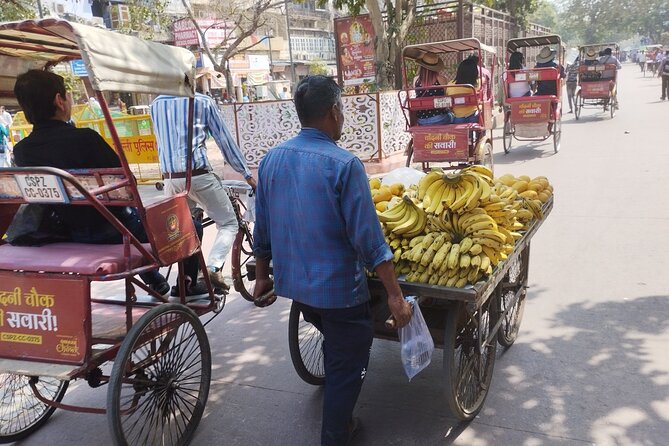
The next stop, Dariba Kalan, takes you along a 17th-century street known for gold, silver, diamond and costume jewelry. Some shops also sell ittar, a traditional form of perfume. The stores are said to trace their trade back to the early 19th century.
This is one of the more specialized parts of the route. You get a chance to see how Old Delhi serves both ceremonial life and personal style, from valuable metals to scented oils and less expensive costume pieces.
The practical point is simple: this is a market visit, not a shopping guarantee. Buying jewelry can require time, trust and careful comparison. Since purchases are not part of the tour price, ask questions freely but do not feel pressured to buy.
For many people, the value here lies in context. A guide can explain what kinds of goods are sold in this lane and how the shops fit into the larger commercial pattern of Chandni Chowk. That makes the stop more useful than wandering past jewelry windows without knowing what you are seeing.
Kinari Bazaar, where celebrations become merchandise
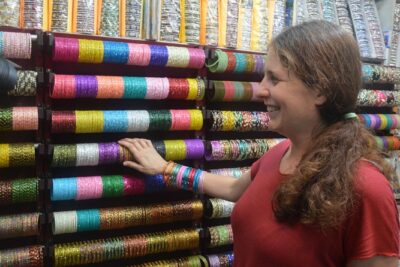
Kinari Bazaar is devoted to embroidery supplies and decorative goods. Look for lace, thread work, borders, stonework, garlands and gold or silver embellishment. The market draws craft and decorative traditions from across India.
This stop helps explain why Old Delhi can feel like a giant workshop as well as a shopping district. The goods are not only finished products. They are also materials used to make wedding clothing, ceremonial decorations and other items for major occasions.
I like this part of the tour because it gives you something specific to look for. Instead of being told that the bazaar is colorful, you can study the small details: the trim, patterns, metallic work and bundles of material packed into the shops.
The possible downside is that wholesale markets can be visually crowded and repetitive if you are not interested in textiles or decoration. The guide’s explanation makes a real difference here, so this is a good place to ask how the materials are used.
More Rickshaw Tours in New Delhi
- Old Delhi: 3-Hour Tuk-Tuk/Rickshaw Tour
★ 4.7 · 137 reviews - Luxury Rickshaw Tour of Old Delhi
★ 5.0 · 106 reviews - Old Delhi Heritage Walk with Rickshaw Ride
★ 5.0 · 68 reviews - Old Delhi – Hidden Gems Tour on Rickshaws with Guide & Audio Headsets
★ 5.0 · 54 reviews
Naughara and a quiet Jain lane
Naughara means a row of nine houses. This lane contains nine mansions and ends at one of Old Delhi’s old Jain temples. After the market noise, the change in mood can be welcome.
The charm of this stop comes from its scale. You are looking at a lane and a group of houses rather than a major public monument. That makes it a useful counterpoint to Chandni Chowk and Khari Baoli, where commerce dominates every step.
The temple is a religious place, so follow the guide’s instructions about respectful behavior. The provided details do not specify interior access, dress rules or photography rules, so do not assume that every part of the site can be entered or photographed.
At about 30 minutes, this is a short stop, but it may be one of the most memorable sections for anyone who likes architecture and quieter corners. It also shows why a local route matters: lanes such as this are easy to pass without realizing what lies behind them.
Gurudwara Sis Ganj Sahib and the city’s Sikh story
Gurudwara Sis Ganj Sahib is one of Delhi’s nine historic gurdwaras. It was first constructed in 1783 by Baghel Singh Dhaliwal to commemorate the martyrdom site of the ninth Sikh Guru, Guru Tegh Bahadur.
The scheduled visit lasts about 40 minutes. That gives you time to understand the site as more than a stop between markets. It adds a religious and historical dimension to a route otherwise dominated by trade, food and shopping streets.
Dress and behavior should be respectful at any gurdwara. The supplied details do not state specific clothing requirements, so your guide is the best person to ask for current instructions when you arrive.
This is also a good point to slow the pace. Old Delhi can push you along with its traffic and crowds, but religious sites ask for more attention. Listen to the explanation, observe how the space is used and avoid treating the visit as a quick backdrop for photographs.
Khari Baoli and the spice market
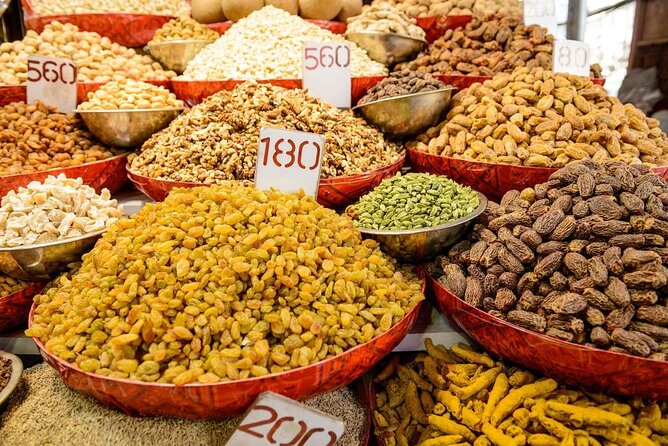
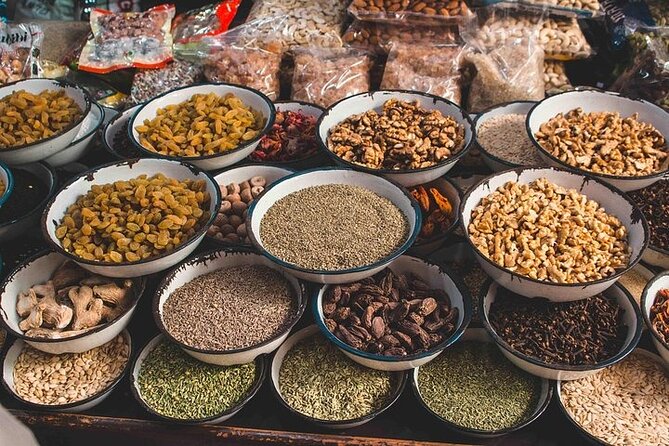
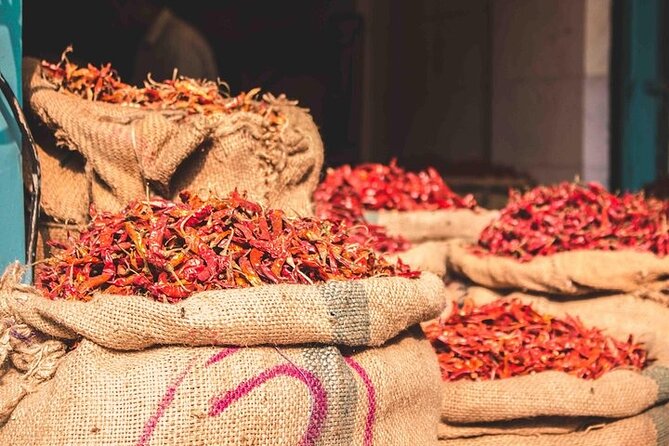
Khari Baoli is the tour’s sensory finale. It is described as Asia’s largest wholesale spice market, operating since the 17th century and selling spices, nuts, herbs, rice, tea and other food products.
Here, you will likely notice the smells before you understand the layout. Sacks, shop displays and wholesale goods create a very different scene from the jewelry and wedding markets. The stop gives the food tastings a clear setting, since you can connect what you eat with the ingredients moving through the market.
The scheduled visit is about 40 minutes. That is enough for an introduction, but not enough to study every corner of a large wholesale district. Stay near your guide and be mindful of shop workers carrying goods through narrow lanes.
Strong aromas and dust may bother some people. If you have a sensitivity to spices or respiratory problems, consider that before booking. The route calls for moderate physical fitness, and this section may be tiring after several hours of walking.
Food tastings and the meal
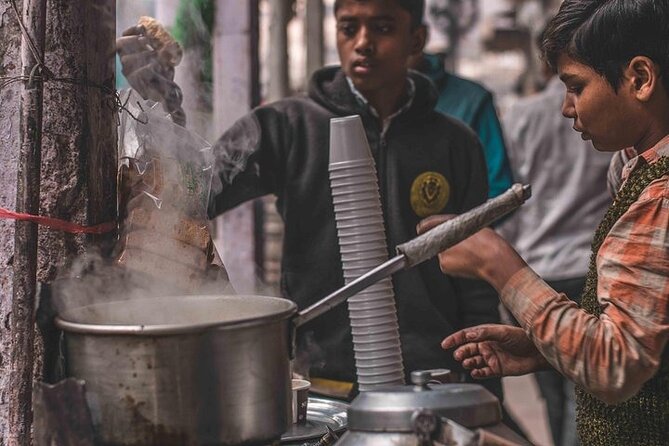
Food is included in several forms: a traditional breakfast, lunch or dinner depending on the time of the walk, plus street-food tastings, snacks and bottled water. All food is vegetarian unless you specify otherwise.
That timing matters. You are not choosing from a restaurant menu at a set hour. The meal depends on when your tour takes place, so confirm the schedule if you need to plan around medication, children’s meals or a strict diet.
You should provide any dietary requirements when booking. The experience promises selected food stops rather than a detailed menu, so the guide needs advance notice to understand your needs.
The food component is valuable because Old Delhi’s markets are tied to cooking, trade and celebration. It also saves you the trouble of deciding which street-food stalls look clean or suitable when you are unfamiliar with the area. Still, personal tolerance varies, and tasting food in a busy market is not the same as dining in a controlled restaurant.
The rickshaw ride and the walking pace
A traditional transport segment is included, using a cycle rickshaw, electric rickshaw or tuk-tuk. The exact vehicle depends on local conditions. This gives your feet a break and lets you experience Old Delhi from street level without turning the whole tour into a vehicle ride.
Do not expect a long scenic journey. In this setting, the ride is best seen as part of the experience and a practical change of pace. Narrow streets, pedestrians and market activity shape how quickly the vehicle can move.
You still need a moderate level of fitness. The route includes about four and a half hours of walking, standing and moving through crowded commercial areas. Wear comfortable shoes and clothing suitable for a warm, busy city setting.
Price, group size and what you receive
At $49.30 per person, the price is reasonable if you value a private guide, food and transport within the route. You are paying for more than a simple walk: the package includes a meal, tastings, snacks, water, the rickshaw segment and an English-speaking guide.
The strongest value comes from the combination. Hiring a guide only for market orientation would not cover the food and transport elements, while exploring alone could mean missing the purpose of individual bazaars. The tour also reduces the guesswork involved in choosing street-food stops.
The price does not include shopping, tips or hotel pickup and drop-off. The experience information says pickup is offered, but the inclusions specifically exclude hotel transfers, so confirm exactly what pickup means for your booking. The stated end point is near Jama Masjid, not back at your hotel.
This is a private activity, though the maximum is 12 people. That is a useful middle ground: more personal than a large group, but not necessarily an intimate one-person tour.
Guide support and practical planning
The guide is an important part of this experience. Saurabh Tiwari is praised for being funny, helpful and willing to assist beyond the basic sightseeing schedule. One account describes him helping with a cosmetics purchase even after a short four-day guiding period, which suggests a service style that goes beyond reciting facts.
That does not mean Saurabh will definitely lead your tour. The package specifies an English-speaking guide, while other languages are available on request and subject to availability. If you need a particular language or hope to meet a named guide, ask before confirming.
Children must be accompanied by an adult. The activity requires good weather, and it can be moved or refunded if rain or another weather problem causes cancellation. A minimum number of bookings is also required, with an alternative date or full refund offered if the operator cancels for that reason.
Free cancellation is available up to 24 hours before the start time. Changes or cancellations made inside that period are not refunded, so check the local cut-off time before making last-minute plans.
Should you book this Old Delhi food and market tour?
Book it if you want Old Delhi explained through working markets, food and religious sites rather than only its famous monuments. It is especially suitable if you are visiting for the first time, enjoy trying vegetarian street food and prefer a private guide who can help you make sense of crowded lanes.
It is less suitable if you dislike crowds, strong smells, walking or uncertainty about the exact food menu. Serious shoppers should also note that the tour is not a dedicated buying trip, and hotel transportation is not included.
For the best fit, treat this as a guided introduction to Old Delhi’s commercial and cultural life. The route from Chandni Chowk to Khari Baoli covers a lot in one morning or afternoon, and the mix of market knowledge, food, religion and rickshaw travel gives you a fuller picture than a monument-only visit.
FAQ
How long does the Old Delhi tour last?
The experience lasts approximately 4 hours and 30 minutes.
Where does the tour begin?
It begins near the Red Fort at Angoori Bagh Road, close to Lajpat Rai Market in Chandni Chowk. The meeting point is at Gate Number 3, where car and bus parking is available.
Where does the tour end?
The tour ends at Jama Masjid in Old Delhi.
Is hotel pickup included?
Hotel pickup and drop-off are not included in the stated inclusions. Pickup is offered as a feature, so confirm the exact pickup arrangement before booking.
What food is included?
The experience includes a traditional breakfast, lunch or dinner depending on the tour time, along with street-food tastings, snacks and bottled water. Food is vegetarian unless specified otherwise.
Is the tour private?
Yes. Only your group participates, with a maximum of 12 people.
What happens if the weather is poor or the minimum group size is not met?
If bad weather or an insufficient number of bookings causes cancellation, you are offered another date or experience, or a full refund.
More Tuk Tuk Food Tours in New Delhi
- Delhi City Tour: Old Delhi, Markets, Monuments & Street Food Walk
★ 5.0 · 24 reviews - Old Delhi Photography & Food Tour with Rickshaw Ride to Masterji Kee Haveli
★ 5.0 · 22 reviews - Delhi: Private Chandni Chowk, Food Tasting, & Tuk-Tuk Tour
★ 4.7 · 14 reviews - Delhi: Explore Old Delhi on Tuk Tuk with Shopping and Street Food
★ 5.0 · 13 reviews
More Tuk Tuk Food Tours in India
- Delhi: Old Delhi City Tour with Tuk-Tuk Ride & Street Food
★ 4.8 · 88 reviews - Delhi: Private Chandni Chowk, Food Tasting, & Tuk-Tuk Tour
★ 4.8 · 68 reviews - Delhi: Old Delhi City Tour with Tuk Tuk Ride & Street Food
★ 4.9 · 46 reviews - Half-Day Food Tour with Cycle Rickshaw ride to Masterji Kee Haveli
★ 5.0 · 31 reviews
Just added around New Delhi
- Tuk Tuk Delhi Experience★ 4.5 · 3 reviews
- Old Delhi Chandi Chowk Food Tour with Rickshaw Ride – 4-5 Hours★ 5.0 · 8 reviews
- Private Full-Day Tour visit Old and New Delhi with Rickshaw Ride★ 4.5 · 5 reviews
- Old Delhi Street Food Tour with TUK-TUK Adventures★ 5.0 · 4 reviews
- Taj Mahal Sunrise View With Tuk-Tuk★ 5.0 · 10 reviews
- Delhi City Tour: Old Delhi, Markets, Monuments & Street Food Walk★ 5.0 · 24 reviews
- Old Delhi Tour by Tuk-Tuk Street Food and Shopping Experience★ 5.0 · 12 reviews
- Old Delhi Walk, Jama Masjid, Spice Market, Sikh Temple & Rickshaw Ride★ 5.0 · 2 reviews
New Delhi Tuk Tuk Tours, compared.
Old Delhi Food, Heritage&Cultural Walk with Rickshaw ride to Masterji Kee Haveli
Read our review →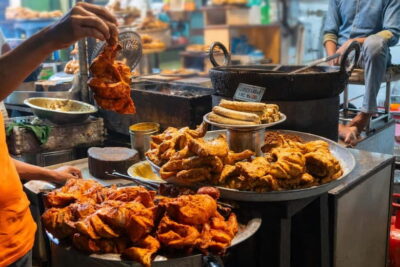
Old Delhi: Private Tour of Chandni Chowk, Tuk Tuk & Food
Read our review →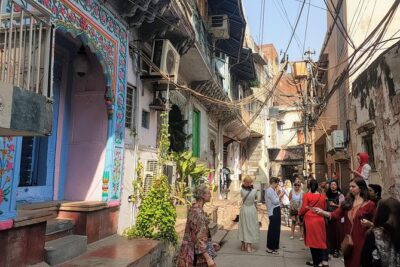
3-hour Old Delhi Heritage Walking tour with Rickshaw Ride
Read our review →3-Hour Old Delhi Heritage Walking tour with Rickshaw ride
Read our review →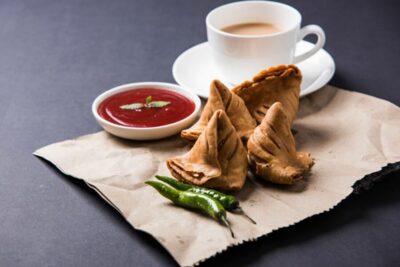
Old Delhi City Tour with Tuk-Tuk Ride & Street Food
Read our review →