
Review · JAPAN
Miyajima: Private Rickshaw Tour to Itsukushima Shrine
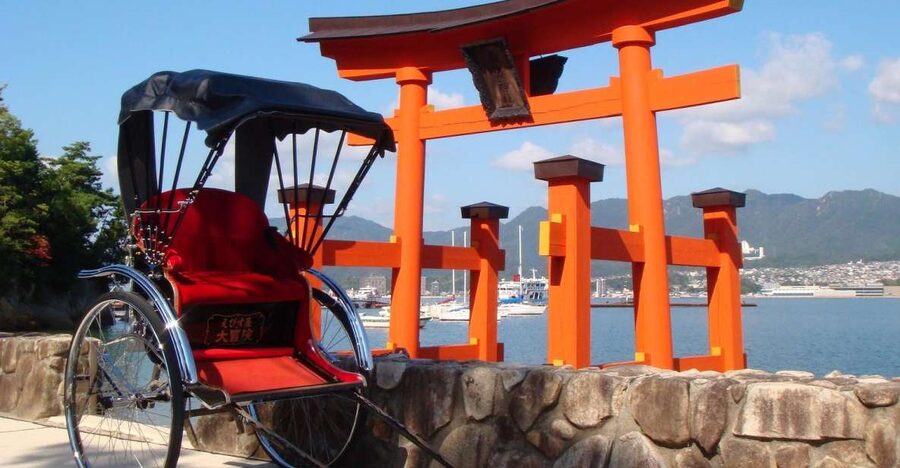
Miyajima’s famous red torii is best approached slowly, with time to look across the water and understand why the shrine seems to float at high tide. This private rickshaw ride gives you that view, plus a guided route through old town streets, the shopping arcade, and the waterfront. I especially like the private format and the chance to choose your endpoint. I also like that longer tours reach Daishoin Temple, where the island opens out below you.
The main catch is the language. The guide speaks Japanese, and communication in English may rely on simple conversation or Google Translate. The rickshaw is also snug, with room for two adults in a 74-centimeter-wide seat, so some couples may prefer separate rickshaws.
Key points to know before booking
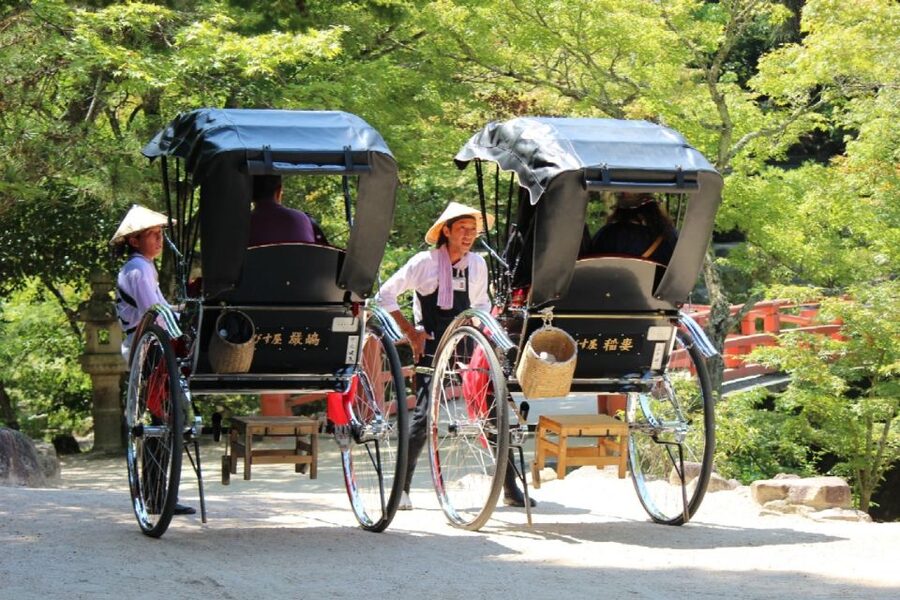
- The meeting point is just outside Miyajima Ferry Terminal, making this easy to find as soon as you arrive on the island.
- Choose from about 45 to 190 minutes, with longer routes adding Daishoin Temple, Senjokaku Shrine, parks, and seaside roads.
- The torii view changes with the tide, and high water creates the classic floating-gate scene.
- Your guide can adjust the route and endpoint, which is useful if you want more temples, views, photos, or a convenient finish.
- Each rickshaw holds up to two adults, though the narrow seat may feel tight for some pairs.
- Guides such as Kim, Jose, and Shinemasa have been praised for warmth, photos, stories, and local insight.
A gentle ride into Miyajima’s old town
The rickshaw waits outside the ferry terminal at your scheduled time. The local operator sends a map and a photo of the meeting place after booking, a useful touch since the terminal area can feel busy when several boats arrive.
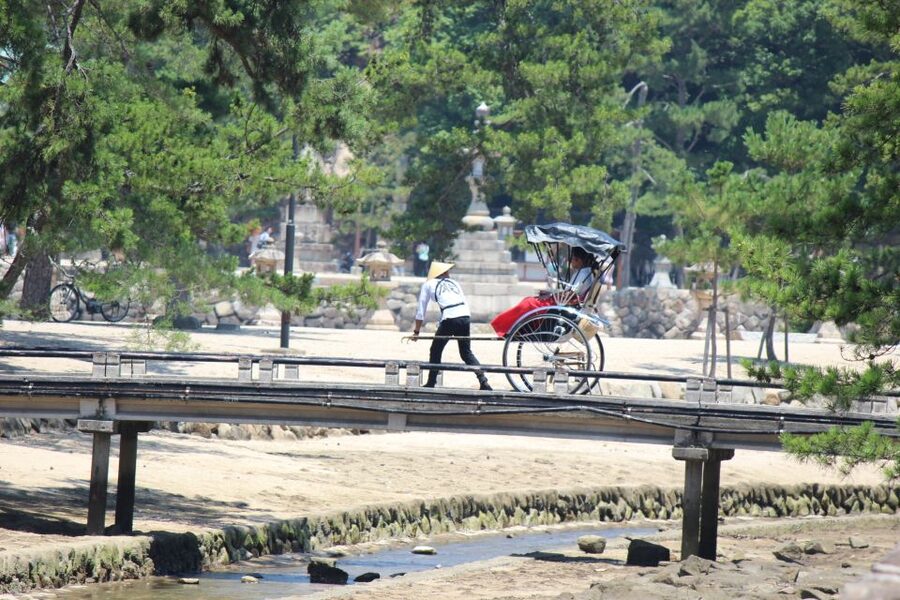
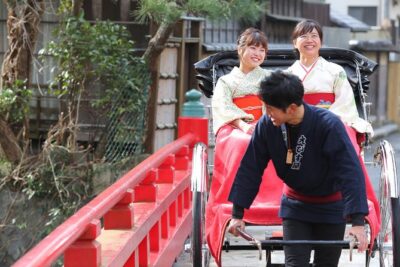
Once you are seated, your guide takes you into Miyajima’s compact town center. The pace is the point. You are not simply being moved from the ferry to the shrine. You have time to look up at the traditional townhouses, watch the island pass at street level, and hear about local customs as you go.
The ride reaches the old-fashioned shopping arcade before continuing toward the waterfront. This gives you a quick sense of how Miyajima works as a lived-in place, not only as the setting for one famous gate. The route is short enough to keep the island feeling manageable, but a rickshaw saves your feet for the shrine and temple stops ahead.
Your guide also handles the practical side of the ride. Guides Kim, Jose, and Shinemasa have been singled out for friendly service, clear explanations, humor, and a willingness to stop for photographs. Communication may not be polished English throughout. One guide used Google Translate when a Japanese explanation was hard to express, so patience and a relaxed attitude will help.
More Rickshaw Tours in Japan
- Tokyo Asakusa Rickshaw Tour
★ 5.0 · 1,375 reviews - Kyoto: Arashiyama Customized Rickshaw Tour & Bamboo Forest
★ 5.0 · 432 reviews - Kyoto Arashiyama Rickshaw Tour with Bamboo Forest
★ 5.0 · 354 reviews
Seeing the torii at Itsukushima Shrine
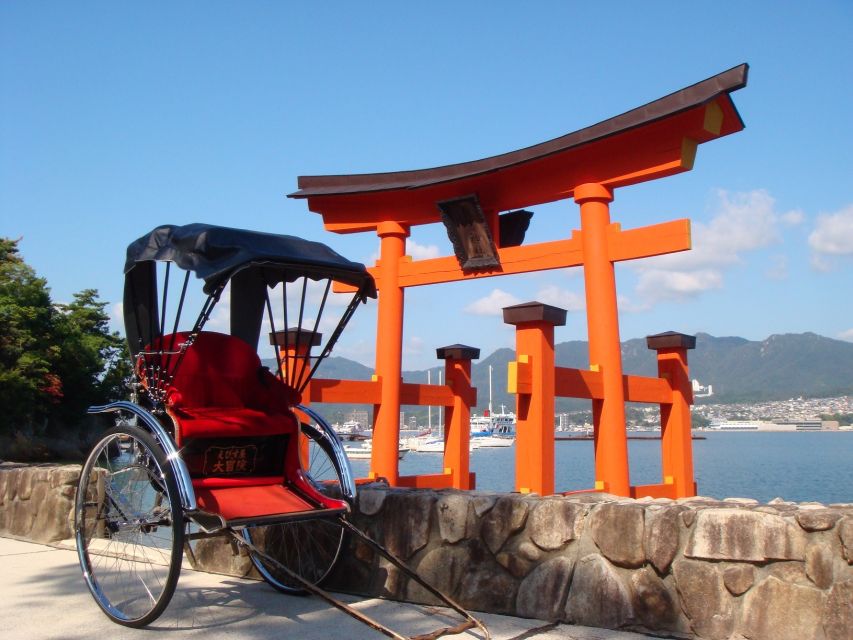
The waterfront is the first major payoff. From here, you look toward the large orange torii placed in the water in front of Itsukushima Shrine. At high tide, the gate creates the famous floating effect, with the sea covering the ground around its base.
Tide conditions matter. The tour takes you to the waterfront, but the exact water level depends on the day and time you book. If the floating view is your main reason for coming, check the local tide schedule and choose a start time that suits it. The rickshaw tour can still be enjoyable at lower water, when the structure feels more solid and close, but the visual effect changes.
This is also where a guide adds real value. You can take the expected photographs, but a local guide can help frame the shrine and gate within the island’s religious setting. The attraction is not just a bright red gate in the sea. Its placement marks the approach to a sacred site, and the ride gives you a little context before you explore further.
The tour does not include temple or shrine admission fees. Keep that in mind when comparing the $51 per-person price. The fee covers a private ride, a local guide, and the convenience of a tailored route, but you will pay separately wherever admission is charged.
The 70-minute route and Daishoin Temple
The 70-minute option adds Daishoin Temple, a 1,200-year-old temple on Miyajima. It is described as a power spot, a place associated with good energy and spiritual renewal. You do not need to share that belief to enjoy the visit. The temple offers a different mood from the waterfront, with a quieter religious setting and a broad view over the island.
This is the option I would consider for most first-time visitors who want more than a quick photo ride. The shortest route gives you the town, waterfront, and torii, but 70 minutes adds a major temple without turning the outing into a large time commitment.
The view from Daishoin is a strong reason to choose this route. From above, you can take in Miyajima and the surrounding water in a way that is impossible from the flat streets near the ferry. You also get a better sense of the island’s shape and its mix of forested slopes, shrine buildings, and shoreline.
Admission fees are not included, so check the cost of any site you plan to enter. The supplied details do not give an admission charge for Daishoin Temple, so do not assume every stop is covered by the rickshaw fare.
The 130-minute route and Senjokaku Shrine
The 130-minute option includes the earlier route and continues to Senjokaku Shrine. This large wooden hall was built under the order of Toyotomi Hideyoshi, the former shogun. Your guide explains the site’s past and points out its sea views.
This longer choice suits you if you want a fuller look at Miyajima’s religious buildings without selecting the longest ride. Two hours gives the guide more room to explain what you are seeing and gives you time to stop rather than simply pass through.
Senjokaku Shrine has a practical detail that is easy to miss when planning: entry is not included and costs 100 yen. That is a small extra, but it is worth carrying a few coins. The tour information refers to the site as Senjokaku Shrine, so follow your guide’s directions when you arrive.
The best reason to choose 130 minutes is balance. You receive the lively town introduction, the waterfront and torii, a temple stop, and another important religious site. The tradeoff is time. If you have only a few hours on Miyajima, a long rickshaw tour will take up much of your island visit.
Same streets, a different route:
- Kyoto Rickshaw Tour
★ 5.0 · 210 reviews - Tokyo: Asakusa Sightseeing Tour by Rickshaw
★ 4.9 · 195 reviews - Kyoto: Private Rickshaw Tour of Gion and Higashiyama Area
★ 5.0 · 144 reviews - Otaru Rickshaw Tour
★ 5.0 · 76 reviews
The 190-minute route through parks and along the sea
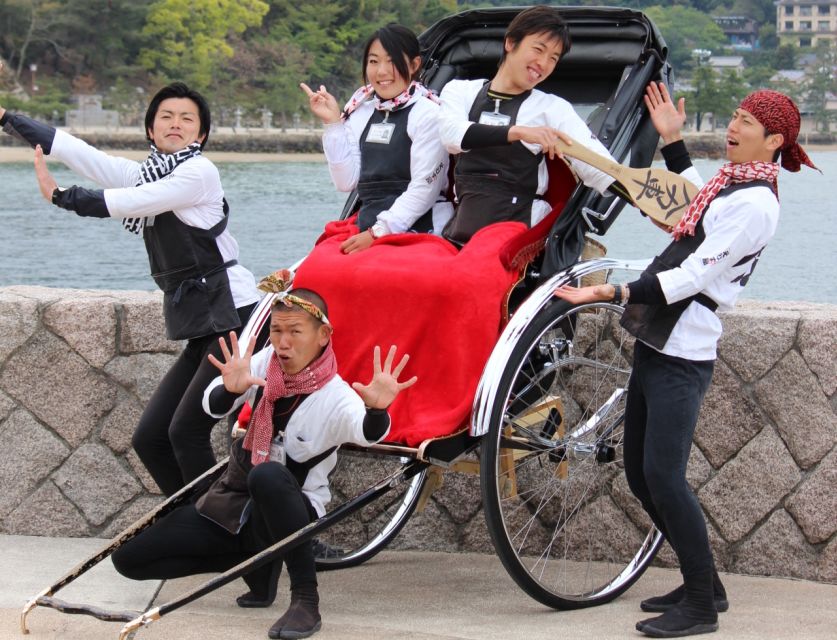
The 190-minute option adds scenic routes through parks and beside the water, along with the temples and shrines covered by the shorter choices. These roads give you a wider look at Miyajima than the central streets alone.
I would choose this length if Miyajima is a main part of your day and you want the ride itself to be one of the central experiences. It allows more room for pauses, photographs, and adjustments based on your interests. You can also select your endpoint, which may help if you want to finish near a particular part of the island.
The long option is not automatically best for everyone. Miyajima is walkable, and some people will prefer to use a shorter ride as an introduction before exploring at their own pace. One Italian-language comment felt that 30 minutes was enough, which is a useful reminder that the ideal duration depends on your schedule and appetite for guided sightseeing.
The route is customizable, so tell your guide what matters most. You may want temple architecture, views, local stories, photographs, or a scenic ride. The details confirm that the operator can modify the outing around your interests, but the exact route depends on your chosen duration and the conditions on the day.
What the private format is really worth
At $51 per person, this is not the cheapest way to move around Miyajima. The island’s main areas can be explored on foot, and walking costs nothing beyond your time and energy.
The price makes more sense when you value three things: a private guide, a comfortable overview soon after arriving, and a route that can be adjusted. You are paying for more than transport. You are paying for local interpretation, a slower introduction to the island, and a chance to reach places such as Daishoin without planning every turn yourself.
Private also means your group is not sharing the ride with strangers. The usual limit is two adults per rickshaw. Children aged six and under can ride free on an adult’s lap, with one child per adult and no more than two adults and two children per rickshaw. A child aged six or older using one of the two seats must book as an adult.
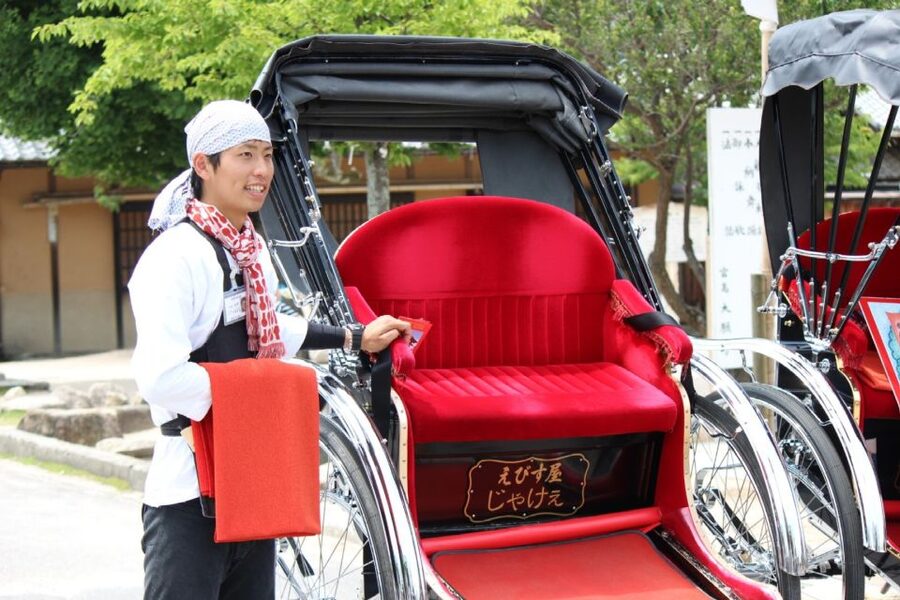
The seat measures 74 centimeters, or about 29.1 inches, across. Two adults can fit side by side, but not every pair will find that comfortable for a long ride. If you prefer personal space, book separate rickshaws. This matters most on the 130-minute and 190-minute options.
Deer, photos, and the small touches
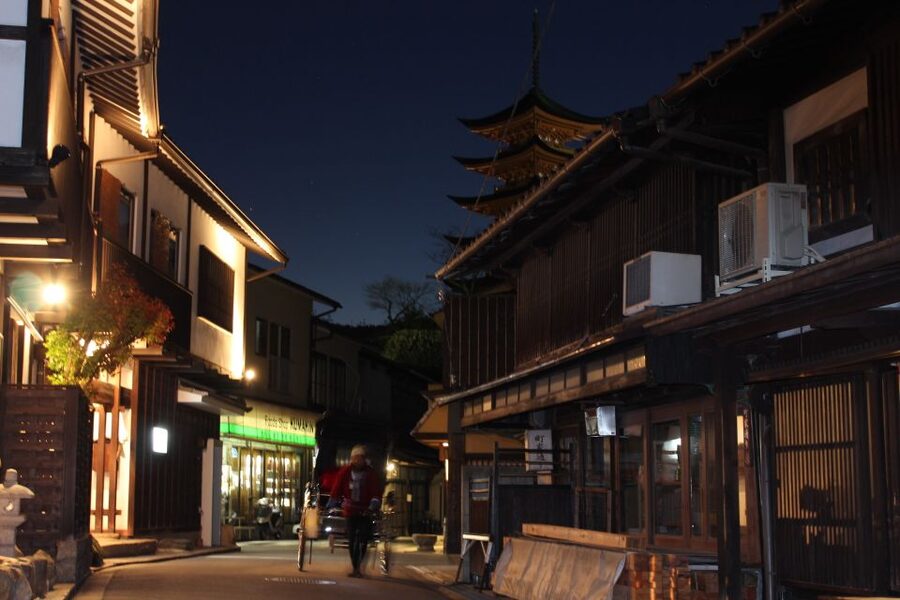
Miyajima’s deer are part of the fun, and the tour gives you a chance to greet them as you move through the island. Treat them with care and follow your guide’s instructions. The information provided does not promise a specific deer encounter, so think of them as a likely part of the setting rather than a guaranteed stop.
Photographs are another strong point. Guides have made a special effort to take pictures, and the route includes places chosen for their visual appeal. You receive a souvenir postcard and sticker, small keepsakes that are included in the fare.
Selfie sticks are not allowed. That rule is easy to follow and also makes sense on narrow streets and around crowded religious sites. Bring a regular phone or camera instead, and ask your guide for help with photos when you want a picture of the whole group.
The reviews give the guides particular credit for being friendly and enthusiastic. Kim was praised for humor, island information, customs, and photographs. Jose was praised for storytelling and for showing less obvious places. Shinemasa was described as attentive and familiar with the island. These are individual guide experiences, not a promise that you will be assigned one of them, but they show the type of personal service this operator aims to provide.
Comfort, timing, and who should skip it
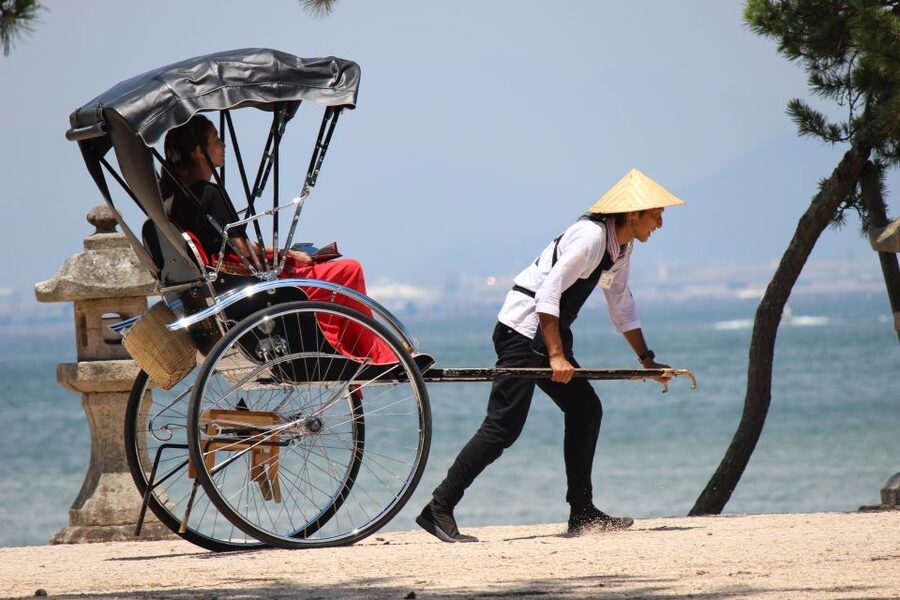
A rickshaw is a seated ride, but it is not ideal for every body. The tour is not recommended for people with back problems or for pregnant women, especially during the first 16 weeks. The listed guidance also says the tour is not suitable for pregnant women, so anyone who is expecting should ask a medical professional before booking.
Think about the weather and tide when selecting a start time. The torii view depends on the water level, while the longer routes involve more time outdoors. The booking system shows available starting times, but the supplied information does not provide a fixed daily timetable.
The Japanese-speaking guide is another consideration. You can still receive useful explanations through gestures, simple language, and translation tools, but do not book this expecting a fully fluent English lecture. If detailed English interpretation is essential, you may want a different tour.
This experience suits couples, families with young children, first-time visitors, and anyone who wants a friendly introduction before exploring alone. It is less suited to solo visitors who want the lowest possible cost, people who dislike compact seating, and anyone with a very short stop who only wants to see the torii.
Booking details worth remembering
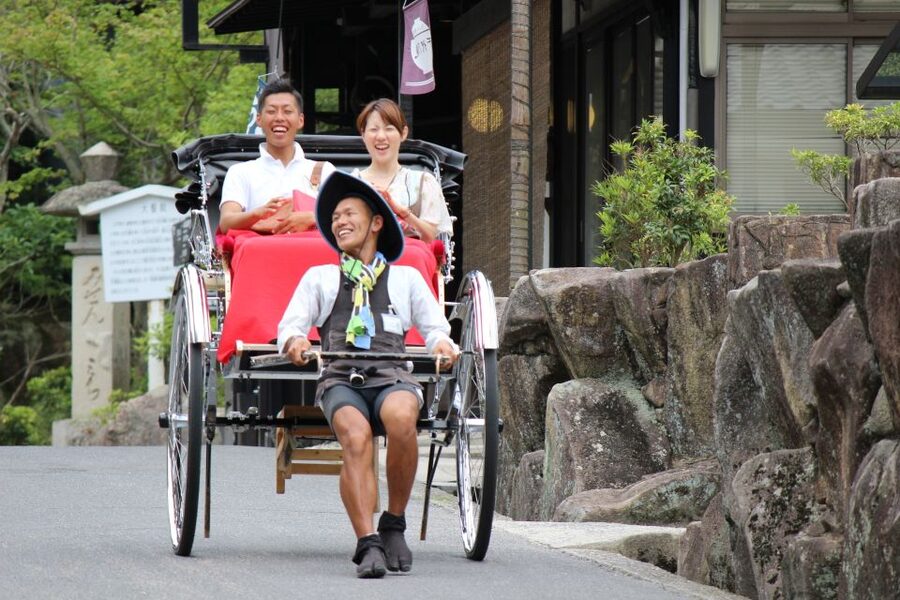
Your guide meets you outside Miyajima Ferry Terminal at the scheduled time. The operator sends a map and photograph of the meeting place after booking, so check your email before leaving for the island.
The private group format is useful if you want to ask questions or adjust the pace. You can also choose your endpoint, which is more flexible than a fixed loop. Food and drinks are not included, so plan those separately around the ride.
You can cancel up to 24 hours in advance for a full refund, and the reservation option allows you to pay later. Those terms help if your wider Japan itinerary is still shifting, though you should always check the final booking conditions shown at checkout.
Should you book the Miyajima rickshaw tour?
Book it if you want a warm, personal introduction to Miyajima and like the idea of seeing the island from a slow-moving seat rather than rushing between sights. The 70-minute option is the best middle ground for many people, adding Daishoin and its view without taking over your day.
Choose 130 minutes if Senjokaku Shrine matters to you, or 190 minutes if scenic roads, parks, seaside views, and a flexible route are central to your plans. Pick a shorter ride if you mainly want the old town, the waterfront, and the torii before continuing on foot.
I would not book it solely as cheap transport. Walking is possible, the seat is narrow, and the guide speaks Japanese. But if you value local stories, personal attention, photographs, and a gentle route through Miyajima’s sacred center, the $51 price can be fair value. Check the tide, bring comfortable expectations about communication, and choose the duration that fits your day rather than automatically choosing the longest option.
FAQ
Where does the Miyajima rickshaw tour begin?
The guide meets you just outside the Miyajima Ferry Terminal at the scheduled time. After booking, the local operator sends a map and photograph of the meeting place.
How long does the rickshaw tour last?
Available durations range from 45 to 190 minutes. The listed longer options include 70 minutes, 130 minutes, and 190 minutes.
Is the tour private?
Yes. The experience is offered for a private group.
How many adults fit in one rickshaw?
A rickshaw can hold a maximum of two adults. The seat is 74 centimeters, or about 29.1 inches, wide.
Can children ride for free?
Children aged six and under can ride free while sitting on an adult’s lap. There can be one child per adult, with a maximum of two adults and two children per rickshaw.
Does a child aged six or older need a separate booking?
Yes. If a child aged six or older uses one of the two rickshaw seats, that child must book a seat as an adult.
What language does the guide speak?
The live tour guide speaks Japanese. Communication may include simple explanations or translation tools.
Is admission to the temples and shrines included?
No. Admission fees are separate. Entry to Senjokaku Shrine is not included and costs 100 yen.
Is the tour suitable for people with back problems?
No. The tour is listed as unsuitable for people with back problems and is not recommended for pregnant women.
Can the route be changed?
Yes. The tour can be customized according to your interests, and you can choose your endpoint.
More Temple Tuk Tuk Tours in Japan
- Private Miyajima Rickshaw Tour Including Itsukushima Shrine
★ 5.0 · 32 reviews - Kyoto:Kiyomizu-dera Temple Rent a kimono and ride a rickshaw
★ 4.8 · 7 reviews - Bangkok by Night: Temples, Markets and Food Tuk-Tuk Tour
★ 5.0 · 3,752 reviews - Bangkok: Markets, Temples and Food Night Tour by Tuk Tuk
★ 4.9 · 2,371 reviews
Just added around Japan
- Sushi Making Tokyo with Traditional Rickshaw Ride Tour in Asakusa★ 5.0 · 12 reviews
- Exiting Rickshaw ride and Kimono experience★ 5.0 · 4 reviews
- Hot Spring Capital of Yufuin Rickshaw Tour★ 5.0 · 32 reviews
- Kyoto Sagano Insider: Rickshaw and Walking Tour★ 5.0 · 15 reviews
- Private 3-hour Kyoto Arashiyama Rickshaw Tour★ 5.0 · 5 reviews
- Kurashiki Rickshaw Tour★ 5.0 · 39 reviews
- Kamakura Rickshaw Tour★ 5.0 · 53 reviews
- Rickshaw Tour of Kagoshima’s Historical and Cultural Sites★ 5.0 · 4 reviews
Japan Tuk Tuk Tours, compared.
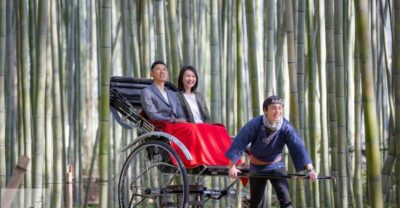
Arashiyama Customized Rickshaw Tour & Bamboo Forest
Read our review →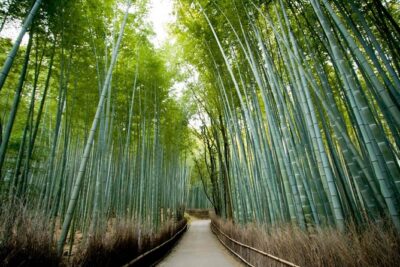
Kyoto Arashiyama Rickshaw Tour with Bamboo Forest
Read our review →
Private Rickshaw Tour of Gion and Higashiyama Area
Read our review →
Browse the lists this tour appears in