
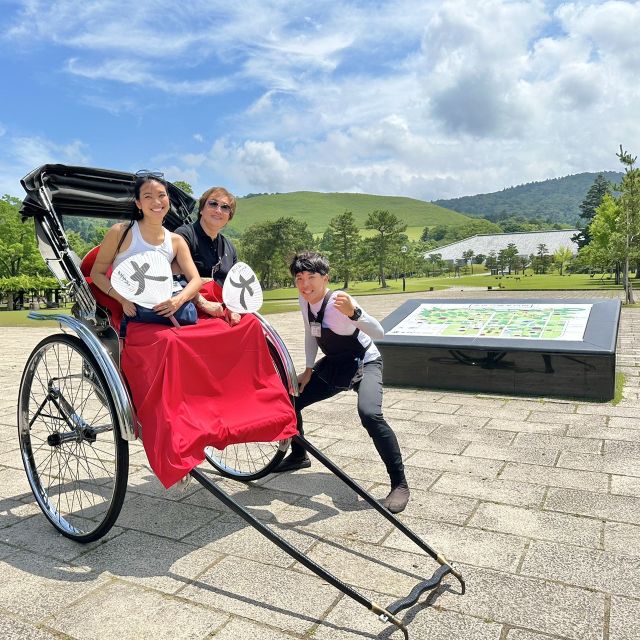
Review · JAPAN
Nara: Cultural Heritage Tour by Rickshaw
Nara’s great sights are spread across parkland, temple grounds, and old streets, so a private rickshaw gives you an easy way to connect them without wearing out your feet. Your guide collects you near Todaiji Temple, then adjusts the route to match your interests.
I like the choice between a short ride to Mt. Wakakusa and deer feeding, or a longer route focused on Buddhist art. I also like the personal scale: each rickshaw carries up to two adults, and the guide can stop for photos and explain what you are seeing. The main drawback is comfort. The seat is only 74 centimeters wide, and the ride is not recommended for people with back problems or those who are pregnant.
Key points to know before you book
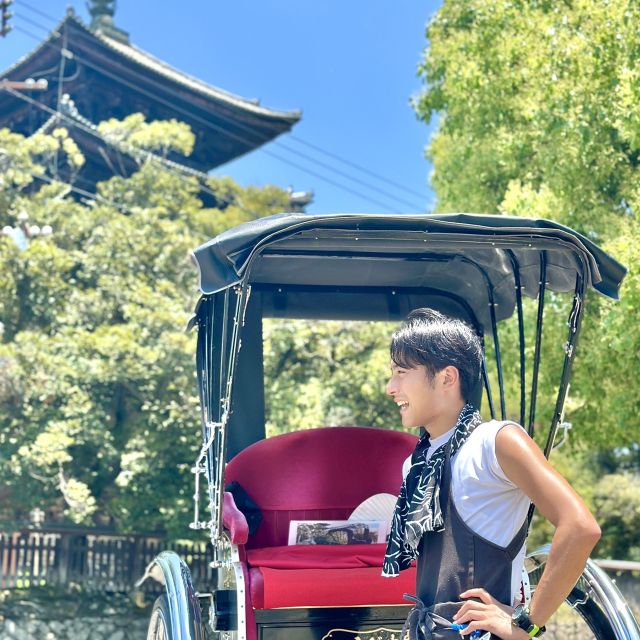
- Three routes serve three different interests: Choose deer and views, Buddhist statues, or a broad heritage route with sake.
- Todaiji is the starting point: The meeting area is near the temple and its enormous Vairocana Buddha.
- The rickshaw is private: You ride with your own party rather than in a large group.
- Mt. Wakakusa offers a change of pace: The grassy hillside gives you a wider view of Nara on clear days.
- Buddhist art fans should choose the 130-minute option: It includes several important halls and statue collections.
- The longest route adds old Naramachi and sake: You can sample sake at a traditional brewery and buy a bottle.
Starting beside Todaiji’s giant Buddha
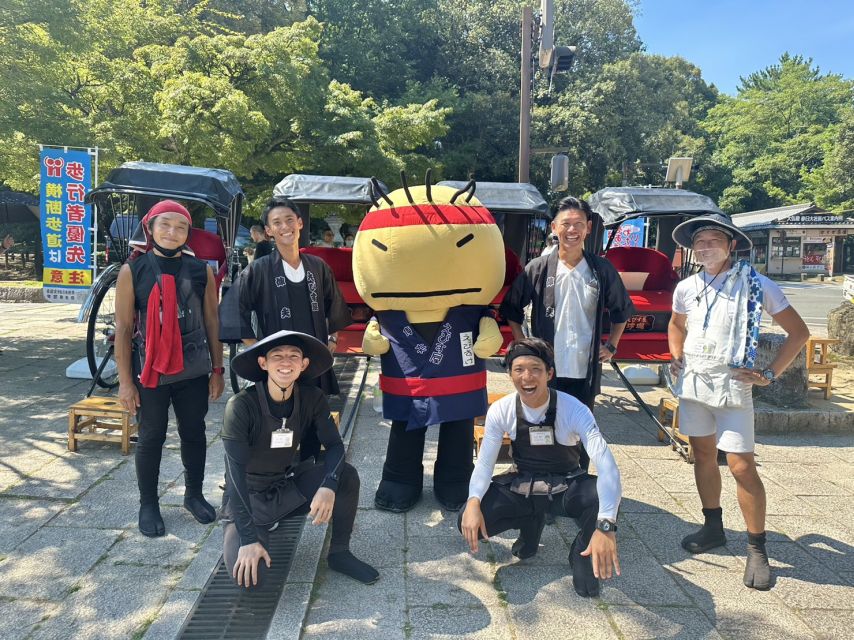
The ride begins just outside the intersection near Todaiji Temple, one of Nara’s defining sights. Todaiji is home to the Daibutsu, a huge bronze statue of Vairocana Buddha. Even if you plan to enter the temple separately, beginning here puts you close to the center of Nara’s heritage area.
Your guide meets you with the rickshaw and talks through the route you have chosen. Since this is a private tour, you have more room to ask questions, request photo stops, or shape the ride around your interests. The guide speaks Japanese or English.
The meeting point can change with the option you book, so check the exact instructions rather than assuming every route begins in precisely the same place. Hotel pickup is not included. You make your own way to the meeting area.
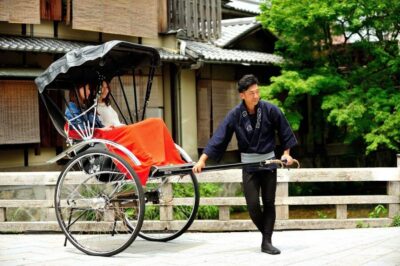
A rickshaw is a useful choice in Nara because it lets you cover ground while keeping the pace gentle. You are not simply being transported from one sight to another. Your guide provides the local explanation as the city passes around you, and the open sides give you a clear view for photographs.
More Rickshaw Tours in Japan
- Tokyo Asakusa Rickshaw Tour
★ 5.0 · 1,375 reviews - Kyoto: Arashiyama Customized Rickshaw Tour & Bamboo Forest
★ 5.0 · 432 reviews - Kyoto Arashiyama Rickshaw Tour with Bamboo Forest
★ 5.0 · 354 reviews
The 70-minute Mt. Wakakusa and deer ride
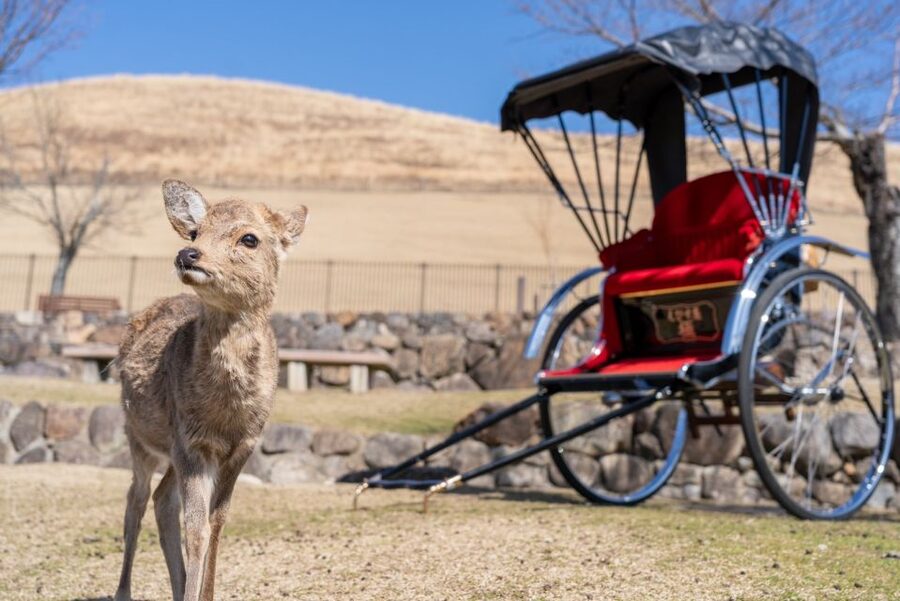
The shortest route leaves the main temple area and heads toward Mt. Wakakusa. The hill is covered entirely with grass, giving you a broad, open setting after the courtyards and gates around Nara’s temples.
On a clear day, you can see the skyline of Nara from the hillside. That view is one of the strongest reasons to choose this route. It gives you a quick sense of the city’s setting rather than keeping your entire visit at street level.
The route also includes time with Nara’s deer. Deer biscuits are provided by the company, so you do not need to arrange food in advance. The deer around Mt. Wakakusa are described as gentle, which makes this a calmer place to feed them.
You should still follow your guide’s instructions around the animals. The deer near Todaiji are described as more forceful, so do not assume that every deer encounter will feel equally quiet. Keep your hands clear after the biscuits are gone, and let the guide manage the interaction.
This option suits you if your time in Nara is limited, or if you want a pleasant introduction rather than a long temple program. It is also the clearest choice for families who mainly want deer, outdoor views, and a short ride.
The tradeoff is depth. You will not visit the full set of Buddhist halls or the sake brewery on this option. If you already know that Nara’s statues and temple architecture matter most to you, the longer routes offer more substance.
The 130-minute tour for Buddhist statue lovers
The middle option focuses on Buddhist sculpture, especially works associated with Unkei and other major Japanese sculptors. This is the route I would choose if you want more than a quick look at Nara’s famous buildings.
The itinerary includes Kofukuji Temple’s National Treasure Hall, Tokondo Hall, and Chukondo Hall, followed by Todaiji’s Nandaimon Gate. Each stop gives the guide a chance to explain the figures, styles, and religious purpose behind the art.
That context matters. Buddhist statues can look impressive at first glance, but details such as posture, facial expression, hand position, and the surrounding figures often carry the meaning. A guide who focuses on the sculpture can help you notice details you might otherwise pass without understanding.
Kofukuji’s halls are especially useful for this route because the visit is not limited to one famous statue or one quick photo. You get several places where the guide can compare works and explain why Nara became such an important center for Buddhist art.
Todaiji’s Nandaimon Gate gives the route an architectural finish. The gate is a major sight in its own right, and it also frames the approach to Todaiji. After spending time with indoor collections and temple halls, seeing the gate in its wider setting helps connect the art to the religious complex around it.
Admission fees to temples are not included, so plan for those extra costs. The tour price is $77 per person, but the total for this route will depend on the entrance fees you pay. That is worth considering when you compare it with a simple ride through the park.
The 130-minute choice is best for adults, students of art, and anyone who wants the guide’s explanations to be the heart of the outing. It is less suited to someone who wants mostly outdoor scenery and deer.
The 190-minute heritage route through Nara
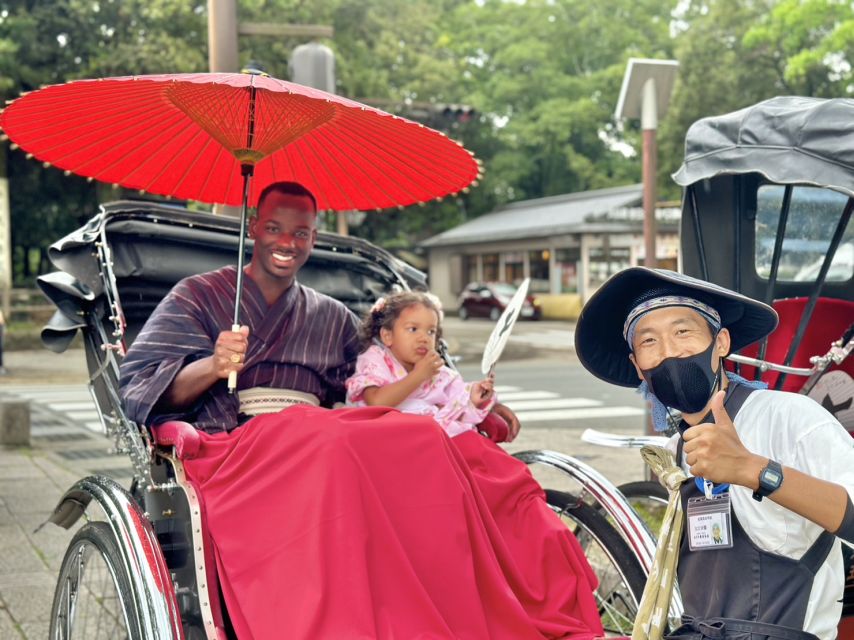
The longest route combines several sides of Nara: Todaiji Temple, Kasuga Taisha Shrine, Naramachi’s older streets, and sake culture. The stated options describe this as a 190-minute tour, although the general activity details also describe the choices as 70 minutes, 130 minutes, and 190 minutes. Confirm the exact duration when you select your booking.
Todaiji gives you the great temple setting and the Daibutsu. Kasuga Taisha brings a different religious atmosphere, with a shrine setting rather than a Buddhist temple. Visiting both helps you see that Nara’s heritage is not built around one monument alone.
The route then continues through Naramachi, where the old townscape remains. This part is valuable because it shifts your attention away from grand religious sites and toward the town itself. You get to see Nara as a lived-in place with older streets and buildings, not only as a collection of monuments.
The sake stop adds a local food and drink element. Nara is described as the birthplace of Japanese sake, and the route includes samples at a traditional brewery. You can also purchase a bottle to take home.
Snacks and drinks are not generally included, but the sake samples are part of this specific route. If you do not drink alcohol, ask your guide how the stop will fit your interests before you book. The experience is built around sampling, not a full meal, so plan another place to eat.
This is the strongest option if you have enough time and want a broad introduction to Nara. It gives you sacred sites, old streets, a local product, and the relaxed pace of a private vehicle. The drawback is simple: nearly three hours is a sizeable block in your day, especially if you also want to enter several buildings on your own.
Same streets, a different route:
- Kyoto Rickshaw Tour
★ 5.0 · 210 reviews - Tokyo: Asakusa Sightseeing Tour by Rickshaw
★ 4.9 · 195 reviews - Kyoto: Private Rickshaw Tour of Gion and Higashiyama Area
★ 5.0 · 144 reviews - Otaru Rickshaw Tour
★ 5.0 · 76 reviews
Why a private rickshaw changes the visit
A private ride gives you more control than a standard group walk. You can ask for explanations at the level you need, stop for pictures, and discuss whether you want more time around a sight or a quicker passage through it.
The vehicle also solves a practical problem. Nara’s major sights are close enough to visit in one outing, but not always close enough to feel effortless on foot. A rickshaw lets you save energy for the temple interiors, shrine grounds, and museum displays.
The tradeoff is the compact seating. Each rickshaw fits up to two adults, but the width is about 74 centimeters. Two adults can ride together, though some people will find separate rickshaws more comfortable.
Up to two children aged five and under can ride with two adults, but they must sit on an adult’s lap. A five-year-old using one of the two seats must be booked as an adult and pay the full fare. Adult pricing applies from age six.
The ride is wheelchair- and stroller-friendly, which makes the experience possible for more families. Still, accessibility does not mean every passenger will find the narrow seat comfortable. If you have mobility or posture concerns, think carefully about the ride length.
What the $77 price means
At $77 per person, this is not the cheapest way to see Nara. You are paying for a private rickshaw, a local guide, photo stops, and the ability to choose a route instead of following a fixed large-group program.
The price makes the most sense for two people who value personal attention. Split between two adults in one rickshaw, the cost buys a private outing with a guide rather than a simple point-to-point transfer. It can also be useful on a first visit, when you want help deciding which sights deserve more time.
You should budget extra for temple admission. Entry fees are not included, and the longer routes visit multiple sites. The sake route may also tempt you to buy a bottle, though that purchase is optional.
The short route offers the clearest value if you want a focused activity without filling half your day. The 130-minute route may offer the best balance for art lovers, while the 190-minute route is the fullest choice for someone who wants a broad Nara introduction.
Timing, comfort, and practical limits
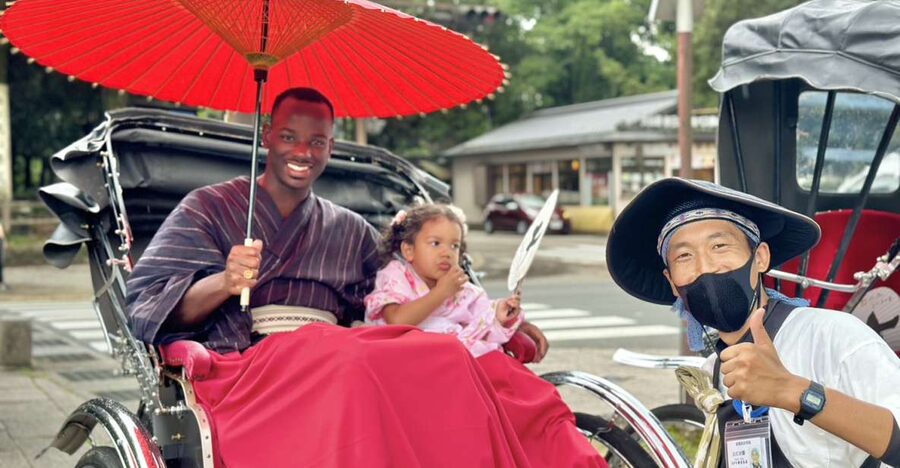
The tour is offered as a private group experience, with Japanese- and English-speaking guides. Starting times depend on availability, and the meeting point may vary by route.
Rickshaws can fit two adults, but I would not book one shared seat automatically if both passengers prefer extra room. The width is limited, and the longer routes give you more time to notice any discomfort.
The tour is not suitable for pregnant women or people with back problems. It is also not recommended during the first 16 weeks of pregnancy. These limits matter because the ride involves sitting in a compact vehicle, even though the pace itself is gentle.
Selfie sticks are not allowed. Bring a normal camera or phone instead, and let the guide help with photo stops. The open design of the rickshaw gives you plenty of chances for pictures without needing a long pole.
The tour normally finishes at the starting point, but the ending location can be customized. Discuss that directly with your guide if you want to finish somewhere else in Nara.
Free cancellation is available up to 24 hours before the start for a full refund, and you can reserve now and pay later. Those terms are helpful if your Japan plans are still moving around.
The guide can make or break the ride
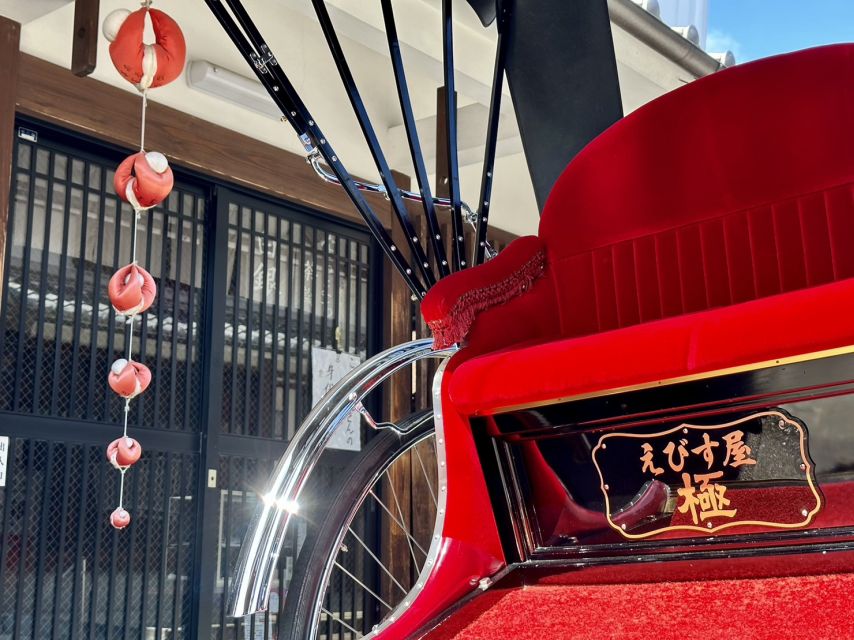
The best part of a private tour is the human explanation. Nara’s temples, shrines, and statues can blur together when you see them quickly, so use the ride to ask direct questions about what makes each place different.
The available feedback specifically names a guide called Ricky, who was praised for being excellent. If Ricky is available, you can ask about him when arranging your tour, though guide assignment is not guaranteed.
In any case, tell your guide what you care about at the beginning. Ask for more deer time if that is your priority. Request extra explanation at the Buddhist statue halls if you choose the 130-minute route. On the longest route, tell the guide whether you want to focus more on temples, Naramachi, or sake.
That simple conversation is one of the advantages of a private booking. You are not locked into the interests of a busload of strangers.
Who should book this Nara ride?
I would recommend the 70-minute option to you if you have a tight schedule, want to feed deer, or prefer an outdoor ride with a view from Mt. Wakakusa.
Choose 130 minutes if you care about Japanese Buddhist sculpture and want a guide to explain the works at Kofukuji and Todaiji. This is the most focused option and the best fit for an art-centered visit.
Choose 190 minutes if you want a fuller introduction to Nara in one outing. The mix of Todaiji, Kasuga Taisha, Naramachi, and sake gives you more variety, but it also requires more time and extra admission costs.
Families may appreciate the private format and stroller access, but check the seating rules for young children. Couples and friends should consider separate rickshaws if the narrow seat feels restrictive.
Should you book it?
Book this tour if you want personal guidance, flexible photo stops, and a comfortable way to connect Nara’s main sights. It is especially useful on a first visit or for anyone who wants more meaning from the temples and statues than a quick self-guided walk provides.
Skip it if you prefer to explore entirely on foot, dislike compact seating, or want a low-cost sightseeing option with no added admission fees. For most people, the best decision is to match the route to your main interest: deer and views for 70 minutes, Buddhist art for 130, or a broad cultural outing with sake for 190.
FAQ
Where does the rickshaw tour meet?
The guide and rickshaw meet near the intersection by Todaiji Temple. The exact meeting point may vary depending on the option you book.
How long does the tour last?
The choices are described as 70 minutes, 130 minutes, and 190 minutes. The activity information also refers to the options as 1 hour 10 minutes, 2 hours 10 minutes, and 3 hours 10 minutes.
What languages are available?
The live guide is available in Japanese or English.
How many people can ride in one rickshaw?
One rickshaw can carry a maximum of two adults. Up to two children aged five and under can ride with two adults if they sit on an adult’s lap.
Can children ride for free?
Children aged five and under may ride on an adult’s lap under the stated limit. A five-year-old using one of the two rickshaw seats must be booked as an adult and pay the full fare. Adult pricing applies from age six.
Are temple admission fees included?
No. Admission fees to the temples are not included in the tour price.
Is the tour suitable for wheelchair and stroller users?
The tour is wheelchair- and stroller-friendly. The rickshaw is about 74 centimeters wide, so consider the available space when deciding whether shared seating will be comfortable.
Can I cancel the booking?
You can cancel up to 24 hours in advance for a full refund. Reserve now and pay later is also available.
More History Tours in Japan
- [30 minutes] Rickshaw tour around Asakusa [History, sightseeing, Tokyo Skytree]
★ 5.0 · 38 reviews - Kamakura Heritage Bike or Walk Tour with ex-Rickshaw guide
★ 5.0 · 11 reviews - Kamakura: Private History and Heritage Tour by Rickshaw
★ 4.9 · 7 reviews - Rickshaw Tour of Kagoshima’s Historical and Cultural Sites
★ 5.0 · 4 reviews
Just added around Japan
- Sushi Making Tokyo with Traditional Rickshaw Ride Tour in Asakusa★ 5.0 · 12 reviews
- Exiting Rickshaw ride and Kimono experience★ 5.0 · 4 reviews
- Hot Spring Capital of Yufuin Rickshaw Tour★ 5.0 · 32 reviews
- Kyoto Sagano Insider: Rickshaw and Walking Tour★ 5.0 · 15 reviews
- Kurashiki Rickshaw Tour★ 5.0 · 39 reviews
- Private 3-hour Kyoto Arashiyama Rickshaw Tour★ 5.0 · 5 reviews
- Kamakura Rickshaw Tour★ 5.0 · 53 reviews
- Rickshaw Tour of Kagoshima’s Historical and Cultural Sites★ 5.0 · 4 reviews
Japan Tuk Tuk Tours, compared.
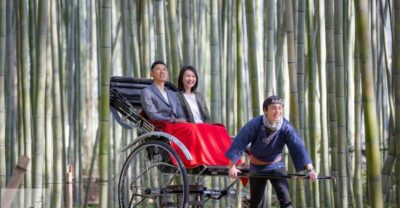
Arashiyama Customized Rickshaw Tour & Bamboo Forest
Read our review →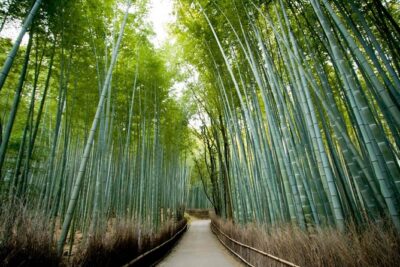
Kyoto Arashiyama Rickshaw Tour with Bamboo Forest
Read our review →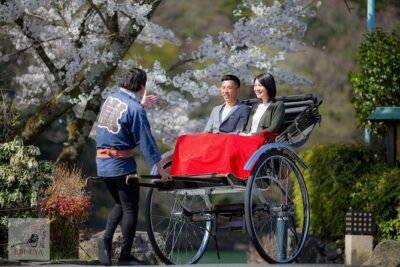
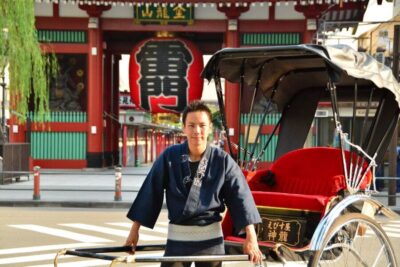
Private Rickshaw Tour of Gion and Higashiyama Area
Read our review →
Browse the lists this tour appears in