
Review · TOKYO
Tokyo: Asakusa Sightseeing Tour by Rickshaw
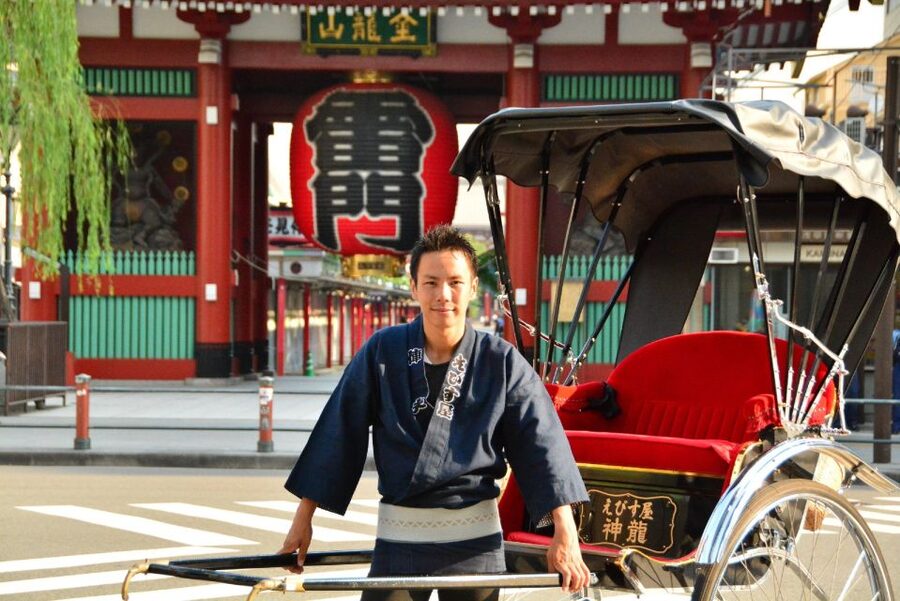
Asakusa’s old streets make much more sense from a rickshaw. You sit above the traffic, glide past temples and shrines, and hear the guide explain small customs that are easy to miss on foot, such as washing your hands and mouth before praying or drawing incense smoke toward your body. It is sightseeing with a human touch, not just a ride.
I like two things here. First, the private format lets your guide adjust the route and pace to your interests. Second, the rickshaw reaches narrow lanes and quieter temple corners that a bus cannot. The main drawback is price: at $35 per person, even the shortest option costs more than walking, and the 74-centimeter-wide seat can feel tight for two adults.
Key points
- Asakusa from a raised seat: See Sensoji-area streets, shrines, gardens, and shops without walking the whole district.
- A guide who does more than pull: Guides such as Masa, Kazu, Taku, Shima, and Yusuke have been praised for humor, local explanations, and photo help.
- Several route lengths: Pick a quick 30-minute orientation, or allow up to 190 minutes for a fuller look at Asakusa.
- Old streets and odd corners: The route can include Tanuki-doori, Rokku, Denpoin Street, and Nishi Shitamachi.
- Useful for families: Young children aged 5 and under can ride free on an adult’s lap, and the activity is wheelchair and stroller friendly.
- A seasonal choice: Sumida Park is especially appealing during cherry blossom season, while heated seats and blankets may help in cold weather.
Why a Rickshaw Fits Asakusa
Asakusa is one of Tokyo’s easiest districts to explore on foot, but it is also a place where a good guide can add real value. The main temple grounds, shopping lanes, side streets, amusement park, riverfront, and old entertainment quarter are close together, yet each has a different feel.
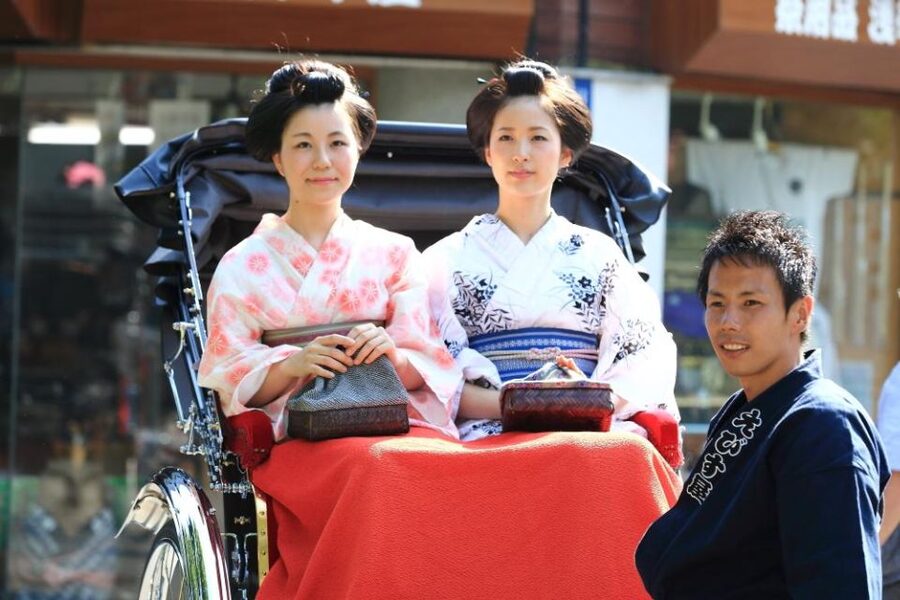
A rickshaw gives you a quick orientation without forcing you to study a map at every corner. You can sit back while your driver handles the busy streets and points out details along the way. Several guides have also taken photos for passengers at stops, which is useful when you want a picture with the rickshaw rather than another arm’s-length selfie.
The experience is private, so you are not sharing the vehicle with strangers. That makes it easier to ask questions, request a slower pace, or tell the guide that you care more about temples, gardens, photography, shopping, or local pop culture. The route can be customized according to your interests.
More Rickshaw Tours in Japan
- Tokyo Asakusa Rickshaw Tour
★ 5.0 · 1,375 reviews - Kyoto: Arashiyama Customized Rickshaw Tour & Bamboo Forest
★ 5.0 · 432 reviews - Kyoto Arashiyama Rickshaw Tour with Bamboo Forest
★ 5.0 · 354 reviews
Starting Near Asakusa Station
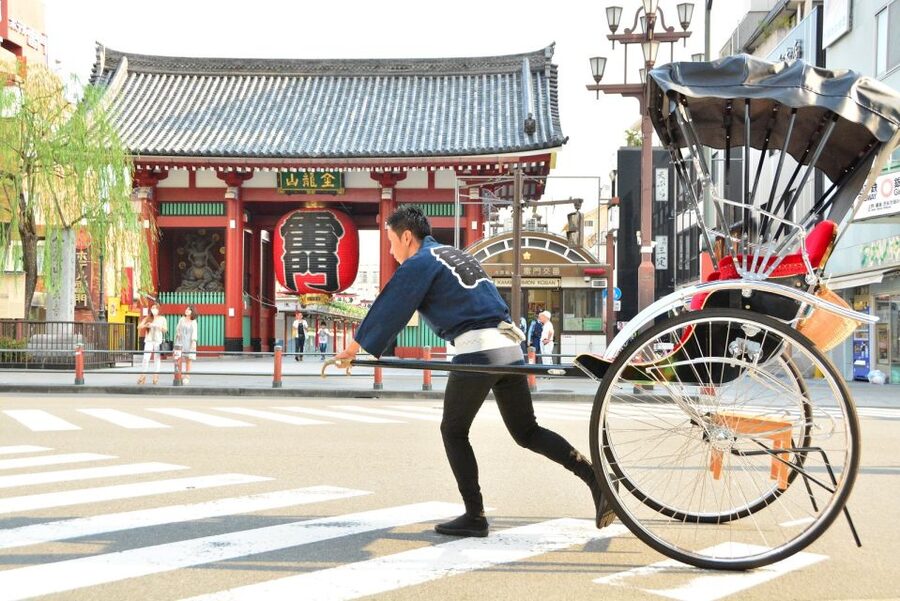
The meeting point is the rickshaw stand just outside Exit 1 of Asakusa Station on the Tokyo Metro Ginza Line. This detail matters. Asakusa has more than one station with the same name, and its subway exits are spread across the district. Go to the Ginza Line station, not another Asakusa station served by a different line.
You still need to walk a few meters from Exit 1 to the stand along the street. Arrive with enough time to find it, especially if you are carrying luggage or meeting the guide for an early appointment. Some passengers have needed help after using the wrong station exit, so check the map before leaving your hotel.
The staff may meet you with a sign, and the guides are used to welcoming international visitors. English and Japanese tours are available. English ability can vary by guide, so if detailed historical explanation is especially important to you, it is worth confirming the language when booking.
Asakusa Shrine and Tokyo’s Oldest Temple Area
The central temple district is usually the natural starting point. Here, you see Asakusa Shrine beside Tokyo’s oldest temple, a pairing that shows how Buddhist and Shinto traditions share the same neighborhood.
Your guide can explain the basic customs at a worship site. You might learn why visitors rinse their hands, wash their mouths, and use the water ladle correctly. Incense is another small ritual that becomes more meaningful when someone explains why people wave the smoke toward themselves.
This is one place where the ride is more than transportation. You may have walked past a basin or incense burner without knowing what to do. With a guide, the sights become easier to read, and you can return later on foot with more confidence.
The temple area can be crowded, so the rickshaw does not remove all the bustle or waiting. It also cannot take you everywhere on the temple grounds. Think of this section as an introduction, with time later to explore the main buildings and shopping street on foot.
Bentendo Hall and Smaller Places of Worship
The route may include Bentendo Hall and smaller Buddhist or Shinto sites away from the most visited temple approach. These stops can change the rhythm of the tour. Instead of only seeing the famous buildings, you get a look at quieter places where local religious practice continues.
A longer booking gives your guide more time to explain these details. The two-hour option, for example, can allow a visit to a smaller Buddhist shrine where the setting feels calmer than the main temple zone. Guides have also taken passengers to gardens behind small temples and pointed out places that are easy to miss from the main road.
Keep your expectations practical. This is a sightseeing ride, not a formal religious tour. The exact stops may depend on the chosen duration, traffic, weather, and your requested interests. Still, the private format gives you a better chance to pause when a small shrine or garden catches your eye.
Same streets, a different route:
- Kyoto Rickshaw Tour
★ 5.0 · 210 reviews - Kyoto: Private Rickshaw Tour of Gion and Higashiyama Area
★ 5.0 · 144 reviews - Otaru Rickshaw Tour
★ 5.0 · 76 reviews - Kamakura Rickshaw Tour
★ 5.0 · 53 reviews
Sumida Park and the Riverfront
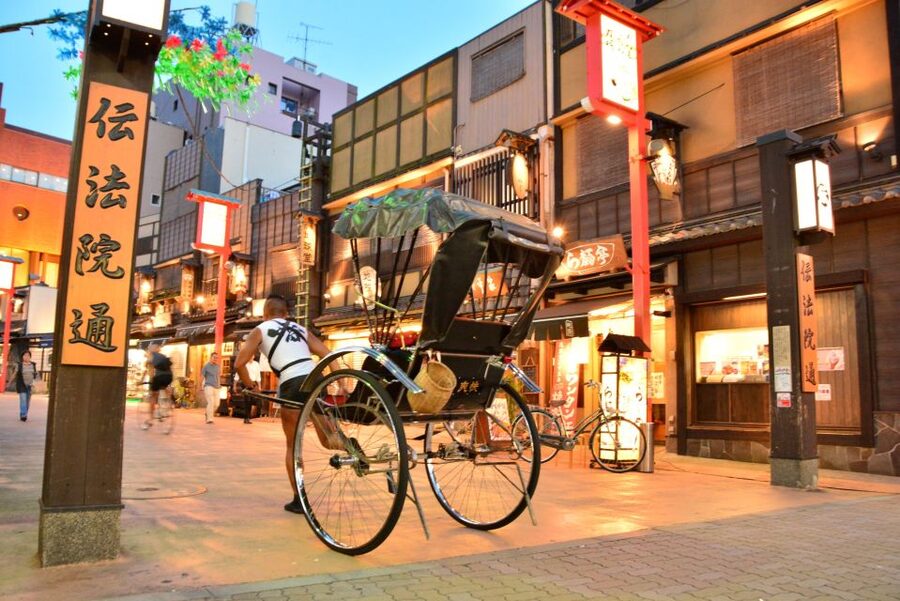
Sumida Park brings trees and open space into an otherwise dense city district. The ride through the park can feel like a welcome change after narrow streets and shopfronts. The Sumida River adds another view of Tokyo, and spring is the special season here, when thousands of cherry trees bloom.
Cherry blossom timing is never guaranteed, of course, so do not book only for flowers. In any season, the park offers a different perspective on Asakusa. You see how the district opens toward the river and how residents use the area beyond the temple streets.
A rickshaw is particularly handy here if you want a quick look but do not want to spend a large part of your day walking along the river. If you prefer a slow stroll beneath the trees, ask your guide about ending the ride near the park and continuing independently.
Hanakawado, Tanuki-doori, and Local Street Life
The tour also passes through everyday parts of Asakusa, including Hanakawado, known for shoe shopping. This section helps connect the famous sights with the working neighborhood around them.
Tanuki-doori adds a quirkier note. Rather than a polished tourist boulevard, it gives you a look at the district’s playful side. Guides often use such streets to explain how Asakusa developed as an entertainment and shopping area.
You may also see details that are difficult to absorb from a car or bus. The rickshaw moves slowly enough for your guide to point out signs, storefronts, small shrines, and neighborhood scenes. It is also high enough to give you a clear view over some street-level obstacles.
The ride is not silent or private in the sense of being away from public space. You remain in the middle of Tokyo streets, with cars, pedestrians, and normal city noise around you. That is part of the appeal, but anyone seeking a quiet vehicle ride should know what to expect.
Rokku and Hanayashiki
Rokku is Asakusa’s historic entertainment quarter. The area includes adult theaters, old-style amusements, and streets that feel different from the temple grounds. Your guide can provide context so the neighborhood does not seem like a random collection of signs and buildings.
You also get a chance to take souvenir photos of Hanayashiki, Japan’s oldest amusement park. The ride does not turn into a full theme-park visit, but the exterior and surrounding streets make a memorable photo stop.
This section is best for adults and older children who enjoy seeing the less polished side of a historic district. Parents should be aware that Rokku includes adult entertainment venues. If that is not suitable for your group, ask for a customized route that gives more time to temples, gardens, and the river.
Denpoin Street and Nishi Shitamachi
Denpoin Street is one of the most appealing parts of the route for anyone interested in old Tokyo. Much of its character has changed little since World War II, giving you a sense of the older Nishi Shitamachi area.
The street is not a museum set. It is part of a living neighborhood, which is why the rickshaw works well here. You can see the older facades and street pattern while your guide explains what you are passing.
This is also a good reason to choose more than 30 minutes. A short ride can show you the temple area and a few nearby streets, but the longer options have room for Denpoin Street, smaller religious sites, park views, and photo stops without making every stop feel rushed.
What the Guides Add
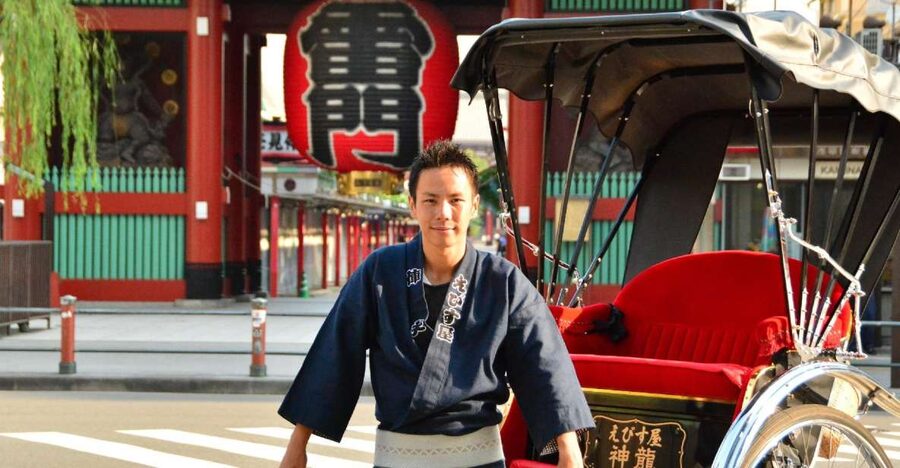
The strongest part of this activity is the guide. Names praised in past bookings include Masa, Kazu, Taku, Shima, Yusuke, Koko, Yuki, Tashi, Taisei, and Ryu Buchi. You are not guaranteed one particular guide, but the repeated pattern is clear: the driver is also your storyteller, photographer, route planner, and local contact.
Guides have explained temple rituals, suggested food and places to try, pointed out anime-related spots, and adjusted their style for families. One guide sang pop songs with a child, while another used anime references to keep a teenager interested. That sort of personal exchange is hard to schedule into a large group tour.
The physical effort also deserves a word. Your driver is pulling the rickshaw, sometimes uphill and through busy streets. The guides are described as strong and careful, but you should still treat them respectfully. Avoid asking for unnecessary detours that add strain, and speak up if you need a break or change of pace.
Photo help is another practical advantage. Guides often take pictures with your phone at several stops. You cannot use selfie sticks, but you should not need one if your guide is willing to help.
Choosing Between 30, 70, 90, and 190 Minutes
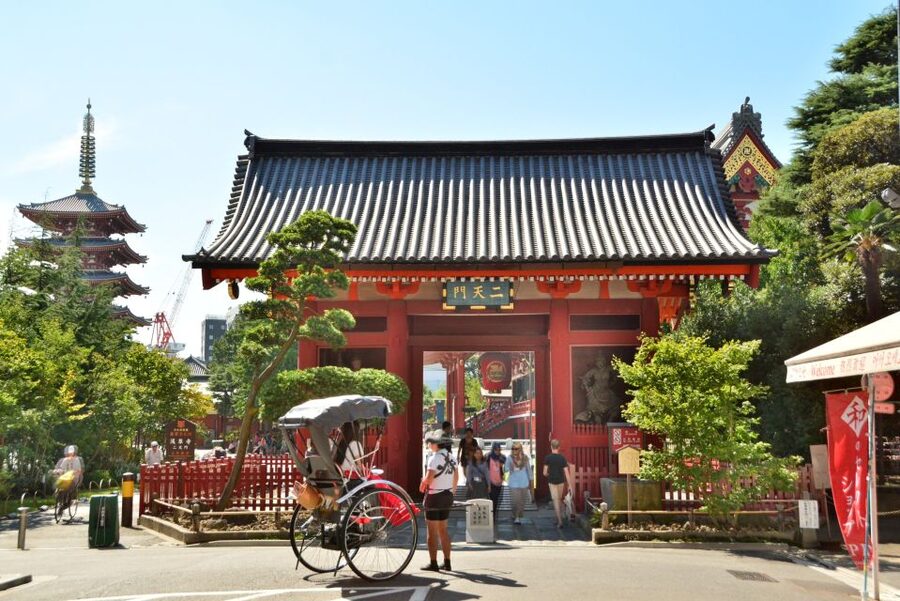
The 30-minute option works as a sampler. It is enough to get a feel for the rickshaw, see part of the central area, and hear a few stories. It is also a smart choice if your schedule is tight or you plan to spend the rest of the day walking around Asakusa yourself.
I would choose about 70 to 90 minutes for the best balance. You have time for several sights, explanations, and photo stops without giving the ride a large share of your day. A 70-minute booking has worked well for passengers who wanted a relaxed introduction without committing to a long outing.
The longest option lasts up to 190 minutes. Choose it if you want a fuller neighborhood tour, have strong interest in local history and customs, or prefer to see Asakusa without doing much walking. The three-hour option also includes a choice of commemorative gift, such as a special Hello Kitty doll or original T-shirt.
Longer is not automatically better. Tokyo weather can be hot and humid in summer, and you remain seated outdoors for much of the ride. In winter, blankets and heated seats may be available, but you should still dress for the conditions. One cold-weather ride included both, while another summer ride was valued for the breeze.
Price, Comfort, and Who Gets the Best Value
At $35 per person, the tour is fairly priced if you value a private guide, local stories, route flexibility, and help with photos. It is less compelling if your main goal is simply to move from one Asakusa sight to another. Walking costs nothing, and the district is compact.
The seating arrangement is important. Each rickshaw is 74 centimeters wide, and no more than two adults may ride in one vehicle. Two adults can fit, but some people may be more comfortable booking separate rickshaws. Children aged 5 and under ride free when seated on an adult’s lap, with one child per adult. A child who needs their own seat must pay the adult fare.
The activity is wheelchair and stroller friendly, though you should still discuss your needs when booking. It is not recommended during the first 16 weeks of pregnancy, and the activity is listed as unsuitable for pregnant women. Snacks and drinks are not included, so eat and carry water before setting off, especially in warm weather.
Free cancellation up to 24 hours before the activity and reserve-now, pay-later booking make it easier to fit into a changing Tokyo schedule. Those policies are useful, but they do not change the central question: are you paying for transport, or for interpretation and personal attention? The value is strongest in the second case.
Should You Book the Asakusa Rickshaw Tour?
Book it if you want a friendly introduction to Asakusa, have limited time, are traveling with children, or enjoy seeing a neighborhood through a local guide’s eyes. It is also a good first activity in Tokyo because your driver can help you understand temple customs and suggest places to explore afterward.
Choose the 30-minute ride for a quick taste. Pick 70 to 90 minutes for a fuller visit, and reserve the longest option only if you want the ride itself to be one of the main events of your day.
Skip it if you dislike outdoor rides, feel uncomfortable with the narrow seat, or prefer to explore every temple and shopping lane at your own walking pace. For most people who like personal stories, photo stops, and a little old-fashioned fun, this is one of the better ways to get oriented in Asakusa.
FAQ
Where does the rickshaw tour meet?
Meet at the rickshaw stand just outside Exit 1 of Asakusa Station on the Tokyo Metro Ginza Line. Walk a few meters from the exit to the stand.
Are there multiple Asakusa stations?
Yes. The meeting point is at the Asakusa Station on the Tokyo Metro Ginza Line, and you should not assume that every station with the Asakusa name is the correct one.
How long does the tour last?
Available durations range from 30 minutes to 190 minutes. Check the available start times and options when booking.
What languages are available?
The tour is offered in English and Japanese.
Is the rickshaw private?
Yes. The activity is arranged as a private group experience.
How many adults fit in one rickshaw?
A maximum of two adults may ride in one rickshaw. Each rickshaw is 74 centimeters wide, so separate rickshaws may be more comfortable for some passengers.
Can young children ride free?
Children aged 5 and under can ride free while sitting on an adult’s lap, with one child per adult. A child who needs their own seat must book and pay as an adult.
Is the activity wheelchair and stroller accessible?
Yes, the activity is listed as wheelchair and stroller friendly.
What is included in the price?
The price includes the rickshaw ride and a local guide. Snacks and drinks are not included.
Just added around Japan
- Sushi Making Tokyo with Traditional Rickshaw Ride Tour in Asakusa★ 5.0 · 12 reviews
- Exiting Rickshaw ride and Kimono experience★ 5.0 · 4 reviews
- Hot Spring Capital of Yufuin Rickshaw Tour★ 5.0 · 32 reviews
- Kyoto Sagano Insider: Rickshaw and Walking Tour★ 5.0 · 15 reviews
- Kurashiki Rickshaw Tour★ 5.0 · 39 reviews
- Private 3-hour Kyoto Arashiyama Rickshaw Tour★ 5.0 · 5 reviews
- Kamakura Rickshaw Tour★ 5.0 · 53 reviews
- Rickshaw Tour of Kagoshima’s Historical and Cultural Sites★ 5.0 · 4 reviews
Tokyo Tuk Tuk Tours, compared.
Asakusa, Tokyo: Rickshaw Experience and Highlights Walking tour
Read our review →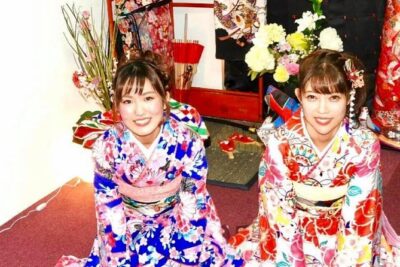
Ride a rickshaw wearing a kimono in Asakusa! Enjoy authentic traditional culture!
Read our review →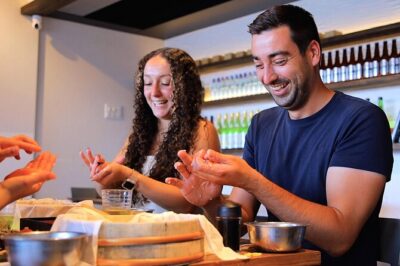
Sushi Making Tokyo with Traditional Rickshaw Ride Tour in Asakusa
Read our review →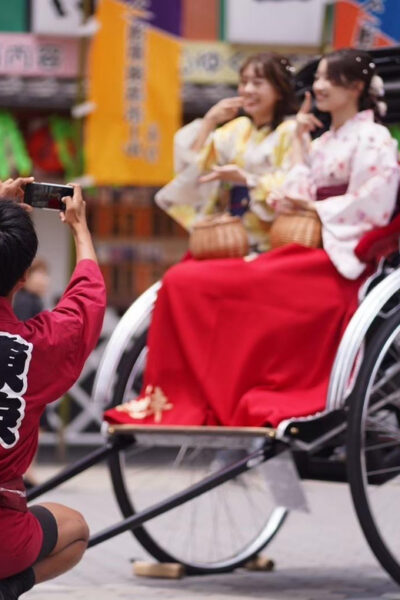
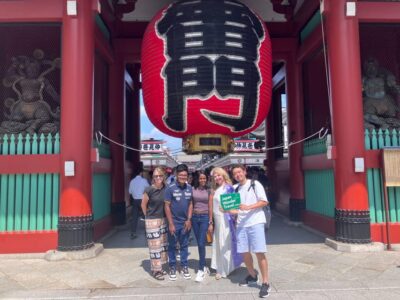
Asakusa Highlights Walking (OP : Rickshaw Experience)
Read our review →
Tokyo Vegan Tour : Miso Making, Tea Ceremony, Rickshaw Ride
Read our review →Browse the lists this tour appears in