
Review · JAPAN
Rickshaw Tour of Kagoshima’s Historical and Cultural Sites
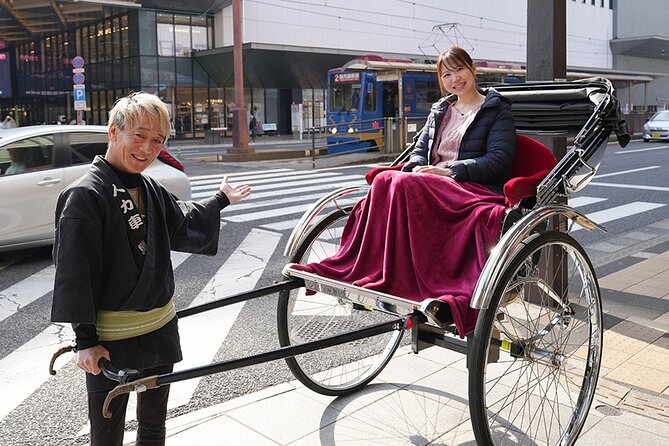
A traditional Japanese rickshaw gives you a quick, personal introduction to Kagoshima. In about 30 minutes, your driver-guide takes you past Reimeikan, Tsurumaru Castle, Terukuni Shrine, and Saigo Takamori’s statue, with time to stop for photos and hear the stories behind each place. I like the easy pace and the chance to see several central sights without committing to a long walking tour.
I also like the private format. You ride only with your own group, and guides such as Kyoichi and Yui bring humor, local history, and plenty of conversation. The main drawback is the short length: $71.53 per person is a fair price for a private introduction, but less attractive if you want to enter museums or spend serious time at each site.
- Four central Kagoshima stops: Reimeikan, the Tsurumaru Castle ruins and Goromon, Terukuni Shrine, and Saigo Takamori’s statue.
- A private ride for one or two people: The booking is designed for a small personal experience, with group discounts available.
- Guides who add personality: Kyoichi, also referred to as Koichi-san, and Yui have used humor, music, and local stories to make the short ride lively.
- Photo stops included: Your guide can stop so you can take pictures at memorable spots.
- No admission fees are needed: The tour views the sites from outside, and entry tickets are not included.
- Weather matters: Poor weather can lead to a different date or a full refund.
A quick ride through Kagoshima’s historic center
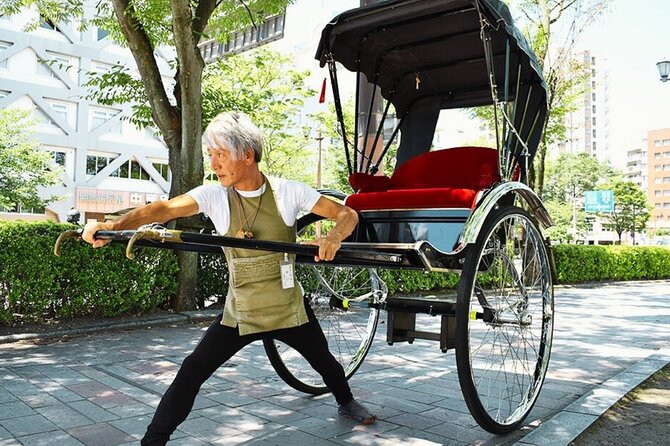
This tour works best as a compact orientation rather than a full sightseeing day. You sit in a traditional rickshaw while your driver-guide handles the route and explains what you are seeing. The ride links several important places in Kagoshima’s central area, so you get a useful sense of how the city’s political, religious, and cultural past fits together.
The experience lasts about 30 minutes. That sounds brief, and it is. Still, the route gives you four named stops, usually with about five minutes at each one, plus the time spent moving between them. You are not signing up for a slow museum visit or a detailed historical lecture. You are getting a lively introduction, a few good photographs, and a chance to ask questions.
I would think of it as a smart first activity on a Kagoshima visit. It can help you decide which places deserve a longer return visit. It also suits anyone who wants a taste of the city without walking far or organizing the route alone.
The meeting point is Hotel & Residence Nanshukan at 19-17 Higashisengokucho. The ride returns there at the end. The listed operating hours are 10:00 a.m. to 6:00 p.m., from January 20, 2025 through December 9, 2026, Monday through Sunday.
Reimeikan puts Kagoshima’s story in context
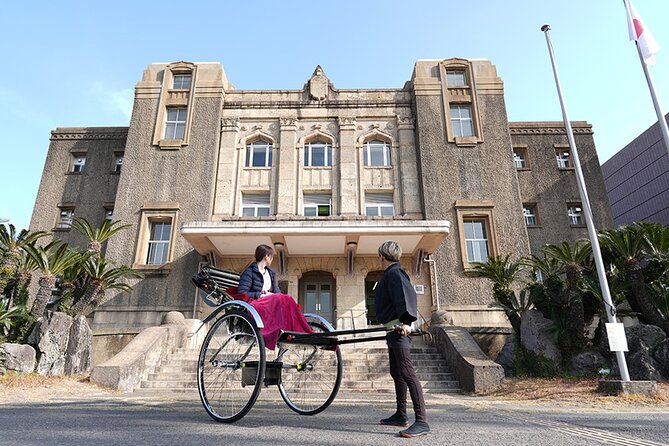
The first stop is Reimeikan, Kagoshima History Museum and Fine Arts Center. This institution covers both local history and art, with a particular connection to Kagoshima’s role in Japan’s modernization during the Meiji period and the Satsuma Rebellion.
You will not have time to visit the museum during this short ride. Admission is not included, and no admission is required for the rickshaw experience itself. Instead, your guide introduces the building and explains why it matters before moving on.
That short explanation can be useful. Kagoshima is closely linked with the Satsuma Domain, the Meiji Restoration, and the conflicts that followed Japan’s rapid political change. Without some background, the castle ruins and Saigo Takamori statue can feel like isolated sights. Reimeikan gives the route a wider frame.
If you have extra time in Kagoshima, you can treat this stop as a note to yourself: return later for the museum and art displays. During the rickshaw tour, it is mainly a visual and historical landmark rather than a full indoor visit.
More Rickshaw Tours in Japan
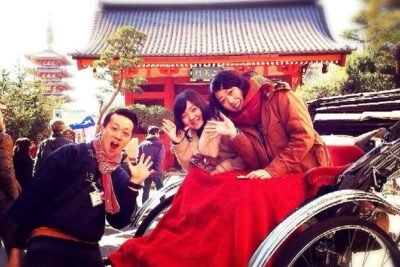
- Tokyo Asakusa Rickshaw Tour
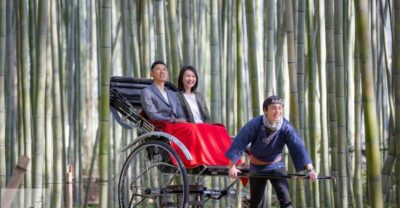
★ 5.0 · 1,375 reviews - Kyoto: Arashiyama Customized Rickshaw Tour & Bamboo Forest
★ 5.0 · 432 reviews - Kyoto Arashiyama Rickshaw Tour with Bamboo Forest
★ 5.0 · 354 reviews
Tsurumaru Castle reveals what remains
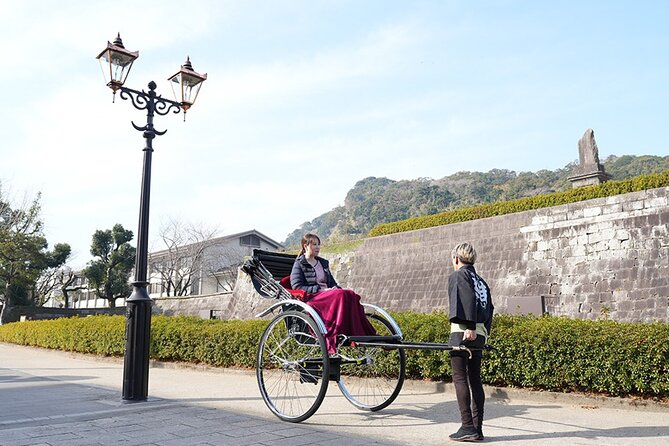
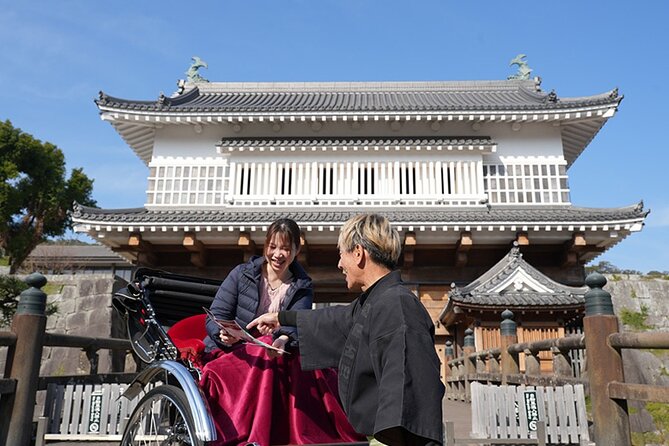
The next stop is the remains of Kagoshima Castle, also called Tsurumaru Castle. The castle was built between 1602 and 1606. Today, you see original stone walls and the moat, with the wooded slopes of Shiroyama Hill behind them.
This is a good example of why a short guided ride helps. A castle ruin can be easy to pass without context, especially when the main structures no longer survive. Your guide can point out the remaining walls and explain the site’s place in Satsuma’s past.
The stop lasts about five minutes, so expect a quick look rather than a long walk around the grounds. The setting makes it a strong photo stop, particularly if you want an image that combines stonework, greenery, and the old castle site.
You should also keep your expectations measured. This is not a reconstructed castle visit with multiple rooms to explore. The appeal is the surviving masonry, the moat, and the setting near the center of Kagoshima. The guide’s explanation adds the meaning that the bare remains cannot provide on their own.
Terukuni Shrine adds a religious side
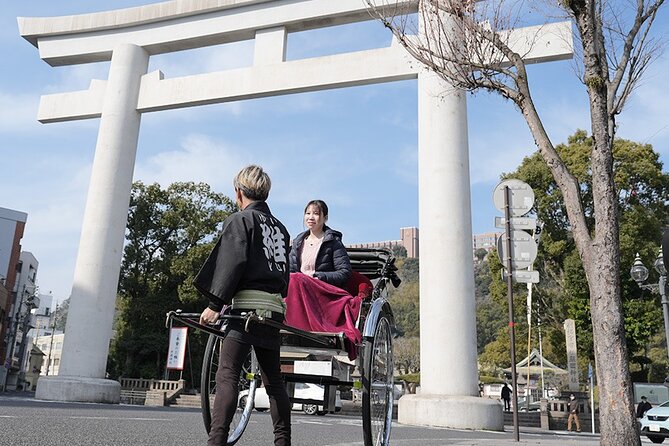
Terukuni Shrine gives the tour a different tone. It is a Shinto shrine dedicated to Shimazu Nariakira, the 28th feudal lord of the Satsuma Domain and an important figure in Japan’s move toward modernization in the late Edo period.
The shrine helps connect Kagoshima’s political past with its religious traditions. Instead of seeing only former government power and military conflict, you get a glimpse of how a local leader is remembered through Shinto worship.
Again, the stop is about five minutes. You should expect a brief introduction and a chance to take photographs, not a formal religious tour or extended time inside the shrine grounds. If you enjoy learning how local history appears in present-day places of worship, this will likely be one of the more interesting stops.
The private setup makes it easier to ask a simple question or two. A larger group tour can make that awkward, especially when the guide needs to keep moving. Here, your driver-guide can adjust the explanation to your interests, at least within the tight schedule.
Saigo Takamori gives the ride a memorable finish
The route also visits the bronze statue of Saigo Takamori in Central Park. Saigo was a major figure in the Meiji Restoration and later led a rebellion against the Meiji government. He remains one of Kagoshima’s best-known historical figures.
This is a particularly useful final stop because Saigo’s life brings together several themes from the tour: the end of the feudal era, the creation of modern Japan, and the tension between reform and tradition. The statue is easy to photograph, and its subject gives your guide a strong story to tell in a short amount of time.
One detail I like about this stop is its human scale. You are not just looking at an old wall or a formal shrine. You are looking at a public monument to a complicated person whose life still shapes Kagoshima’s identity.
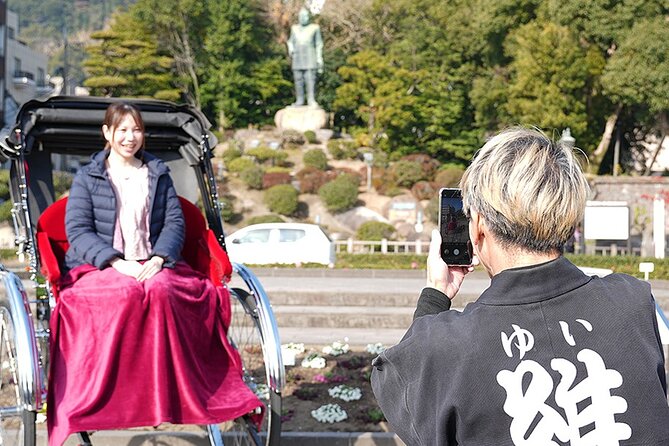
The guides have also made the tour personal in small ways. One guide connected with a rider over heavy metal music, even recognizing an obscure favorite song. That detail says something useful about the experience: the conversation need not stay rigidly inside a script. If you offer an interest of your own, your guide may find a way to connect it to the ride.
Same streets, a different route:
- Kyoto Rickshaw Tour
★ 5.0 · 210 reviews - Tokyo: Asakusa Sightseeing Tour by Rickshaw
★ 4.9 · 195 reviews - Kyoto: Private Rickshaw Tour of Gion and Higashiyama Area
★ 5.0 · 144 reviews - Otaru Rickshaw Tour
★ 5.0 · 76 reviews
The guides make a short tour feel personal
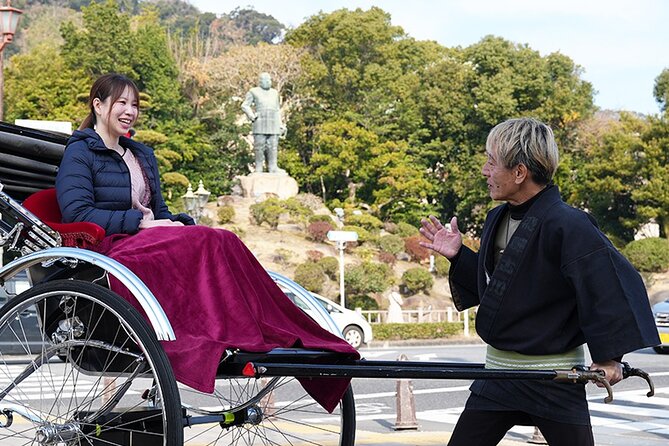
The strongest reason to choose this experience is the driver-guide. Kyoichi, also referred to as Koichi-san, has provided running commentary at each stop and talked with riders about Kagoshima’s past. Yui has also guided the ride, adding jokes, energy, and personal conversation.
The tone seems friendly rather than formal. That matters in a 30-minute experience. A dry list of dates would make the ride feel rushed. Humor and direct conversation give the route some life, especially when you are moving quickly from one site to the next.
You may also get help with photographs. One guide took pictures in front of attractive areas, which is useful when you are traveling alone or as a couple and do not want to rely on a stranger holding your phone. Photo stops are part of the stated experience, though the exact locations and timing can vary.
The private format is another advantage. This activity is for only your group, with bookings for one or two people. You can contact the provider in advance to suggest places of interest. That does not turn the 30-minute ride into a custom full-day tour, but it may help the guide shape the conversation or route around your priorities.
Is $71.53 a good value for 30 minutes?
At $71.53 per person, this is not a cheap way to cover four sights. If you judge it only by minutes, the price looks high. A regular walk through central Kagoshima will cost less, and you can view these exterior sites without paying admission.
The value comes from the private rickshaw, the driver, the local commentary, and the convenience of seeing several places in one short outing. You are paying for a guided introduction with character, not for transportation alone. For a first look at Kagoshima, that can be worthwhile.
I would consider it especially useful in three cases:
- You have limited time in the city and want a fast orientation.
- You are traveling as a couple and want a private activity with photographs.
- You prefer a seated ride to a longer walking route.
The value is weaker if you want detailed museum time, extended shrine visits, or a deep study of Kagoshima’s past. The 30-minute limit simply does not allow that. In that case, use the ride to identify the places you want to revisit, then spend another part of your day exploring them on foot.
Group discounts may improve the price for a larger booking, although the stated format focuses on one or two people. Children under six are free, which helps families, though the activity is still short enough that young children will need to stay settled during the ride.
Practical details that affect your choice
Arrive 10 minutes before pickup. The meeting point is Hotel & Residence Nanshukan, and the tour ends at the same location. You can leave luggage at the hotel pickup point during the ride, which is useful if you are carrying bags between other plans.
The experience is near public transportation, so reaching the start point should fit easily into a day of sightseeing. Exact confirmation is sent within 48 hours of booking, subject to availability. The listed price is per person.
The activity requires good weather. If rain or other poor conditions lead to cancellation, you can choose another date or receive a full refund. You can also cancel for a full refund if you do so at least 24 hours before the start time. A late cancellation or no-show is not refunded, so do not treat this as a last-minute weather gamble.
Most people can take part, and admission tickets are neither included nor required. That last point is important: the tour introduces the outside of the sites. If you want to enter Reimeikan or another attraction afterward, plan and pay for that separately.
Who will enjoy this Kagoshima rickshaw ride?
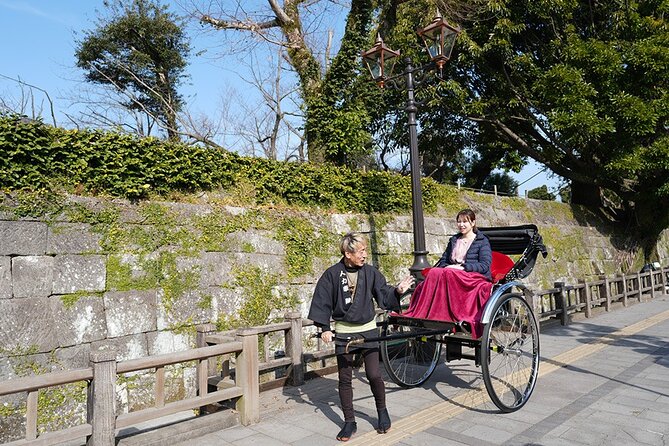
I would recommend this for couples, solo visitors, families with young children, and anyone looking for an easy introduction to Kagoshima. The private setting gives you more freedom than a large group, while the short length keeps the commitment small.
It is also a good choice for people who enjoy local conversation. The guides have brought humor, music, photographs, and personal stories into the ride. That makes the experience less like a moving checklist and more like a brief meeting with someone who knows the city.
I would hesitate if you are looking for a full historical tour. Four five-minute stops leave little time for detail. You also need to be comfortable with the price for a 30-minute activity, especially if you can comfortably walk between the same central sights.
For many people, the best use of the ride is at the start of a Kagoshima stay. You get the broad picture first, then decide which museum, shrine, castle remains, or statue deserves another look.
Should you book it?
Book this rickshaw tour if you want a short, private, good-humored introduction to Kagoshima and value a guide who can make familiar sights more meaningful. Kyoichi, Koichi-san, and Yui have brought strong personality to the ride, and the chance to stop for photographs adds practical value.
Skip it if you want long visits, indoor museum time, or the lowest-cost way to see the city. At 30 minutes, this is an orientation with local color, not a complete sightseeing day. For a first look, a couple’s outing, or an easy family activity, I think the private format and lively guiding make the price reasonable.
FAQ
How long is the Kagoshima rickshaw tour?
The tour lasts approximately 30 minutes.
Where does the tour start?
It starts at Hotel & Residence Nanshukan, 19-17 Higashisengokucho, Kagoshima, 892-0842, Japan.
Where does the tour end?
The activity ends back at the meeting point.
Which places does the rickshaw tour visit?
The route includes Reimeikan, the Kagoshima or Tsurumaru Castle ruins and Goromon, Terukuni Shrine, and the Saigo Takamori statue.
Are admission tickets included?
No admission tickets are included, but admission is not required for this rickshaw experience.
Is the tour private?
Yes. Only your group participates in the activity.
How many people can book?
The tour is suitable for bookings of one or two people. Group discounts are available.
Are children under six charged?
Children under six can join for free.
Can I leave luggage during the tour?
Yes. Luggage can be left at the hotel pickup point during the ride.
What happens if the weather is poor?
The experience requires good weather. If it is canceled because of poor weather, you can choose another date or receive a full refund.
More History Tours in Japan
- [30 minutes] Rickshaw tour around Asakusa [History, sightseeing, Tokyo Skytree]
★ 5.0 · 38 reviews - Kamakura Heritage Bike or Walk Tour with ex-Rickshaw guide
★ 5.0 · 11 reviews - Kamakura: Private History and Heritage Tour by Rickshaw
★ 4.9 · 7 reviews - Nara: Cultural Heritage Tour by Rickshaw
★ 5.0 · 5 reviews
Just added around Japan
- Sushi Making Tokyo with Traditional Rickshaw Ride Tour in Asakusa★ 5.0 · 12 reviews
- Exiting Rickshaw ride and Kimono experience★ 5.0 · 4 reviews
- Hot Spring Capital of Yufuin Rickshaw Tour★ 5.0 · 32 reviews
- Kyoto Sagano Insider: Rickshaw and Walking Tour★ 5.0 · 15 reviews
- Kurashiki Rickshaw Tour★ 5.0 · 39 reviews
- Private 3-hour Kyoto Arashiyama Rickshaw Tour★ 5.0 · 5 reviews
- Kamakura Rickshaw Tour★ 5.0 · 53 reviews
- Kamakura Heritage Bike or Walk Tour with ex-Rickshaw guide★ 5.0 · 11 reviews
Japan Tuk Tuk Tours, compared.
Arashiyama Customized Rickshaw Tour & Bamboo Forest
Read our review →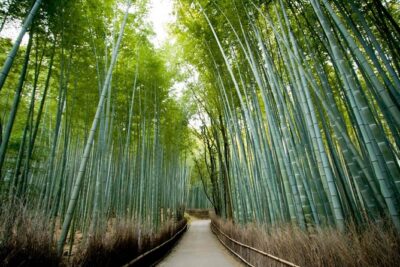
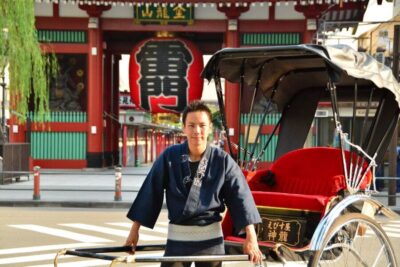
Kyoto Arashiyama Rickshaw Tour with Bamboo Forest
Read our review →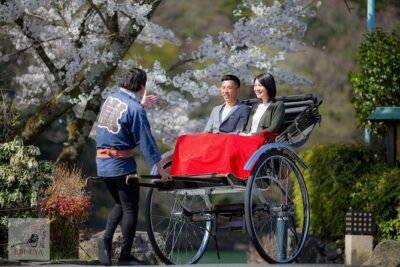
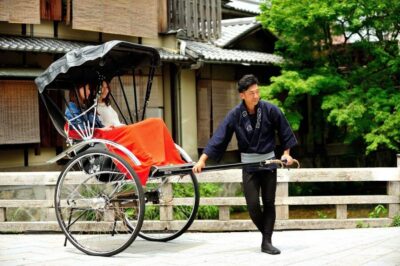
Private Rickshaw Tour of Gion and Higashiyama Area
Read our review →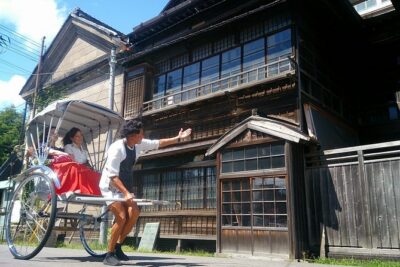
Browse the lists this tour appears in