
Review · JAPAN
Otaru Rickshaw Tour
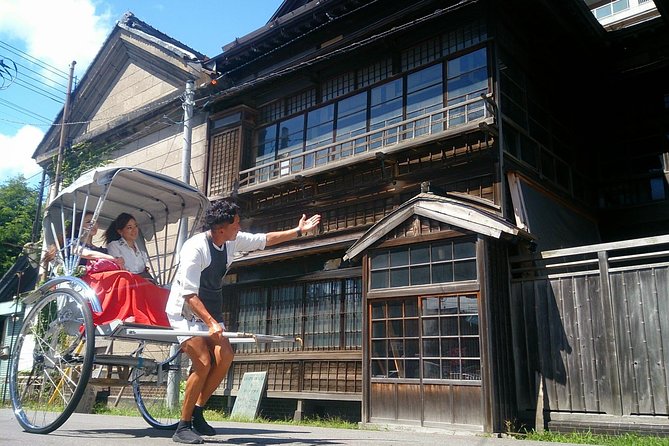
Otaru’s old canal district is made for a slow ride, and a rickshaw gives you a fine view without asking you to study a map at every corner. You pass warehouses, old rail tracks, narrow lanes, and the marina while your guide explains what made this northern port town tick.
I like the private format, since only your group rides together, and I like the chance to hear local stories from guides such as Koto and Kuma. Their self-taught English has been praised as clear and friendly, with plenty of useful detail. The main drawback is space: two adults share a rickshaw only 74 centimeters wide, so a separate rickshaw may be more comfortable.
Key points at a glance
- Choose your pace: Tours run from about 30 minutes to 2 hours, so you can fit a quick introduction into a port stop or allow time for more sights.
- See Otaru from the canal district: The route includes the north canal, old warehouses, a famous bridge, and the former Nippon Yusen Kaisha Otaru Branch.
- Meet guides with personality: Koto and Kuma are noted for friendly service, strong local knowledge, self-taught English, and help with photographs.
- Private for your group: You do not share the activity with strangers, although larger parties may need more than one rickshaw.
- Plan for comfort: Each rickshaw is 74 centimeters wide. Two adults fit, but individual rickshaws can be wiser for larger passengers.
- Easy port-day option: The meeting point is at Chuo Bridge, close to public transportation, and the ride returns there unless another drop-off is arranged.
Why a rickshaw works so well in Otaru
Otaru is compact enough to explore on foot, but its most interesting streets are spread around the canal, warehouse district, old rail line, and waterfront. A rickshaw lets you cover that ground while keeping your eyes up. You can watch the old buildings slide past instead of stopping every few minutes to check directions.
The ride also gives you a local guide at the exact moment you need one. Otaru’s warehouses and commercial buildings can look like attractive photo backdrops, but the guide helps connect them to the town’s port life, fishing trade, shipping routes, and former commercial importance.
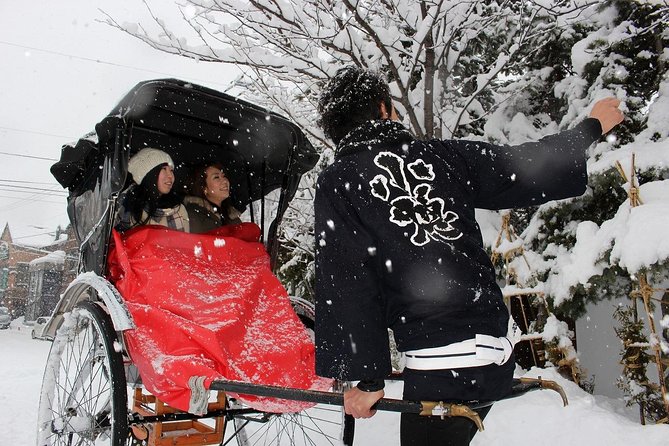
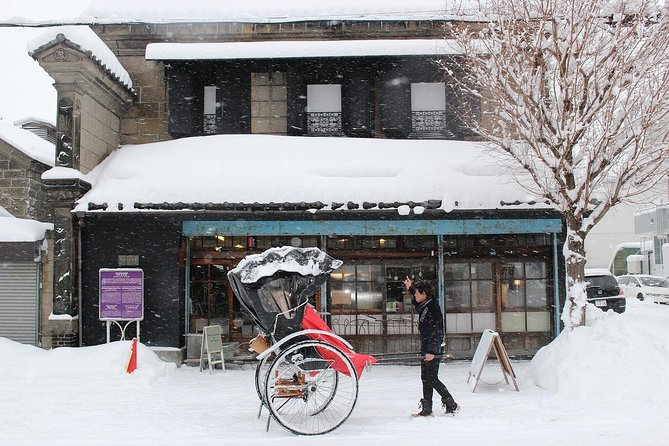
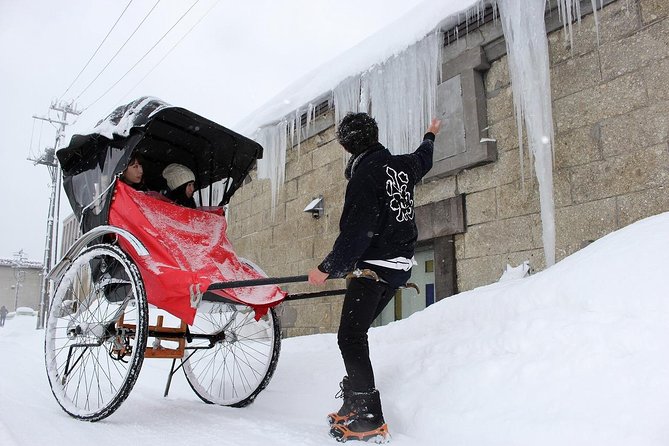
The setting changes with the season. Summer brings a cool sea breeze, while winter can cover the streets and canal with snow. The same route will feel quite different depending on the weather, so dress for the season and expect an open-air ride.
This is a private activity, which gives it a more personal feel than a large walking group. You can ask questions, request a photo stop, and focus on the parts of Otaru that interest you most. The guide may also suggest less crowded corners, as one guest described being taken to quieter places with attractive views.
More Rickshaw Tours in Japan
- Tokyo Asakusa Rickshaw Tour
★ 5.0 · 1,375 reviews - Kyoto: Arashiyama Customized Rickshaw Tour & Bamboo Forest
★ 5.0 · 432 reviews - Kyoto Arashiyama Rickshaw Tour with Bamboo Forest
★ 5.0 · 354 reviews
Starting at Chuo Bridge in the canal district
The ride begins at Chuo Bridge, in a central part of Otaru. This is a useful starting point because you are already near the canal scenery that draws many people to the town. The meeting point is close to public transportation, and a map and photo are provided to help you find the stand.
Your first impression is likely to be visual: canal water, old warehouses, broad streets, and the remains of a working port town. The rickshaw places you slightly above the usual street-level view, which helps when you want to frame the canal and buildings in one photograph.
The selected starting time is not automatically final. The operator confirms the time by email within 24 hours of booking, so check your messages before setting your day around the ride. That matters if you are visiting from a cruise ship or have a tight train schedule.
The north part of Otaru Canal
The north section of the canal offers a quieter look at Otaru than the most photographed central stretches. Here, the old warehouse buildings and waterfront remind you that this was not built only for sightseeing. The canal served the movement of goods, and the surrounding stockyards and commercial buildings reflect that working past.
Your guide can point out details you might otherwise pass without noticing. The route is especially useful early in your visit because it gives you a sense of how the canal district fits together. Afterward, you can return on foot to browse, take more photographs, or visit nearby sights with a better sense of direction.
The short ride option works well here. A 30-minute tour can introduce you to the main canal area without taking over your day. If you want more stories, additional photo stops, and a wider look at Otaru, choose an hour or more.
Inside the former Nippon Yusen Kaisha Otaru Branch
One scheduled stop is the Former Nippon Yusen Kaisha Otaru Branch, where you visit inside the old post office building. Admission is not included, so you should allow for an extra entrance charge if you decide to go inside.
This stop adds context to the street scenes. You are not only passing old facades from the seat of a rickshaw. You get a chance to step into one of the buildings tied to Otaru’s commercial and shipping past.
The visit lasts about 15 minutes. That makes it a manageable addition, but it also means you should not expect a long museum visit. The attraction here is the building itself and the sense of place it gives you, not a full afternoon indoors.
If you prefer to keep moving, ask your guide how the stop fits into your chosen tour length. The 90-minute option mentioned by one guest allowed enough time for a broad ride and plenty of explanation, while a shorter booking may leave less room for extended stops.
Same streets, a different route:
- Kyoto Rickshaw Tour
★ 5.0 · 210 reviews - Tokyo: Asakusa Sightseeing Tour by Rickshaw
★ 4.9 · 195 reviews - Kyoto: Private Rickshaw Tour of Gion and Higashiyama Area
★ 5.0 · 144 reviews - Kamakura Rickshaw Tour
★ 5.0 · 53 reviews
Old rail tracks and a small alley
The route also includes Otaru’s old rail tracks. These are a useful reminder that the town was connected not just by water, but also by rail. Details like this help you see Otaru as a transportation center rather than simply a pretty canal town.
A small alley adds a different mood. Narrow lanes often reveal the everyday side of a destination, where the view is less polished and more local. The rickshaw’s size makes it practical for moving through compact streets, though the narrow vehicle also means you should think carefully about seating comfort.
These parts of the ride are valuable because they break up the classic canal views. You get a mix of broad waterfront scenery, old infrastructure, and smaller streets. The result feels more rounded than a simple ride along the main canal.
The famous bridge and warehouse view
One of the strongest photo stops is Otaru’s most popular bridge. From here, you get a broad view along the canal, with old warehouses lining the water. This is the scene many people picture when they think of Otaru, and the elevated rickshaw seat gives you a relaxed way to take it in.
Guides may stop to take photographs for you. One guide was praised for having a good eye for setting up pictures, which can be useful when you want more than a quick snapshot taken at arm’s length. You can also ask for a group photograph without trying to balance a phone on a railing.
The bridge can be a busy photo point, especially at popular times. A private guide can help you make the most of the stop, but you should still expect other people around the canal. Winter snow may change the view completely, while summer gives the scene a softer, breezier feel.
A quick stroll through Otaru Marina
The final part includes a short walk through Otaru Marina. This brings you closer to the fishing-town side of Otaru and adds a waterfront view beyond the canal warehouses.
The marina matters because it keeps the town connected to its working identity. Otaru is not only an old commercial district preserved for visitors. It remains a port town, and the marina offers a quick look at that continuing relationship with the sea.
Do not expect a long marina visit. It is described as a quick stroll, so treat it as a brief change of scenery rather than a separate attraction. It works best as part of the longer ride, when you have enough time to enjoy several areas without rushing back to the meeting point.
Picking 30 minutes, 60 minutes, 90 minutes, or 2 hours
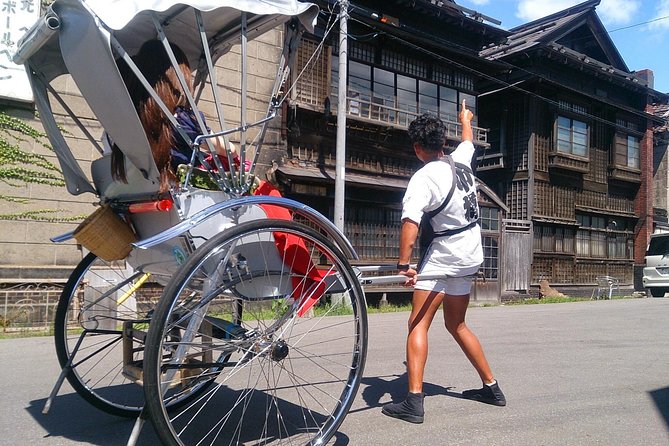
The available duration is one of this tour’s best features. Your choice should depend on how much time you have and how deeply you want to explore.
- About 30 minutes: Best for a first look at the canal district, especially during a short port visit. You will get the general feel of Otaru, but not as much time for stops and stories.
- About 1 hour: A good middle ground for the canal, warehouse views, old rail tracks, and a few photographs.
- About 90 minutes: The strongest choice if you want a fuller explanation of Otaru and enough time to pause at historic sights. This length was used by one highly satisfied guest with guide Koto.
- Up to 2 hours: Best for a relaxed private outing with more room for the north canal, small lanes, the former Nippon Yusen Kaisha branch, and the marina.
I would choose 60 to 90 minutes for most first visits. Half an hour is useful but quick. Two hours can be worthwhile if you enjoy local stories, photography, and a slow pace, or if you want the rickshaw to serve as your main introduction before walking around on your own.
What the $42.90 price means
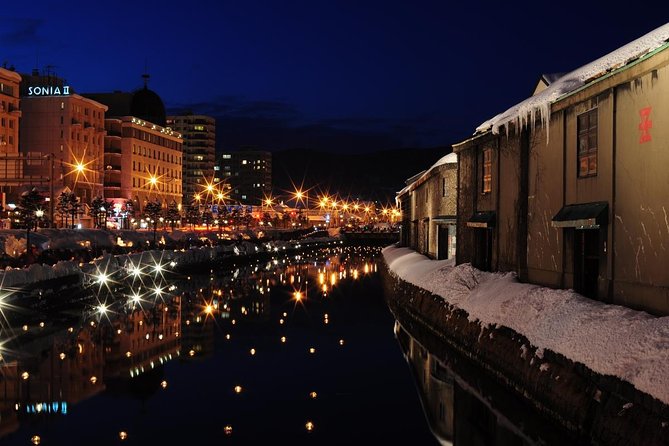
At about $42.90 per person, the ride costs more than simply walking along the canal. You are paying for the rickshaw, a local driver-guide, private service, and the convenience of seeing several nearby areas without planning every turn yourself.
The value improves when you use the guide well. Ask questions about the old buildings, request advice on where to walk afterward, and make use of the photo stops. A short ride is less expensive in time but gives you less explanation. A longer ride costs more, yet it can replace some of the orientation work you would otherwise do alone.
Group discounts may help if you are booking for several people. Remember that two adults share one rickshaw, and children five or under can sit on an adult’s lap without taking a seat. Children aged six and over pay the adult price.
For larger passengers, do not treat the two-person capacity as a promise of comfort. The vehicle is only 74 centimeters wide. You may need one rickshaw per person, and an extra rickshaw with an English-speaking guide may not be available unless you book it ahead.
Guides, language, and the personal touch
The guide can make or break a short city ride. Here, named guides Koto and Kuma have been singled out for polite service, strong explanations, humor, and self-taught English. Kuma also has some Korean and Chinese, according to the information provided, though a multilingual driver depends on availability.
Ask for your preferred language at the departure point, but understand that it cannot be guaranteed. If English matters to you, booking any additional rickshaw in advance is particularly important for larger parties.
The private format helps the conversation. You can ask about a building as you pass it, request a slower explanation, or let the guide know that photographs matter to you. One guide was also praised for helping arrange photographs, which adds real value for couples and families who want a picture together.
Comfort, families, and practical limits
Most people can take part, but the ride is not ideal for everyone. Expecting mothers during the first 16 weeks of pregnancy are not permitted to ride. The narrow seat may also be uncomfortable for larger passengers, and individual rickshaws are recommended for better personal space.
A maximum of two adults can ride in one rickshaw. Up to two children aged five or under may join two adults, but both children must sit on an adult’s lap. This arrangement may work for a short ride, though a longer tour could feel cramped.
Food and drinks are not included. Hotel pickup and drop-off are also not included, and the standard finish is back at Chuo Bridge. A different drop-off point may be possible for an added fee paid on the day.
The activity is available with a mobile ticket, and confirmation arrives at booking. Since the starting time is confirmed by email within 24 hours, keep an eye on your inbox before departure.
Who will enjoy this Otaru ride most
I would recommend it to first-time visitors who want a quick understanding of Otaru before exploring alone. It also suits couples, families with young children, and cruise passengers who want a private activity near the central canal area.
It is a particularly good choice for anyone who enjoys photographs but does not want to manage the camera, map, and group at once. The guide can handle the route and help set up pictures while you watch the town.
You may prefer a walking tour if you want to spend long periods inside buildings or stop at many shops. You should also think twice if you dislike confined seating, have mobility or comfort concerns, or want an exact departure time before booking. The operator confirms the starting time after booking, and the rickshaw itself is narrow.
Free cancellation is available if you cancel at least 24 hours before the start time. Cancellations or changes made inside that window are not refunded or accepted, based on local time.
Should you book the Otaru Rickshaw Tour?
Book it if you want a friendly, private introduction to Otaru that combines the canal, warehouses, rail tracks, old buildings, lanes, and marina in one outing. The strongest reasons are the local explanations, the flexible duration, and the chance to see the classic canal view without rushing between stops.
Choose 60 to 90 minutes for the best balance of time and value. Pick 30 minutes if your schedule is tight, and consider two hours if you want a slower ride with more conversation and photographs.
Before paying, check the rickshaw space carefully. Larger passengers should reserve separate vehicles, and families should confirm how children will sit. With that planning done, this is an enjoyable way to get your bearings and see the old port district from a fresh angle.
FAQ
Where does the Otaru Rickshaw Tour start?
The tour starts at Chuo Bridge in Otaru, Hokkaido, Japan.
Where does the tour finish?
The activity normally ends back at the meeting point.
How long does the rickshaw ride last?
The available duration is approximately 30 minutes to 2 hours.
Is the tour private?
Yes. Only your group participates in the activity.
What is included in the price?
The price includes the rickshaw ride and a local driver-guide.
Are food and drinks included?
No. Food and drinks are not included unless specifically stated.
Is hotel pickup and drop-off included?
No. Hotel pickup and drop-off are not included.
How many adults fit in one rickshaw?
A maximum of two adults can ride in one rickshaw. Each rickshaw is 74 centimeters wide.
Can children ride in the rickshaw?
Children aged six and over pay the adult price. Children aged five or under can ride on an adult’s lap without occupying a seat, with up to two young children allowed alongside two adults.
Can I cancel for a refund?
Yes. You can receive a full refund if you cancel at least 24 hours before the experience start time. Cancellations made less than 24 hours in advance are not refunded.
Just added around Japan
- Sushi Making Tokyo with Traditional Rickshaw Ride Tour in Asakusa★ 5.0 · 12 reviews
- Exiting Rickshaw ride and Kimono experience★ 5.0 · 4 reviews
- Hot Spring Capital of Yufuin Rickshaw Tour★ 5.0 · 32 reviews
- Kyoto Sagano Insider: Rickshaw and Walking Tour★ 5.0 · 15 reviews
- Kurashiki Rickshaw Tour★ 5.0 · 39 reviews
- Private 3-hour Kyoto Arashiyama Rickshaw Tour★ 5.0 · 5 reviews
- Kamakura Rickshaw Tour★ 5.0 · 53 reviews
- Rickshaw Tour of Kagoshima’s Historical and Cultural Sites★ 5.0 · 4 reviews
Japan Tuk Tuk Tours, compared.
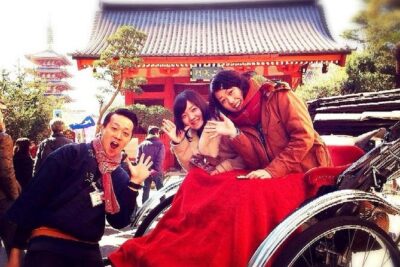
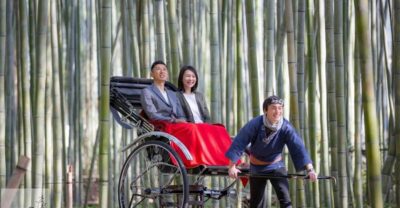
Arashiyama Customized Rickshaw Tour & Bamboo Forest
Read our review →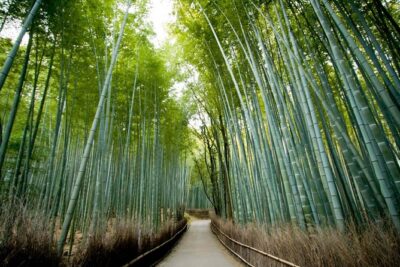
Kyoto Arashiyama Rickshaw Tour with Bamboo Forest
Read our review →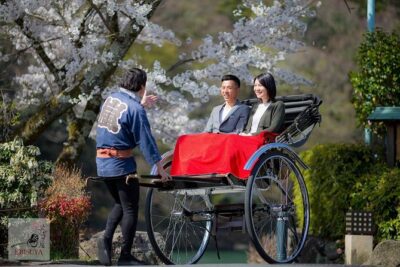
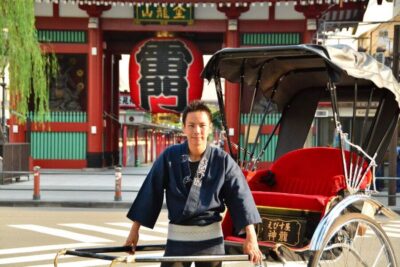
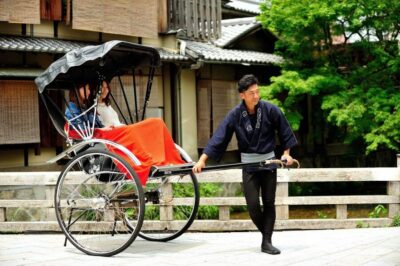
Private Rickshaw Tour of Gion and Higashiyama Area
Read our review →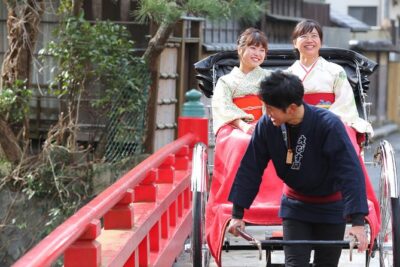
Asakusa, Tokyo: Rickshaw Experience and Highlights Walking tour
Read our review →Browse the lists this tour appears in